Kirjojen hintavertailu. Mukana 11 342 296 kirjaa ja 12 kauppaa.

Kirjahaku

Etsi kirjoja tekijän nimen, kirjan nimen tai ISBN:n perusteella.

8 kirjaa tekijältä Edward Burman

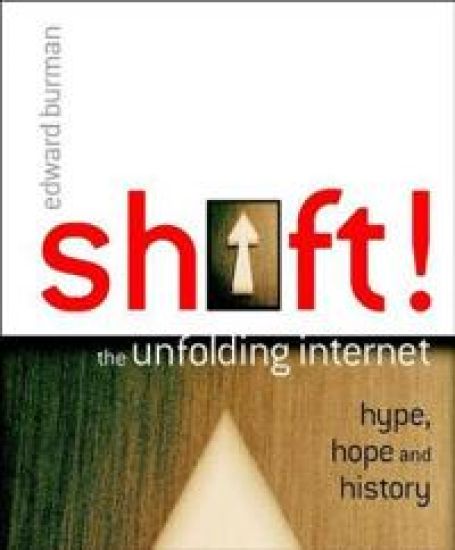
Shift!

Shift!

Edward Burman

John Wiley Sons Inc
2003
nidottu
Discovery is a process that must unfold in time. Drawing on colourful vignettes from the scientific past to inform his vision of the technological and cultural future, Edward Burman uses the 'paradigm' thinking explored by Thomas Kuhn in The Structure of Scientific Revolutions (over a million copies sold) to assess the Internet as a breakthrough like any other. Dismissing its attempted hijack by dot.com business as cynical and doomed to failure, he cuts through uncertainty to point out how far we have come - already we take instant connection for granted, and the Internet is embedded deep in our personal and working lives. The problem, he explains, is that as we undergo a Shift! of this magnitude we are unable to see where we are going. Thus we persist with old terminology and models in the new paradigm. Companies continue to place 'tollbooths' in a world designed to offer freedom of movement. People still see the Internet as the province of the young and gifted. There is not even general agreement as to what the Internet is really for. Shift! unravels the past and predicts a time close ahead when capability becomes usability, benefits outweigh costs, and the public embraces the Internet as wholly as the electric light, the telephone and the car.
The Inquisition

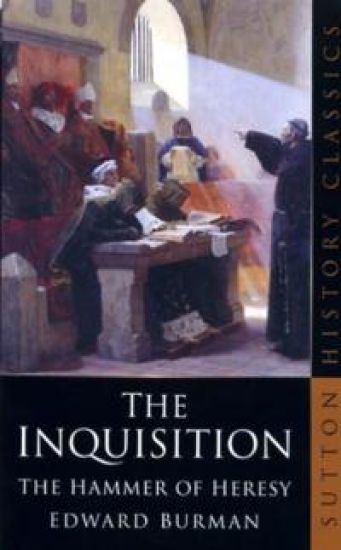
The Inquisition

Edward Burman

The History Press Ltd
2004
nidottu
The Inquisition inspired fear for centuries. This clear and objective account of the most notorious institutions of medieval Europe now called "The Sacred Congregation for the Doctrine of Faith" covers its activities in Italy, Germany, France, Spain and Latin America.
China: The Stealth Empire

China: The Stealth Empire

Edward Burman

The History Press Ltd
2008
sidottu
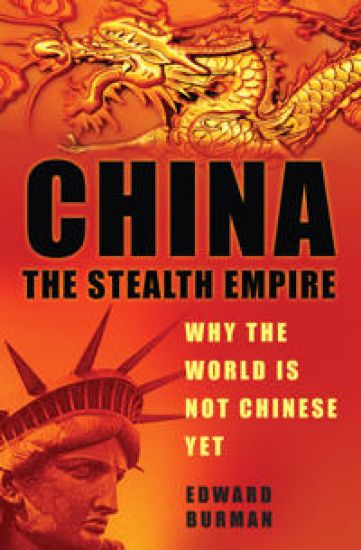
China: The Stealth Empire asks why it is that China despite its size and once advanced culture and technology did not become a world power centuries ago? Burman traces the answer through Chinese innate sense of superiority which made foreign conquest and trade an irrelevance. This is about to change with the evolution of what is termed the Stealth Empire characterised by world dominance in the production of consumer goods, a growing share of world manufacturing and a strong sense of nationalism. The Chinese believe that they need to do nothing as they evolve by the middle of the century into the dominant world power. Burman's book opens a window onto this history and growing sense of national destiny. It will be essential reading for anyone wanting to understand what is going on in the Stealth Empire.
China and Iran

China and Iran

Edward Burman

The History Press Ltd
2009
sidottu
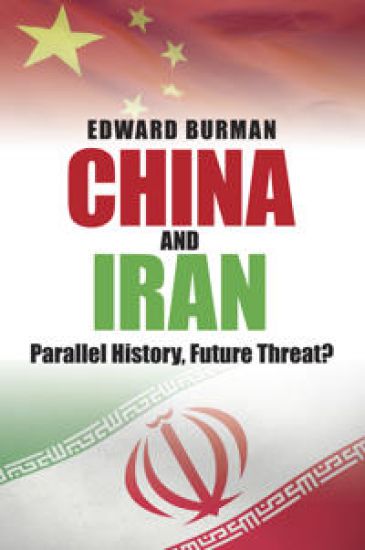
China and Iran have featured heavily in the news in recent years. China is both a military and an economic superpower with 20% of the world's population; Iran is suspected of developing nuclear weapons and arming terrorists, and sits on the world's second-largest oil and gas reserves. They are also surprisingly close geographically: Iran is only 700 miles across Afghanistan from China's extreme western border. A 25-year, $100 billion deal to supply China with oil and gas and the large number of Chinese companies operating in Iran shows that the two are moving increasingly close in both political and economic terms. But what does this mean for the rest of the world, and especially for 'the West?' Edward Burman examines how the strikingly similar histories of these two ancient civilisations can inform what the likely consequences for the world of an alliance between them might be.
Terracotta Warriors

Terracotta Warriors

Edward Burman

Weidenfeld Nicolson
2019
pokkari
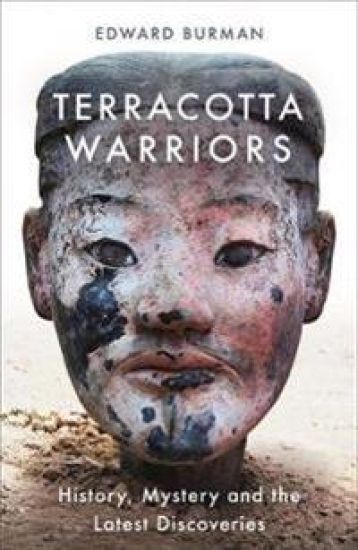
Terracotta Warriors provides an intriguing, original and up-to-date account of one of the wonders of the ancient world. Illustrated with a wealth of original photographs, this is the first book available for the general reader. In one of the most astounding archaeological discoveries of all time, the Terracotta Warriors were discovered by chance by farmers in 1974. We now understand that the excavated pits containing nearly eight thousand warriors and hundreds of horses are only part of a much grander mausoleum complex. There is a great deal still to be discovered and understood about the entire area whichis now thought to cover around 100 square kilometres. And there is the tantalising possibility of the opening of the imperial tomb.
The Terracotta Warriors: Exploring the Most Intriguing Puzzle in Chinese History
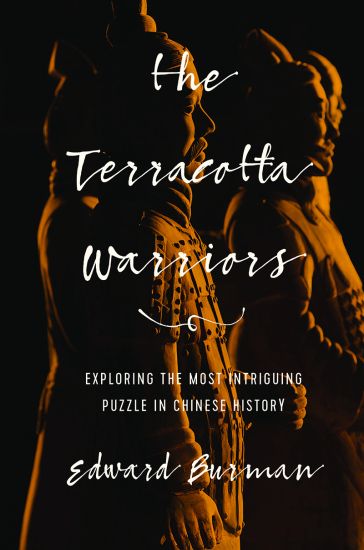
Exciting investigations in northwest China are set to reveal more of the mysteries of the huge mausoleum of the Qin Emperor, a portion of which was accidently discovered in 1974 by farmers who were digging a well. The second phase of an international research project began in 2011 and is ongoing. More recently still, promising new excavations began in Pit 2, with exciting fresh discoveries already announced. The Terracotta Warriors seeks to examine one of China's most famous archaeological discoveries in light of these new findings.The book begins with the discovery of the terracotta warriors and then tells the history of the Qin Dynasty and as much as is known about the construction of the third-century bce mausoleum, based on the work of the historian Sima Qian (145-90 BCE). He wrote that the First Emperor was buried with palaces, towers, officials, valuable artifacts, and wondrous objects. According to this account, one hundred flowing rivers were simulated using mercury; the ceiling was decorated with heavenly bodies, high above the features of the land. The new findings and the description of the mausoleum based on the quoted historical accounts suggest that the next discoveries may surpass the size and conception of the original discovery of the terracotta warriors.In the second part, Edward Burman asks: Who built it and how? He also questions the role of the terracotta warriors, who may be servants and not warriors, and what their function may have been in the afterlife. Finally, he anticipates the ongoing discoveries and describes the new methods of excavation and preservation.
Sardinia

Sardinia

Edward Burman

Tauris Parke
2022
nidottu
Tourism in Sardinia is booming, yet there is nothing else in print that deals with the island’s incredibly rich history and culture, which stretches back to the Neolithic period. This book details everyone from the Phoenicians to the Carthaginians and Aragonese who invaded Sardinia, which is covered with some of the most fascinating historical and archaeological sites in Europe - from thousands of nuraghi, Bronze Age towers and settlements, to 'giant's grave' and 'fairy house' tombs. It also holds eccentric festivals, from Barbagia’s carnival parade of ghoulish mamuthones, said to banish winter demons, to the death-defying S’Ardia horse race in Sedilo. There are shipwrecks off Cagliari’s coast, underwater caves and submerged Roman ruins in addition to ancient castles, churches, undisturbed hilltop villages and 2,000 miles of some of the most beautiful coastline in the world.
The Terracotta Warriors: Exploring the Most Intriguing Puzzle in Chinese History
A history of the famous Terracotta Army in Xi'an, China, exploring what we now know about it, what remains hidden, and the fascinating theories that surround its creation. Exciting investigations in northwest China are about to reveal more of the mysteries of the huge mausoleum of the Qin Emperor, a portion of which was accidently discovered in 1974 by farmers who were digging a well. The second phase of an international research project began in 2011 and is ongoing. More recently still, promising new excavations began in Pit 2, with exciting fresh discoveries already announced. The Terracotta Warriors seeks to examine one of China's most famous archaeological discoveries in light of these new findings. The book begins with the discovery of the terracotta warriors and then tells the history of the Qin Dynasty and as much as is known about the construction of the 3rd century BCE mausoleum, based on the work of the historian Sima Qian (145-90 BCE). He wrote that the First Emperor was buried with palaces, towers, officials, valuable artifacts, and wondrous objects. According to this account, one hundred flowing rivers were simulated using mercury; the ceiling was decorated with heavenly bodies, high above the features of the land. The new findings and the description of the mausoleum based on the quoted historical accounts suggest that the next discoveries may surpass the size and conception of the original discovery of the terracotta warriors. In the second part, Edward Burman asks: Who built it and how? He also questions the role of the terracotta warriors, who may be servants and not warriors, and what their function may have been in the afterlife. Finally, he anticipates the ongoing discoveries and describes teh new methods of excavation and preservation.