Kirjojen hintavertailu. Mukana 11 546 493 kirjaa ja 12 kauppaa.

Kirjahaku

Etsi kirjoja tekijän nimen, kirjan nimen tai ISBN:n perusteella.

6 kirjaa tekijältä Edward Curry

Real-time Linked Dataspaces

Real-time Linked Dataspaces

Edward Curry

Saint Philip Street Press
2020
pokkari
This open access book explores the dataspace paradigm as a best-effort approach to data management within data ecosystems. It establishes the theoretical foundations and principles of real-time linked dataspaces as a data platform for intelligent systems. The book introduces a set of specialized best-effort techniques and models to enable loose administrative proximity and semantic integration for managing and processing events and streams. The book is divided into five major parts: Part I "Fundamentals and Concepts" details the motivation behind and core concepts of real-time linked dataspaces, and establishes the need to evolve data management techniques in order to meet the challenges of enabling data ecosystems for intelligent systems within smart environments. Further, it explains the fundamental concepts of dataspaces and the need for specialization in the processing of dynamic real-time data. Part II "Data Support Services" explores the design and evaluation of critical services, including catalog, entity management, query and search, data service discovery, and human-in-the-loop. In turn, Part III "Stream and Event Processing Services" addresses the design and evaluation of the specialized techniques created for real-time support services including complex event processing, event service composition, stream dissemination, stream matching, and approximate semantic matching. Part IV "Intelligent Systems and Applications" explores the use of real-time linked dataspaces within real-world smart environments. In closing, Part V "Future Directions" outlines future research challenges for dataspaces, data ecosystems, and intelligent systems. Readers will gain a detailed understanding of how the dataspace paradigm is now being used to enable data ecosystems for intelligent systems within smart environments. The book covers the fundamental theory, the creation of new techniques needed for support services, and lessons learned from real-world intelligent systems and applications focused on sustainability. Accordingly, it will benefit not only researchers and graduate students in the fields of data management, big data, and IoT, but also professionals who need to create advanced data management platforms for intelligent systems, smart environments, and data ecosystems. This work was published by Saint Philip Street Press pursuant to a Creative Commons license permitting commercial use. All rights not granted by the work's license are retained by the author or authors.
Real-time Linked Dataspaces

Real-time Linked Dataspaces

Edward Curry

Saint Philip Street Press
2020
sidottu
This open access book explores the dataspace paradigm as a best-effort approach to data management within data ecosystems. It establishes the theoretical foundations and principles of real-time linked dataspaces as a data platform for intelligent systems. The book introduces a set of specialized best-effort techniques and models to enable loose administrative proximity and semantic integration for managing and processing events and streams. The book is divided into five major parts: Part I "Fundamentals and Concepts" details the motivation behind and core concepts of real-time linked dataspaces, and establishes the need to evolve data management techniques in order to meet the challenges of enabling data ecosystems for intelligent systems within smart environments. Further, it explains the fundamental concepts of dataspaces and the need for specialization in the processing of dynamic real-time data. Part II "Data Support Services" explores the design and evaluation of critical services, including catalog, entity management, query and search, data service discovery, and human-in-the-loop. In turn, Part III "Stream and Event Processing Services" addresses the design and evaluation of the specialized techniques created for real-time support services including complex event processing, event service composition, stream dissemination, stream matching, and approximate semantic matching. Part IV "Intelligent Systems and Applications" explores the use of real-time linked dataspaces within real-world smart environments. In closing, Part V "Future Directions" outlines future research challenges for dataspaces, data ecosystems, and intelligent systems. Readers will gain a detailed understanding of how the dataspace paradigm is now being used to enable data ecosystems for intelligent systems within smart environments. The book covers the fundamental theory, the creation of new techniques needed for support services, and lessons learned from real-world intelligent systems and applications focused on sustainability. Accordingly, it will benefit not only researchers and graduate students in the fields of data management, big data, and IoT, but also professionals who need to create advanced data management platforms for intelligent systems, smart environments, and data ecosystems. This work was published by Saint Philip Street Press pursuant to a Creative Commons license permitting commercial use. All rights not granted by the work's license are retained by the author or authors.
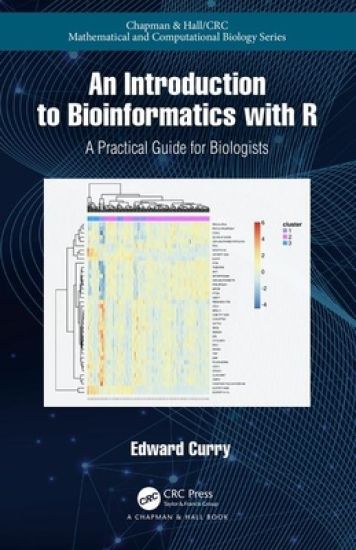
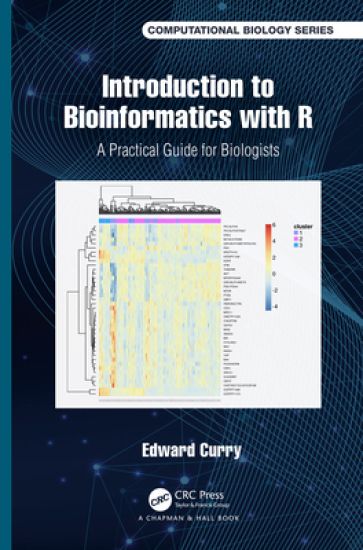
Introduction to Bioinformatics with R
In biological research, the amount of data available to researchers has increased so much over recent years, it is becoming increasingly difficult to understand the current state of the art without some experience and understanding of data analytics and bioinformatics. An Introduction to Bioinformatics with R: A Practical Guide for Biologists leads the reader through the basics of computational analysis of data encountered in modern biological research. With no previous experience with statistics or programming required, readers will develop the ability to plan suitable analyses of biological datasets, and to use the R programming environment to perform these analyses. This is achieved through a series of case studies using R to answer research questions using molecular biology datasets. Broadly applicable statistical methods are explained, including linear and rank-based correlation, distance metrics and hierarchical clustering, hypothesis testing using linear regression, proportional hazards regression for survival data, and principal component analysis. These methods are then applied as appropriate throughout the case studies, illustrating how they can be used to answer research questions.Key Features:· Provides a practical course in computational data analysis suitable for students or researchers with no previous exposure to computer programming.· Describes in detail the theoretical basis for statistical analysis techniques used throughout the textbook, from basic principles· Presents walk-throughs of data analysis tasks using R and example datasets. All R commands are presented and explained in order to enable the reader to carry out these tasks themselves.· Uses outputs from a large range of molecular biology platforms including DNA methylation and genotyping microarrays; RNA-seq, genome sequencing, ChIP-seq and bisulphite sequencing; and high-throughput phenotypic screens.· Gives worked-out examples geared towards problems encountered in cancer research, which can also be applied across many areas of molecular biology and medical research.This book has been developed over years of training biological scientists and clinicians to analyse the large datasets available in their cancer research projects. It is appropriate for use as a textbook or as a practical book for biological scientists looking to gain bioinformatics skills.
Introduction to Bioinformatics with R
In biological research, the amount of data available to researchers has increased so much over recent years, it is becoming increasingly difficult to understand the current state of the art without some experience and understanding of data analytics and bioinformatics. An Introduction to Bioinformatics with R: A Practical Guide for Biologists leads the reader through the basics of computational analysis of data encountered in modern biological research. With no previous experience with statistics or programming required, readers will develop the ability to plan suitable analyses of biological datasets, and to use the R programming environment to perform these analyses. This is achieved through a series of case studies using R to answer research questions using molecular biology datasets. Broadly applicable statistical methods are explained, including linear and rank-based correlation, distance metrics and hierarchical clustering, hypothesis testing using linear regression, proportional hazards regression for survival data, and principal component analysis. These methods are then applied as appropriate throughout the case studies, illustrating how they can be used to answer research questions.Key Features:· Provides a practical course in computational data analysis suitable for students or researchers with no previous exposure to computer programming.· Describes in detail the theoretical basis for statistical analysis techniques used throughout the textbook, from basic principles· Presents walk-throughs of data analysis tasks using R and example datasets. All R commands are presented and explained in order to enable the reader to carry out these tasks themselves.· Uses outputs from a large range of molecular biology platforms including DNA methylation and genotyping microarrays; RNA-seq, genome sequencing, ChIP-seq and bisulphite sequencing; and high-throughput phenotypic screens.· Gives worked-out examples geared towards problems encountered in cancer research, which can also be applied across many areas of molecular biology and medical research.This book has been developed over years of training biological scientists and clinicians to analyse the large datasets available in their cancer research projects. It is appropriate for use as a textbook or as a practical book for biological scientists looking to gain bioinformatics skills.
Real-time Linked Dataspaces

Real-time Linked Dataspaces

Edward Curry

Springer Nature Switzerland AG
2019
sidottu
This open access book explores the dataspace paradigm as a best-effort approach to data management within data ecosystems. It establishes the theoretical foundations and principles of real-time linked dataspaces as a data platform for intelligent systems. The book introduces a set of specialized best-effort techniques and models to enable loose administrative proximity and semantic integration for managing and processing events and streams. The book is divided into five major parts: Part I “Fundamentals and Concepts” details the motivation behind and core concepts of real-time linked dataspaces, and establishes the need to evolve data management techniques in order to meet the challenges of enabling data ecosystems for intelligent systems within smart environments. Further, it explains the fundamental concepts of dataspaces and the need for specialization in the processing of dynamic real-time data. Part II “Data Support Services” explores the design and evaluation of critical services, including catalog, entity management, query and search, data service discovery, and human-in-the-loop. In turn, Part III “Stream and Event Processing Services” addresses the design and evaluation of the specialized techniques created for real-time support services including complex event processing, event service composition, stream dissemination, stream matching, and approximate semantic matching. Part IV “Intelligent Systems and Applications” explores the use of real-time linked dataspaces within real-world smart environments. In closing, Part V “Future Directions” outlines future research challenges for dataspaces, data ecosystems, and intelligent systems. Readers will gain a detailed understanding of how the dataspace paradigm is now being used to enable data ecosystems for intelligent systems within smart environments. The book covers the fundamental theory, the creation of new techniques needed for support services, and lessons learned from real-world intelligent systems and applications focused on sustainability. Accordingly, it will benefit not only researchers and graduate students in the fields of data management, big data, and IoT, but also professionals who need to create advanced data management platforms for intelligent systems, smart environments, and data ecosystems.
Real-time Linked Dataspaces

Real-time Linked Dataspaces

Edward Curry

Springer Nature Switzerland AG
2020
nidottu
This open access book explores the dataspace paradigm as a best-effort approach to data management within data ecosystems. It establishes the theoretical foundations and principles of real-time linked dataspaces as a data platform for intelligent systems. The book introduces a set of specialized best-effort techniques and models to enable loose administrative proximity and semantic integration for managing and processing events and streams. The book is divided into five major parts: Part I “Fundamentals and Concepts” details the motivation behind and core concepts of real-time linked dataspaces, and establishes the need to evolve data management techniques in order to meet the challenges of enabling data ecosystems for intelligent systems within smart environments. Further, it explains the fundamental concepts of dataspaces and the need for specialization in the processing of dynamic real-time data. Part II “Data Support Services” explores the design and evaluation of critical services, including catalog, entity management, query and search, data service discovery, and human-in-the-loop. In turn, Part III “Stream and Event Processing Services” addresses the design and evaluation of the specialized techniques created for real-time support services including complex event processing, event service composition, stream dissemination, stream matching, and approximate semantic matching. Part IV “Intelligent Systems and Applications” explores the use of real-time linked dataspaces within real-world smart environments. In closing, Part V “Future Directions” outlines future research challenges for dataspaces, data ecosystems, and intelligent systems. Readers will gain a detailed understanding of how the dataspace paradigm is now being used to enable data ecosystems for intelligent systems within smart environments. The book covers the fundamental theory, the creation of new techniques needed for support services, and lessons learned from real-world intelligent systems and applications focused on sustainability. Accordingly, it will benefit not only researchers and graduate students in the fields of data management, big data, and IoT, but also professionals who need to create advanced data management platforms for intelligent systems, smart environments, and data ecosystems.