Kirjojen hintavertailu. Mukana 11 244 527 kirjaa ja 12 kauppaa.

Kirjahaku

Etsi kirjoja tekijän nimen, kirjan nimen tai ISBN:n perusteella.

15 kirjaa tekijältä Edward Foley

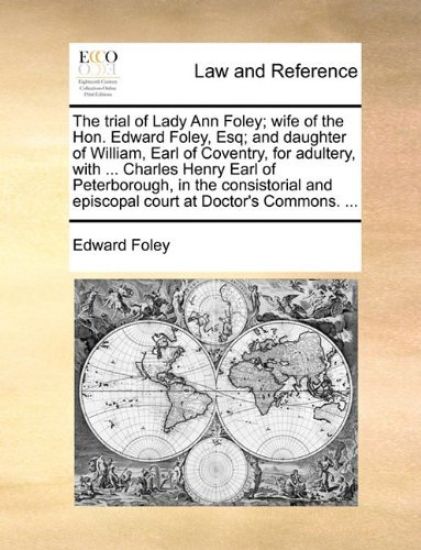
The Trial of Lady Ann Foley; Wife of the Hon. Edward Foley, Esq; and Daughter of William, Earl of Coventry, for Adultery, With ... Charles Henry Earl of Peterborough, in the Consistorial and Episcopal Court at Doctor's Commons.
The 18th century was a wealth of knowledge, exploration and rapidly growing technology and expanding record-keeping made possible by advances in the printing press. In its determination to preserve the century of revolution, Gale initiated a revolution of its own: digitization of epic proportions to preserve these invaluable works in the largest archive of its kind. Now for the first time these high-quality digital copies of original 18th century manuscripts are available in print, making them highly accessible to libraries, undergraduate students, and independent scholars.This collection reveals the history of English common law and Empire law in a vastly changing world of British expansion. Dominating the legal field is the Commentaries of the Law of England by Sir William Blackstone, which first appeared in 1765. Reference works such as almanacs and catalogues continue to educate us by revealing the day-to-day workings of society.++++The below data was compiled from various identification fields in the bibliographic record of this title. This data is provided as an additional tool in helping to insure edition identification: ++++British LibraryT002975Action brought by Edward Foley. With a half-title. Dated on p.76: 9th May 1785. Pp.77-80 contain bookseller's advertisements.London: printed for G. Lister, 1785?]. 80p., plate; 8
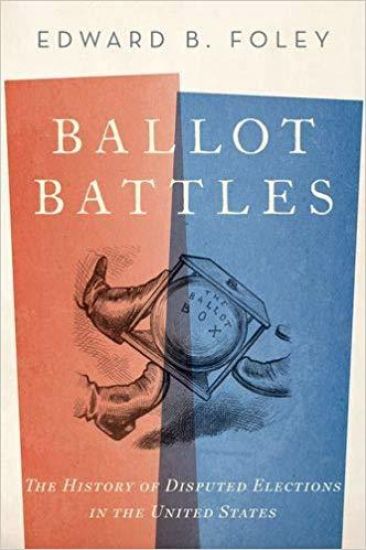
Ballot Battles

Ballot Battles

Edward Foley

Oxford University Press Inc
2016
sidottu
The 2000 presidential race resulted in the highest-profile ballot battle in over a century. But it is far from the only American election determined by a handful of votes and marred by claims of fraud. Since the founding of the nation, violence frequently erupted as the votes were being counted, and more than a few elections produced manifestly unfair results. Despite America's claim to be the world's greatest democracy, its adherence to the basic tenets of democratic elections-the ability to count ballots accurately and fairly even when the stakes are high-has always been shaky. A rigged gubernatorial election in New York in 1792 nearly ended in calls for another revolution, and an 1899 gubernatorial race even resulted in an assassination. Though acts of violence have decreased in frequency over the past century, fairness and accuracy in ballot counting nonetheless remains a basic problem in American political life. In Ballot Battles, Edward Foley presents a sweeping history of election controversies in the United States, tracing how their evolution generated legal precedents that ultimately transformed how we determine who wins and who loses. While weaving a narrative spanning over two centuries, Foley repeatedly returns to an originating event: because the Founding Fathers despised parties and never envisioned the emergence of a party system, they wrote a constitution that did not provide clear solutions for high-stakes and highly-contested elections in which two parties could pool resources against one another. Moreover, in the American political system that actually developed, politicians are beholden to the parties which they represent - and elected officials have typically had an outsized say in determining the outcomes of extremely close elections that involve recounts. This underlying structural problem, more than anything else, explains why intense ballot battles that leave one side feeling aggrieved will continue to occur for the foreseeable future. American democracy has improved dramatically over the last two centuries. But the same cannot be said for the ways in which we determine who wins the very close races. From the founding until today, there has been little progress toward fixing the problem. Indeed, supporters of John Jay in 1792 and opponents of Lyndon Johnson in the 1948 Texas Senate race would find it easy to commiserate with Al Gore after the 2000 election. Ballot Battles is not only the first full chronicle of contested elections in the US. It also provides a powerful explanation of why the American election system has been-and remains-so ineffective at deciding the tightest races in a way that all sides will agree is fair.
Ballot Battles

Ballot Battles

Edward Foley

Oxford University Press Inc
2019
nidottu
The 2000 presidential race resulted in the highest-profile ballot battle in over a century. But it is far from the only American election determined by a handful of votes and marred by claims of fraud. Since the founding of the nation, violence frequently erupted as the votes were being counted, and more than a few elections produced manifestly unfair results. Despite America's claim to be the world's greatest democracy, its adherence to the basic tenets of democratic elections-the ability to count ballots accurately and fairly even when the stakes are high-has always been shaky. A rigged gubernatorial election in New York in 1792 nearly ended in calls for another revolution, and an 1899 gubernatorial race even resulted in an assassination. Though acts of violence have decreased in frequency over the past century, fairness and accuracy in ballot counting nonetheless remains a basic problem in American political life. In Ballot Battles, Edward Foley presents a sweeping history of election controversies in the United States, tracing how their evolution generated legal precedents that ultimately transformed how we determine who wins and who loses. While weaving a narrative spanning over two centuries, Foley repeatedly returns to an originating event: because the Founding Fathers despised parties and never envisioned the emergence of a party system, they wrote a constitution that did not provide clear solutions for high-stakes and highly-contested elections in which two parties could pool resources against one another. Moreover, in the American political system that actually developed, politicians are beholden to the parties which they represent - and elected officials have typically had an outsized say in determining the outcomes of extremely close elections that involve recounts. This underlying structural problem, more than anything else, explains why intense ballot battles that leave one side feeling aggrieved will continue to occur for the foreseeable future. American democracy has improved dramatically over the last two centuries. But the same cannot be said for the ways in which we determine who wins the very close races. From the founding until today, there has been little progress toward fixing the problem. Indeed, supporters of John Jay in 1792 and opponents of Lyndon Johnson in the 1948 Texas Senate race would find it easy to commiserate with Al Gore after the 2000 election. Ballot Battles is not only the first full chronicle of contested elections in the US. It also provides a powerful explanation of why the American election system has been-and remains-so ineffective at deciding the tightest races in a way that all sides will agree is fair.
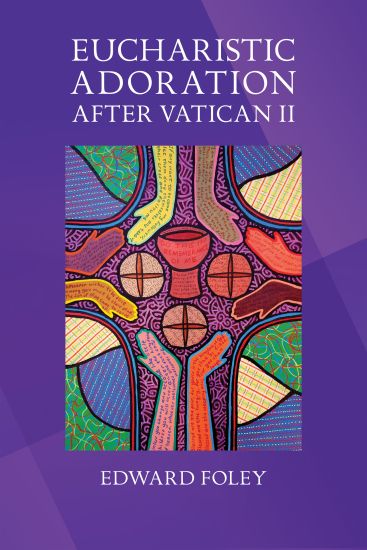
Eucharistic Adoration after Vatican II

Eucharistic Adoration after Vatican II

Edward Foley

Liturgical Press
2022
pokkari
2023 Catholic Media Association First Place Award, Liturgy There were radical changes in the Order of Mass promulgated by Pope Paul VI in 1969. Beyond the use of the vernacular, these included a more dialogic format of the Mass, the transformation of the offertory rite to a preparation of gifts, a complete revision of the lectionary, new eucharistic prayers, and Communion under both forms. In Eucharistic Adoration after Vatican II, Edward Foley examines the relationship between Vatican II, liturgical prayer, and contemporary eucharistic adoration and devotions.
Theological Reflection across Religious Traditions
Theological reflection — connecting real life, ministry, and religious traditions — is a core component of most pastoral training. It is also a hallmark of practical theology and a common spiritual exercise among ordinary Christians trying to discern how their beliefs might influence daily living. Yet, our society is increasingly pluralistic, with growing numbers of people from varying belief systems — from Islam to Buddhism — as well as an increasing number of atheists. In this book, Edward Foley reimagines theological reflection in interfaith contexts and with those of no faith tradition. The book addresses and celebrates diverse beliefs, and envisions the practice of theological reflection in such contexts. Theological Reflection Across Religious Traditions introduces readers to the basics of traditional forms of theological reflection, then considers how it might be reconceived in different contexts — from interfaith ministers working together to reduce poverty and homelessness to people of diverse or no faith traditions strategizing to secure the dignity of undocumented immigrants. Beyond suggestions for collaborative social action, the book offers tools for productive interfaith conversation through a process Foley calls “reflective believing.” This is a groundbreaking rethinking of theological reflection for today’s world, proposing that people across the religious landscape can participate in reflective believing for personal and communal benefit without sacrificing their own integrity.
Theological Reflection across Religious Traditions
Theological reflection — connecting real life, ministry, and religious traditions — is a core component of most pastoral training. It is also a hallmark of practical theology and a common spiritual exercise among ordinary Christians trying to discern how their beliefs might influence daily living. Yet, our society is increasingly pluralistic, with growing numbers of people from varying belief systems — from Islam to Buddhism — as well as an increasing number of atheists. In this book, Edward Foley reimagines theological reflection in interfaith contexts and with those of no faith tradition. The book addresses and celebrates diverse beliefs, and envisions the practice of theological reflection in such contexts. Theological Reflection Across Religious Traditions introduces readers to the basics of traditional forms of theological reflection, then considers how it might be reconceived in different contexts — from interfaith ministers working together to reduce poverty and homelessness to people of diverse or no faith traditions strategizing to secure the dignity of undocumented immigrants. Beyond suggestions for collaborative social action, the book offers tools for productive interfaith conversation through a process Foley calls “reflective believing.” This is a groundbreaking rethinking of theological reflection for today’s world, proposing that people across the religious landscape can participate in reflective believing for personal and communal benefit without sacrificing their own integrity.
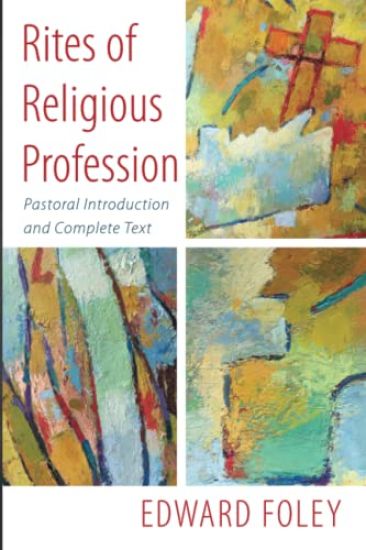
Rites of Religious Profession

Rites of Religious Profession

Edward Foley

Wipf Stock Publishers
2023
pokkari
The rites of religious profession mark the initiation of women and men into the various religious communities of the church. These public liturgies of the church manifest and shape the relation of these women and men to the church and to the world. How are the rites of religious profession to be understood, prepared, and celebrated? Edward Foley offers an overview of their history and a reflection on the theology of these rites. He then shows how to approach these liturgies and bring them to life as celebrations of the church. We learn how much the rites themselves tell us about the formation of religious women and men, and how and the place these communities have in the church. This volume also contains the entire official text of the Rite of Religious Profession. This includes all revisions to this text made through 1988.
Rites of Religious Profession

Rites of Religious Profession

Edward Foley

Wipf Stock Publishers
2023
sidottu
The rites of religious profession mark the initiation of women and men into the various religious communities of the church. These public liturgies of the church manifest and shape the relation of these women and men to the church and to the world. How are the rites of religious profession to be understood, prepared, and celebrated? Edward Foley offers an overview of their history and a reflection on the theology of these rites. He then shows how to approach these liturgies and bring them to life as celebrations of the church. We learn how much the rites themselves tell us about the formation of religious women and men, and how and the place these communities have in the church. This volume also contains the entire official text of the Rite of Religious Profession. This includes all revisions to this text made through 1988.
A Lyrical Vision

A Lyrical Vision

Edward Foley

Wipf Stock Publishers
2020
pokkari
The publication of the US Bishops' document on music in the liturgy, Sing to the Lord (2007), has prompted Edward Foley to review the overall contribution of the Bishops to liturgical music since Vatican Council II. He explores the history and content of the US Bishops' three previous statements on music in worship: The Place of Music in Eucharistic CelebrationsMusic in Catholic WorshipLiturgical Music TodayIn tracing this history, Foley illuminates the stages that led to Sing to the Lord and compares this most fully developed document with its predecessors. This concise history and analysis--illustrated with sets of comparative tables--will be a valuable resource for those who study, prepare, and lead music in Catholic worship in the United States.
A Lyrical Vision

A Lyrical Vision

Edward Foley

Wipf Stock Publishers
2020
sidottu
The publication of the US Bishops' document on music in the liturgy, Sing to the Lord (2007), has prompted Edward Foley to review the overall contribution of the Bishops to liturgical music since Vatican Council II. He explores the history and content of the US Bishops' three previous statements on music in worship: The Place of Music in Eucharistic CelebrationsMusic in Catholic WorshipLiturgical Music TodayIn tracing this history, Foley illuminates the stages that led to Sing to the Lord and compares this most fully developed document with its predecessors. This concise history and analysis--illustrated with sets of comparative tables--will be a valuable resource for those who study, prepare, and lead music in Catholic worship in the United States.
Foundations of Christian Music

Foundations of Christian Music

Edward Foley

Wipf Stock Publishers
2020
sidottu
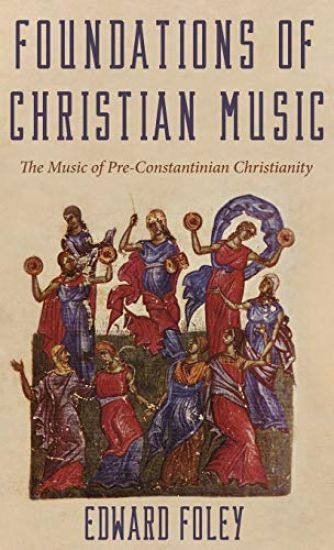
In the study of Christian liturgical music, the first three centuries of the Christian era are foundational. Seldom, however, does this period receive serious attention from scholars. One of the reasons for this oversight is the fluid auditory environment of this period, and the inadequacy of the Western concept of ""music"" to describe this environment. Foundations of Christian Music addresses this lacuna by exploring the auditory environment of first-century CE Judaism and emerging Christianity until the time of Constantine (d. 337). Through a consideration of the text, styles, forms, performance, and settings of Jewish and early Christian worship, Foundations offers an unusually rich perspective on the lyrical nature of emerging Christian worship.
Foundations of Christian Music

Foundations of Christian Music

Edward Foley

Wipf Stock Publishers
2020
pokkari
In the study of Christian liturgical music, the first three centuries of the Christian era are foundational. Seldom, however, does this period receive serious attention from scholars. One of the reasons for this oversight is the fluid auditory environment of this period, and the inadequacy of the Western concept of ""music"" to describe this environment. Foundations of Christian Music addresses this lacuna by exploring the auditory environment of first-century CE Judaism and emerging Christianity until the time of Constantine (d. 337). Through a consideration of the text, styles, forms, performance, and settings of Jewish and early Christian worship, Foundations offers an unusually rich perspective on the lyrical nature of emerging Christian worship.