Kirjojen hintavertailu. Mukana 11 365 813 kirjaa ja 12 kauppaa.

Kirjahaku

Etsi kirjoja tekijän nimen, kirjan nimen tai ISBN:n perusteella.

12 kirjaa tekijältä Edward G. Longacre

Gentleman and Soldier

Gentleman and Soldier

Edward G. Longacre

Bison Books
2009
pokkari
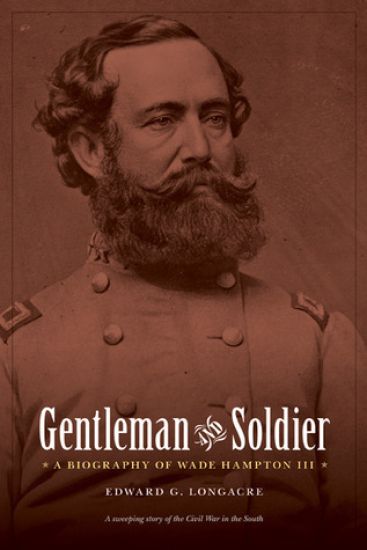
Winner of the Douglas Southall Freeman History Award, Gentleman and Soldier is the first biography in more than fifty years of Wade Hampton III (1818–1902), a Confederate general whose life provides a unique, sweeping insight into the entire history of the Civil War in the South. Hampton was a leading citizen of South Carolina before the war and the highest-ranking cavalry leader on either side during the war. He fought in a remarkable number of battles from Antietam to Gettysburg to Bentonville and after the war served as governor of South Carolina and in the U.S. Senate.Hampton's life, however, was one of dramatic contradictions. He was the quintessential slave owner who nonetheless questioned the ethical underpinnings of the "peculiar institution." He was a prewar spokesperson for national unity but became an avid secessionist. He condemned violence and abhorred dueling, but he probably killed more opponents in battle than any other general with the possible exception of Nathan Bedford Forrest. He "redeemed" South Carolina from Reconstruction but then extended more political benefits to African Americans than any other Democratic governor in the postwar South. For more than forty years he gave selflessly of himself to his state and his community, not only when wealthy but also when teetering on the abyss of poverty.
Fitz Lee

Fitz Lee

Edward G. Longacre

Bison Books
2010
pokkari
As the grandson of Henry "Light-Horse Harry" Lee and the nephew of Robert E. Lee, Fitzhugh Lee—nicknamed "Fitz"—was born into one of Virginia's most distinguished families. Upon graduation from West Point, Fitz Lee served in the U.S. Army until the outbreak of the Civil War, when he joined the Confederate cavalry forces. After participating in the Peninsula Campaign, he rapidly rose in rank, promoted first to brigadier general in July 1862, then to major general in the fall of 1863. Only twenty-seven years old, he commanded with distinction at Antietam, Fredericksburg, Chancellorsville, and Gettysburg. Severely wounded in 1864, he subsequently returned to service and was promoted to commander of the cavalry of the Army of Northern Virginia, which he led during the final campaigns of the war. After the war Fitz Lee served as governor of Virginia, commander of the U.S. Volunteers in the Spanish-American War, and postwar occupation commander in Cuba. He also wrote many popular works of military history and biography; his biography of Robert E. Lee is still in print. Acclaimed Civil War author Edward G. Longacre has combed family records, West Point cadet files, and the National Archives to produce a lively biography of one of the South's youngest and ablest cavalry commanders—a man who later became one of America's most distinguished military leaders.
A Regiment of Slaves

A Regiment of Slaves

Edward G. Longacre

Bison Books
2011
pokkari
The 4th United States Colored Troops (USCT) regiment saw considerable action in the eastern theater of operations from late 1863 to mid-1865. The regiment—drawn largely from freedmen and liberated slaves in the Middle Atlantic and New England states—served in Maj. Gen. Benjamin F. Butler's Army of the James, whose mission was to capture the Confederate capital at Richmond. From May to December 1864, the 4th saw action in the Bermuda Hundred and Richmond-Petersburg campaigns, and in early 1865 helped capture the defenses of Wilmington, North Carolina, the last open seaport of value to the Confederacy.Citing recently discovered and previously unpublished accounts, author Edward G. Longacre goes beyond the battlefield heroics of the 4th USCT, blending his unique insights into political and social history to analyze the motives, goals, and aspirations of the African American enlisted men. The author also emphasizes how these soldiers overcame what one of their commanders called "stupid, unreasoning, and quite vengeful prejudice" and shows how General Butler, a supporter of black troops, gave the unit opportunities to prove itself in battle, resulting in a combat record of which any infantry regiment, black or white, could be proud.
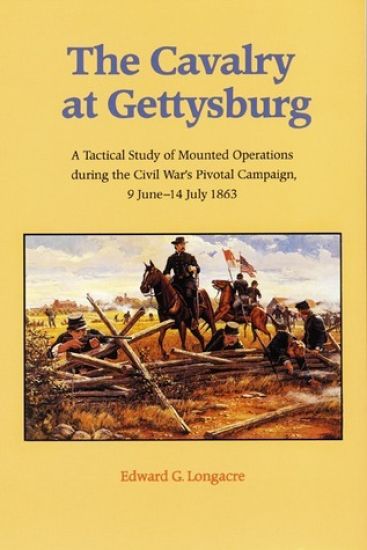
The Cavalry at Gettysburg

The Cavalry at Gettysburg

Edward G. Longacre

Bison Books
1993
pokkari
"For cavalry and/or Gettysburg enthusiasts, this book is a must; for other Civil War buffs, it possesses the qualities sought by students of the conflict...[It] bristles with analysis, details, judgements, personality profiles, and evaluations and combat descriptions, even down to the squadron and company levels. The mounted operations of the campaign from organizational, strategic, and tactical viewpoints are examined thoroughly. The author's graphic recountings of the Virginia fights at Brandy Station, Aldie, Middleburg, and Upperville, the Pennsylvania encounters at Hanover, Hunterstown, Gettysburg, and Fairfield, and finally the retreat to Virginia, are the finest this reviewer has read under a single cover. For those who enjoy the thunder of hoofbeats, the clang of sabers, and the crack of pistols and carbines, this book has all of it. Generals and privates share the pages, as the mounted opponents parry and thrust across hundreds of miles of territory from June 9 to July 14, 1863." (Civil War Times Illustrated). "Edward Longacre's study is a much-needed, long overdue piece of the complex mosaic which makes up the Gettysburg story. No Civil War Library should be without it. The volume adds an important perspective to one's understanding of this critical military operation." (Military Images). Edward G. Longacre's books on the Civil War have won both the Fletcher Pratt Award of the Civil War Round Table of New York and the Moncado prize of the American Military Institute. They include To Gettysburg and Beyond: The Twelfth New Jersey Volunteer Infantry, II Corps, and Army of the Potomac, 1862-1865 (1988).
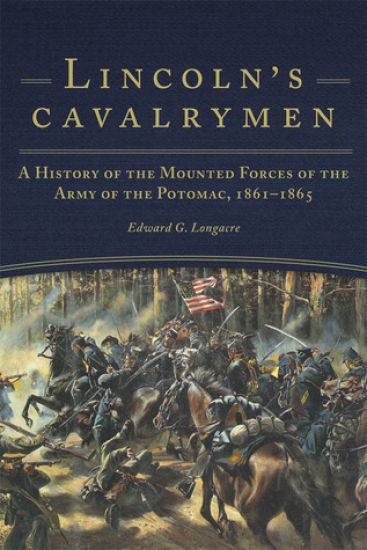
Lincoln's Cavalrymen

Lincoln's Cavalrymen

Edward G. Longacre

University of Oklahoma Press
2012
nidottu
Lincoln's Cavalrymen describes the organizational, administrative, and operational history of the mounted arm of ""Mr. Lincoln's Army."" Historian Edward G. Longacre consulted at least fifty manuscript collections pertaining to general officers of cavalry, as well as the unpublished letters and diaries of more than 450 officers and enlisted men, representing almost every mounted unit in the Army of the Potomac.The result is the most comprehensive history of the Union cavalry to date. It covers the gamut of cavalry life - not only field operations but also the recruiting, organizing, mounting, remounting, equipping, training, tactical instruction, and war-long support of this critical branch of the nineteenthcentury army. The book vividly portrays the cavalry's most influential commanders and assesses the depth and quality of its leadership. Longacre also seeks to place the cavalry in the context of the army and the war effort as a whole.
Lee's Cavalrymen

Lee's Cavalrymen

Edward G. Longacre

University of Oklahoma Press
2012
nidottu
Since the first histories of the Civil War appeared after Appomattox, the cavalry has received intermittent, uneven, and even romanticized coverage. Historian Edward G. Longacre has corrected this oversight. Lee's Cavalrymen, not only details the organizational and operational history of the mounted arm of the Army of Northern Virginia but also examines the personal experiences of officers and men.Longacre chronicles the salient characteristics of the regiments, brigades, and divisions, and explores the evolution of cavalry leadership, with emphasis on the personalities, interpersonal relationships, and operational styles of J. E. B. Stuart, WadeHampton, Fitzhugh Lee, and other influential commanders. He has consulted dozens of collections of letters, diaries, and memoirs by cavalrymen of all ranks, and his careful study of North Carolina, Virginia, and Georgia newspapers unearthed rare cavalry-specific dispatches. Longacre also makes extensive use of an unpublished memoir of Gen. Wade Hampton, Stuart's second-in-command.A provocative analysis of the mounted army's organization, leadership, and tactics, Lee's Cavalrymen is a study that no Civil War enthusiast will want to miss.
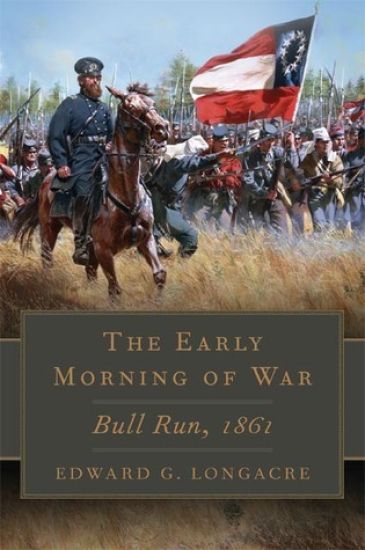
The Early Morning of War

The Early Morning of War

Edward G. Longacre

University of Oklahoma Press
2014
sidottu
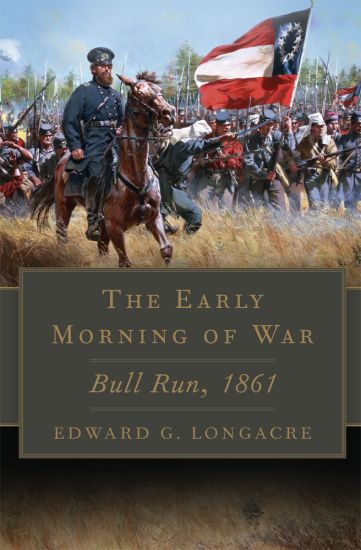
When Union and Confederate forces squared off along Bull Run on July 21, 1861, the Federals expected this first major military campaign would bring an early end to the Civil War. But when Confederate troops launched a strong counterattack, both sides realized the war would be longer and costlier than anticipated. First Bull Run, or First Manassas, set the stage for four years of bloody conflict that forever changed the political, social, and economic fabric of the nation. It also introduced the commanders, tactics, and weaponry that would define the American way of war through the turn of the twentieth century.This crucial campaign receives its most complete and comprehensive treatment in Edward G. Longacre's The Early Morning of War. A magisterial work by a veteran historian, The Early Morning of War blends narrative and analysis to convey the full scope of the campaign of First Bull Run - its drama and suspense as well as its practical and tactical underpinnings and ramifications. Also woven throughout are biographical sketches detailing the backgrounds and personalities of the leading commanders and other actors in the unfolding conflict.Longacre has combed previously unpublished primary sources, including correspondence, diaries, and memoirs of more than four hundred participants and observers, from ranking commanders to common soldiers and civilians affected by the fighting. In weighing all the evidence, Longacre finds correctives to long-held theories about campaign strategy and battle tactics and questions sacrosanct beliefs - such as whether the Manassas Gap Railroad was essential to the Confederate victory. Longacre shears away the myths and persuasively examines the long-term repercussions of the Union's defeat at Bull Run, while analyzing whether the Confederates really had a chance of ending the war in July 1861 by seizing Washington, D.C.Brilliant moves, avoidable blunders, accidents, historical forces, personal foibles: all are within Longacre's compass in this deftly written work that is sure to become the standard history of the first, critical campaign of the Civil War.
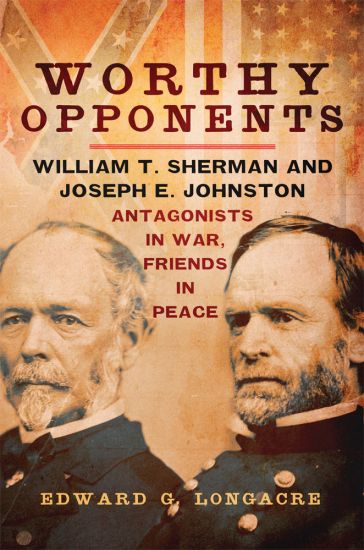
Worthy Opponents

Worthy Opponents

Edward G. Longacre

University of Oklahoma Press
2017
nidottu
Worthy Opponents tells the parallel stories of Confederate general Joseph E. Johnston and Union general William Tecumseh Sherman. Their armies clashed repeatedly, so it was only natural for these two commanding offers to become adversaries. Yet, as the war continued, Johnston and Sherman came to respect each other, eventually becoming close friends. Edward G. Longacre masterfully investigates the entwined lives of these two celebrated generals, bringing to life their personalities, their military styles, and their friendship in this fascinating dual biography.
The Early Morning of War

The Early Morning of War

Edward G. Longacre

University of Oklahoma Press
2020
nidottu
When Union and Confederate forces squared off along Bull Run on July 21, 1861, the Federals expected this first major military campaign would bring an early end to the Civil War. But when Confederate troops launched a strong counterattack, both sides realized the war would be longer and costlier than anticipated. First Bull Run, or First Manassas, set the stage for four years of bloody conflict that forever changed the political, social, and economic fabric of the nation. It also introduced the commanders, tactics, and weaponry that would define the American way of war through the turn of the twentieth century.This crucial campaign receives its most complete and comprehensive treatment in Edward G. Longacre's The Early Morning of War. A magisterial work by a veteran historian, The Early Morning of War blends narrative and analysis to convey the full scope of the campaign of First Bull Run - its drama and suspense as well as its practical and tactical underpinnings and ramifications. Also woven throughout are biographical sketches detailing the backgrounds and personalities of the leading commanders and other actors in the unfolding conflict.Longacre has combed previously unpublished primary sources, including correspondence, diaries, and memoirs of more than four hundred participants and observers, from ranking commanders to common soldiers and civilians affected by the fighting. In weighing all the evidence, Longacre finds correctives to long-held theories about campaign strategy and battle tactics and questions sacrosanct beliefs - such as whether the Manassas Gap Railroad was essential to the Confederate victory. Longacre shears away the myths and persuasively examines the long-term repercussions of the Union's defeat at Bull Run, while analyzing whether the Confederates really had a chance of ending the war in July 1861 by seizing Washington, D.C.Brilliant moves, avoidable blunders, accidents, historical forces, personal foibles: all are within Longacre's compass in this deftly written work that is sure to become the standard history of the first, critical campaign of the Civil War.
A Soldier to the Last

A Soldier to the Last

Edward G. Longacre

Potomac Books Inc
2008
pokkari
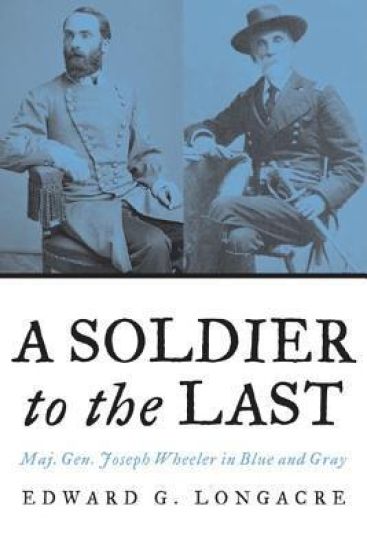
Maj. Gen. Joseph Wheeler served in two armies, playing a major role in the development of Confederate cavalry in the Civil War's western theater, and, more than thirty years afterwards, commanded troops in the Spanish-American War. After leaving the U.S. Army to join the Confederacy, Wheeler served in artillery and infantry units before joining the cavalry. Subsequently, he fought at Shiloh, the Battle of Murfreesboro, and other engagements. As a cavalry commander in the Army of Tennessee from mid-1862 almost to the war's end, he raided Gen. William T. Sherman's lines of communication and contested his advance in the final Carolinas campaign. In addition to detailing Wheeler's Civil War experience, Edward Longacre discusses Wheeler's youth and education at West Point, his pre-Civil War service in the Regiment of Mounted Riflemen, his postwar business, his political career as a congressman from Alabama, and his colorful service in Cuba as a major general of volunteers during the Spanish-American War. Longacre also seeks to correct errors and misconceptions about this Civil War figure that have become a part of the public record, making Joseph Wheeler's life and career accessible to a new generation of readers. A Soldier to the Last will be a valuable addition to the library of anyone interested in Civil War history and U.S. military history.
The Sharpshooters

The Sharpshooters

Edward G. Longacre

Potomac Books Inc
2017
sidottu
Recruited as sharpshooters and clothed in distinctive uniforms with green trim, the hand-picked regiment of the Ninth New Jersey Volunteer Infantry was renowned and admired far and wide. The only New Jersey regiment to reenlist for the duration of the Civil War at the close of its initial three-year term, the Ninth saw action in forty-two battles and engagements across three states. Throughout the South, the regiment broke up enemy camps and supply depots, burned bridges, and destroyed railroad tracks to thwart Confederate movements. Members of the Ninth also suffered disease and starvation as POWs at the notorious Andersonville prison camp in Georgia. Recruited largely from socially conservative cities and villages in northern and central New Jersey, the Ninth Volunteer Infantry consisted of men with widely differing opinions about the Union and their enemy. Edward G. Longacre unearths these complicated political and social views, tracing the history of this esteemed regiment before, during, and after the war-from recruitment at Camp Olden to final operations in North Carolina.