Kirjojen hintavertailu. Mukana 11 717 486 kirjaa ja 12 kauppaa.

Kirjahaku

Etsi kirjoja tekijän nimen, kirjan nimen tai ISBN:n perusteella.

3 kirjaa tekijältä Edward Gallafent

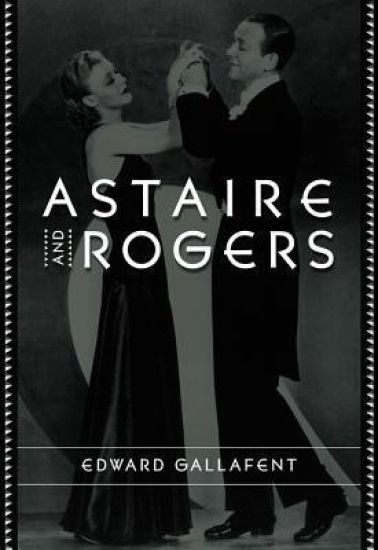
Astaire and Rogers

Astaire and Rogers

Edward Gallafent

Columbia University Press
2004
pokkari
Fred Astaire and Ginger Rogers endure in the American imagination. The charm and grace of their dancing in the ten films they made together, including Top Hat and Swing Time, elicit nostalgia today. Most books about the Astaire-Rogers films focus exclusively on the music and dance scenes, but this book shows that the films are much more than the sum of those scenes, which after all only account for approximately one-third of their films' running times. Gallafent argues that, contrary to received opinion, the musical numbers are not discrete, generic moments dropped in to enliven the films. Instead, the music and dance routines advance the movies' themes. Gallafent shows how dialogue, plotting, and the audience's perception of this striking professional couple affect the context, and thus meaning, for the song and dance routines. The book examines how the Astaire-Rogers musicals, which were produced and originally viewed as a series, relate to one another and to other musicals of their day. Gallafent also provides an illuminating account of the films Astaire and Rogers made separately during the 1940s before their final reunion in The Barkleys of Broadway. Astaire and Rogers concludes by tracing the development of their star personas both together and apart, and shows how the films were designed around those personas.
Adultery and the Female Star

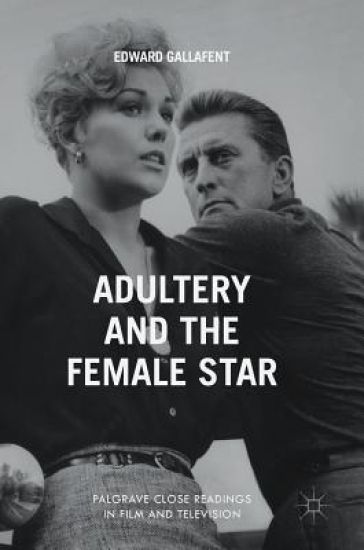
Adultery and the Female Star

Edward Gallafent

Palgrave Macmillan
2018
sidottu
This book provides an in-depth study of Bette Davis, Joan Fontaine, Kim Novak and Meryl Streep, and the treatment of adultery in their films. It avoids the near-impossible challenge of writing about the sheer volume of adultery in film by focusing on specific periods in the work of these four major Hollywood actresses who have each performed roles that share some features but also contain points of difference. The periods discussed cover Davis’s work in 1937 to 1943, Fontaine’s work between 1939 and 1950, Novak in 1954 to 1964, and finally Streep’s work between 1979 and 1985. Closely analysing both established classics and lesser known films, Edward Gallafent explores the work of a broad range of directors including Alfred Hitchcock, Max Ophüls, Sydney Pollack and Billy Wilder. Adultery and the Female Star explores topics such as motherhood, the significance of place, censorship, and adaptation, and is the first book of its kind to take on the topic of adultery in relation to these four actresses. It ultimately argues that our understanding of the adultery narrative is tightly bound up with our understanding of the Hollywood stars that depict it.
Quentin Tarantino

Quentin Tarantino

Edward Gallafent

Routledge
2016
sidottu
Quentin Tarantino is one of the best-known living American filmmakers in the world, and the story of his career has been the subject of a number of books and articles. But what do his films mean? In this new study, Edward Gallafent does not look at Tarantino’s story but at the films themselves. He asks to what extent Tarantino can be seen as a specifically American filmmaker, with the kinds of preoccupations and interests that have formed part of Hollywood’s traditions, and also how he explores the expressive possibilities of current cinema. The book concentrates on the main feature films of Tarantino’s career so far: Reservoir Dogs, Pulp Fiction, Jackie Brown, and the two volumes of Kill Bill. Apart from Kill Bill the films are not treated individually, but in terms of some of the subjects that connect them together, such as success and tradition, their notorious deployment of violence, and Tarantino’s approach to story-telling: his interest in presenting events out of chronological order. The book also covers adaptations of Tarantino’s work, looking at the screenplays of True Romance and Natural Born Killers as well as the films made from them, and compares Tarantino’s approach to adapting Elmore Leonard with that of another important American filmmaker, Paul Schrader. The aim of the book is to explore these topics and to take the reader back to what the American critic Robert Warshow called the ‘actual, immediate experience of seeing and responding to the movies’. It is designed to appeal both to those who were excited by the films on first seeing them in the cinema and to those taking the opportunity of reconsidering them on the screen or on DVD.