Kirjojen hintavertailu. Mukana 11 244 527 kirjaa ja 12 kauppaa.

Kirjahaku

Etsi kirjoja tekijän nimen, kirjan nimen tai ISBN:n perusteella.

14 kirjaa tekijältä Edward Hirsch

The Demon and the Angel

The Demon and the Angel

Edward Hirsch

Harcourt Brace International
2003
nidottu
A work of art, whether a painting, a dance, a poem, or a jazz composition, can be admired in its own right. But how does the artist actually create his or her work? What is the source of an artist's inspiration? What is the force that impels the artist to set down a vision that becomes art? In this groundbreaking book, Edward Hirsch explores the concept of duende, that mysterious, highly potent power of creativity that results in a work of art. With examples ranging from Federico Garcia Lorca's wrestling with darkness as he discovered the fountain of words within himself to Martha Graham's creation of her most emotional dances, from the canvases of Robert Motherwell to William Blake's celestial visions, Hirsch taps into the artistic imagination and explains, in terms illuminating and emotional, how different artists respond to the power and demonic energy of creative impulse.
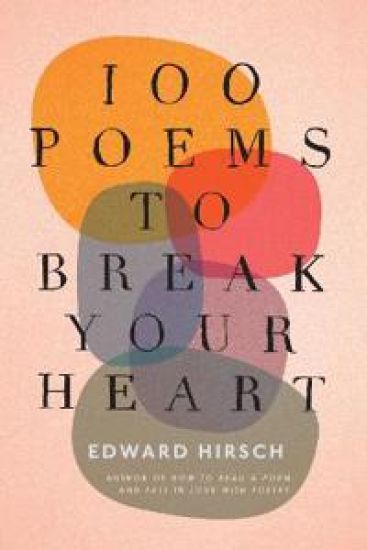
100 Poems to Break Your Heart

100 Poems to Break Your Heart

Edward Hirsch

Ecco Press
2023
nidottu
100 of the most moving and inspiring poems of the last 200 years from around the world, a collection that will comfort and enthrall anyone trapped by grief or loneliness, selected by the award-winning, best-selling, and beloved author of How to Read a PoemImplicit in poetry is the idea that we are enriched by heartbreaks, by the recognition and understanding of suffering--not just our own suffering but also the pain of others. We are not so much diminished as enlarged by grief, by our refusal to vanish, or to let others vanish, without leaving a record. And poets are people who are determined to leave a trace in words, to transform oceanic depths of feeling into art that speaks to others.In 100 Poems to Break Your Heart, poet and advocate Edward Hirsch selects 100 poems, from the nineteenth century to the present, and illuminates them, unpacking context and references to help the reader fully experience the range of emotion and wisdom within these poems. For anyone trying to process grief, loneliness, or fear, this collection of poetry will be your guide in trying times.
Wild Gratitude

Wild Gratitude

Edward Hirsch

Alfred A. Knopf
2003
pokkari
Winner of the National Book Critics Circle Award in Poetry, 1986 "This is a lovely and moving collection, and it has not only the courage of its strong emotions, but the language and form that makes and keeps them clear and true." --Anthony Hecht "Hirsch remains a poet of celebration, but the sorrows of the world are here too, in equal measure. The language is, throughout, simple, sensuous, and direct. We can be grateful for this book and this poet." --Jay Parini "I have known the poetry of Edward Hirsch for some time, and have greatly admired it. But I even more greatly admire his Wild Gratitude as a general collection, and I am convinced that the best poems here are unsurpassed in our time." --Robert Penn Warren
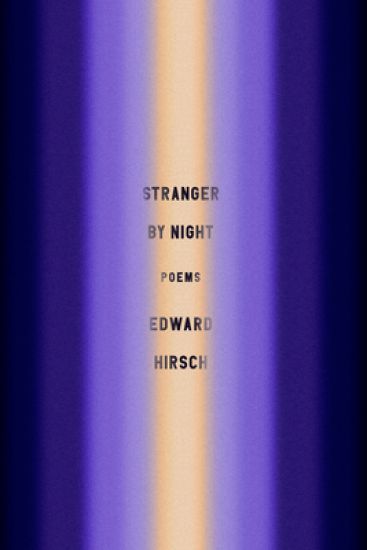
Stranger by Night

Stranger by Night

Edward Hirsch

Alfred A. Knopf
2020
sidottu
In his seventieth birthday year, the award-winning poet looks back on what was and accepts what is, in a beautiful sequence about what sustains him. Beginning with "My Friends Don't Get Buried," the lament of a delinquent mourner as his friends have begun to die, and ending with the plaintive note to self "don't write elegies/anymore," Hirsch takes us backward through the decades in these memory poems of startling immediacy. He recalls the black dress a lover wore when he couldn't yet know the tragedy of her burning spirit; the radiance of an autumn day in Detroit when his students smoked outside, passionately discussing Shelley; the day he got off late from a railyard shift and missed an antiwar demonstration. There are direct and indirect elegies to lost contemporaries like Mark Strand, William Meredith, and, most especially, his longtime compatriot Philip Levine, whom he honors in several poems about daily work in the late midcentury Midwest. As the poet ages and begins to lose his peripheral vision, the world is "stranger by night," but these elegant, heart-stirring poems shed light on a lifetime that inevitably contains both sorrow and its opposite.
Essential Poet's Glossary, The

Essential Poet's Glossary, The

Edward Hirsch

HARPERCOLLINS PUBLISHERS
2017
nidottu
A Poet’s Glossary was an extraordinary achievement that continues to stand as a definitive source for poets and poetry lovers alike. Here, The Essential Poet’s Glossary gleans the very best from that extraordinary volume. "An instant classic that belongs on the bookshelf of every serious poet and literature student."—Washington PostChancellor of the Academy of American Poets Edward Hirsch has compiled poetic terms spanning centuries and continents, including forms, devices, movements, aesthetics, rhetorical terms, and folklore. Knowing how a poem works is crucial to unlocking its meaning—entries will deepen readers’ relationships with their favorite poems and open greater levels of understanding in each new poem they encounter. Shot through with the enthusiasm, authority, and sheer delight that made A Poet’s Glossary and How to Read a Poem so beloved, this Essential edition is the book that all readers, writers, teachers, and students of poetry will return to again and again.
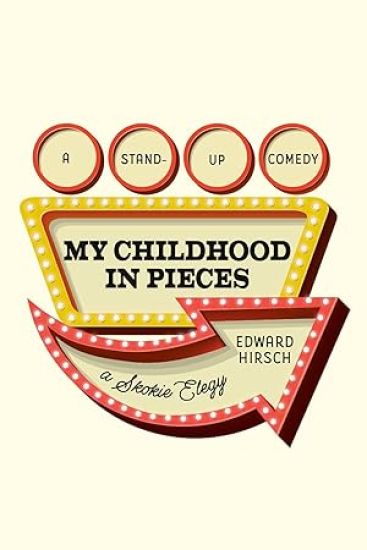
My Childhood in Pieces

My Childhood in Pieces

Edward Hirsch

RANDOM HOUSE USA INC
2025
sidottu
From the award-winning poet, dark comic microbursts of prose deliver a whole childhood, at the hands of an aspiring middle-class Jewish family whose hard-boiled American values and wit were the forge of a poet's coming-of-age. "My grandparents taught me to write my sins on paper and cast them into the water. . . . They didn't expect an entire book," Hirsch says in the "prologue" to this glorious festival of knife-sharp observations. In microchapters--sometimes only a single scathing sentence long--with titles like "Call to Breakfast," "Pay Cash," "The Sorrow of Manly Sports," and "Aristotle on Lawrence Avenue," Eddie's gambling father, Ruby, son of an iron smelter, schools him and his sister in blackjack; Eddie's mom bangs pots to wake the kids to a breakfast of cold cereal; Uncle Bob, in the collection business, is heard threatening people on the phone; and nobody suffers fools. In this household, Eddie learned to jab with his left and cross with his right, never to kid a kidder, and how to sneak out at night. Affectionate, deadpan, and exuberant, steeped in Yiddishkeit and Midwestern practicality, Hirsch's laugh-and-cry performance animates a heartbreaking odyssey, from the cradle to the day he leaves home, armed with sorrow and a huge store of poetic wit.
Gabriel

Gabriel

Edward Hirsch

Ballantine Books Inc.
2016
pokkari
Longlisted for the 2014 National Book Award Never has there been a book of poems quite like Gabriel, in which a short life, a bewildering death, and the unanswerable sorrow of a father come together in such a sustained elegy. This unabashed sequence speaks directly from Hirsch's heart to our own, without sentimentality. From its opening lines--"The funeral director opened the coffin / And there he was alone / From the waist up"--Hirsch's account is poignantly direct and open to the strange vicissitudes and tricks of grief. In propulsive three-line stanzas, he tells the story of how a once unstoppable child, who suffered from various developmental disorders, turned into an irreverent young adult, funny, rebellious, impulsive. Hirsch mixes his tale of Gabriel with the stories of other poets through the centuries who have also lost children, and expresses his feelings through theirs. His landmark poem enters the broad stream of human grief and raises in us the strange hope, even consolation, that we find in the writer's act of witnessing and transformation. It will be read and reread.
Stranger by Night

Stranger by Night

Edward Hirsch

ALFRED A. KNOPF
2022
nidottu
Now in his seventies, the award-winning poet looks back on what was and accepts what is, in a deeply moving and beautiful sequence about what sustains him--now in paperback. Beginning with My Friends Don't Get Buried, the lament of a delinquent mourner as his friends have begun to die, and ending with the plaintive note to self don't write elegies/anymore, Edward Hirsch takes us backward through the decades in these memory poems of startling immediacy. He recalls the black dress a lover wore when he couldn't yet know the tragedy of her burning spirit; the radiance of an autumn day in Detroit when his students smoked outside, passionately discussing Shelley; the day he got off late from a railyard shift and missed an antiwar demonstration. There are direct and indirect elegies to lost contemporaries like Mark Strand, William Meredith, and, most especially, his longtime compatriot Philip Levine, whom he honors in several poems about daily work in the late mid-century Midwest. As the poet ages and begins to lose his peripheral vision, the world is stranger by night, but these elegant, heart-stirring poems shed light on a lifetime that inevitably contains both sorrow and joy.
The Heart of American Poetry

The Heart of American Poetry

Edward Hirsch

Library of America
2022
sidottu
An acclaimed poet and our greatest champion for poetry offers an inspiring and insightful new reading of the American tradition We live in unsettled times. What is America and who are we as a people? How do we understand the dreams and betrayals that have shaped the American experience? For poet and critic Edward Hirsch, poetry opens up new ways of answering these questions, of reconnecting with one another and with what's best in us. In this landmark new book from Library of America, Hirsch offers deeply personal readings of forty essential American poems we thought we knew--from Anne Bradstreet's "The Author to Her Book" and Phillis Wheatley's "To S.M. a Young African Painter, on seeing his Works" to Garrett Hongo's "Ancestral Graves, Kahuku" and Joy Harjo's "Rabbit Is Up to Tricks"--exploring how these poems have sustained his own life and how they might uplift our diverse but divided nation. "This is a personal book about American poetry," writes Hirsch, "but I hope it is more than a personal selection. I have chosen forty poems from our extensive archive and songbook that have been meaningful to me, part of my affective life, my critical consideration, but I have also tried to be cognizant of the changing playbook in American poetry, which is not fixed but fluctuating, ever in flow, to pay attention to the wider consideration, the appreciable reach of our literature. This is a book of encounters and realizations."