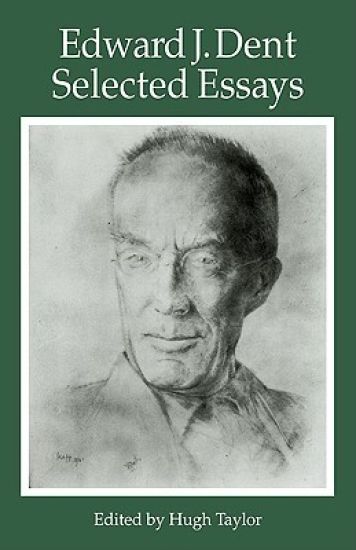
During his long career, Edward Dent wrote on a variety of musical subjects, ranging from substantial articles in the most learned journals to less weighty pieces in Radio Times. This volume aims to reflect that variety. Some of the articles are now of primarily historical interest, others offer insights of a fundamental kind; all are informed by Dent's witty and distinctive prose style. In editing this collection, Hugh Taylor has drawn on writings from 1903 to 1951 and included two pieces originally written in Italian and published here in English for the first time. As well as providing footnotes, which amplify certain of Dent's statements and draw attention to subsequent research, Mr Taylor has listed sources for Dent's many textual references and quotations. Brought together in this way Dent's learned but always readable criticism will appeal to the reader with a general interest in music as well as to the music student and specialist.
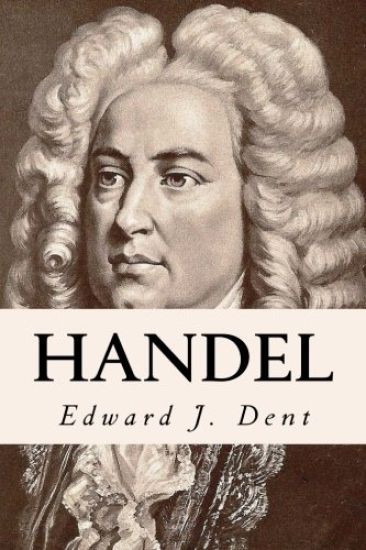
Handel, by Edward J. Dent, is a classical music biography of the great German-English composer, George Frideric Handel. The name of Handel suggests to most people the sound of music unsurpassed in massiveness and dignity, and the familiar portraits of the composer present us with a man whose external appearance was no less massive and dignified than his music. Countless anecdotes point him out to us as a well-known figure in the life of London during the reigns of Queen Anne and the first two Georges. George Frideric (or Frederick) Handel (born Georg Friedrich H ndel 23 February 1685 - 14 April 1759) was a German, later British, Baroque composer who spent the bulk of his career in London, becoming well-known for his operas, oratorios, anthems, and organ concertos. Handel received important training in Halle-upon-Saale and worked as a composer in Hamburg and Italy before settling in London in 1712; he became a naturalised British subject in 1727. 4] He was strongly influenced both by the great composers of the Italian Baroque and by the middle-German polyphonic choral tradition. Within 15 years, Handel had started three commercial opera companies to supply the English nobility with Italian opera. Musicologist Winton Dean writes that his operas show that "Handel was not only a great composer; he was a dramatic genius of the first order." 5] As Alexander's Feast (1736) was well received, Handel made a transition to English choral works. After his success with Messiah (1742) he never composed an Italian opera again. Almost blind, and having lived in England for nearly fifty years, he died in 1759, a respected and rich man. His funeral was given full state honours, and he was buried in Westminster Abbey in London. Born the same year as Johann Sebastian Bach and Domenico Scarlatti, Handel is regarded as one of the greatest composers of the Baroque era, with works such as Messiah, Water Music, and Music for the Royal Fireworks remaining steadfastly popular. 6] One of his four Coronation Anthems, Zadok the Priest (1727), composed for the coronation of George II, has been performed at every subsequent British coronation, traditionally during the sovereign's anointing. Another of his English oratorios, Solomon (1748), has also remained popular, with the Sinfonia that opens act 3 (known more commonly as "The Arrival of the Queen of Sheba") featuring at the 2012 London Olympics opening ceremony. Handel composed more than forty operas in over thirty years, and since the late 1960s, with the revival of baroque music and historically informed musical performance, interest in Handel's operas has grown.