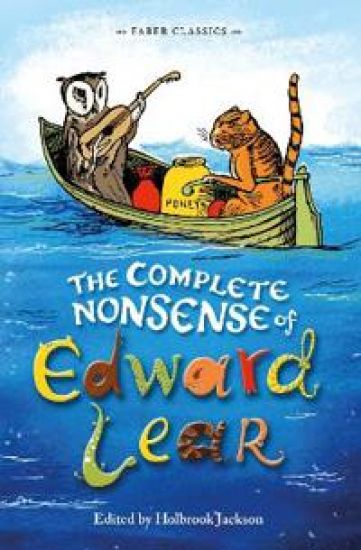
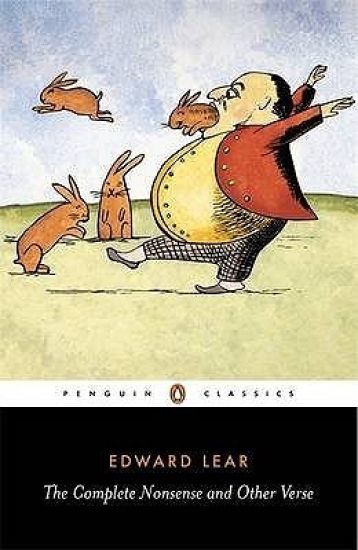
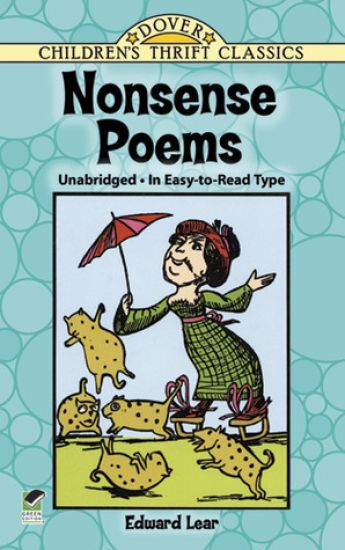
Edward Lear was the greatest nonsensicalist of all time. He was the inventor of the limerick and created the Jumblies and The Owl and the Pussycat. This complete edition of Lear's nonsense verse - including the limericks, longer verses, alphabets and his own illustrations - is lovingly restored and beautifully presented, for adults and children to enjoy together.
John Vernon's Lord's stunning illustrations completely capture the spirit and satirical wit of Lear's work, conveying a lifelong enthusiasm for Lear's nonsense. 'Nonsense is the breath of my nostrils', wrote Edward Lear (1812-88)The perfect gift for both Lear fans and those discovering his work for the first time.
Edward Lear was an English artist, illustrator, author, and poet, renowned for his literary nonsense, in poetry and prose, and especially his limericks, a form that he popularized.Lear's nonsense works are distinguished by a facility of verbal invention and a poet's delight in the sounds of words, both real and imaginary. A stuffed rhinoceros becomes a "diaphanous doorscraper." A "blue Boss-Woss" plunges into "a perpendicular, spicular, orbicular, quadrangular, circular depth of soft mud." His heroes are Quangle-Wangles, Pobbles, and Jumblies. His most famous piece of verbal invention, a "runcible spoon" occurs in the closing lines of The Owl and the Pussycat, and is now found in many English dictionaries.
Edward Lear was an English artist, illustrator, author, and poet, renowned for his literary nonsense, in poetry and prose, and especially his limericks, a form that he popularized.Lear's nonsense works are distinguished by a facility of verbal invention and a poet's delight in the sounds of words, both real and imaginary. A stuffed rhinoceros becomes a "diaphanous doorscraper." A "blue Boss-Woss" plunges into "a perpendicular, spicular, orbicular, quadrangular, circular depth of soft mud." His heroes are Quangle-Wangles, Pobbles, and Jumblies. His most famous piece of verbal invention, a "runcible spoon" occurs in the closing lines of The Owl and the Pussycat, and is now found in many English dictionaries.
Edward Lear loved birds. Of all the animals that sprang from his quirky imagination, birds held a special place, serving as the animal of choice for his zoomorphosis in self-portraiture. Not only did he draw more birds than any other animal, but he endowed them with particularly human characteristics. This book brings together a collection of Lear’s nonsense birds, such as ‘The Obsequious Ornamental Ostrich, who wore Boots to keep his feet quite dry’, as well as the twenty birds he hand-coloured such as ‘The Runcible Bird’ and ‘The Stripy Bird’. Each of these is endowed with unique character while collectively they form a gloriously humorous flock. Beautifully presented, this is a perfect gift for children of all ages as well as for lovers of birds.
Edward Lear (12 or 13 May 1812 - 29 January 1888) was an English artist, illustrator, musician, author and poet, and is known now mostly for his literary nonsense in poetry and prose and especially his limericks, a form he popularised. His principal areas of work as an artist were threefold: as a draughtsman employed to illustrate birds and animals; making coloured drawings during his journeys, which he reworked later, sometimes as plates for his travel books; as a (minor) illustrator of Alfred Tennyson's poems. As an author, he is known principally for his popular nonsense collections of poems, songs, short stories, botanical drawings, recipes, and alphabets. He also composed and published twelve musical settings of Tennyson's poetry. Early years: Lear was born into a middle-class family at Holloway, North London, the penultimate of twenty-one children (and youngest to survive) of Ann Clark Skerrett and Jeremiah Lear, a stockbroker formerly working for the family sugar refining business.He was raised by his eldest sister, also named Ann, 21 years his senior. Jeremiah Lear ended up defaulting to the London Stock Exchange in the economic upheaval following the Napoleonic Wars; owing to the family's now more limited finances, Lear and his sister were required to leave the family home, Bowmans Lodge, and live together when he was aged four. Ann doted on Edward and continued to act as a mother for him until her death, when he was almost 50 years of age. Lear suffered from lifelong health afflictions. From the age of six he suffered frequent grand mal epileptic seizures, and bronchitis, asthma, and during later life, partial blindness. Lear experienced his first seizure at a fair near Highgate with his father. The event scared and embarrassed him. Lear felt lifelong guilt and shame for his epileptic condition. His adult diaries indicate that he always sensed the onset of a seizure in time to remove himself from public view. When Lear was about seven years old he began to show signs of depression, possibly due to the instability of his childhood. He suffered from periods of severe melancholia which he referred to as "the Morbids." Artist: Lear was already drawing "for bread and cheese" by the time he was aged 16 and soon developed into a serious "ornithological draughtsman" employed by the Zoological Society and then from 1832 to 1836 by the Earl of Derby, who kept a private menagerie at his estate, Knowsley Hall. He was the first major bird artist to draw birds from real live birds, instead of skins. Lear's first publication, published when he was 19 years old, was Illustrations of the Family of Psittacidae, or Parrots in 1830.One of the greatest ornithological artists of his era, he taught Elizabeth Gould whilst also contributing to John Gould's works and was compared favourably with the naturalist John James Audubon. Unfortunately his eyesight deteriorated too much to work with such precision on the fine drawings and etchings of plates used in lithography, thus he turned to landscape painting and travel. Among other travels, he visited Greece and Egypt during 1848-49, and toured India during 1873-75, including a brief detour to Ceylon. While travelling he produced large quantities of coloured wash drawings in a distinctive style, which he converted later in his studio into oil and watercolour paintings, as well as prints for his books. His landscape style often shows views with strong sunlight, with intense contrasts of colour. Between 1878 and 1883 Lear spent his summers on Monte Generoso, a mountain on the border between the Swiss canton of Ticino and the Italian region of Lombardy. His oil painting The Plains of Lombardy from Monte Generoso is in the Ashmolean Museum in the English city of Oxford.Throughout his life he continued to paint seriously. He had a lifelong ambition to illustrate Tennyson's poems; near the end of his life a volume with a small number of illustrations was published.........
Edward Lear (12 or 13 May 1812 - 29 January 1888) was an English artist, illustrator, musician, author and poet, and is known now mostly for his literary nonsense in poetry and prose and especially his limericks, a form he popularised. His principal areas of work as an artist were threefold: as a draughtsman employed to illustrate birds and animals; making coloured drawings during his journeys, which he reworked later, sometimes as plates for his travel books; as a (minor) illustrator of Alfred Tennyson's poems. As an author, he is known principally for his popular nonsense collections of poems, songs, short stories, botanical drawings, recipes, and alphabets. He also composed and published twelve musical settings of Tennyson's poetry. Early years: Lear was born into a middle-class family at Holloway, North London, the penultimate of twenty-one children (and youngest to survive) of Ann Clark Skerrett and Jeremiah Lear, a stockbroker formerly working for the family sugar refining business.He was raised by his eldest sister, also named Ann, 21 years his senior. Jeremiah Lear ended up defaulting to the London Stock Exchange in the economic upheaval following the Napoleonic Wars; owing to the family's now more limited finances, Lear and his sister were required to leave the family home, Bowmans Lodge, and live together when he was aged four. Ann doted on Edward and continued to act as a mother for him until her death, when he was almost 50 years of age. Lear suffered from lifelong health afflictions. From the age of six he suffered frequent grand mal epileptic seizures, and bronchitis, asthma, and during later life, partial blindness. Lear experienced his first seizure at a fair near Highgate with his father. The event scared and embarrassed him. Lear felt lifelong guilt and shame for his epileptic condition. His adult diaries indicate that he always sensed the onset of a seizure in time to remove himself from public view. When Lear was about seven years old he began to show signs of depression, possibly due to the instability of his childhood. He suffered from periods of severe melancholia which he referred to as "the Morbids." Artist: Lear was already drawing "for bread and cheese" by the time he was aged 16 and soon developed into a serious "ornithological draughtsman" employed by the Zoological Society and then from 1832 to 1836 by the Earl of Derby, who kept a private menagerie at his estate, Knowsley Hall. He was the first major bird artist to draw birds from real live birds, instead of skins. Lear's first publication, published when he was 19 years old, was Illustrations of the Family of Psittacidae, or Parrots in 1830.One of the greatest ornithological artists of his era, he taught Elizabeth Gould whilst also contributing to John Gould's works and was compared favourably with the naturalist John James Audubon. Unfortunately his eyesight deteriorated too much to work with such precision on the fine drawings and etchings of plates used in lithography, thus he turned to landscape painting and travel. Among other travels, he visited Greece and Egypt during 1848-49, and toured India during 1873-75, including a brief detour to Ceylon. While travelling he produced large quantities of coloured wash drawings in a distinctive style, which he converted later in his studio into oil and watercolour paintings, as well as prints for his books. His landscape style often shows views with strong sunlight, with intense contrasts of colour. Between 1878 and 1883 Lear spent his summers on Monte Generoso, a mountain on the border between the Swiss canton of Ticino and the Italian region of Lombardy. His oil painting The Plains of Lombardy from Monte Generoso is in the Ashmolean Museum in the English city of Oxford.Throughout his life he continued to paint seriously. He had a lifelong ambition to illustrate Tennyson's poems; near the end of his life a volume with a small number of illustrations was published...................
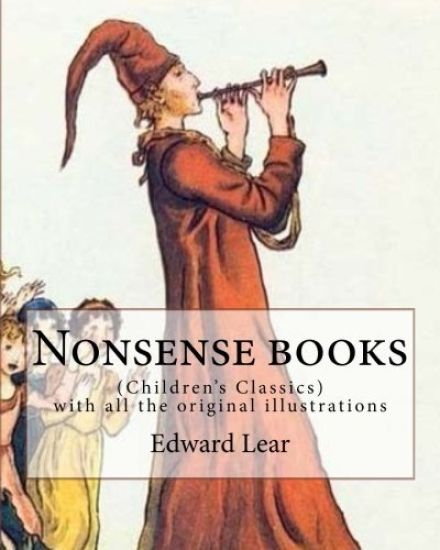
'Nonsense is the breath of my nostrils', wrote Edward Lear (1812-88), and this collection demonstrates the wonderfully varied ways in which he pursued his philosophy of life. He created an extraordinary world filled with bizarre creatures - from the Dong with a luminous nose to the Pobble who has no toes - who misbehave with joyful abandon. Here can be found such exuberant and timeless verse as 'The Owl and the Pussy-cat', 'The Quangle Wangle's Hat' and numerous comic limericks, along with stories, letters, alphabets and recipes, all accompanied throughout with his fantastical line drawings. Gently pointing out human follies and the absurdities of the conventional Victorian society in which he lived, Lear's nonsense has enchanted children and adults alike for generations.
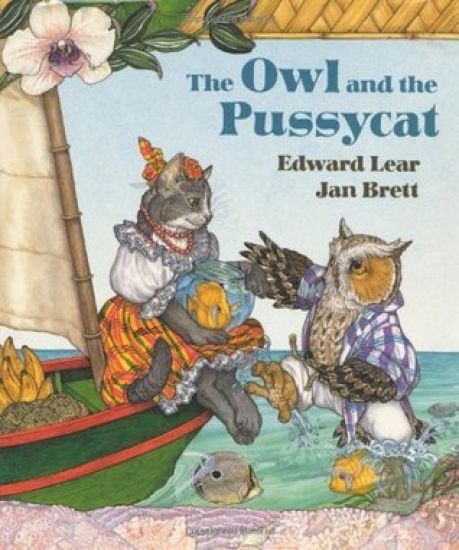
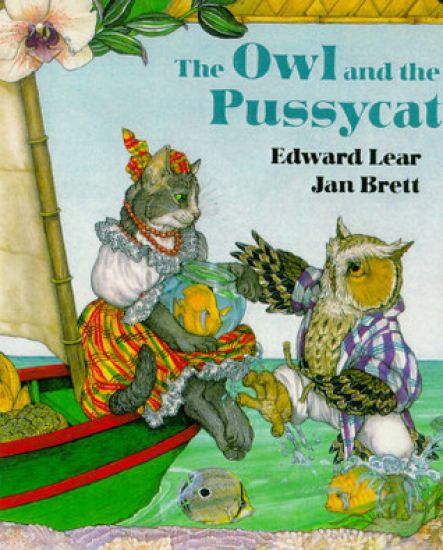
Owl sets out to woo Pussycat in a boat laden with fruit from their Caribbean island and with a guitar at his side, ready for serenading. As they sail off across the sea, another story unfolds in the water beneath the boat. One by one, exotic sea creatures swim into the picture and a small yellow fish seems to be looking for someone. Jan Brett brings the magic of the Caribbean to her exquisitely detailed illustrations of Edward Lear's charming poem.
A board book edition of the acclaimed picture book offers a beautifully illustrated, richly detailed version of Lear's nonsense verse about the whimsical adventures of the romantic Owl and Pussycat.
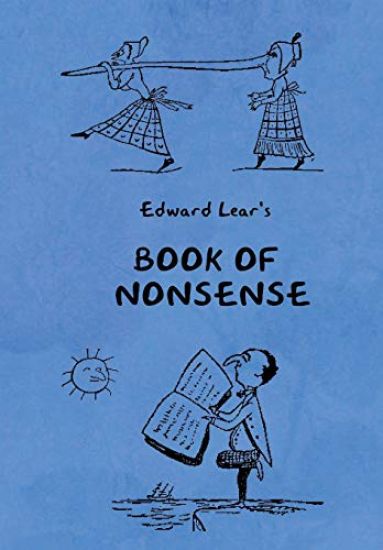
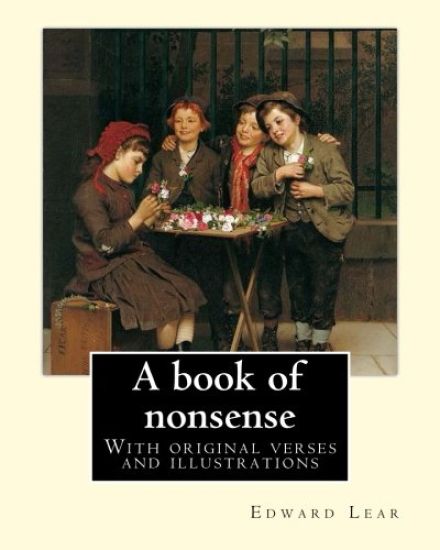
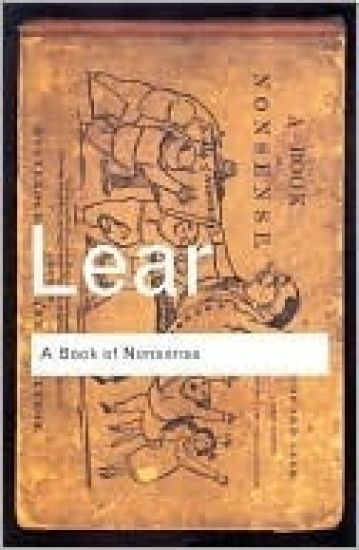
From the benighted Old Man with a Beard to the erudite Perpendicular Purple Polly, Edward Lear's world is inhabited by a bewildering variety of oddities. One of the world's most loved writers, Lear's verse has delighted whole generations of readers. Here, after 140 years, is the original edition of A Book of Nonsense, from the original publishers. Complete with Lear's own remarkable illustrations, this treasure trove of nonsense is guaranteed to hold readers spellbound for generations more!