Kirjojen hintavertailu. Mukana 11 717 486 kirjaa ja 12 kauppaa.

Kirjahaku

Etsi kirjoja tekijän nimen, kirjan nimen tai ISBN:n perusteella.

8 kirjaa tekijältä Edward M. Spiers

Chemical Warfare

Chemical Warfare

Edward M. Spiers

Palgrave Macmillan
1986
sidottu
Ever since its employment in the First World War, chemical warfare has always aroused controversy. Governments have responded by pursuing the policies of disarmament and deterrence in the hope of avoiding its recurrence. However, despite the signing of the Geneva Protocol in 1925 which banned the use of poison gas, chemical weapons have been used in subsequent conflicts and most recently in the Gulf War between Iraq and Iran. In this work the policies of disarmament and deterrence will be reassessed within a broad historical and strategic context. It will be argued that poison gas could still be used in a modern European conflict; that the Soviet forces are the best equipped to operate in a contaminated environment; and that weaknesses persist in NATO's anti-chemical defences and in her deterrent. It will be emphasised, too, that the Geneva disarmament talks, which have made some progress in recent years, still face formidable difficulties over the issues of verification and compliance. Above all, it will be claimed that the onset of nuclear parity between the superpowers has eroded the credibility of a deterrent to chemical attack based upon the threat of nuclear release. Accordingly, this book will contend that the United States should modernize her stockpile of chemical weapons to bolster the Western deterrent and to provide more leverage for the negotiations in Geneva.
Chemical Weaponry

Chemical Weaponry

Edward M. Spiers

Palgrave Macmillan
1989
sidottu
Chemical weapons are still a viable military option. This book assesses their appeal by examining how the agents, munitions and protective equipment of chemical warfare have evolved since 1915; how technological innovations and refinements in weaponry have altered tactical assumptions; and how these weapons have been employed in conflicts from the First World War to the Gulf War. The author argues that the weapon technology has proved inherently dynamic, that a new generation of biochemical agents may soon be available, and that arms control may not be able to curb these developments.
The Scottish Soldier and Empire, 1854-1902

The Scottish Soldier and Empire, 1854-1902

Edward M. Spiers

Edinburgh University Press
2006
sidottu
The Scottish Soldier and Empire, 1854-1902 reflects upon the iconic role of the Scottish soldier as an empire builder from the Crimean War to the end of the nineteenth century. It examines how the soldier commented on this imperial experience, largely through letter, diaries and poems published in the provincial press, how his exploits were reviewed in Scotland and how military achievements contributed to both a growing sense of national identity and a deepening degree of imperial commitment. Key features: *Uses wide range of source material, especially Scottish press and regimental museums. *Reveals depth of Scottish support for its regiments as instruments of imperialism. *Illustrated.
Chemical Weaponry

Chemical Weaponry

Edward M. Spiers

Palgrave Macmillan
1989
nidottu
Chemical weapons are still a viable military option. This book assesses their appeal by examining how the agents, munitions and protective equipment of chemical warfare have evolved since 1915; how technological innovations and refinements in weaponry have altered tactical assumptions; and how these weapons have been employed in conflicts from the First World War to the Gulf War. The author argues that the weapon technology has proved inherently dynamic, that a new generation of biochemical agents may soon be available, and that arms control may not be able to curb these developments.
Chemical Warfare

Chemical Warfare

Edward M. Spiers

Palgrave Macmillan
1986
nidottu
Ever since its employment in the First World War, chemical warfare has always aroused controversy. Governments have responded by pursuing the policies of disarmament and deterrence in the hope of avoiding its recurrence. However, despite the signing of the Geneva Protocol in 1925 which banned the use of poison gas, chemical weapons have been used in subsequent conflicts and most recently in the Gulf War between Iraq and Iran. In this work the policies of disarmament and deterrence will be reassessed within a broad historical and strategic context. It will be argued that poison gas could still be used in a modern European conflict; that the Soviet forces are the best equipped to operate in a contaminated environment; and that weaknesses persist in NATO's anti-chemical defences and in her deterrent. It will be emphasised, too, that the Geneva disarmament talks, which have made some progress in recent years, still face formidable difficulties over the issues of verification and compliance. Above all, it will be claimed that the onset of nuclear parity between the superpowers has eroded the credibility of a deterrent to chemical attack based upon the threat of nuclear release. Accordingly, this book will contend that the United States should modernize her stockpile of chemical weapons to bolster the Western deterrent and to provide more leverage for the negotiations in Geneva.

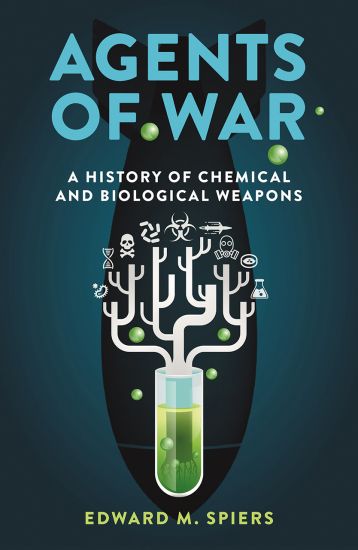
Agents of War

Agents of War

Edward M. Spiers

Reaktion Books
2021
nidottu
Often described as the misuse of science, chemical and biological weapons have incurred widespread opposition over the years. Despite condemnation from the United Nations, governments and the disarmament lobby, they remain very real options for rogue states and terrorists. This much-needed history is now available in paperback, and has been expanded and updated with two new chapters on political poisoning and chemical weapons in the Middle East. In Agents of War Edward M. Spiers breaks new ground by presenting his analysis in both historical and contemporary contexts, giving a comprehensive chronological account of why, where and when such weapons were used or suspected to be deployed.
A History of Chemical and Biological Weapons

A History of Chemical and Biological Weapons

Edward M. Spiers

Reaktion Books
2010
sidottu
Often described as the misuse of science, chemical and biological weapons have incurred widespread opposition over the years. Despite condemnation from the United Nations, governments and the disarmament lobby, they remain very real options for rogue states and terrorists. Capable of development and production in small, covert facilities, these versatile weapons kill and injure in horrific ways, and also cause immense psychological shock and panic. This much-needed history examines the similarities and differences between the two types of weapons, and how technological advancements have led to tactical innovations in their use. Global efforts to restrain their use, with deterrence and disarmament being the major issues, are also discussed. From the widespread gas warfare used in the First World War to Saddam Hussein's attacks on the Iraqi Kurds, this book gives a comprehensive chronological account of why, where and when such weapons were used or suspected to be deployed. Edward M. Spiers breaks new ground by presenting his analysis in both historical and contemporary contexts. He includes attempts by terrorists to employ these weapons, along with the challenges posed in the preparation of proportionate defences, military responses and law-enforcement. This book will be of interest to readers studying the proliferation and use of these weapons, and the reactions of the international community.
The Scottish Soldier and Empire, 1854-1902

The Scottish Soldier and Empire, 1854-1902

Edward M. Spiers

EDINBURGH UNIVERSITY PRESS
2026
nidottu
The Scottish Soldier and Empire, 1854-1902 reflects upon the iconic role of the Scottish soldier as an empire builder from the Crimean War to the end of the nineteenth century. It examines how the soldier commented on this imperial experience, largely through letter, diaries and poems published in the provincial press, how his exploits were reviewed in Scotland and how military achievements contributed to both a growing sense of national identity and a deepening degree of imperial commitment.