Kirjojen hintavertailu. Mukana 11 244 527 kirjaa ja 12 kauppaa.

Kirjahaku

Etsi kirjoja tekijän nimen, kirjan nimen tai ISBN:n perusteella.

9 kirjaa tekijältä Edward N. Wolff

Does Education Really Help?

Does Education Really Help?

Edward N. Wolff

Oxford University Press Inc
2006
sidottu
This book challenges the conventional wisdom that greater schooling and skill improvement leads to higher wages, that income inequality falls with wider access to schooling, and that the Information Technology revolution will re-ignite worker pay. Indeed, the econometric results provide no evidence that the growth of skills or educational attainment has any statistically significant relation to earnings growth or that greater equality in schooling has led to a decline in income inequality. Results also indicate that computer investment is negatively related to earnings gains and positively associated with changes in both income inequality and the dispersion of worker skills. The findings reports here have direct relevance to ongoing policy debates on educational reform in the U.S.
Inheriting Wealth in America

Inheriting Wealth in America

Edward N. Wolff

Oxford University Press Inc
2015
sidottu
Inheritances are often regarded as a societal "evil, " enabling great fortunes to be passed from one generation to another, thus exacerbating wealth inequality and reducing wealth mobility. Discussions of inheritances in America bring to mind the Vanderbilts, Rockefellers, and "trust fund babies "---people who receive enough money through inheritances or gifts that they do not have any need to work during their lifetime. Though these are, of course, extreme outliers, inheritances in America have a reputation for being a way the rich keep getting richer. In Inheriting Wealth in America, Edward Wolff seeks to counter these misconceptions with data and arguments that illuminate who inherits what in the United States and what results from these wealth transfers. Using data from the Survey of Consumer Finances---a triennial survey conducted by the Federal Reserve Board that contains detailed information on household wealth, inheritances, and gifts---as well as the Panel Study of Income Dynamics and a simulation model over years 1989 to 2010, Wolff reports six major findings on the state of inheritances in America. First, wealth transfers (inheritances and gifts) accounted for less than one quarter of household wealth. However, for persons age 75 and over, the figure was about two-fifths since they have more time to receive wealth transfers. Indirect evidence, derived from the simulation model, indicates a figure closer to two-thirds at end of life - probably the best estimate. Second, despite prognostications of a coming "inheritance boom, " it has not materialized yet. Only a small (and statistically insignificant) uptick in average wealth transfers was observed over the period, and wealth transfers were actually down as a share of household wealth. Third, while wealth transfers are greater in dollar amount for richer households than poorer ones, they constitute a smaller share of the accumulated wealth of the rich. Fourth, contrary to popular belief, inheritances and gifts, on net, reduce wealth inequality rather than raising it. The rationale is that inheritances and particularly gifts typically flow from richer to poorer persons, thus lowering wealth inequality. Fifth, despite a rapid rise in income inequality, the inequality of wealth transfers shows no discernible time trend from 1989 to 2010, neither upward nor downward. Sixth, among the very wealthy, the share of wealth accounted for by wealth transfers is surprisingly low, only about a sixth, and this share has trended significantly downward over time. It is true that inheritances and gifts are unequal, with only one fifth of families receiving wealth transfers and these transfers benefitting the rich far more than the middle class and the poor. That, however, is not the whole picture of inheritances in America. Clearly-written and illuminating, this books expertly distills an abundance of data on inheritances into important takeaways for all who wonder about the current state of inheritances and gifts in the United States.
Growth, Accumulation, and Unproductive Activity

Growth, Accumulation, and Unproductive Activity

Edward N. Wolff

Cambridge University Press
2006
pokkari
This book documents the growth of unproductive activity in the United States economy since World War II and its relation to the economic surplus, capital accumulation, and economic growth. Unproductive activities broadly consist of those involved in the circulation process, including wholesaling and retailing, banking and financial services, advertising, legal services, business services and many (though not all) government activities. The results indicate that the level of unproductive activity in the postwar economy has been a significant factor in the slowdown in the rate of capital accumulation, productivity growth and the overall growth rate. Here, the villain is shown to be the gradual but persistent shift of resources to unproductive activities. The consequence has been a reduction in new capital formation and productivity growth and an erosion in the rate of growth in per capita living standards. Moreover, the rise in unproductive activity is itself seen to be rooted in the logic of advanced capitalism. The forces of competition, which in the early stages of capitalism lead to rapid technical change and productivity growth, promote non-productive and even counterproductive activities in its more advanced stages.
Growth, Accumulation, and Unproductive Activity

Growth, Accumulation, and Unproductive Activity

Edward N. Wolff

Cambridge University Press
1986
sidottu
This book documents the growth of unproductive activity in the United States economy since World War II and its relation to the economic surplus, capital accumulation, and economic growth. Unproductive activities broadly consist of those involved in the circulation process, including wholesaling and retailing, banking and financial services, advertising, legal services, business services and many (though not all) government activities. The results indicate that the level of unproductive activity in the postwar economy has been a significant factor in the slowdown in the rate of capital accumulation, productivity growth and the overall growth rate. Here, the villain is shown to be the gradual but persistent shift of resources to unproductive activities. The consequence has been a reduction in new capital formation and productivity growth and an erosion in the rate of growth in per capita living standards. Moreover, the rise in unproductive activity is itself seen to be rooted in the logic of advanced capitalism. The forces of competition, which in the early stages of capitalism lead to rapid technical change and productivity growth, promote non-productive and even counterproductive activities in its more advanced stages.
Productivity Convergence

Productivity Convergence

Edward N. Wolff

Cambridge University Press
2013
sidottu
A vast new literature on the sources of economic growth has now accumulated. This book critically reviews the most significant works in this field and summarizes what is known today about the sources of economic growth. The first part discusses the most important theoretical models that have been used in modern growth theory as well as methodological issues in productivity measurement. The second part examines the long-term record on productivity among Organization for Economic Co-operation and Development (OECD) countries, considers the sources of growth among them with particular attention to the role of education, investigates convergence at the industry level among them, and examines the productivity slowdown of the 1970s. The third part looks at the sources of growth among non-OECD countries. Each chapter emphasizes the factors that appear to be most important in explaining growth performance.
Productivity Convergence

Productivity Convergence

Edward N. Wolff

Cambridge University Press
2013
pokkari
A vast new literature on the sources of economic growth has now accumulated. This book critically reviews the most significant works in this field and summarizes what is known today about the sources of economic growth. The first part discusses the most important theoretical models that have been used in modern growth theory as well as methodological issues in productivity measurement. The second part examines the long-term record on productivity among Organization for Economic Co-operation and Development (OECD) countries, considers the sources of growth among them with particular attention to the role of education, investigates convergence at the industry level among them, and examines the productivity slowdown of the 1970s. The third part looks at the sources of growth among non-OECD countries. Each chapter emphasizes the factors that appear to be most important in explaining growth performance.
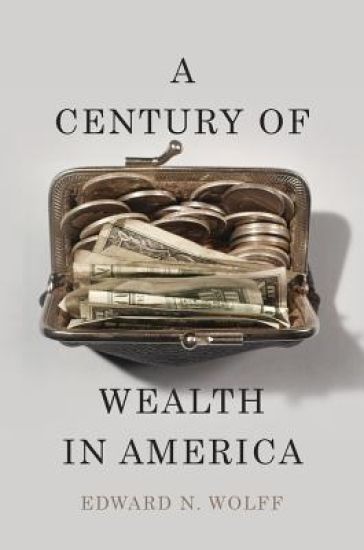
A Century of Wealth in America

A Century of Wealth in America

Edward N. Wolff

The Belknap Press
2017
sidottu
Understanding wealth in the United States—who has it, how they acquired it, and how they preserve it—is crucial to addressing the economic and political challenges facing the nation. But until now we have had little reliable information. Edward Wolff, one of the world’s great experts on the economics of wealth, offers an authoritative account of patterns in the accumulation and distribution of wealth since 1900.A Century of Wealth in America demonstrates that the most remarkable change has been the growth of per capita household wealth, which climbed almost eightfold prior to the 2007 recession. But overlaid on this base rate are worrying trends. The share of personal wealth claimed by the richest one percent almost doubled between the mid-1970s and 2013, concurrent with a steep run-up of debt in the middle class. As the wealth of the average family dropped precipitously—by 44 percent—between 2007 and 2013, with black families hit hardest, the debt-income ratio more than doubled. The Great Recession also caused a sharp spike in asset poverty, as more and more families barely survived from one paycheck to the next. In short, the United States has changed from being one of the most economically equal of the advanced industrialized countries to being one of the most unequal.At a time of deep uncertainty about the future, A Century of Wealth in America provides a sober bedrock of facts and astute analysis. It will become one of the few indispensable resources for contemporary public debate.
Poverty and Income Distribution

Poverty and Income Distribution

Edward N. Wolff

Wiley-Blackwell (an imprint of John Wiley Sons Ltd)
2009
sidottu
Poverty and Income Distribution 2E Written by a leading scholar in the field, this textbook provides a thorough introduction to the topic of income distribution and poverty, with additional emphasis on the issues of inequality and discrimination. This book features an empirical focus, and includes sections on basic statistics, as well as optional econometric studies and more advanced mathematical handling of inequality measurement. Utilizing data from various countries around the globe, including the US and Europe, this textbook is international in its scope and provides a comparative element that will aid students in their studies. Up-to-date and comprehensive in its coverage, this new edition supplies a self-contained course on income distribution and poverty.
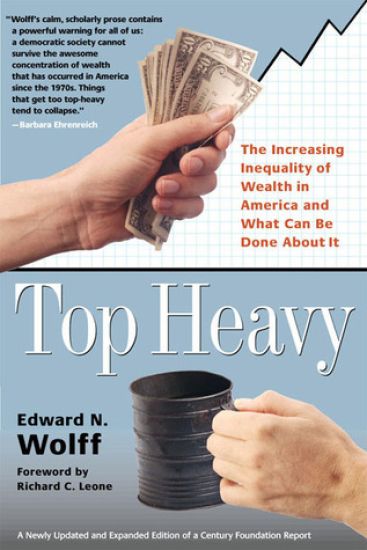
Top Heavy: The Increasing Inequality of Wealth in America and What Can Be Done about It
A work that sparked widespread controversy when it was first published, Top Heavy is acclaimed economist Edward N. Wolff's eloquent presentation of the facts of wealth inequality in the United States. In a completely revised and updated edition of the book the Boston Review hailed as "the leading contemporary study of the distribution of wealth," Wolff reveals the unprecedented rise in recent years of wealth inequality and shows how it is one of the major forces challenging democracy and economic opportunity in America.Wolff vividly illustrates how the gap between the haves and the have-nots in terms of wealth is greater now than at any time since 1929, immediately preceding the Great Depression. As the nation considers trillion-dollar tax cuts and the abolishment of the estate tax, Top Heavy takes a sobering look at how the wealth of the top 1 percent of households continues its heart stopping expansion while the current distribution of wealth in America invites the surprisingly apt comparison with the class-dominated societies of nineteenth-century Europe.Top Heavy will continue to be an essential reference point in any discussion of what an economically healthy America might look like.