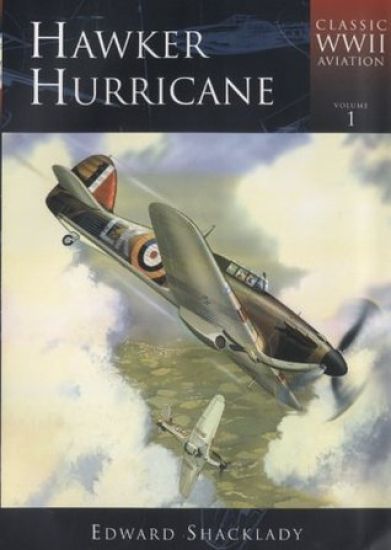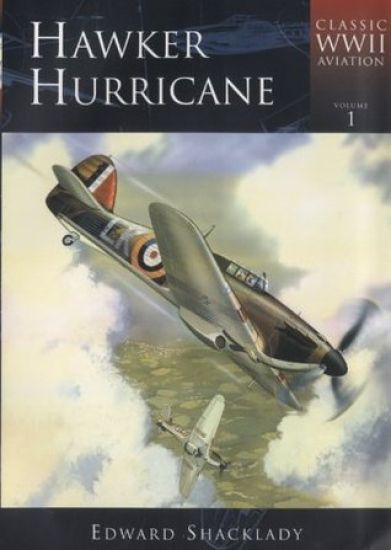
The Hurricane was the first monoplane fighter to see service in the Royal Air Force and the first aircraft to be equipped with eight guns. Designed in 1933-34 by Hawker's chief designer, Sydney Camm, it was eventually contracted by the Air Ministry in 1935 and was capable of flying in excess of 300 mph. The first RAF squadron to receive the Hurricane, No. 111, took delivery in January 1938 and by the beginning of the Second World War in September 1939 eighteen squadrons were flying this remarkable aircraft. After showing its mettle in intensive combat during the Battle of France in early 1940, the Hurricane played a leading role in the Battle of Britain later that year. The Hurricane was the most numerous of the RAF's aircraft during this phase of the war and over 1,700 -- more than half the total of RAF aircraft involved -- were flown by pilots who claimed nearly 75% of all victories. Among the Hurricane pilots who perfected their skills in the 'dog fights' that ensued with their Luftwaffe counterparts were Douglas Bader, Bob Stanford Tuck, 'Cobber' Kain and Peter Townsend. Following the Battle of Britain the Hurricane served in virtually every theatre of Allied operations. It was adapted for heavier machine gun armament, cannons, 40mm shell guns for 'tank-busting', rockets and bombs. It saw duty as a ground attack aircraft, served as a naval fighter flying from the decks of aircraft carriers and was adapted to be catapulted from ships to act as an escort to merchant ships. Hurricanes continued in first-line service until the Japanese surrender in the Far East. During this period over 14,500 Hurricanes were built.