Kirjojen hintavertailu. Mukana 11 699 587 kirjaa ja 12 kauppaa.

Kirjahaku

Etsi kirjoja tekijän nimen, kirjan nimen tai ISBN:n perusteella.

6 kirjaa tekijältä Edward Tomarken

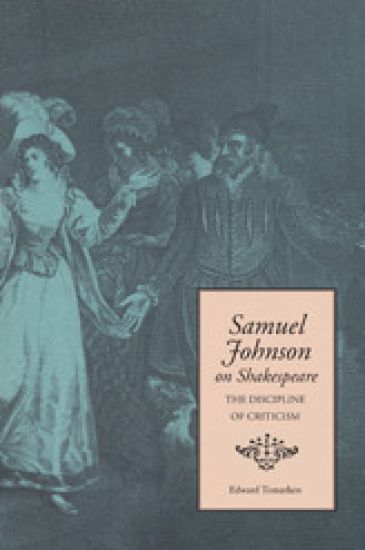
Samuel Johnson on Shakespeare

Samuel Johnson on Shakespeare

Edward Tomarken

University of Georgia Press
2009
pokkari
Since the first appearance of Samuel Johnson's edition of Shakespeare's drama in 1765, its Preface has often been published separately, while the Notes have been treated as miscellaneous and fragmentary. As a result, few modern readers realize that the Notes in fact contain coherent interpretations of most of the plays and that many portions of the Preface are generalizations related to those readings. Scholars who have examined the Notes carefully have almost always used them in studies of larger issues, such as Johnson's morality or rhetoric. In this book, Edward Tomarken provides the first full-length study of the Notes to Shakespeare, showing how they raise issues of direct concern to modern critics and theoreticians.While referring to Johnson's notes on all the Shakespearean dramas, Tomarken focuses on eight plays--Henry IV, Troilus and Cressida, Twelfth Night, The Taming of the Shrew, King Lear, The Tempest, Hamlet, and Macbeth--to demonstrate the range of Johnson's editorial and critical abilities. Each chapter, devoted to a single play, moves from the particular to the general-from specific remarks about the play in the Notes, to related theoretical statements in the Preface, and finally to an axiom of literary theory. Ranging from a formulation concerning ideology in criticism to a reconsideration of aesthetic empathy, these axioms are, Tomarken contends, essential to literary criticism as a discipline and manifest Johnson's relevance to moder
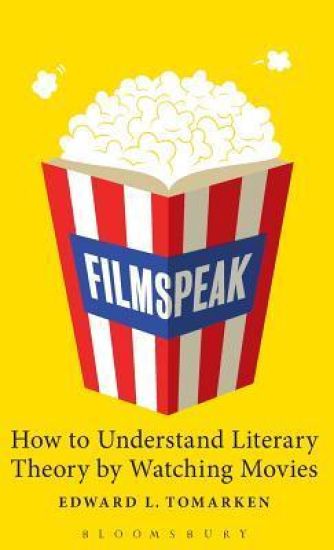
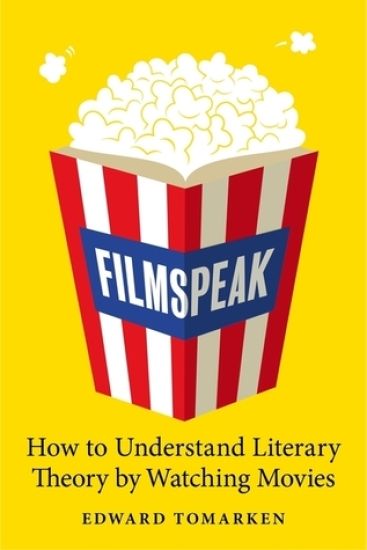
Filmspeak

Filmspeak

Edward Tomarken

Bloomsbury Academic USA
2012
sidottu
Filmspeak is an accessible, innovative book which uses specific examples to show how once arcane literary and cultural theory has infiltrated popular culture. Theory reaches us in ways we do not even realize. Issues such as the nature of knowledge or truth, the function of personal response in interpretation, the nature of the forces of politics, the female alternative to the male view of the world, are fundamental for all of us. And intelligent analysis of the relationship between literary theory and popular culture can help us to understand our fast-changing world.Here, experienced literary scholar and teacher Edward L. Tomarken explains how it is possible to study the rudiments of literary theory by watching and analyzing contemporary mainstream movies - from The Dark Knight to Kill Bill, and from The Social Network to The Devil Wears Prada. Theorists discussed include Foucault, Jameson, Iser, and Cixous. Tomarken brilliantly demonstrates that anyone can grasp modern literary theory by way of mainstream movies without having to wade through stacks of impenetrable jargon.
Filmspeak

Filmspeak

Edward Tomarken

Bloomsbury Academic USA
2012
nidottu
Filmspeak is an accessible, innovative book which uses specific examples to show how once arcane literary and cultural theory has infiltrated popular culture. Theory reaches us in ways we do not even realize. Issues such as the nature of knowledge or truth, the function of personal response in interpretation, the nature of the forces of politics, the female alternative to the male view of the world, are fundamental for all of us. And intelligent analysis of the relationship between literary theory and popular culture can help us to understand our fast-changing world. Here, experienced literary scholar and teacher Edward L. Tomarken explains how it is possible to study the rudiments of literary theory by watching and analyzing contemporary mainstream movies - from The Dark Knight to Kill Bill, and from The Social Network to The Devil Wears Prada. Theorists discussed include Foucault, Jameson, Iser, and Cixous. Tomarken brilliantly demonstrates that anyone can grasp modern literary theory by way of mainstream movies without having to wade through stacks of impenetrable jargon.
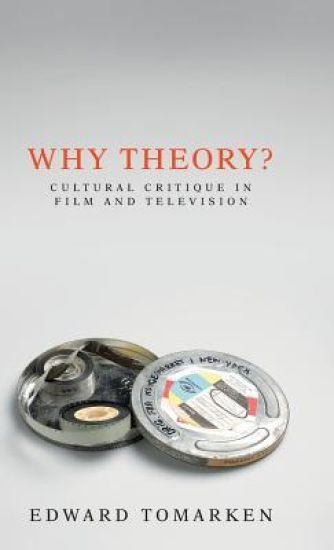
Why Theory?

Why Theory?

Edward Tomarken

Manchester University Press
2017
nidottu
Edward Tomarken's previous book, Filmspeak, was a study of literary theory in relation to contemporary mainstream films. Some of the abstruse ideas of early literary theorists (1950–70) had in fact permeated our thinking to such an extent that both films and theories enriched and shed light upon one another. One early response to Filmspeak was the question 'Why theory?’, a remark that provides the title of this new and exciting exploration of literature.In pursuit of an answer, Tomarken turns to the 'second generation' of critics (1970–2000), and analyses television programmes as well as films. He considers scholars such as Clifford Geertz and Martha Nussbaum who saw themselves as working in the field of cultural studies. Why theory? thus has a dual focus – on both culture and literary theory. The result of integrating cultural ideas with media interpretation sees Tomarken grapple with the question of the title: theory has become a part of our cultural life.
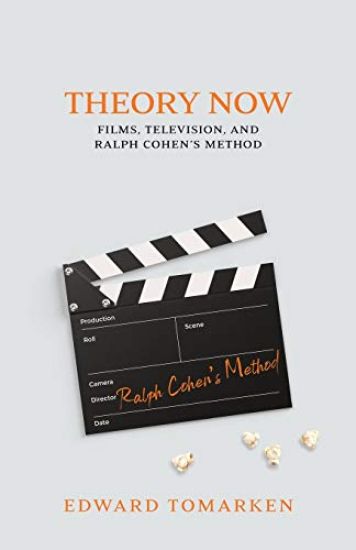
Theory Now

Theory Now

Edward Tomarken

Alpert Books
2020
nidottu
Ralph Cohen founded New Literary History in 1969 and remained its editor until 2012, when it was widely seen as one of the major journals of literary theory. Cohen's generic method can help us understand many forms of artistic endeavour, from poetry and fiction to films and television series. In Theory Now, Edward Tomarken, a former student of Ralph Cohen, presents the rudiments of Cohen's method by using popular movies and television programmes to illustrate and explain theory essays of the past twenty years. Avoiding the jargon associated with the discipline, Tomarken uses the language of the general reader. The present book is intended both for undergraduates and for anyone interested in film and television. It combines close analysis of the chosen artistic works with a lifetime's experience of the innovative and ground-breaking insights of Ralph Cohen. The final aim of the study is to show that literary and artistic knowledge is not different from any other form of knowledge and that therefore aesthetic comprehension applies to all aspects of human culture.
History of the Commentary on Selected Writings of Samuel Johnson
A history and analysis of 250 years of critical commentary on selected works of Samuel Johnson. The works of Samuel Johnson, whom many consider the father of English criticism, are themselves the object of thousands of pages of critical commentary and analysis. Edward Tomarken's study traces and analyses the past two and a half centuries of commentary on selected Johnsonian works: The early biographies and the life of Savage (1744); The nondramatic poems, particularly 'London' (1738) and 'The Vanity of Human Wishes' (1749); His play Irene (1749); The periodical essays, particularly in the Rambler (1750-52); Rasselas (1759); Shakespearean criticism (1765); The Journey to the Western Islands of Scotland (1775); and The Lives of the Poets(1779-81).