Kirjojen hintavertailu. Mukana 11 518 949 kirjaa ja 12 kauppaa.

Kirjahaku

Etsi kirjoja tekijän nimen, kirjan nimen tai ISBN:n perusteella.

6 kirjaa tekijältä Edward W. Gondolf

Assessing Woman Battering in Mental Health Services

Assessing Woman Battering in Mental Health Services

Edward W. Gondolf

SAGE Publications Inc
1997
sidottu
Assessing Woman Battering challenges traditional mental health approaches to domestic violence and offers alternative strategies and procedures to improve the response to battered women. The book is a guide to the conceptual and practical issues associated with identifying and assessing battered women in mental health services. Edward W. Gondolf draws from research on mental health assessment and his own surveys of battered womenÆs services to illustrate these issues. The expertise of battered women advocates is used to develop answers to critical assessment issues. Beyond a how-to book, Assessing Woman Battering discusses the issues underlying the identification and assessment of battered women and assists clinicians in providing an appropriate and safe response for them. It presents ways to build collaboration that improves assessment and referrals, and establishes a supportive environment that enhances disclosure of woman battering, identifying potential strengths and further safety rather than increasing risks. Concluding chapters consider issues involved in assessing women of different racial backgrounds and men who battered their female partners. This timely and well-written book is directed to mental health practitioners and domestic violence workers as well as academics, researchers, and students in the helping professions. Academics, researchers, mental health practitioners, domestic violence workers, and professionals in violence against women, interpersonal violence, social work, clinical/counseling psychology, sociology, gender studies, family studies, public health, criminology, and nursing will find this book useful.

Assessing Woman Battering in Mental Health Services

Assessing Woman Battering in Mental Health Services

Edward W. Gondolf

SAGE Publications Inc
1997
nidottu
Assessing Woman Battering challenges traditional mental health approaches to domestic violence and offers alternative strategies and procedures to improve the response to battered women. The book is a guide to the conceptual and practical issues associated with identifying and assessing battered women in mental health services. Edward W. Gondolf draws from research on mental health assessment and his own surveys of battered womenÆs services to illustrate these issues. The expertise of battered women advocates is used to develop answers to critical assessment issues. Beyond a how-to book, Assessing Woman Battering discusses the issues underlying the identification and assessment of battered women and assists clinicians in providing an appropriate and safe response for them. It presents ways to build collaboration that improves assessment and referrals, and establishes a supportive environment that enhances disclosure of woman battering, identifying potential strengths and further safety rather than increasing risks. Concluding chapters consider issues involved in assessing women of different racial backgrounds and men who battered their female partners. This timely and well-written book is directed to mental health practitioners and domestic violence workers as well as academics, researchers, and students in the helping professions. Academics, researchers, mental health practitioners, domestic violence workers, and professionals in violence against women, interpersonal violence, social work, clinical/counseling psychology, sociology, gender studies, family studies, public health, criminology, and nursing will find this book useful.
Batterer Intervention Systems

Batterer Intervention Systems

Edward W. Gondolf

SAGE Publications Inc
2002
sidottu
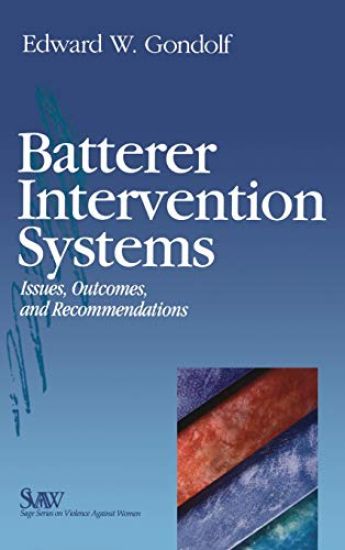
"Batterer Intervention Systems is a very important book--probably the most important one on batter interventions and evaluations to date.... The writing style is very strong, conversational, and kept my interest. It presents complex information in a non-technical way. The book should be very accessible to a wide audience." —JEFFREY L. EDLESON, Professor of Social Work, University of Minnesota, and Director, Minnesota Center Against Violence & Abuse (MINCAVA) One of the most burning debates in the domestic violence field is over the effectiveness of batterer programs and how to improve them. Batterer Intervention Systems responds to this debate with research from a multi-site evaluation of batterer programs—the most comprehensive and extensive evaluation to date. It critiques current experimental evaluations, exposes the complex issues of evaluation, and presents alternatives to assessing effectiveness. A four-year follow-up of program participants reveals a surprising de-escalation of abuse, a subgroup of unresponsive repeat reassaulters, and the difficulty in identifying the most dangerous men. Conventional batterer counseling appears to be appropriate for the vast majority of men. Most of all, the book shows that the "system" matters and can be improved through some straightforward adjustments.
Batterer Intervention Systems

Batterer Intervention Systems

Edward W. Gondolf

SAGE Publications Inc
2002
nidottu
"Batterer Intervention Systems is a very important book--probably the most important one on batter interventions and evaluations to date.... The writing style is very strong, conversational, and kept my interest. It presents complex information in a non-technical way. The book should be very accessible to a wide audience." —JEFFREY L. EDLESON, Professor of Social Work, University of Minnesota, and Director, Minnesota Center Against Violence & Abuse (MINCAVA) One of the most burning debates in the domestic violence field is over the effectiveness of batterer programs and how to improve them. Batterer Intervention Systems responds to this debate with research from a multi-site evaluation of batterer programs—the most comprehensive and extensive evaluation to date. It critiques current experimental evaluations, exposes the complex issues of evaluation, and presents alternatives to assessing effectiveness. A four-year follow-up of program participants reveals a surprising de-escalation of abuse, a subgroup of unresponsive repeat reassaulters, and the difficulty in identifying the most dangerous men. Conventional batterer counseling appears to be appropriate for the vast majority of men. Most of all, the book shows that the "system" matters and can be improved through some straightforward adjustments.
Gender-Based Perspectives on Batterer Programs

Gender-Based Perspectives on Batterer Programs

Edward W. Gondolf

Lexington Books
2015
sidottu
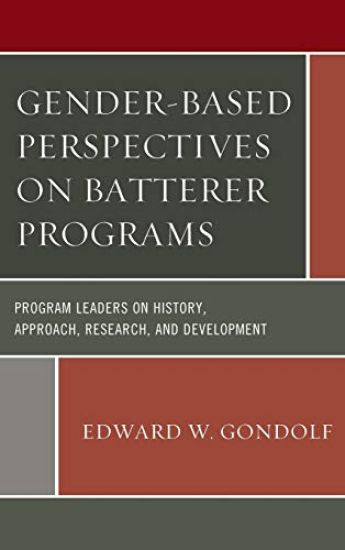
Gender-Based Perspectives on Batterer Programs responds to the intense debate about the approach and effectiveness of batterer programs, especially in light of the “evidence-based practice” movement. But it does so through a collection of 24 interviews with batterer program founders and leaders who have been working in the field for 25 to 35 years. In the process, it answers many of the misconceptions and misrepresentations of batterer programs, and highlights their contributions and development. It also offers recommendations to researchers and the field in general that would help strengthen the work overall. More specifically, the book is a follow-up to the author’s research-oriented book, The Future of Batterer Programs: Reassessing Evidence-Based Practice (Northeastern University Press, 2012). That book critically reviewed the research on batterer programs in light of the demand for documentation of program effectiveness and documented the effective role of batterer programs in an intervention system. It also exposed the need for “evidence-based practice” research to include the feedback, interpretations, and critique of practitioners who have their own “evidence” to contribute. In Gender-Based Perspectives on Batterer Programs, a summarizing introduction and conclusion on leadership frame the set of leader interviews. The collection of interviews represents an archive of the experience and wisdom of long-term workers in the field—many of whom are on the verge of retirement. This “database” should help researchers develop more meaningful studies, and ground research results in actualities of the work. Ideally, the interviews will also help practitioners realize their commonalities and better represent themselves to their critics and public in general.
Gender-Based Perspectives on Batterer Programs

Gender-Based Perspectives on Batterer Programs

Edward W. Gondolf

Lexington Books
2016
nidottu
Gender-Based Perspectives on Batterer Programs responds to the intense debate about the approach and effectiveness of batterer programs, especially in light of the “evidence-based practice” movement. But it does so through a collection of 24 interviews with batterer program founders and leaders who have been working in the field for 25 to 35 years. In the process, it answers many of the misconceptions and misrepresentations of batterer programs, and highlights their contributions and development. It also offers recommendations to researchers and the field in general that would help strengthen the work overall. More specifically, the book is a follow-up to the author’s research-oriented book, The Future of Batterer Programs: Reassessing Evidence-Based Practice (Northeastern University Press, 2012). That book critically reviewed the research on batterer programs in light of the demand for documentation of program effectiveness and documented the effective role of batterer programs in an intervention system. It also exposed the need for “evidence-based practice” research to include the feedback, interpretations, and critique of practitioners who have their own “evidence” to contribute. In Gender-Based Perspectives on Batterer Programs, a summarizing introduction and conclusion on leadership frame the set of leader interviews. The collection of interviews represents an archive of the experience and wisdom of long-term workers in the field—many of whom are on the verge of retirement. This “database” should help researchers develop more meaningful studies, and ground research results in actualities of the work. Ideally, the interviews will also help practitioners realize their commonalities and better represent themselves to their critics and public in general.