Kirjojen hintavertailu. Mukana 11 244 527 kirjaa ja 12 kauppaa.

Kirjahaku

Etsi kirjoja tekijän nimen, kirjan nimen tai ISBN:n perusteella.

30 kirjaa tekijältä Edward W. Said

Power, Politics, and Culture: Interviews with Edward W. Said
Edward Said has long been considered one of the world's most compelling public intellectuals, taking on a remarkable array of topics with his many publications. But no single book has encompassed the vast scope of his stimulating erudition quite like Power, Politics, and Culture. "A fascinating, oblique entry into the mind of one whose own writings . . . are a brilliant questioning chronicle of contemporary culture and values." --Nadine Gordimer In these twenty-eight interviews, Said addresses everything from Palestine to Pavarotti, from his nomadic upbringing under colonial rule to his politically active and often controversial adulthood, and reflects on Austen, Beckett, Conrad, Naipaul, Mahfouz, and Rushdie, as well as on fellow critics Bloom, Derrida, and Foucault. The passion Said feels for literature, music, history, and politics is powerfully conveyed in this indispensable complement to his prolific life's work.
The Selected Works of Edward Said, 1966 - 2006
The renowned literary and cultural critic Edward Said was one of our era's most provocative and important thinkers. This comprehensive collection of his work draws from across his entire four-decade career, including his posthumously published books, making it a definitive one-volume source. "Said is a brilliant and unique amalgam of scholar, aesthete, and political activist... He] challenges and stimulates our thinking in every area." --Washington Post Book World The Selected Works includes key sections from all of Said's books, including his groundbreaking Orientalism; his memoir, Out of Place; and his last book, On Late Style. Whether writing of Zionism or Palestinian self-determination, Jane Austen or Yeats, or of music or the media, Said's uncompromising intelligence casts urgent light on every subject he undertakes. The Selected Works is a joy for the general reader and an indispensable resource for scholars in the many fields that his work has influenced and transformed.
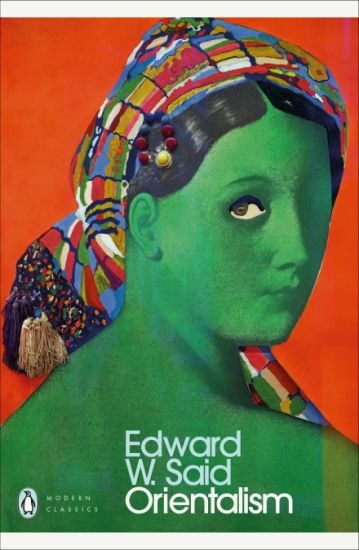
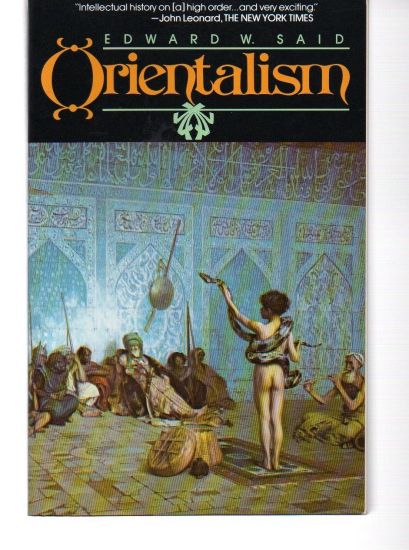
Orientalism

Orientalism

Edward W. Said

Penguin Books Ltd.
2003
pokkari
Surveys the history and nature of Western attitudes towards the East, considering orientalism as a powerful European ideological creation - a way for writers, philosophers and colonial administrators to deal with the 'otherness' of eastern culture, customs and beliefs.
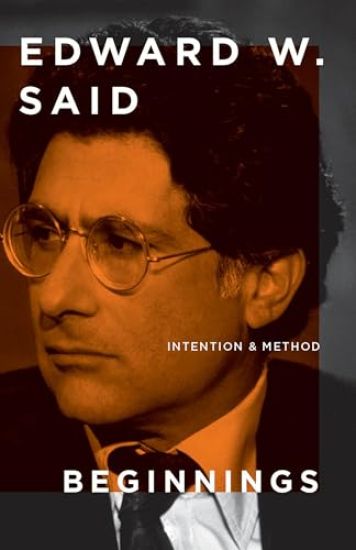
Beginnings: Intention and Method

Beginnings: Intention and Method

Edward W. Said

VINTAGE
2025
nidottu
From one of the world's most beloved and outspoken public intellectuals comes an illuminating book on the nature of criticism "Readers will be surprised, stimulated, instructed, impressed."―The New Yorker "What is a beginning? What must one do in order to begin? What is special about beginning as an activity or a moment or a place?" So begins Beginnings, a scintillating work of criticism by Edward W. Said, author of Orientalism, The Question of Palestine, and other seminal works, and one of the most lauded public intellectuals of our time. Tracing humankind's diverse understandings of what it means to begin throughout history, Said argues that "beginning" is itself a method, the first step in the creation of meaning. It's what sparks a break from preexisting tradition, and it's what authorizes new texts to be. As ever, Said insists on a criticism that is both humane and socially responsible. Beginnings is about much more than writing: it is about imagination and action as well as the constraints on freedom and invention that come from achieving human intention. The result is a classic and necessary treatise on the role of the intellectual and the worth of criticism.
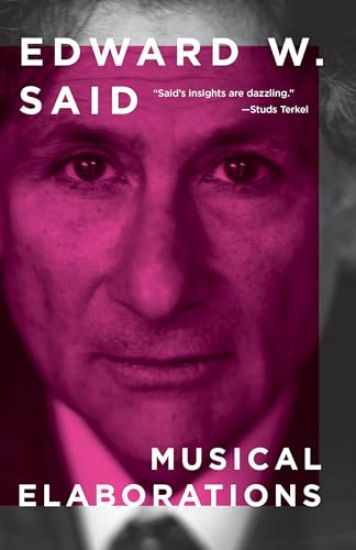
Musical Elaborations

Musical Elaborations

Edward W. Said

VINTAGE
2026
nidottu
From one of the world's most beloved and respected public intellectuals comes a sweeping work of musical criticism, examining the distance between the performer and their audience "Not since Virgil Thomson have we had a music critic with as wide ranging a view as Edward Said."--Studs Terkel "Wonderful personal thoughts on music and musicians . . . Mr. Said is marvelous."--New York Times Book Review Filling a significant gap in contemporary cultural studies, Musical Elaborations examines the intersection of the public and private meaning of music. Incorporating the music criticism of Adorno, musical ideas from literary works by Proust, and criticism by Benjamin and de Man into his work, noted critic Edward W. Said discusses performers such as Glenn Gould, Arturo Toscanini, and Alfred Brendel and such composers as Beethoven, Wagner, and Strauss.
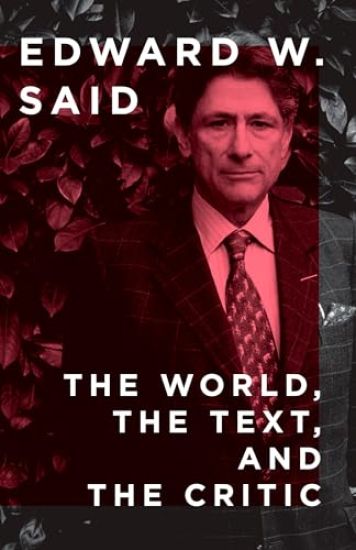
The World, the Text, and the Critic
A sweeping and intellectually rigorous work of literary criticism that moves the field forward, from one of the preeminent public scholars " Said's] book is relaxed and discursive, original, immensely learned, fluently written."―John Bayley, The New York Times Book Review Edward W. Said, author of Beginnings and the controversial yet seminal Orientalism, is one of the most acclaimed public intellectuals of our time. In this sweeping and rigorous work of literary criticism, he pushes the field even further forward. Moving from Derrida to Foucault, from Marxism to structuralism to psychoanalysis, and from Swift to Conrad to Luk cs to Renan, Said argues that critical systems and the dogmas of the dominant culture have crippled our engagement with literature, forcing a text to meet the requirements of theory while ignoring the tethers that bind it to the living world. Provocatively, Said advocates for freedom of consciousness and responsiveness to history, to the exigencies of the text, to political, social, and human values, and to the heterogeneity of human experience. The World, the Text, and the Critic asks daring questions, investigates problems of urgent significance, and gives a subtle yet powerful new meaning to the enterprise of criticism in modern society.
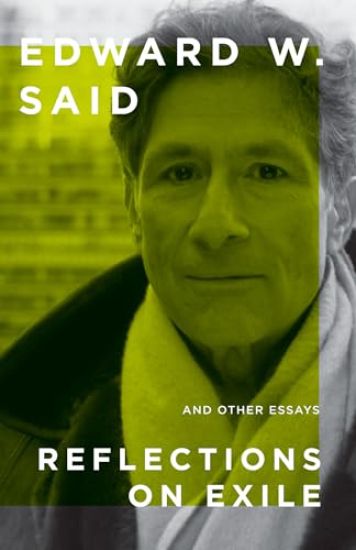
Reflections on Exile: And Other Essays
From one of the world's most beloved and respected public intellectuals comes a collection of essays examining culture, the literary canon, and the ever-shifting terrain of history "This is surely a major work, among the most provocative and cogent accounts of culture and the humanities that America has produced in recent years."―Martha C. Nussbaum, The New York Times Book Review Edward W. Said's writings have transformed the field of literary studies. In this bracing collection of essays, one of the most beloved and respected public intellectuals of our time examines culture, the literary canon, and the ever-shifting terrain of history. Said's topics are many and diverse, from the Hollywood heroics of Tarzan to the machismo of Ernest Hemingway to the shades of difference that divide Alexandria and Cairo. In the title essay, the widely admired "Reflections on Exile," he weighs his own estrangement from his home country and the fate of the Palestinian people against the literary canon's most romanticized fugitives. "What could be more intransigent than the conflict between Zionist Jews and Arab Palestinians?" Said asks. "Palestinians feel that they have been turned into exiles by the proverbial people of exile." The culmination of thirty-five years of scholarship, Reflections on Exile and Other Essays is an invigorating and life-affirming achievement, a work of intellectual, emotional, and moral rigor.
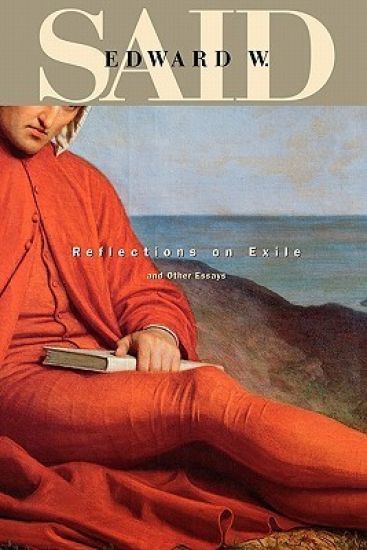
Reflections on Exile and Other Essays

Reflections on Exile and Other Essays

Edward W. Said

HARVARD UNIVERSITY PRESS
2002
nidottu
With their powerful blend of political and aesthetic concerns, Edward W. Said's writings have transformed the field of literary studies. This long-awaited collection of literary and cultural essays, the first since Harvard University Press published The World, the Text, and the Critic in 1983, reconfirms what no one can doubt--that Said is the most impressive, consequential, and elegant critic of our time--and offers further evidence of how much the fully engaged critical mind can contribute to the reservoir of value, thought, and action essential to our lives and our culture. As in the title essay, the widely admired "Reflections on Exile," the fact of his own exile and the fate of the Palestinians have given both form and the force of intimacy to the questions Said has pursued. Taken together, these essays--from the famous to those that will surprise even Said's most assiduous followers--afford rare insight into the formation of a critic and the development of an intellectual vocation. Said's topics are many and diverse, from the movie heroics of Tarzan to the machismo of Ernest Hemingway to the shades of difference that divide Alexandria and Cairo. He offers major reconsiderations of writers and artists such as George Orwell, Giambattista Vico, Georg Lukacs, R. P. Blackmur, E. M. Cioran, Naguib Mahfouz, Herman Melville, Joseph Conrad, Walter Lippman, Samuel Huntington, Antonio Gramsci, and Raymond Williams. Invigorating, edifying, acutely attentive to the vying pressures of personal and historical experience, his book is a source of immeasurable intellectual delight.
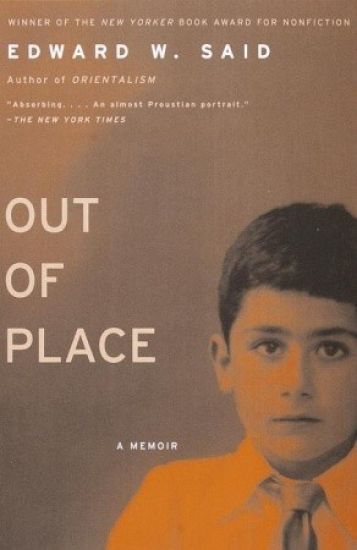
Out of Place: A Memoir

Out of Place: A Memoir

Edward W. Said

VINTAGE
2000
nidottu
WINNER OF THE NEW YORKER BOOK AWARD FOR NONFICTION - From one of the most important intellectuals of our time comes an extraordinary story of exile and a celebration of an irrecoverable past. A fatal medical diagnosis in 1991 convinced Edward Said that he should leave a record of where he was born and spent his childhood, and so with this memoir he rediscovers the lost Arab world of his early years in Palestine, Lebanon, and Egypt. "Engrossing. . . . Said has] an almost Proustian feel for smells, sounds, sights, and telling anecdotes." --The New York Review of Books Said writes with great passion and wit about his family and his friends from his birthplace in Jerusalem, schools in Cairo, and summers in the mountains above Beirut, to boarding school and college in the United States, revealing an unimaginable world of rich, colorful characters and exotic eastern landscapes. Underscoring all is the confusion of identity the young Said experienced as he came to terms with the dissonance of being an American citizen, a Christian and a Palestinian, and, ultimately, an outsider. Richly detailed, moving, often profound, Out of Place depicts a young man's coming of age and the genesis of a great modern thinker.
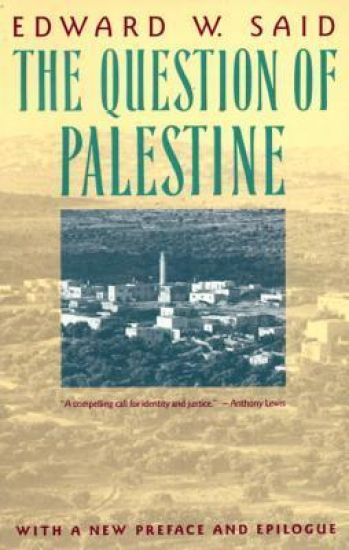
The Question of Palestine

The Question of Palestine

Edward W. Said

Random House USA Inc
2003
sidottu
Still a basic and indespensible account of the Palestinian question, updated to include the most recent developments in the Middle East- from the intifada to the Gulf war to the historic peace conference in Madrid.
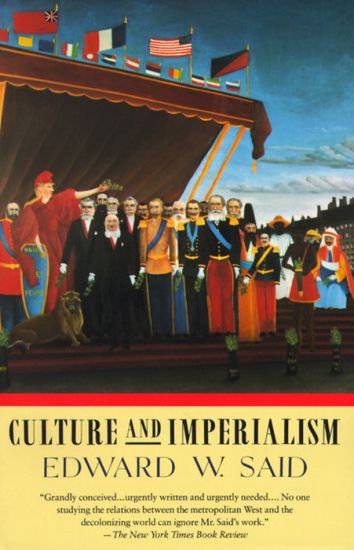
Culture and Imperialism

Culture and Imperialism

Edward W. Said

VINTAGE
1994
nidottu
A landmark work from the author of Orientalism that explores the long-overlooked connections between the Western imperial endeavor and the culture that both reflected and reinforced it. "Grandly conceived . . . urgently written and urgently needed. . . . No one studying the relations between the metropolitan West and the decolonizing world can ignore Mr. Said's work.' --The New York Times Book Review In the nineteenth and early twentieth centuries, as the Western powers built empires that stretched from Australia to the West Indies, Western artists created masterpieces ranging from Mansfield Park to Heart of Darkness and Aida. Yet most cultural critics continue to see these phenomena as separate. Edward Said looks at these works alongside those of such writers as W. B. Yeats, Chinua Achebe, and Salman Rushdie to show how subject peoples produced their own vigorous cultures of opposition and resistance. Vast in scope and stunning in its erudition, Culture and Imperialism reopens the dialogue between literature and the life of its time.
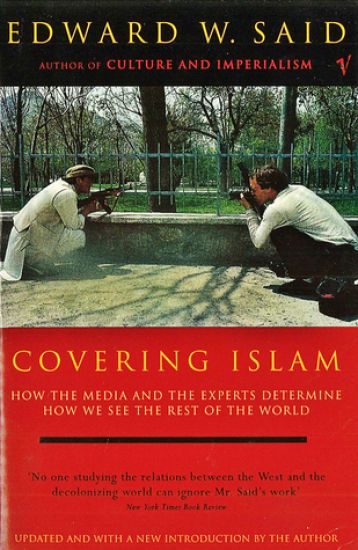
Covering Islam: How the Media and the Experts Determine How We See the Rest of the World
In this classic work, the author of Culture and Imperialism reveals the hidden agendas and distortions of fact that underlie even the most "objective" coverage of the Islamic world. - With a new foreword by Laleh Khalili "No one stuyding the relations between the West and the decolonizing world can ignore Mr. Said's work." --The New York Times Book Review From the Iranian hostage crisis through the Gulf War and the bombing of the World Trade Center, the American news media have portrayed "Islam" as a monolithic entity, synonymous with terrorism and religious hysteria. At the same time, Islamic countries use "Islam" to justify unrepresentative and often repressive regimes. Combining political commentary with literary criticism, Covering Islam continues Edward Said's lifelong investigation of the ways in which language not only describes but also defines political reality.
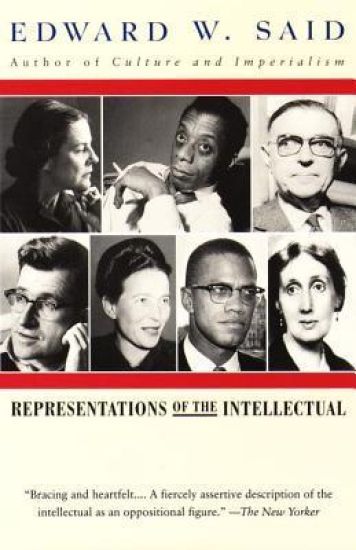
Representations of the Intellectual
In these impassioned and inspiring essays, based on his 1993 Reith Lectures, Edward Said explores what it means to be an intellectual. "Said is a brilliant and unique amalgam of scholar, aesthete and political activist. . . . He challenges and stimulates our thinking in every area." --Washington Post Book World Are intellectuals merely the servants of special interests or do they have a larger responsibility? In these wide-ranging essays, one of our most brilliant and fiercely independent public thinkers addresses this question with extraordinary eloquence. Said sees the the intellectual as an exile and amateur whose role it is "to speak the truth to power" even at the risk of ostracism or imprisonment. Drawing on the examples of Jonathan Swift and Theodor Adorno, Robert Oppenheimer and Henry Kissinger, Vietnam and the Gulf War, Said explores the implications of this idea and shows what happens when intellectuals succumb to the lures of money, power, or specialization.
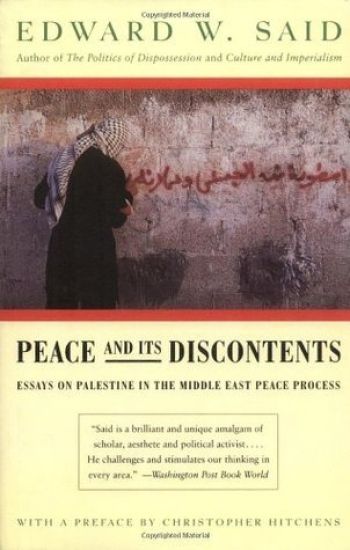
Peace And Its Discontents: Essays on Palestine in the Middle East Peace Process
In works such as Culture and Imperialism, Said compelled us to question our culture's most privileged myths. With this impassioned and incisive book, the foremost Palestinian-American intellectual challenges the official version of the Middle East "peace process." "He challenges and stimulates our thinking in every area."--Washington Post Book World.
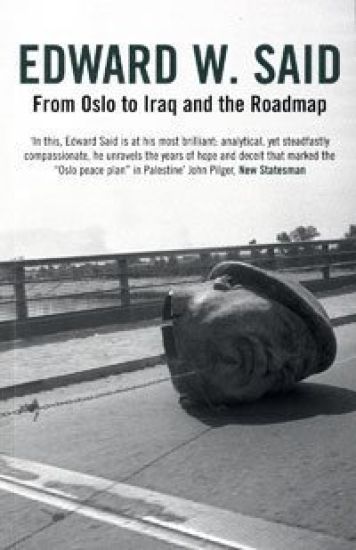
From Oslo to Iraq and the Roadmap

From Oslo to Iraq and the Roadmap

Edward W. Said

Bloomsbury Publishing PLC
2005
nidottu
From Oslo to Iraq and the Roadmap is Edward Said's final collection of essays, written between the end of 2000 and early 2003. They offer Said's commentary on the deepening crisis in the Middle East: pre-September 11 to the bombing of the World Trade Centre, through to the bombing of Afghanistan and the early days of the war in Iraq. What has always set Said apart is his ability to state the uncensored truth. This collection is filled with the eloquence, anger and the immense humanity for which Said was so loved and admired. Urgent, thought-provoking and troubling, it gives us a valuable and necessary perspective of the events of the last few years.
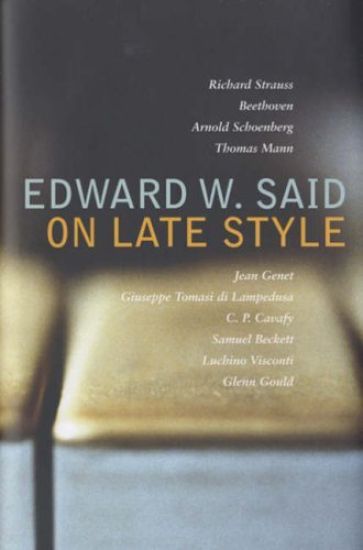
On Late Style

On Late Style

Edward W. Said

Bloomsbury Publishing PLC
2006
sidottu
Based on a hugely popular graduate seminar that Said taught in the fall of 1995 at Columbia, On Late Style examines the work produced by Richard Strauss, Ludwig van Beethoven, Arnold Schoenberg, Thomas Mann, Jean Genet, Giuseppe Tomesi di Lampedusa, C.D. Cavafy, Samuel Beckett, Luchino Visconti, and Glenn Gould at the end of their creative lives, and illuminates the ways in which these works differed from the artists' previous works and what they tell us about the artists' evolution. Said makes clear that rather than the resolution of a lifetime's artistic endeavor, most of the late works discussed are rife with unresolved contradiction and almost impenetrable complexity. But he helps us see how, though these works often stood in direct contrast to the tastes of society, they were, just as often, announcements of what was to come in the artist's discipline--works of true artistic genius. Eloquent and impassioned--the subject had increasing resonance for the author as he battled leukemia in the last years of his own life--brilliantly reasoned and revelatory, On Late Style is Edward Said's own great last work.
Islam, Judaism, and the Political Role of Religions in the Middle East
Although the ""politicization"" of religion or ""sacrilization"" of politics is not restricted to the Middle East, this phenomenon found its most spectacular expressions in the region. These essays examine, in an original and innovative manner, the complex relation between political and national identity and the three major religions of the contemporary Middle East - Islam, Christianity, and Judaism. Although the focus is on Palestinian-Israeli relations, the study is relevant to the entire history of the modern Middle East. The contributors, an international group of scholars from Israel, Palestine, Europe, and the United States, explore common theological and political ground shared by Jews and Muslims, a novel comparative approach that could lead to future dialogue along theological as well as political lines.
The Question of Palestine

The Question of Palestine

Edward W. Said

Fitzcarraldo Editions
2024
nidottu
A major work by one of the great public intellectuals of the twentieth century, The Question of Palestine was the first book to narrate the modern Palestinian experience in English. Edward Said’s project to ‘bring Palestine into history’ was unquestionably a success – there is no longer a question of whether Palestine had a history before colonization – and yet Palestinian self-determination is as distant as ever. With the rigorous scholarship he brought to his influential Orientalism and shaped by his own life in exile in New York, Said’s account of the traumatic national encounter of the Palestinian people with Zionism is still as pertinent and incisive today as it was on first publication in 1979.
Reflections On Exile

Reflections On Exile

Edward W. Said

Granta Books
2012
nidottu
With their powerful blend of political and aesthetic concerns, Edward W. Said's writings have transformed the field of literary studies. As in the title essay, the widely admired "Reflections on Exile," the fact of his own exile and the fate of the Palestinians have given both form and the force of intimacy to the questions Said has pursued. Taken together, these essays--from the famous to those that will surprise even Said's most assiduous followers--afford rare insight into the formation of a critic and the development of an intellectual vocation. Said's topics are many and diverse, from the movie heroics of Tarzan to the machismo of Ernest Hemingway to the shades of difference that divide Alexandria and Cairo. He offers major reconsiderations of writers and artists such as George Orwell, Giambattista Vico, Georg Lukacs, R. P. Blackmur, E. M. Cioran, Naguib Mahfouz, Herman Melville, Joseph Conrad, Walter Lippman, Samuel Huntington, Antonio Gramsci, and Raymond Williams. Invigorating, edifying, acutely attentive to the vying pressures of personal and historical experience, his book is a source of immeasurable intellectual delight.