Kirjojen hintavertailu. Mukana 12 383 953 kirjaa ja 12 kauppaa.

Kirjahaku

Etsi kirjoja tekijän nimen, kirjan nimen tai ISBN:n perusteella.

5 kirjaa tekijältä Edwards Anne, Peter Knight

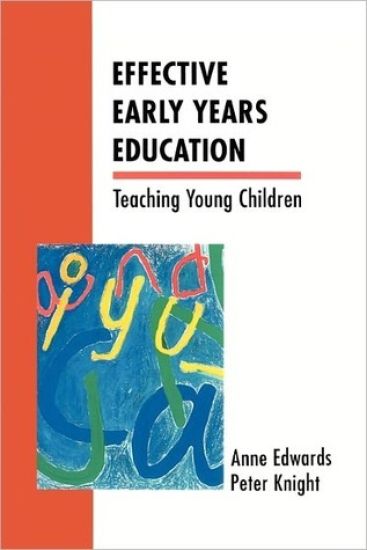
Effective Early Years Education

Effective Early Years Education

Edwards Anne; Peter Knight

Open University Press
1994
nidottu
In this concise and accessible guide, the authors are sympathetic to the particular demands of teaching three to eight year olds and offer practical solutions to the complex issues that are currently faced by early years educators. In recognizing the demands on practitioners, they provide new and challenging frameworks for an understanding of the practice of teaching young children and draw upon international research to offer a sound model of early years subject-structured teaching which has the quality of children's learning at its centre. Their aim is to support teacher expertise through stimulating teachers' thinking about children's development, motivation, ways of learning and the subjects they teach. These topics are clearly set in the complex institutional settings in which practitioners work and ways of taking and evaluating action are offered.
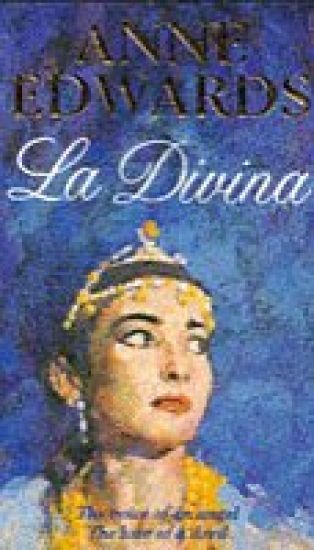
Divina, La

Divina, La

Edwards Anne

PAN MACMILLAN
1995
pokkari
Follows Athena Varos from her humble origins in pre-war New York to marriage to one of the world's richest men. Athena must chase the destiny that will make her a star. But the power she exerts over men will make her as famous for her passionate private life as for her performances.
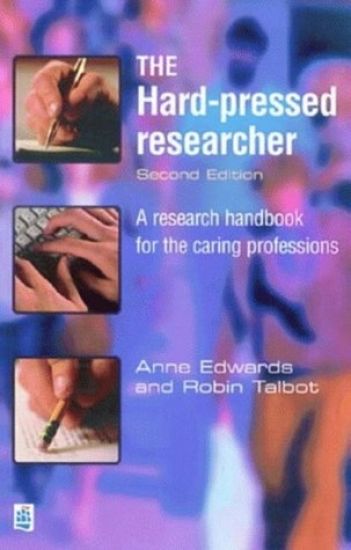
The Hard-pressed Researcher

The Hard-pressed Researcher

Edwards Anne; Robin Talbot

Prentice-Hall
1999
nidottu
Working in the fields of education, health and social care demands a great deal of energy, effort and commitment on the part of the practitioner or trainee. When a research project is added to a workload the pressures can be great, particulary if the would-be-researcher is not confident about the process involved.The Hard-pressed Researcher provides practical guidance on how to undertake a research project. It has been written specially for practitioners and students in the fields of education, health and social care and assumes no specific knowledge of the research process.This revised and updated version of the first edition covers the major modes of research (experimental research, survey work, case study, interpretative research and action research) and provides step-by-step guidance from conceptualization through to report writing. Each chapter provides sources for further reading and the book ends with a series of statistical tables.All those studying or working in the caring professions will welcome the very straightforward and sympathetic approach of the authors, both of whom have considerable experience in the supervision of research work.
Primary School Teaching and Educational Psychology

Primary School Teaching and Educational Psychology

Galloway David M.; Edwards Anne

Routledge
1991
nidottu
Drawing upon extensive research, David Galloway and Anne Edwards analyse the increasing pressures on teachers from the national curriculum and other recent legislation. They look carefully at childrens' learning and behavioural difficulties and show how educational psychology can extend our understanding of teacher's day-to-date work in the classroom. Primary Teaching and Educational Psychology is a refreshing and at times controversial examination of primary teaching and the application of educational psychology. It will be essential reading for trainee teachers and will stimulate more experienced teachers to re-evaluate their current practices.
Secondary School Teaching and Educational Psychology

Secondary School Teaching and Educational Psychology

Galloway David M.; Edwards Anne

Routledge
1992
nidottu
A companion volume to Primary School Teaching and Educational Psychology, this book concerns itself with the day-to-day business of teaching in a secondary school. Throughout the book four themes reoccur: that teachers can best understand the development of children by observing their learning and their relationships within school; that assessment and evaluation are integral to effective teaching; that effective teaching and learning depend on both teacher and child being able to monitor own progress and to find solutions to problems that occur; and finally that there must be explicit recognition of the common-ground between educational psychology and other disciplines such as sociology, philosophy and the history of education.