Kirjojen hintavertailu. Mukana 11 699 587 kirjaa ja 12 kauppaa.

Kirjahaku

Etsi kirjoja tekijän nimen, kirjan nimen tai ISBN:n perusteella.

19 kirjaa tekijältä Edwin P. Hoyt

The Last Kamikaze

The Last Kamikaze

Edwin P. Hoyt

Praeger Publishers Inc
1993
sidottu
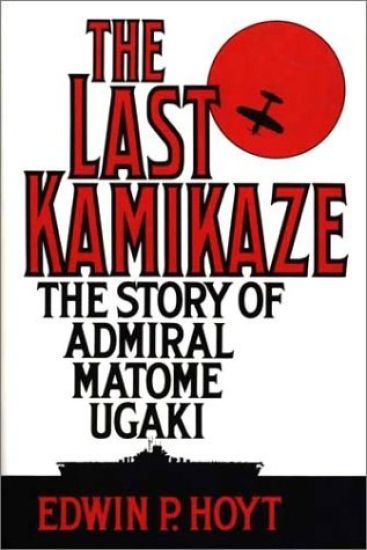
This is the story of a man and a Navy--Vice Admiral Matome Ugaki and the Imperial Japanese Navy. By 1945 the Imperial Navy was physically destroyed and Admiral Ugaki was given the task of defending the Japanese homeland against attack, and he sent hundreds of kamikazes against the American naval forces operating around Okinawa. After Emperor Hirohito announced Japan's surrender on August 15, Ugaki stripped off his insignia of rank, climbed into a torpedo bomber, and flew to Okinawa, where he intended to crash into an American ship. But like so many of the other kamikazes, his mission was fruitless, his plane was shot down by American nightfighters. But Admiral Ugaki died, as he has promised to do, in the fashion of the thousands of young men he had sent to their deaths. Vice Admiral Matome Ugaki was the only high official of the Imperial Japanese Navy to have left a significant record, in the form of a diary started during the preparations for the China Incident, and kept throughout the war--from the planning phase of 1940, through the Pearl Harbor attack, and up until Japan's surrender. Hoyt draws on the diary and numerous other accounts by admirals and historians to create a picture of a Japanese Navy that began in a position of strength but was eventually destroyed by powerful Allied forces, shattering Japan's drive for conquest.
Hirohito

Hirohito

Edwin P. Hoyt

Praeger Publishers Inc
1992
sidottu
Hoyt's biography, taking advantage of recent posthumous revelations of a Japanese foreign service diplomat, portrays Hirohito as a man of peace held captive by his role in Japanese society and government . . . Library Journal A successful new book from a topnotch writer . . . Booklist . . . provocative . . . Kirkus ReviewsWas Emperor Hirohito to blame for Japan's expansionist military policies--and its atrocities--in World War II? Was he out to make the world his empire? This most extensive biography of the emperor in English challenges portrayals of Hirohito as either an unworldly scientist or a swashbuckling conspirator who tried to conquer the globe with military might. Using sources uncovered as recently as 1991, Hoyt reveals that the emperor was fundamentally a peace-loving man caught in a turbulent period when the Japanese military gained extraordinary power. He became the virtual prisoner of an Imperial system that prevented him from leading his country into an era of peace and prosperity, his boyhood dream. Hoyt's account, backed by a decade of research, details the emperor's repeated attempts to thwart the Imperial Army's headlong drive toward war. Even when defeat was certain, Hoyt maintains, Hirohito had to outmaneuver the army in order to surrender to Allied forces. Only then, in postwar years, did the emperor see his wishes for his country come true.To help the reader assess the emperor's life, Hoyt begins by examining the years preceding Hirohito's reign. He then focuses on the Manchurian incidents, the struggle for power in Japan, the China war, the global conflict and Japan's role in it, and the country's final capitulation. Critical passages on events preceding and during World War II, supported by the recently released diaries of men close to the emperor, detail the process by which Hirohito increasingly lost power as the army gained control. Turning his attention to the post-war years, Hoyt chronicles Japan's economic growth and the changing role of the emperor in Japanese society. Photographs from Japanese sources enhance the narrative. Hirohito: The Emperor and the Man offers new insight into the motives of a widely misunderstood leader. Hoyt's Hirohito is a quiet man with scholarly leanings; a patriot who loved his country but also admired Western qualities; a monarch who wished to act responsibly at a critical juncture but lacked the authority to do so.
Backwater War

Backwater War

Edwin P. Hoyt

Praeger Publishers Inc
2002
sidottu
A year before the much-heralded second front was opened at Normandy in 1944, the Allies waged a campaign in Sicily and Italy—an assault that was marked by argument and dissent from beginning to end, highlighting the fundamental differences in strategic thinking between the Americans and the British. Winston Churchill favored scrapping what would become the Normandy invasion entirely, focusing instead on the soft underbelly of Nazi Europe, but American planners summarily rejected any plan that relied solely on a southern option. This is the story of this backwater campaign, a series of battles skillfully staged by the Germans and so botched by the Allies that their victory was achieved only as a result of German exhaustion. During the hard-fought campaign, the Americans persisted in their suspicion that the British were trying to undermine the effort. For example, the imbroglio over the Benedictine monastery of Monte Cassino and the ineptness of the British assault, led by a commander already discredited by his role in the fall of Crete, would spur the Americans to overreact and destroy the monastery by bombing. This created a major propaganda victory for the Germans. Such incidents convinced both Washington and London that they were working at cross-purposes. Hoyt contends that, as the British argued at the time, Allied efforts would have been better-spent concentrating on the Balkans. The Normandy campaign was expensive, unnecessary, and ultimately lengthened the war.
The Last Kamikaze

The Last Kamikaze

Edwin P. Hoyt

Praeger Publishers Inc
1993
nidottu
This is the story of a man and a Navy--Vice Admiral Matome Ugaki and the Imperial Japanese Navy. By 1945 the Imperial Navy was physically destroyed and Admiral Ugaki was given the task of defending the Japanese homeland against attack, and he sent hundreds of kamikazes against the American naval forces operating around Okinawa. After Emperor Hirohito announced Japan's surrender on August 15, Ugaki stripped off his insignia of rank, climbed into a torpedo bomber, and flew to Okinawa, where he intended to crash into an American ship. But like so many of the other kamikazes, his mission was fruitless, his plane was shot down by American nightfighters. But Admiral Ugaki died, as he has promised to do, in the fashion of the thousands of young men he had sent to their deaths. Vice Admiral Matome Ugaki was the only high official of the Imperial Japanese Navy to have left a significant record, in the form of a diary started during the preparations for the China Incident, and kept throughout the war--from the planning phase of 1940, through the Pearl Harbor attack, and up until Japan's surrender. Hoyt draws on the diary and numerous other accounts by admirals and historians to create a picture of a Japanese Navy that began in a position of strength but was eventually destroyed by powerful Allied forces, shattering Japan's drive for conquest.
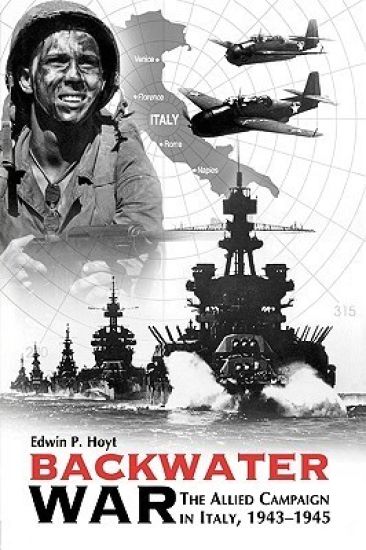
Backwater War

Backwater War

Edwin P. Hoyt

Stackpole Books
2007
nidottu
After disagreeing about whether to open an Italian front at all, the Allies began their campaign by invading Sicily in July 1943. In September the battle shifted to Italy, where the Allies landed at Salerno and Taranto and then pushed inland only to encounter unexpectedly stiff German resistance. Not until June 1944—after landing at Anzio in January and subsequently destroying the monastery at Monte Cassino—did the Allies finally break the German line and capture Rome. By then the invasion of France had overshadowed the Italian campaign, ensuring that its final ten months would indeed be a backwater war.
The GI's War

The GI's War

Edwin P. Hoyt

Cooper Square Publishers Inc.,U.S.
2000
pokkari
The GI's War contains eyewitness accounts from ordinary young men, farm hands and factory workers, who had war thrust upon them and in the process became veteran soldiers. Their unsparing narratives, presented in their own words, capture the many emotions evoked by war. GIs and their commanding officers speak freely, and movingly, of becoming soldiers, of enduring the ordeals of the various campaigns, and of fightling for their lives and their country. Vividly personal and compelling, this book puts the reader on the front lines.
Stalin's War

Stalin's War

Edwin P. Hoyt

Cooper Square Publishers Inc.,U.S.
2003
sidottu
The battlefields of the USSR witnessed the most devastating confrontations of World War II. In every one of those battles, Communist dictator Josef Stalin exercised his influence, meddling with (and executing) his generals, hurling unprepared armies into pure chaos, and meeting with his Western allies to divide the world up into zones of influence that would soon be embroiled in a new war. World War II scholar Hoyt describes the war from Stalin's vantage point and shows how his decisions, especially his early refusal to go to war with Germany even after they attacked, led to the historic battles for Leningrad, Stalingrad, and Moscow. Hoyt also explains how Stalin's bloody purges before the war left a military bereft of leadership, yet opened the doors for Zhukov, Chuikov, Rokossovsky, and other crucial commanders to spearhead a Soviet victory. Stalin's War also examines Stalin's use of propaganda to vilify the German army and blame Soviet war crimes and human rights violations on the Nazis.
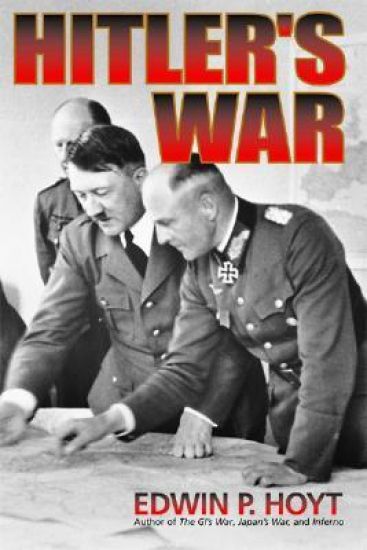
Hitler's War

Hitler's War

Edwin P. Hoyt

Cooper Square Publishers Inc.,U.S.
2001
pokkari
Here is World War II, the twentieth century's most destructive international conflict, from the unique perspective of its instigator and architect, German Fuhrer Adolf Hitler (1889-1945). Noted military historian Edwin P. Hoyt vivdly recreates Hitler's direction of the war, his bold gambles, evolving strategies, and crucial miscalculations.
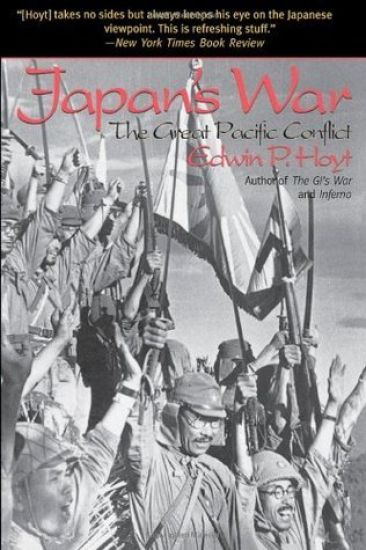
Japan's War

Japan's War

Edwin P. Hoyt

Cooper Square Publishers Inc.,U.S.
2001
pokkari
The many factors that led to Japan's participation in World War II, and the horrifying battles that resulted, come into focus in Japan's War: The Great Pacific Conflict. The book, which takes into account Japanese and Asian documents and scholarship in addition to American and European sources, chronicles events in the Pacific from 1853 to 1951. During those years, the leaders of Japan, believing in the superiority of their nation and culture, sought to dominate East Asia and the Pacific Basin. That period also saw Japan and America becoming entangled in each other's national affairs, starting when Commodore Perry's ships ended Japan's isolation policy, and continuing into the occupation by the U. S. Army following the war. Author Hoyt shows conflicting personalities and historical context that led to the rise of Japanese militarism and wars with China and Russia. Japan's War examines the decisions that led to the attack on Pearl Harbor, and the escalating climate of violence that resulted in the Rape of Nanking and the Bataan Death March.
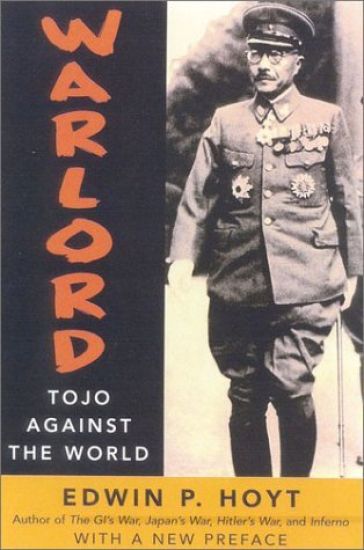
Warlord

Warlord

Edwin P. Hoyt

Cooper Square Publishers Inc.,U.S.
2001
pokkari
Vilified in the West as the Japanese equivalent of Hitler, Hideki Tojo (1884-1948) was in fact cut from very different cloth. Lacking the skills and charisma of a statesman, fueled by no apocalyptic visions, Tojo was an unimaginative soldier whose primary goals were to establish Japan's military strength and serve his emperor. Yet his determination and ambition caused him to participate in the seizure of power when the military took over the government. WWII scholar Hoyt, a resident of Japan, relies on new sources and remarkable insight to show how Tojo and the leaders of Japan's armed forces gained control of the country, but how ambition ultimately proved to be Tojo's undoing.
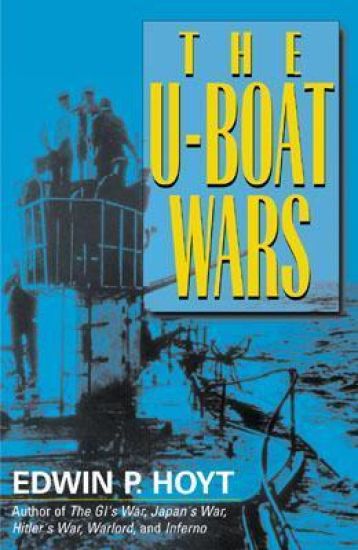
The U-Boat Wars

The U-Boat Wars

Edwin P. Hoyt

Cooper Square Publishers Inc.,U.S.
2002
pokkari
The remarkably effective submarines (U-boats) of the German Navy devastated the Allies during the first part of World War II and very nearly brought British and American sea forces to their knees. Military historian Hoyt here describes the years when U-boat "wolf packs" under the command of Admiral Karl Doenitz terrorized the Allies, sinking a third of Britain's battleships in 1939, and how the Allies came back, developing anti-submarine weapons that sent almost three-fourths of the U-boat crews to the bottom of the ocean. The U-Boat Wars is a gripping account of the battles at sea and the men—Doenitz, Churchill, sub-hunter Captain F. J. Walker, and others—who decided the fate of the Atlantic.
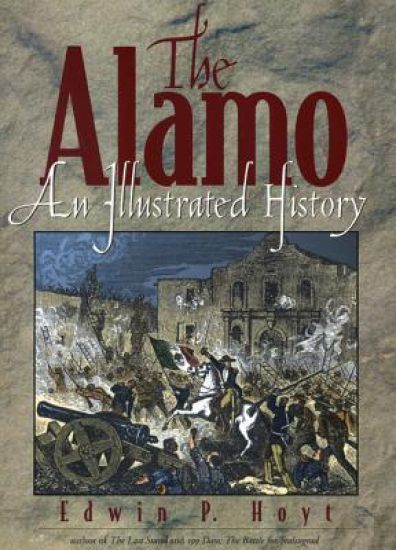
The Alamo

The Alamo

Edwin P. Hoyt

Taylor Trade Publishing
2003
pokkari
Master historian Edwin P. Hoyt depicts with graphic and gripping detail the conflict between revolutionary Texas and the Mexican government determined to rule. In the first paperback edition of a highly acclaimed history, Hoyt describes the well-known historical facts of the revolution, the pivotal siege of the Alamo, and the decisive aftermath, and fills them with new life. By merging a multitude of authoritative accounts of this turbulent period and the bloody clashes that shaped it, Hoyt paints a dynamic portrait of Texas rebels and Mexican authorities locked in a struggle over the fate of an untamed land. Fully illustrated with more than 120 black and white and full color images, The Alamo reveals the entire spectrum of Texas's determined bid for independence. Read of the triumph, passion, and tragedy of the valiant yet doomed defenders of the old Spanish mission.
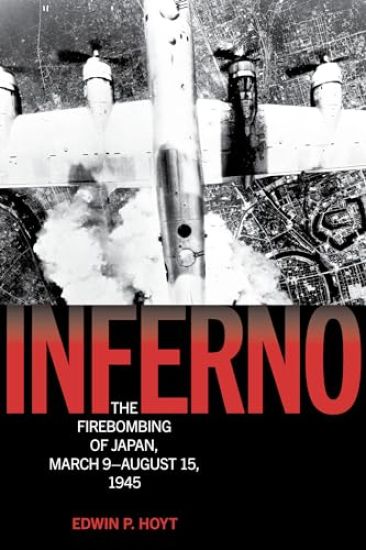
Inferno

Inferno

Edwin P. Hoyt

ROWMAN LITTLEFIELD
2025
pokkari
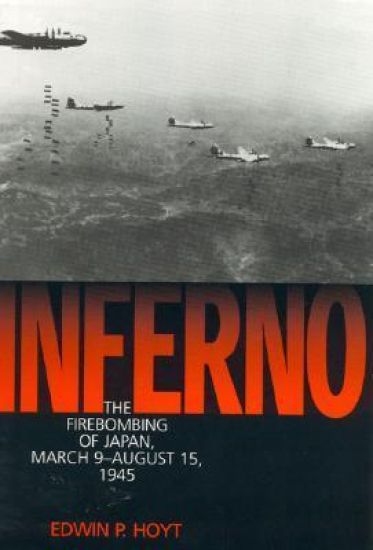
Did the bombing of Japan's cities—culminating in the nuclear destruction of Hiroshima and Nagasaki—hasten the end of World War II? Edwin Hoyt, World War II scholar and author, argues against the U.S. justification of the bombing. In Inferno, Hoyt shows how the United States bombed without discrimination, hurting Japanese civilians far more than the Japanese military. Hoyt accuses Major General Curtis LeMay, the Air Force leader who helped plan the destruction of Dresden, of committing a war crime through his plan to burn Japan's major cities to the ground. The firebombing raids conducted by LeMay's squadrons caused far more death than the two atomic blasts. Throughout cities built largely from wood, incendiary bombs started raging fires that consumed houses and killed hundreds of thousands of men, women, and children. The survivors of the raids recount their stories in Inferno, remembering their terror as they fled to shelter through burning cities, escaping smoke, panicked crowds, and collapsing buildings.Hoyt's descriptions of the widespread death and destruction of Japan depicts a war machine operating without restraint. Inferno offers a provocative look at what may have been America's most brutal policy during the years of World War II.
Men of the Gambier Bay

Men of the Gambier Bay

Edwin P. Hoyt

ROWMAN LITTLEFIELD
2026
pokkari
This is the vivid story of men at all levels-from the captain to the seamen-and the Japanese they faced in battle, first at the Marianas in June 1944 and finally on October 25, 1944, during the Battle of Leyte Gulf. In that engagement, the Navy bloodied the Japanese sorely, but at a grim price: The Gambier Bay became the only U.S. aircraft carrier in World War II to be sunk by naval gunfire.The story of the Gambier Bay is a tale of uncommon courage under fire.
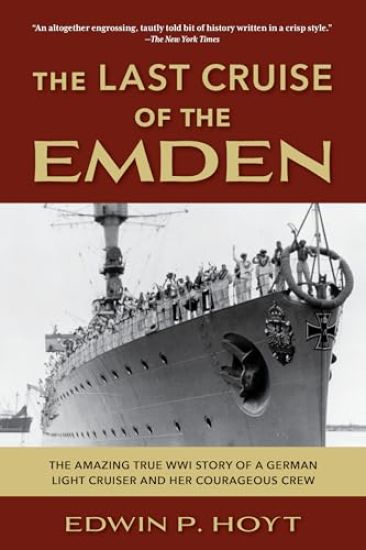
The Last Cruise of the Emden

The Last Cruise of the Emden

Edwin P. Hoyt

ROWMAN LITTLEFIELD
2026
pokkari
The Last Cruise of the Emden is the true story of one of the most extraordinary and little-known escapades of World War I. On August 2, 1914, the Emden, a German light cruiser, was steaming peacefully off the China coast when over its wireless came the message that the German Empire was at war. The ship was made ready for action. Sailing to the Indian Ocean under orders, the Emden sank some twenty merchant vessels - most of them British - a Russian cruiser, and a French destroyer.What followed was a six-month voyage that took the Emden and its crew halfway around the world, fighting heroic battles both on land and at sea, culminating in a dramatic journey across the Arabian desert, which saw the crew survive attacks of malaria, typhus, dysentery, and the murderous onslaught of Lawrence of Arabia's bedouin tribesmen.
Inferno

Inferno

Edwin P. Hoyt

Madison Books
2000
sidottu
Did the bombing of Japan's cities-culminating in the nuclear destruction of Hiroshima and Nagasaki-hasten the end of World War II? Edwin Hoyt, World War II scholar and author, argues against the U. S. justification of the bombing. In his new book, Inferno, Hoyt shows how the U. S. bombed without discrimination, hurting Japanese civilians far more than the Japanese military. Hoyt accuses Major General Curtis LeMay, the Air Force leader who helped plan the destruction of Dresden, of committing a war crime through his plan to burn Japan's major cities to the ground. The firebombing raids conducted by LeMay's squadrons caused far more death than the two atomic blasts. Throughout cities built largely from wood, incendiary bombs started raging fires that consumed houses and killed hundreds of thousands of men, women and children. The survivors of the raids recount their stories in Inferno, remembering their terror as they fled to shelter through burning cities, escaping smoke, panicked crowds, and collapsing buildings. Hoyt's descriptions of the widespread death and destruction of Japan depicts a war machine operating without restraint.Inferno offers a provocative look at what may have been America's most brutal policy during the years of World War II.
Bowfin

Bowfin

Edwin P. Hoyt

Burford Books,U.S.
1998
pokkari
Here is an unforgettable account of submarine warfare, the story of the ship called 'the Pearl Harbour Avenger'. The USS Bowfin, one of the most commended fighting submarines of the Pacific theatre, miraculously survived while sinking 44 Japanese ships. Edwin P Hoyt drew upon official records and crew interviews to craft this brisk, authentic account of the submariner's life and submarine warfare.