Kirjojen hintavertailu. Mukana 12 053 082 kirjaa ja 12 kauppaa.

Kirjahaku

Etsi kirjoja tekijän nimen, kirjan nimen tai ISBN:n perusteella.

15 kirjaa tekijältä Efraim Karsh

Palestine Betrayed

Palestine Betrayed

Efraim Karsh

Yale University Press
2011
pokkari
A searing account of the UN resolution to partition Palestine, and its bloody aftermath “[A] tour de force. . . . With his customary in-depth archival research . . . clear presentation, and meticulous historical sensibility, Karsh argues . . . that Palestinians decided their own destiny and bear near-total responsibility for becoming refugees.”—Daniel Pipes, National Review The 1947 UN resolution to partition Palestine irrevocably changed the political landscape of the Middle East, giving rise to six full-fledged wars between Arabs and Jews, countless armed clashes, blockades, and terrorism, as well as a profound shattering of Palestinian Arab society. Its origins, and that of the wider Arab-Israeli conflict, are deeply rooted in Jewish-Arab confrontation and appropriation in Palestine. But the isolated occasions of violence during the British Mandate era (1920–48) suggest that the majority of Palestinian Arabs yearned to live and thrive under peaceful coexistence with the evolving Jewish national enterprise. So what was the real cause of the breakdown in relations between the two communities? In this brave and groundbreaking book, Efraim Karsh tells the story from both the Arab and Jewish perspectives. He argues that from the early 1920s onward, a corrupt and extremist leadership worked toward eliminating the Jewish national revival and protecting its own interests. Karsh has mined many of the Western, Soviet, UN, and Israeli documents declassified over the past decade, as well as unfamiliar Arab sources, to reveal what happened behind the scenes on both Palestinian and Jewish sides. It is an arresting story of delicate political and diplomatic maneuvering by leading figures—Ben Gurion, Hajj Amin Husseini, Abdel Rahman Azzam, King Abdullah, Bevin, and Truman —over the years leading up to partition, through the slide to war and its enduring consequences. Palestine Betrayed is vital reading for understanding the origin of disputes that remain crucial today.
Islamic Imperialism

Islamic Imperialism

Efraim Karsh

Yale University Press
2013
pokkari
A fundamental challenge to the way we understand the history of the Middle East and the role of Islam in the region From the first Arab-Islamic Empire of the mid-seventh century to the Ottomans, the last great Muslim empire, the story of the Middle East has been the story of the rise and fall of universal empires and, no less important, of imperialist dreams. So argues Efraim Karsh in this highly provocative book. Rejecting the conventional Western interpretation of Middle Eastern history as an offshoot of global power politics, Karsh contends that the region’s experience is the culmination of long-existing indigenous trends, passions, and patterns of behavior, and that foremost among these is Islam’s millenarian imperial tradition. The author explores the history of Islam’s imperialism and the persistence of the Ottoman imperialist dream that outlasted World War I to haunt Islamic and Middle Eastern politics to the present day. September 11 can be seen as simply the latest expression of this dream, and such attacks have little to do with U.S. international behavior or policy in the Middle East, says Karsh. The House of Islam’s war for world mastery is traditional, indeed venerable, and it is a quest that is far from over.
The Cautious Bear

The Cautious Bear

Efraim Karsh

Routledge
2019
sidottu
This book analyzes Soviet military engagement in Middle East wars in the post-1967 era. It clarifies the nature and characteristics of this engagement, offers an explanation for its occurrence, and tries to predict future trends.
The Cautious Bear

The Cautious Bear

Efraim Karsh

Routledge
2020
nidottu
This book analyzes Soviet military engagement in Middle East wars in the post-1967 era. It clarifies the nature and characteristics of this engagement, offers an explanation for its occurrence, and tries to predict future trends.
Neutrality and Small States

Neutrality and Small States

Efraim Karsh

Routledge
2011
sidottu
Originally published in 1988, this book examines the experiences of neutral states in Europe during the Second World War and in the postwar peiod. It examines both the practical and the theoretical considerations and the interface between the two, and discusses the implications of the experience of these countries for small states generally
Neutrality and Small States

Neutrality and Small States

Efraim Karsh

Routledge
2012
nidottu
Originally published in 1988, this book examines the experiences of neutral states in Europe during the Second World War and in the postwar peiod. It examines both the practical and the theoretical considerations and the interface between the two, and discusses the implications of the experience of these countries for small states generally
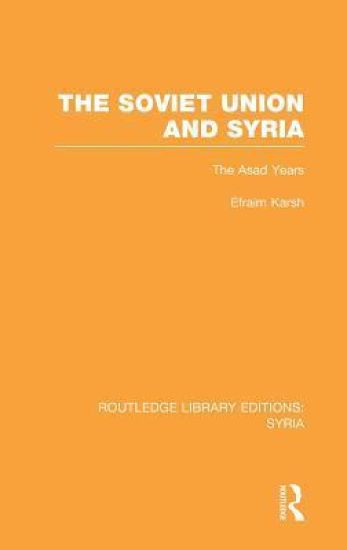
The Soviet Union and Syria (RLE Syria)
This Chatham House Paper examines the nature of Soviet relations with Syria, assessing the commitments made and the gains reaped by Moscow and Damascus in the economic, military and political spheres. After discussing Soviet interests in the region in general and with regard to Syria in particular, the author traces the evolution of the relationship between Moscow and its major Middle Eastern ally since Asad came to power in 1970.While the study argues that huge Soviet military aid has intensified the pro-Soviet alignment of Syrian policy, it contends that Asad’s perception of his country’s national interests has also played a large part in shaping the relationship. The author concludes that both sides have gained from what is an interdependent relationship. If Damascus remains almost wholly dependent on Soviet military aid, regional constraints give Syria some leverage over Moscow. Without Moscow’s support Syria might perhaps not have played such a leading role in the region; without Damascus the Soviet Union might have found itself on the sidelines of the Arab-Israeli conflict.
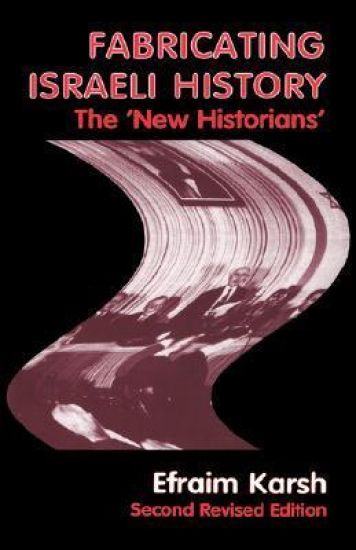
Fabricating Israeli History

Fabricating Israeli History

Efraim Karsh

Routledge
2000
sidottu
Israeli historiography is under assault by "new historians" exposing "Zionist narrative". This text takes issue with these "revisionists", arguing that they have ignored or misinterpreted much documentation in developing their analysis of Israel's history.
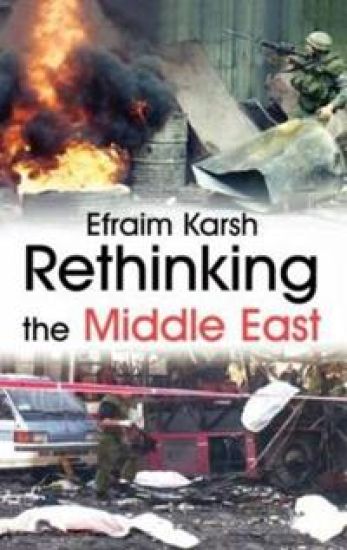
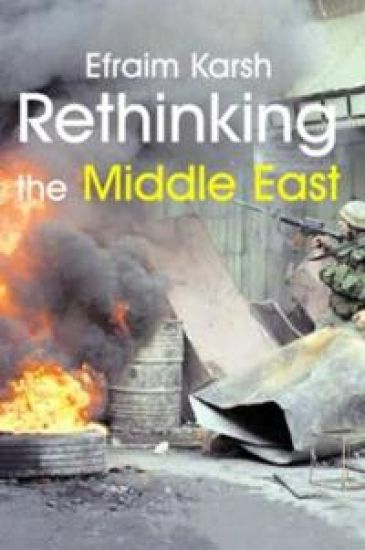
Rethinking the Middle East

Rethinking the Middle East

Efraim Karsh

Routledge
2003
sidottu
Rethinking the Middle East runs counter to the received wisdom in modern Middle East studies. This discipline has been dominated by what may be termed a "culture of victimization"; it views the local populations of the Middle East Arabs in particular as the hapless victims of alien encroachment, and blames the region's endemic malaise on Western political and cultural imperialism. The author contends that the influence of the Great Powers has not been the primary force behind the region's political development, nor the main cause of its famous volatility. He argues that the main impetus has been provided by regional factors; and that even at their weakest point in modern history - during the final stages of the Ottoman Empire - the peoples in the Middle East have played an active role in the restructuring of their region.
Fabricating Israeli History

Fabricating Israeli History

Efraim Karsh

Routledge
2000
nidottu
Israeli historiography is under assault by "new historians" exposing "Zionist narrative". This text takes issue with these "revisionists", arguing that they have ignored or misinterpreted much documentation in developing their analysis of Israel's history.
Rethinking the Middle East

Rethinking the Middle East

Efraim Karsh

Routledge
2003
nidottu
Rethinking the Middle East runs counter to the received wisdom in modern Middle East studies. This discipline has been dominated by what may be termed a "culture of victimization"; it views the local populations of the Middle East Arabs in particular as the hapless victims of alien encroachment, and blames the region's endemic malaise on Western political and cultural imperialism. The author contends that the influence of the Great Powers has not been the primary force behind the region's political development, nor the main cause of its famous volatility. He argues that the main impetus has been provided by regional factors; and that even at their weakest point in modern history - during the final stages of the Ottoman Empire - the peoples in the Middle East have played an active role in the restructuring of their region.
The Soviet Union and Syria (RLE Syria)
This Chatham House Paper examines the nature of Soviet relations with Syria, assessing the commitments made and the gains reaped by Moscow and Damascus in the economic, military and political spheres. After discussing Soviet interests in the region in general and with regard to Syria in particular, the author traces the evolution of the relationship between Moscow and its major Middle Eastern ally since Asad came to power in 1970.While the study argues that huge Soviet military aid has intensified the pro-Soviet alignment of Syrian policy, it contends that Asad’s perception of his country’s national interests has also played a large part in shaping the relationship. The author concludes that both sides have gained from what is an interdependent relationship. If Damascus remains almost wholly dependent on Soviet military aid, regional constraints give Syria some leverage over Moscow. Without Moscow’s support Syria might perhaps not have played such a leading role in the region; without Damascus the Soviet Union might have found itself on the sidelines of the Arab-Israeli conflict.
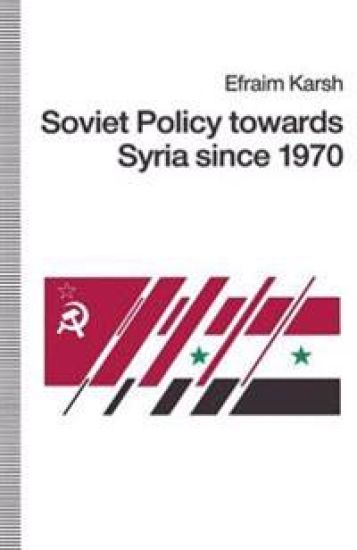
Soviet Policy towards Syria since 1970

Soviet Policy towards Syria since 1970

Efraim Karsh

Palgrave Macmillan
1991
nidottu
An examination of the nature of Soviet policy towards Syria during the last two decades, which seeks to assess Moscow's objectives and the means of achieving those objectives. The study argues that the overriding concern of Soviet policy is preservation of regional stability.
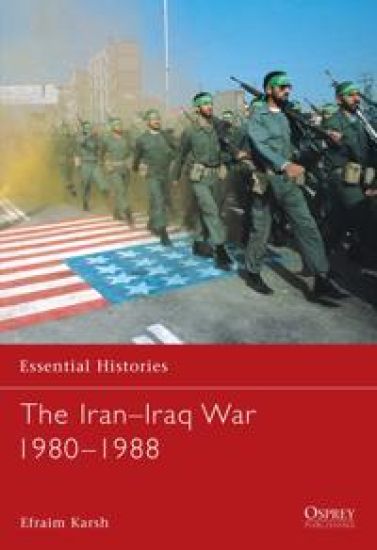
The Iran–Iraq War 1980–1988

The Iran–Iraq War 1980–1988

Efraim Karsh

Osprey Publishing
2002
nidottu
The Iran-Iraq War, which ended in August 1988, one month short of its eighth anniversary, was one of the longest, bloodiest and costliest third world armed conflicts in the 20th century. This volume addresses the causes of the Iran-Iraq War, unpacking the objectives of the two belligerents and examining how far objectives were matched by strategy. It assesses the war's military lessons regarding such key areas as strategy, tactics and escalation and in particular the use of non-conventional weapons. Finally, it examines the utility of armed forces as an instrument of foreign policy.
The Arab-Israeli Conflict

The Arab-Israeli Conflict

Efraim Karsh

Osprey Publishing
2002
nidottu
An examination of the Palestine War of 1948 and its progression through two distinct stages: the guerrilla warfare between the Arab and Jewish communities of Mandatory Palestine, and the conventional inter-state war between the State of Israel and the invading Arab armies. It assesses the participants, their war aims, strategies and combat performance. Finally, it explores the reasons for Israel's success in the face of seemingly impossible odds and for the failure of the Arab nations to turn their military and numerical superiority into victory on the ground.