Kirjojen hintavertailu. Mukana 11 627 362 kirjaa ja 12 kauppaa.

Kirjahaku

Etsi kirjoja tekijän nimen, kirjan nimen tai ISBN:n perusteella.

5 kirjaa tekijältä Eileen M. Hunt

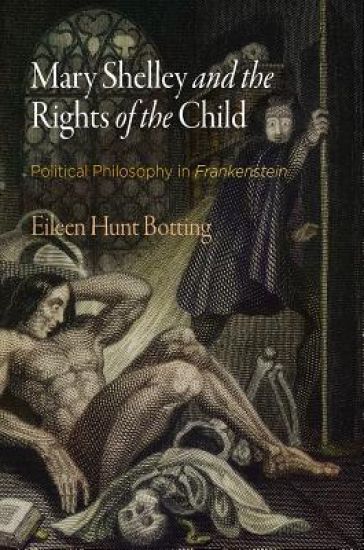
Mary Shelley and the Rights of the Child

Mary Shelley and the Rights of the Child

Eileen M. Hunt

University of Pennsylvania Press
2019
pokkari
From her youth, Mary Shelley immersed herself in the social contract tradition, particularly the educational and political theories of John Locke and Jean-Jacques Rousseau, as well as the radical philosophies of her parents, the feminist Mary Wollstonecraft and the anarchist William Godwin. Against this background, Shelley wrote Frankenstein; or, the Modern Prometheus, first published in 1818. In the two centuries since, her masterpiece has been celebrated as a Gothic classic and its symbolic resonance has driven the global success of its publication, translation, and adaptation in theater, film, art, and literature. However, in Mary Shelley and the Rights of the Child, Eileen Hunt Botting argues that Frankenstein is more than an original and paradigmatic work of science fiction-it is a profound reflection on a radical moral and political question: do children have rights? Botting contends that Frankenstein invites its readers to reason through the ethical consequences of a counterfactual premise: what if a man had used science to create a human life without a woman? Immediately after the Creature's "birth," his scientist-father abandons him and the unjust and tragic consequences that follow form the basis of Frankenstein's plot. Botting finds in the novel's narrative structure a series of interconnected thought experiments that reveal how Shelley viewed Frankenstein's Creature for what he really was-a stateless orphan abandoned by family, abused by society, and ignored by law. The novel, therefore, compels readers to consider whether children have the right to the fundamental means for their development as humans-namely, rights to food, clothing, shelter, care, love, education, and community. In Botting's analysis, Frankenstein emerges as a conceptual resource for exploring the rights of children today, especially those who are disabled, stateless, or genetically modified by medical technologies such as three-parent in vitro fertilization and, perhaps in the near future, gene editing. Mary Shelley and the Rights of the Child concludes that the right to share love and community, especially with parents or fitting substitutes, belongs to all children, regardless of their genesis, membership, or social status.
Mary Shelley and the Rights of the Child

Mary Shelley and the Rights of the Child

Eileen M. Hunt

University of Pennsylvania Press
2017
sidottu
From her youth, Mary Shelley immersed herself in the social contract tradition, particularly the educational and political theories of John Locke and Jean-Jacques Rousseau, as well as the radical philosophies of her parents, the feminist Mary Wollstonecraft and the anarchist William Godwin. Against this background, Shelley wrote Frankenstein; or, the Modern Prometheus, first published in 1818. In the two centuries since, her masterpiece has been celebrated as a Gothic classic and its symbolic resonance has driven the global success of its publication, translation, and adaptation in theater, film, art, and literature. However, in Mary Shelley and the Rights of the Child, Eileen Hunt Botting argues that Frankenstein is more than an original and paradigmatic work of science fiction-it is a profound reflection on a radical moral and political question: do children have rights? Botting contends that Frankenstein invites its readers to reason through the ethical consequences of a counterfactual premise: what if a man had used science to create a human life without a woman? Immediately after the Creature's "birth," his scientist-father abandons him and the unjust and tragic consequences that follow form the basis of Frankenstein's plot. Botting finds in the novel's narrative structure a series of interconnected thought experiments that reveal how Shelley viewed Frankenstein's Creature for what he really was-a stateless orphan abandoned by family, abused by society, and ignored by law. The novel, therefore, compels readers to consider whether children have the right to the fundamental means for their development as humans-namely, rights to food, clothing, shelter, care, love, education, and community. In Botting's analysis, Frankenstein emerges as a conceptual resource for exploring the rights of children today, especially those who are disabled, stateless, or genetically modified by medical technologies such as three-parent in vitro fertilization and, perhaps in the near future, gene editing. Mary Shelley and the Rights of the Child concludes that the right to share love and community, especially with parents or fitting substitutes, belongs to all children, regardless of their genesis, membership, or social status.
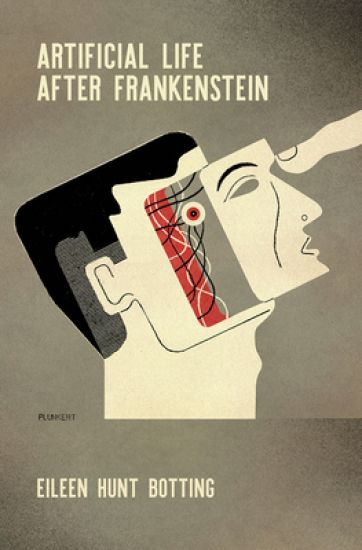
Artificial Life After Frankenstein

Artificial Life After Frankenstein

Eileen M. Hunt

University of Pennsylvania Press
2020
sidottu
Artificial Life After Frankenstein brings the insights born of Mary Shelley's legacy to bear upon the ethics and politics of making artificial life and intelligence in the twenty-first century. What are the obligations of humanity to the artificial creatures we make? And what are the corresponding rights of those creatures, whether they are learning machines or genetically modified organisms? In seeking ways to respond to these questions, so vital for our age of genetic engineering and artificial intelligence, we would do well to turn to the capacious mind and imaginative genius of Mary Wollstonecraft Shelley (1797-1851). Shelley's novels Frankenstein; or, The Modern Prometheus (1818) and The Last Man (1826) precipitated a modern political strain of science fiction concerned with the ethical dilemmas that arise when we make artificial life-and make life artificial-through science, technology, and other forms of cultural change. In Artificial Life After Frankenstein, Eileen Hunt Botting puts Shelley and several classics of modern political science fiction into dialogue with contemporary political science and philosophy, in order to challenge some of the apocalyptic fears at the fore of twenty-first-century political thought on AI and genetic engineering. Focusing on the prevailing myths that artificial forms of life will end the world, destroy nature, and extinguish love, Botting shows how Shelley modeled ways to break down and transform the meanings of apocalypse, nature, and love in the face of widespread and deep-seated fear about the power of technology and artifice to undermine the possibility of humanity, community, and life itself. Through their explorations of these themes, Mary Shelley and authors of modern political science fiction from H. G. Wells to Nnedi Okorafor have paved the way for a techno-political philosophy of living with the artifice of humanity in all of its complexity. In Artificial Life After Frankenstein, Botting brings the insights born of Shelley's legacy to bear upon the ethics and politics of making artificial life and intelligence in the twenty-first century.
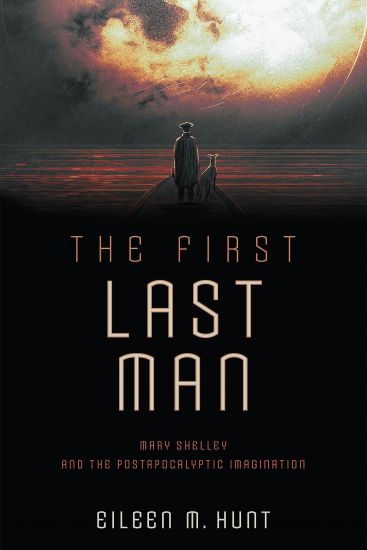
The First Last Man

The First Last Man

Eileen M. Hunt

UNIVERSITY OF PENNSYLVANIA PRESS
2024
sidottu
Beyond her most famous creation—the nightmarish vision of Frankenstein's Creature—Mary Shelley's most enduring influence on politics, literature, and art perhaps stems from the legacy of her lesser-known novel about the near-extinction of the human species through war, disease, and corruption. This novel, The Last Man (1826), gives us the iconic image of a heroic survivor who narrates the history of an apocalyptic disaster in order to save humanity—if not as a species, then at least as the practice of compassion or humaneness. In visual and musical arts from 1826 to the present, this postapocalyptic figure has transmogrified from the "last man" into the globally familiar filmic images of the "invisible man" and the "final girl." Reading Shelley's work against the background of epidemic literature and political thought from ancient Greece to Covid-19, Eileen M. Hunt reveals how Shelley's postapocalyptic imagination has shaped science fiction and dystopian writing from H. G. Wells, M. P. Shiel, and George Orwell to Octavia Butler, Margaret Atwood, and Emily St. John Mandel. Through archival research into Shelley's personal journals and other writings, Hunt unearths Shelley's ruminations on her own personal experiences of loss, including the death of young children in her family to disease and the drowning of her husband, Percy Bysshe Shelley. Shelley's grief drove her to intensive study of Greek tragedy, through which she developed the thinking about plague, conflict, and collective responsibility that later emerges in her fiction. From her readings of classic works of plague literature to her own translation of Sophocles's Oedipus Rex, and from her authorship of the first major modern pandemic novel to her continued influence on contemporary popular culture, Shelley gave rise to a tradition of postapocalyptic thought that asks a question that the Covid-19 pandemic has made newly urgent for many: What do humans do after disaster?
Artificial Life After Frankenstein

Artificial Life After Frankenstein

Eileen M. Hunt

UNIVERSITY OF PENNSYLVANIA PRESS
2024
pokkari
Artificial Life After Frankenstein brings the insights born of Mary Shelley's legacy to bear upon the ethics and politics of making artificial life and intelligence in the twenty-first century. What are the obligations of humanity to the artificial creatures we make? And what are the corresponding rights of those creatures, whether they are learning machines or genetically modified organisms? In seeking ways to respond to these questions, so vital for our age of genetic engineering and artificial intelligence, we would do well to turn to the capacious mind and imaginative genius of Mary Wollstonecraft Shelley (1797-1851). Shelley's novels Frankenstein; or, The Modern Prometheus (1818) and The Last Man (1826) precipitated a modern political strain of science fiction concerned with the ethical dilemmas that arise when we make artificial life-and make life artificial-through science, technology, and other forms of cultural change. In Artificial Life After Frankenstein, Eileen Hunt Botting puts Shelley and several classics of modern political science fiction into dialogue with contemporary political science and philosophy, in order to challenge some of the apocalyptic fears at the fore of twenty-first-century political thought on AI and genetic engineering. Focusing on the prevailing myths that artificial forms of life will end the world, destroy nature, and extinguish love, Botting shows how Shelley modeled ways to break down and transform the meanings of apocalypse, nature, and love in the face of widespread and deep-seated fear about the power of technology and artifice to undermine the possibility of humanity, community, and life itself. Through their explorations of these themes, Mary Shelley and authors of modern political science fiction from H. G. Wells to Nnedi Okorafor have paved the way for a techno-political philosophy of living with the artifice of humanity in all of its complexity. In Artificial Life After Frankenstein, Botting brings the insights born of Shelley's legacy to bear upon the ethics and politics of making artificial life and intelligence in the twenty-first century.