Kirjojen hintavertailu. Mukana 11 342 296 kirjaa ja 12 kauppaa.

Kirjahaku

Etsi kirjoja tekijän nimen, kirjan nimen tai ISBN:n perusteella.

12 kirjaa tekijältä Eleanor Johnson

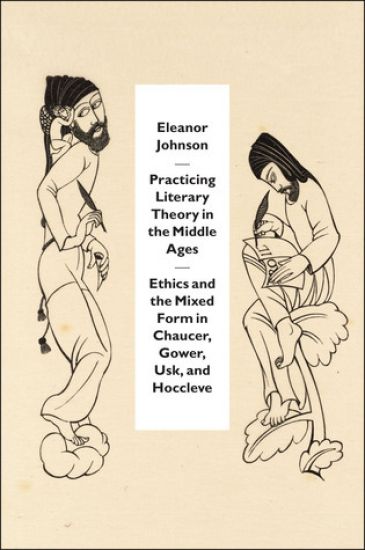
Practicing Literary Theory in the Middle Ages

Practicing Literary Theory in the Middle Ages

Eleanor Johnson

University of Chicago Press
2013
sidottu
Literary scholars often avoid the category of the aesthetic in discussions of ethics, believing that purely aesthetic judgments can vitiate analyses of a literary work's sociopolitical heft and meaning. In "Practicing Literary Theory in the Middle Ages", Eleanor Johnson reveals that aesthetics - the formal aspects of literary language that make it senseperceptible - are indeed inextricable from ethics in the writing of medieval literature. Johnson brings a keen formalist eye to bear on the prosimetric form: the mixing of prose with lyrical poetry. This form descends from the writings of the sixth-century Christian philosopher Boethius - specifically his famous prison text, "Consolation of Philosophy" - to the late-medieval English tradition. Johnson argues that Boethius' text had a broad influence not simply on the thematic and philosophical content of subsequent literary writing, but also on the specific aesthetic construction of several vernacular traditions. She demonstrates the underlying prosimetric structures in a variety of Middle English texts - including Chaucer's "Troilus and Criseyde and portions of the Canterbury Tales", Thomas Usk's "Testament of Love", John Gower's "Confessio Amantis", and Thomas Hoccleve's autobiographical poetry - and asks how particular formal choices work, how they resonate with medieval literary-theoretical ideas, and how particular poems and prose works mediate the tricky business of modeling ethical transformation for a readership.
Practicing Literary Theory in the Middle Ages

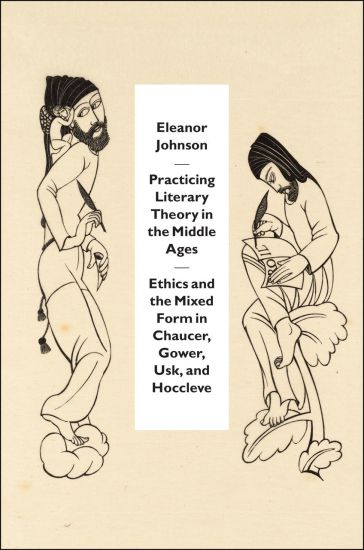
Practicing Literary Theory in the Middle Ages

Eleanor Johnson

University of Chicago Press
2017
nidottu
Literary scholars often avoid the category of the aesthetic in discussions of ethics, believing that purely aesthetic judgments can vitiate analyses of a literary work's sociopolitical heft and meaning. In Practicing Literary Theory in the Middle Ages, Eleanor Johnson reveals that aesthetics the formal aspects of literary language that make it sense-perceptible are indeed inextricable from ethics in the writing of medieval literature. Johnson brings a keen formalist eye to bear on the prosimetric form: the mixing of prose with lyrical poetry. This form descends from the writings of the sixth-century Christian philosopher Boethius specifically his famous prison text, Consolation of Philosophy to the late medieval English tradition. Johnson argues that Boethius's text had a broad influence not simply on the thematic and philosophical content of subsequent literary writing, but also on the specific aesthetic construction of several vernacular traditions. She demonstrates the underlying prosimetric structures in a variety of Middle English texts including Chaucer's Troilus and Criseyde and portions of the Canterbury Tales, Thomas Usk's Testament of Love, John Gower's Confessio amantis, and Thomas Hoccleve's autobiographical poetry and asks how particular formal choices work, how they resonate with medieval literary-theoretical ideas, and how particular poems and prose works mediate the tricky business of modeling ethical transformation for a readership.
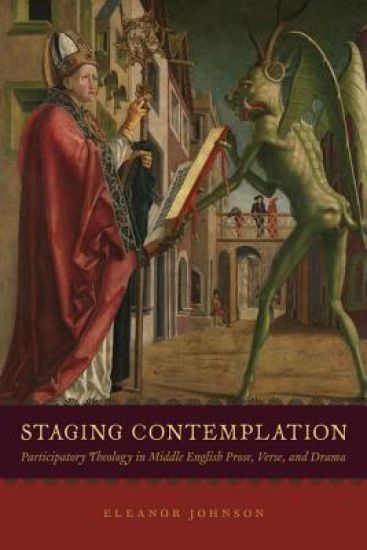
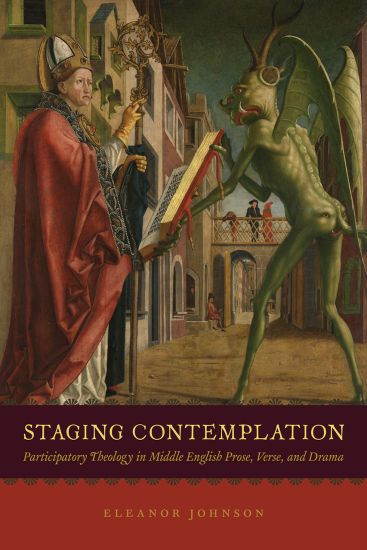
Staging Contemplation

Staging Contemplation

Eleanor Johnson

University of Chicago Press
2018
sidottu
What does it mean to contemplate? In the Middle Ages, more than merely thinking with intensity, it was a religious practice entailing utter receptiveness to the divine presence. Contemplation is widely considered by scholars today to have been the highest form of devotional prayer, a rarified means of experiencing God practiced only by the most devout of monks, nuns, and mystics. Yet, in this groundbreaking new book, Eleanor Johnson argues instead for the pervasiveness and accessibility of contemplative works to medieval audiences. By drawing together ostensibly diverse literary genres—devotional prose, allegorical poetry, cycle dramas, and morality plays—Staging Contemplation paints late Middle English contemplative writing as a broad genre that operated collectively and experientially as much as through radical individual disengagement from the world. Johnson further argues that the contemplative genre played a crucial role in the exploration of the English vernacular as a literary and theological language in the fifteenth century, tracing how these works engaged modes of disfluency—from strained syntax and aberrant grammar, to puns, slang, code-switching, and laughter—to explore the limits, norms, and potential of English as a devotional language. Full of virtuoso close readings, this book demonstrates a sustained interest in how poetic language can foster a participatory experience of likeness to God among lay and devotional audiences alike.
Staging Contemplation

Staging Contemplation

Eleanor Johnson

University of Chicago Press
2018
pokkari
What does it mean to contemplate? In the Middle Ages, more than merely thinking with intensity, it was a religious practice entailing utter receptiveness to the divine presence. Contemplation is widely considered by scholars today to have been the highest form of devotional prayer, a rarified means of experiencing God practiced only by the most devout of monks, nuns, and mystics. Yet, in this groundbreaking new book, Eleanor Johnson argues instead for the pervasiveness and accessibility of contemplative works to medieval audiences. By drawing together ostensibly diverse literary genres—devotional prose, allegorical poetry, cycle dramas, and morality plays—Staging Contemplation paints late Middle English contemplative writing as a broad genre that operated collectively and experientially as much as through radical individual disengagement from the world. Johnson further argues that the contemplative genre played a crucial role in the exploration of the English vernacular as a literary and theological language in the fifteenth century, tracing how these works engaged modes of disfluency—from strained syntax and aberrant grammar, to puns, slang, code-switching, and laughter—to explore the limits, norms, and potential of English as a devotional language. Full of virtuoso close readings, this book demonstrates a sustained interest in how poetic language can foster a participatory experience of likeness to God among lay and devotional audiences alike.
Waste and the Wasters

Waste and the Wasters

Eleanor Johnson

THE UNIVERSITY OF CHICAGO PRESS
2023
sidottu
A groundbreaking examination of ecological thought in medieval England. While the scale of today’s crisis is unprecedented, environmental catastrophe is nothing new. Waste and the Wasters studies the late Middle Ages, when a convergence of land contraction, soil depletion, climate change, pollution, and plague subsumed Western Europe. In a culture lacking formal scientific methods, the task of explaining and coming to grips with what was happening fell to medieval poets. The poems they wrote used the terms “waste” or “wasters” to anchor trenchant critiques of people’s unsustainable relationships with the world around them and with each other. In this book, Eleanor Johnson shows how poetry helped medieval people understand and navigate the ecosystemic crises—both material and spiritual—of their time.
Waste and the Wasters

Waste and the Wasters

Eleanor Johnson

THE UNIVERSITY OF CHICAGO PRESS
2023
nidottu
A groundbreaking examination of ecological thought in medieval England. While the scale of today’s crisis is unprecedented, environmental catastrophe is nothing new. Waste and the Wasters studies the late Middle Ages, when a convergence of land contraction, soil depletion, climate change, pollution, and plague subsumed Western Europe. In a culture lacking formal scientific methods, the task of explaining and coming to grips with what was happening fell to medieval poets. The poems they wrote used the terms “waste” or “wasters” to anchor trenchant critiques of people’s unsustainable relationships with the world around them and with each other. In this book, Eleanor Johnson shows how poetry helped medieval people understand and navigate the ecosystemic crises—both material and spiritual—of their time.
The Dwell

The Dwell

Eleanor Johnson

Scrambler Books
2009
nidottu
Eleanor Johnson is a poet, scholar, translator, and teacher. She studies medieval poetics, ethics, and literary theories. She has taught literature and creative writing at the University of California, Berkeley, and is an Assistant Professor of English and Comparative Literature at Columbia University. She has published poetry in the online magazine Shampoo and has a forthcoming collaborative book entitled "Her Many Feathered Bones," from Achiote Press.
Thimbles and Thimble Cases

Thimbles and Thimble Cases

Eleanor Johnson

Shire Publications
2006
nidottu
To many people a thimble may seem to be simply a mundane and commonplace object with unromantic shape and associations, even if the work with which it assists can frequently be exquisite and imaginative. This book will open a door to the charm of the humble thimble in all its variety, from the simple workaday type to the rarer and more exquisite examples that gave scope for artists and craftsmen, and indeed still do. It will give those new to a fascinating collecting field an introduction to the possibilities that exist, including the parallel subject of thimble cases. The more interesting old thimbles are less plentiful than they once were but are still worth searching for in antique shops and antique fairs, while those currently being made and on sale in good gift shops can make a worthy addition to any comprehensive collection.
Scream with Me

Scream with Me

Eleanor Johnson

Atria Books
2025
sidottu
A compelling, intelligent, and timely exploration of the horror genre from one of Columbia University’s most popular professors, shedding light on how classic horror films demonstrate larger cultural attitudes about women’s rights, bodily autonomy, and more.In May of 2022, Columbia University’s Dr. Eleanor Johnson watched along with her students as the Supreme Court reversed Roe v. Wade. At the same time, her class was studying the 1968 horror film Rosemary’s Baby and Johnson had a sudden epiphany: horror cinema engages directly with the combustive politics of women’s rights and offer a light through the darkness and an outlet to scream. With a voice as persuasive as it is insightful, Johnson reveals how classics like Rosemary’s Baby, The Exorcist, and The Shining expose and critique issues of reproductive control, domestic violence, and patriarchal oppression. Scream with Me weaves these iconic films into the fabric of American feminism, revealing that true horror often lies not in the supernatural, but in the familiar confines of the home, exposing the deep-seated fears and realities of women’s lives. While on the one hand a joyful celebration of seminal and beloved horror films, Scream with Me is also an unflinching and timely recognition of the power of this genre to shape and reflect cultural dialogues about gender and power.
Scream with Me

Scream with Me

Eleanor Johnson

Atria Books
2025
pokkari
A compelling and timely exploration of the horror genre from award-winning scholar Eleanor Johnson that sheds light on the nexus between classic horror films and women’s rights, bodily autonomy, and more. In May 2022, Columbia University’s Dr. Eleanor Johnson watched along with her students as the Supreme Court of the United States overturned decades of judicial precedent and reversed Roe v. Wade. At the time, her class was in the middle of studying the 1968 horror film Rosemary’s Baby which led Johnson to an epiphany: horror cinema engages directly with the combustible politics of women’s rights and the despotic atmosphere in America. Scream with Me reveals with intellect and empathy how classics like Rosemary’s Baby, The Exorcist, and The Shining expose and critique issues of reproductive control, domestic violence, and patriarchal oppression. These films, beloved by horror fans, show with blood and terror the sinister nature of gender roles, the isolation of domesticity, and the ever-present threat lurking in the shadows behind our own thresholds. Here, Johnson weaves these iconic films into the fabric of feminism, revealing that true horror lies not in rare situations and the supernatural but in the familiar confines of the home. While celebrating seminal horror films, Johnson also encourages us to wrestle intimately with the surface scares to understand the deeper messages at play. Scream with Me is an unflinching and timely recognition of the power of this genre to shape and reflect cultural dialogues about gender and autonomy.
Monstrous Bitch

Monstrous Bitch

Eleanor Johnson

PRINCETON UNIVERSITY PRESS
2027
sidottu
How an ancient myth about a sexually voracious, baby-slaying, loudmouthed demoness became the defining misogynistic archetype of Western civilization For as long as human societies have been telling stories, the patriarchy has felt threatened by women. In this book, Eleanor Johnson provides an engaging cultural history of a figure she calls the “monstrous bitch,” the notorious female who has haunted the patriarchal imagination for centuries, feared for her sexual promiscuity, her exercise of reproductive agency and control, and her outspoken way of contesting patriarchal power. In a narrative brimming with insight, Johnson traces the origins of female monstrosity to the demoness Lamashtu of ancient Mesopotamia, showing how this infanticidal, hypersexual, loudmouthed monster appears in different guises throughout history. In classical Greece, she reemerges as the sorceress Medea, the child-devouring monster Lamia, and the vengeful Furies. In the medieval and early modern periods, she is an oversexed, baby-slaying, spellcasting witch; in the Romantic and Victorian eras, a vampiress; and in the modern age of psychoanalysis, a mental patient. After this longue durée history, Johnson shows how monstrous bitchery has been challenged and reinterpreted in contemporary cinematic popular culture, becoming an expression of heroism and resistance in films like The Exorcist, The Hunger, and Species. She demonstrates how deeply embedded the roots of misogyny have become, and why it is more critical today than ever that we expose and address them. An irreverent look at a pervasive trope that runs through four thousand years of Western culture, Monstrous Bitch reveals that while representations of the powerful woman have evolved over time, the fear and demonization of her remains the same.