Kirjojen hintavertailu. Mukana 11 717 486 kirjaa ja 12 kauppaa.

Kirjahaku

Etsi kirjoja tekijän nimen, kirjan nimen tai ISBN:n perusteella.

7 kirjaa tekijältä Eleanor Ty

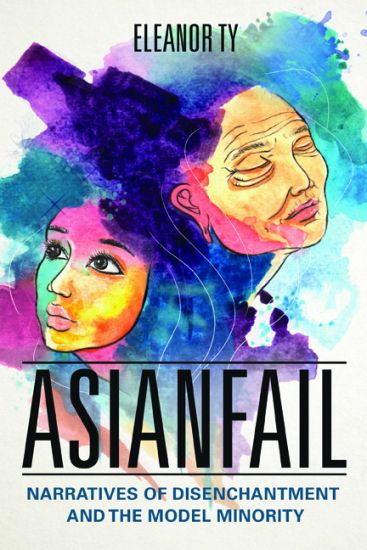
Asianfail

Asianfail

Eleanor Ty

University of Illinois Press
2017
sidottu
Eleanor Ty's bold exploration of literature, plays, and film reveals how young Asian Americans and Asian Canadians have struggled with the ethos of self-sacrifice preached by their parents. This new generation's narratives focus on protagonists disenchanted with their daily lives. Many are depressed. Some are haunted by childhood memories of war, trauma, and refugee camps. Rejecting an obsession with professional status and money, they seek fulfillment by prioritizing relationships, personal growth, and cultural success. As Ty shows, these storytellers have done more than reject a narrowly defined road to happiness. They have rejected neoliberal capitalism itself. In so doing, they demand that the rest of us reconsider our outmoded ideas about the so-called model minority.
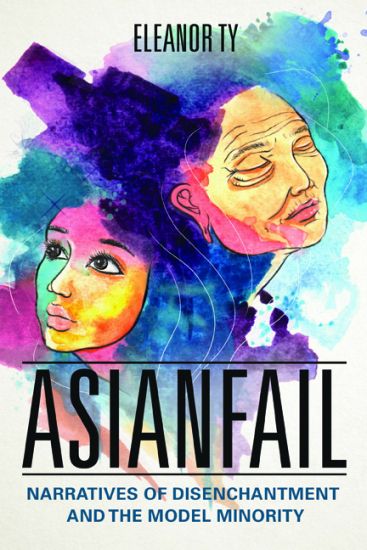
Asianfail

Asianfail

Eleanor Ty

University of Illinois Press
2017
nidottu
Eleanor Ty's bold exploration of literature, plays, and film reveals how young Asian Americans and Asian Canadians have struggled with the ethos of self-sacrifice preached by their parents. This new generation's narratives focus on protagonists disenchanted with their daily lives. Many are depressed. Some are haunted by childhood memories of war, trauma, and refugee camps. Rejecting an obsession with professional status and money, they seek fulfillment by prioritizing relationships, personal growth, and cultural success. As Ty shows, these storytellers have done more than reject a narrowly defined road to happiness. They have rejected neoliberal capitalism itself. In so doing, they demand that the rest of us reconsider our outmoded ideas about the so-called model minority.
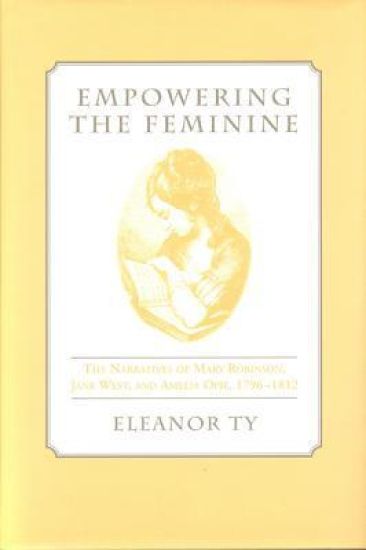
Empowering the Feminine

Empowering the Feminine

Eleanor Ty

University of Toronto Press
1998
sidottu
Mary Robinson, a fantastic beauty and popular actress, and once lover of the Prince of Wales, received the epithet 'the English Sappho' for her lyric verse. Amelia Opie, a member of the fashionable literary society and later a Quaker, included amongst her friends Sydney Smith, Byron, and Scott, and reputedly refused Godwin's marriage proposal out of admiration for Mary Wollstonecraft. Jane West, who tended her household and dairy while writing prolifically to support her children, was in direct opposition to the radically feminist ideas preceding her. These authors, each from different ideological and social backgrounds, all grappled with a desire for empowerment. Writing in an atmosphere hardened towards reform in response to the French revolution's upheavals, these women focus their narratives on typically feminine attitudes - docility, maternal feeling, heightened sensibility (that key word of the period). Their focus invested these attitudes with new meaning, making supposed female weaknesses potentially active forces for social change. Eleanor Ty's convincing argument, arrived at through close readings of ten key texts, is an important addition to the recent spate of publications which bring to the fore neglected women authors whose fascinating lives and works greatly enrich our understanding of the late eighteenth century and British Romanticism.
Unsex'd Revolutionaries

Unsex'd Revolutionaries

Eleanor Ty

University of Toronto Press
1993
pokkari
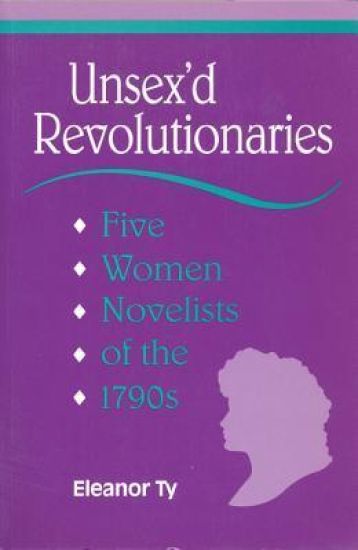
Women had been writing long before the French Revolution, but the reactionary character of the 1790s infused their work with a public importance and an urgency. The decade was one of intense argument and reflection on the role of women in society. Eleanor Ty studies the ways in which five women writers of the 1790s politicized the domestic or sentimental novel in response to oppression and exclusion. Influenced by radical post-revolution thinkers, Mary Wollstonecraft, Mary Hays, Helen Maria Williams, Elizabeth Inchbald, and Charlotte Smith wrote fiction that questioned existing social, economic, legal and cultural practices as they related to women. In particular, they dealt with historically specific gender issues such as female education, the rights and ‘wrongs’ of woman, and the duties of a wife. Using historical and feminist psycho-linguistic studies as a base, Ty explores some of the complexities encountered in the writings of these five women. Through their challenge to Edmund Burke’s patriarchal ideas, they discovered strategies of writing based on the maternal or female aesthetic. For these ‘unsex’d revolutionaries,’ sentimental or domestic fiction was not just about courtship, love, and romance. Their writings interrogate the structures of society, and criticize and make relevant the connections between the personal and the political, the domestic and the public sphere.
The Politics of the Visible in Asian North American Narratives
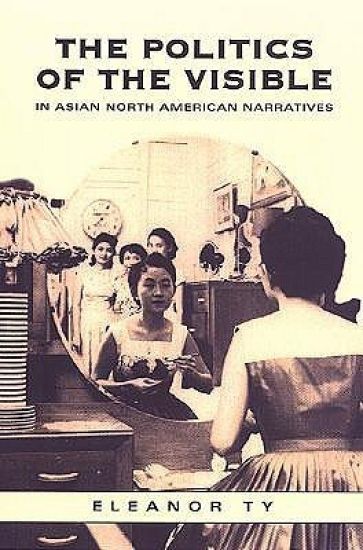
Examining nine Asian Canadian and Asian American narratives, Eleanor Ty explores how authors empower themselves, represent differences, and re-script their identities as 'visible minorities' within the ideological, imaginative, and discursive space given to them by dominant culture. In various ways, Asian North Americans negotiate daily with 'birthmarks,' their shared physical features marking them legally, socially, and culturally as visible outsiders, and paradoxically, as invisible to mainstream history and culture. Ty argues that writers such as Denise Chong, Shirley Geok-lin Lim, and Wayson Choy recast the marks of their bodies and challenge common perceptions of difference based on the sights, smells, dress, and other characteristics of their hyphenated lives. Others, like filmmaker Mina Shum and writers Bienvenido Santos and Hiromi Goto, challenge the means by which Asian North American subjects are represented and constructed in the media and in everyday language. Through close readings grounded in the socio-historical context of each work, Ty studies the techniques of various authors and filmmakers in their meeting of the gaze of dominant culture and their response to the assumptions and meanings commonly associated with Orientalized, visible bodies.
The Politics of the Visible in Asian North American Narratives
Examining nine Asian Canadian and Asian American narratives, Eleanor Ty explores how authors empower themselves, represent differences, and re-script their identities as 'visible minorities' within the ideological, imaginative, and discursive space given to them by dominant culture. In various ways, Asian North Americans negotiate daily with 'birthmarks,' their shared physical features marking them legally, socially, and culturally as visible outsiders, and paradoxically, as invisible to mainstream history and culture. Ty argues that writers such as Denise Chong, Shirley Geok-lin Lim, and Wayson Choy recast the marks of their bodies and challenge common perceptions of difference based on the sights, smells, dress, and other characteristics of their hyphenated lives. Others, like filmmaker Mina Shum and writers Bienvenido Santos and Hiromi Goto, challenge the means by which Asian North American subjects are represented and constructed in the media and in everyday language. Through close readings grounded in the socio-historical context of each work, Ty studies the techniques of various authors and filmmakers in their meeting of the gaze of dominant culture and their response to the assumptions and meanings commonly associated with Orientalized, visible bodies.
Unfastened

Unfastened

Eleanor Ty

University of Minnesota Press
2010
nidottu
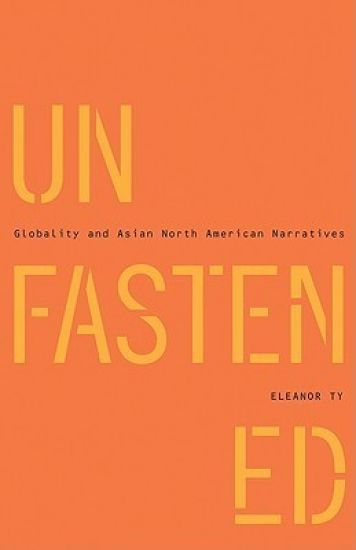
Unfastened examines literary works and films by Asian Americans and Asian Canadians that respond critically to globality-the condition in which traditional national, cultural, geographical, and economic boundaries have been-supposedly-surmounted. In this wide-ranging exploration, Eleanor Ty reveals how novelists such as Brian Ascalon Roley, Han Ong, Lydia Kwa, and Nora Okja Keller interrogate the theoretical freedom that globalization promises in their depiction of the underworld of crime and prostitution. She looks at the social critiques created by playwrights Betty Quan and Sunil Kuruvilla, who use figures of disability to accentuate the effects of marginality. Investigating works based on fantasy, Ty highlights the ways feminist writers Larissa Lai, Chitra Divakaruni, Hiromi Goto, and Ruth Ozeki employ myth, science fiction, and magic realism to provide alternatives to global capitalism. She notes that others, such as filmmaker Deepa Mehta and performers/dramatists Nadine Villasin and Nina Aquino, play with the multiple identities afforded to them by transcultural connections. Ultimately, Ty sees in these diverse narratives unfastened mobile subjects, heroes, and travelers who use everyday tactics to challenge inequitable circumstances in their lives brought about by globalization.