Kirjojen hintavertailu. Mukana 12 390 323 kirjaa ja 12 kauppaa.

Kirjahaku

Etsi kirjoja tekijän nimen, kirjan nimen tai ISBN:n perusteella.

57 kirjaa tekijältä Elias Canetti

The Voices of Marrakesh: A Record of a Visit

The Voices of Marrakesh: A Record of a Visit

Elias Canetti

Penguin Classics
2012
pokkari
Nobel Prize-winning author Canetti spent only a few weeks in Marrakesh, but it was a visit that would remain with him for the rest of his life. In The Voices of Marrakesh, he captures the essence of that place: the crowds, the smells - of spices, camels and the souks - and, most importantly to Canetti, the sounds of the city, from the cries of the blind beggars and the children's call for alms to the unearthly silence on the still roofs above the hordes. In these immaculately crafted essays, Canetti examines the emotions Marrakesh stirred within him and the people who affected him for ever.
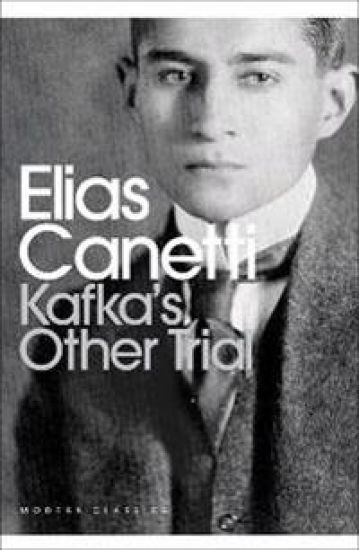
Kafka's Other Trial

Kafka's Other Trial

Elias Canetti

Penguin Classics
2012
pokkari
In July 1914, Franz Kafka's fiancée Felice broke off their engagement in a humiliating public tribunal, surrounded by her friends and family, and the other woman with whom Kafka had recently fallen in love. Broken and bereft, Kafka - at the height of his writing powers - turned the experience into his masterpiece, The Trial, where his lovers became the faceless prosecutors of Josef K. In Kafka's Other Trial, Canetti explores each letter that Kafka wrote to his fiancée, from their first tender moments together to his final letter and his refusal to reconcile. In this affecting book, he offers moving insights into the creativity of Franz Kafka and the torment he suffered as a man, a lover, and a writer.
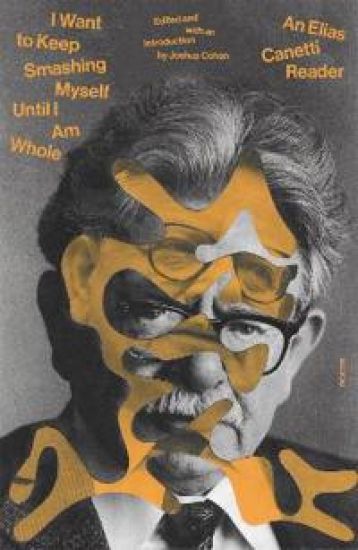
I Want to Keep Smashing Myself Until I Am Whole

I Want to Keep Smashing Myself Until I Am Whole

Elias Canetti

FARRAR, STRAUS GIROUX INC
2022
pokkari
A career-spanning collection of writings by the Nobel laureate Elias Canetti, edited and introduced by Pulitzer Prize winner Joshua Cohen. He embarked on no adventures, he was in no war. He was never in prison, he never killed anyone. He neither won nor lost a fortune. All he ever did was live in this century. But that alone was enough to give his life dimension, both of feeling and of thought. Here, in his own words, is one of the twentieth century's foremost chroniclers: a dizzyingly inventive, formally unplaceable, unstoppably peripatetic writer named Elias Canetti, who was awarded the Nobel Prize in Literature in 1981. I Want to Keep Smashing Myself Until I Am Whole is a summa of Canetti's life and thought, and the definitive introduction to a writer whose genius for interpreting world-historical changes was matched by a keen sense of wonder and an abiding skepticism about the knowability of the self. Born into a Sephardi Jewish family in Bulgaria, Canetti later lived in Austria, England, and Switzerland while traversing, in writing, the great thematic provinces of his time: politics, identity, mortality, and more. Sourced from Canetti's landmark texts, including Crowds and Power, an analysis of authoritarianism and mobs; Auto-da-Fe, a darkly comic, daringly modernist novel about the fate of European literature; the famous sequence of sensory-titled memoirs, including The Tongue Set Free and The Torch in My Ear; and never-before-translated writings such as the posthumous The Book Against Death, this collection assembles its luminous shards into the fullest portrait yet of Canetti's remarkable achievement. Edited and introduced by Joshua Cohen (Book of Numbers, The Netanyahus), I Want to Keep Smashing Myself Until I Am Whole leads us from Canetti's polyglot childhood to his mature preoccupations, and his friendships and rivalries with Hermann Broch, James Joyce, Karl Kraus, Thomas Mann, Robert Musil, and others. This collection is also interspersed with aphorisms and diary entries, revealing Canetti's formal range and stylistic versatility in flashes of erudition and introspective humor. Throughout, we come to see Canetti's restless fascination with the instability of identity as one of the keys to his thought--as he reminds us, It all depends on this: with whom we confuse ourselves.
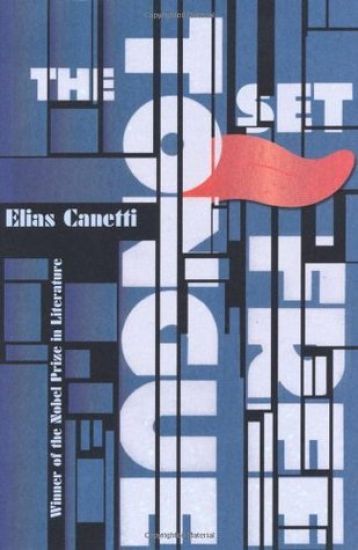
The Tongue Set Free

The Tongue Set Free

Elias Canetti

Farrar, Straus and Giroux
1983
nidottu
Winner of the 1981 Nobel Prize, this first volume of the author's autobiography provides a searching portrait of his personal background and creative development. Elias Canetti was one of the major intellectual figures and polymaths of the twentieth century. A master of many genres, he is known especially for his novel, Auto-da-Fe, and his great work of social theory, Crowds and Power. But Canetti's genius is perhaps nowhere more evident than in the three volumes of his autobiography. This first volume, Tongue Set Free, provides a searching portrait of the author's personal background and creative development as it presents the events, personalities (especially Canetti's mother), and intellectual forces that shaped the growth of the artist as a young man.
Torch in My Ear

Torch in My Ear

Elias Canetti

Farrar, Straus and Giroux
1983
nidottu
The second volume in the Nobel Prize winning author Elias Canetti's trilogy of memoirs, The Torch in My Ear This book presents an account of Canetti's young manhood, of his arrival in Vienna in the early 1920s, of his schooling, and of the beginning of his life as a writer.
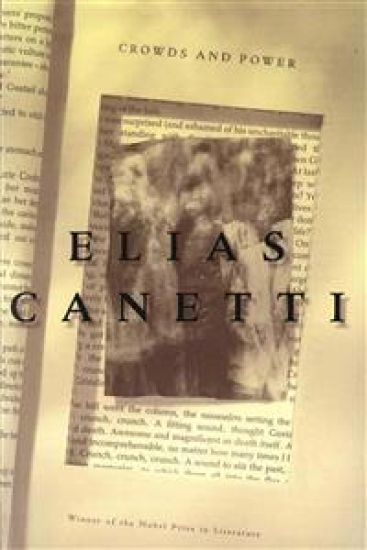
Crowds and Power

Crowds and Power

Elias Canetti

Farrar, Straus and Giroux
1984
nidottu
Crowds and Power is a revolutionary work in which Elias Canetti finds a new way of looking at human history and psychology. Breathtaking in its range and erudition, it explores Shiite festivals and the English Civil war, the finger exercises of monkeys and the effects of inflation in Weimar Germany. In this study of the interplay of crowds, Canetti offers one of the most profound and startling portraits of the human condition.
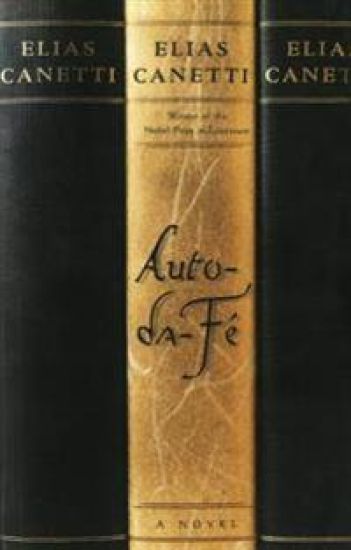
Auto DA Fe

Auto DA Fe

Elias Canetti

Farrar, Straus Giroux Inc
1984
nidottu
"Auto-da-Fe, Elias Canetti's only work of fiction, is a staggering achievement that puts him squarely in the ranks of major European writers such as Robert Musil and Hermann Broch. It is the story of Peter Kien, a scholarly recluse who lives among and for his great library. The destruction of Kien through the instrument of the illiterate, brutish housekeeper he marries constitutes the plot of the book. The best writers of our time have been concerned with the horror of the modern world--one thinks of Kafka, to whom Canetti has often been compared. But "Auto-de-Fe stands as a completely original, unforgettable treatment of the modern predicament.
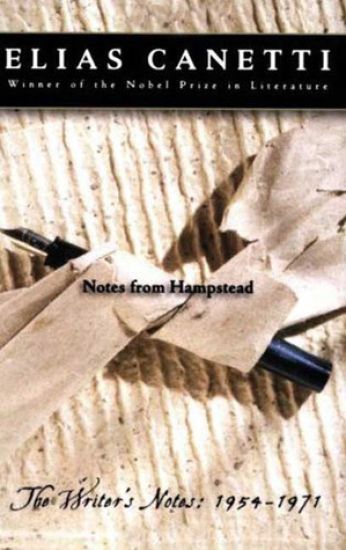
Notes from Hampstead: The Writer's Notes: 1954-1971

Notes from Hampstead: The Writer's Notes: 1954-1971

Elias Canetti

Farrar, Straus and Giroux
2005
nidottu
Notes from Hampstead is a map of the late Nobel laureate's thinking, a triumphant compendium of aphoristic, enigmatic, and expository writings covering a characteristically diverse range of subjects."Canetti is a meticulous writer, and in reading his notes, one can easily see him hovering over a just formed sentence, pencil in hand, wondering whether to cut or to add or to leave well enough alone." - Publishers Weekly
The Secret Heart of the Clock

The Secret Heart of the Clock

Elias Canetti

Farrar, Strauss Giroux-3pl
2005
nidottu
From one of the preeminent intellectual figures of the twentieth century, a highly personal testimonial of what Canetti himself chooses to term "notations," bits and pieces: notes, aphorisms, fragments. Taken together, they present an awesomely tender, guiltily gloomy meditation on death and aging." A mosaical portrait of an old body's mind determined to do its exercises and not lose a step--and fascinating for that." - Kirkus Reviews
The Play of the Eyes

The Play of the Eyes

Elias Canetti

Farrar, Strauss Giroux-3pl
2005
nidottu
The Play of the Eyes is the third volume in Nobel Prize winning author Elias Canetti's trilogy of memoirs. Here, Canetti describes his young adult life as he tries to make it as a writer in Vienna during the 1930s, and provides vivid accounts of the remarkable figures he meets along the way, usually in cafes, from Robert Musil, Thomas Mann, and Herman Broch, among others. "Canetti uses a dramatist's gifts here to achieve emotional depth; his mother's death, sketched simply against the backdrop of a crumbling Europe, takes on a tragic dignity." - Publishers Weekly
The Book Against Death

The Book Against Death

Elias Canetti

NEW DIRECTIONS PUBLISHING CORPORATION
2024
nidottu
The Book Against Death is the work of a lifetime: a collection of Elias Canetti's powerful, disarming, and often bleakly comic observations, diatribes, musings, and commentaries on and against death. Evoking despair, melancholy, and fury, Canetti examines the inevitable demise of all beings--from the ant, the fish, and the worm to an executioner, a court painter, and a Greek god--while fiercely protesting the mass deaths incurred during war and the willingness of the despot to wield death as power. Interspersed with material from philosophers and writers such as Goethe, Walter Benjamin, and Robert Walser, The Book Against Death is ultimately a moving affirmation of the value of life itself. Canetti famously refused to die before he'd read all his obituaries and corrected them."I accept no death."--Elias Canetti (1905-1994)
The Book Against Death

The Book Against Death

Elias Canetti

Fitzcarraldo Editions
2024
nidottu
In 1937, Elias Canetti began collecting notes for the project that ‘by definition, he could never live to complete’, as translator Peter Filkins writes in his afterword. The Book Against Death is the work of a lifetime: a collection of Canetti’s aphorisms, diatribes, musings and commentaries on and against death – published in English for the first time since his death in 1994 – interspersed with material from philosophers and writers including Goethe, Walter Benjamin and Robert Walser. This major work by the 1981 Nobel Prize in Literature laureate is a disarming and often darkly comic reckoning with the inevitability of death and with its politicization, evoking despair at the loss of loved ones and the impossibility of facing one’s own death, while fiercely protesting the mass deaths incurred during war and the willingness of the despot to wield death as power. Infused with fervour and vitality, The Book Against Death ultimately forms a moving affirmation of the value of life itself.
The Play Of The Eyes

The Play Of The Eyes

Elias Canetti

Granta Books
2011
nidottu
The third volume of Canetti's autobiography is set in Vienna between 1931 and 1937: years when the European catastrophe, already clear to anyone with eyes to see, was approaching its horrifying climax. To this great intellectual and spiritual self-portrait Canetti adds wonderful portraits of his friends and rivals: Herman Broch, Robert Musil, Fritz Wortruba, Alban Berg and Alma Mahler. Canetti brings these legends to life for modern readers as never before. Central to the book is Canetti's account of his friendship with the mysterious Doctor Sonne, a mentor whose effect on his life and work was enormous.
The Tongue Set Free

The Tongue Set Free

Elias Canetti

Granta Books
2011
nidottu
'The Tongue Set Free is so beautifully written. It begins wtih an extraordinary image, Canetti's earliest memory. He comes out of a room. A man makes him stick out his tongue; if he talks he will cut it off. Years later Canetti realises that this was his nursemaid's lover, frightening him into silence about their rendezvous. The idea of speaking as the entry into forbidden grown-up life dominates this book. When he is seven his father dies. He is propelled from childhood into adulthood, from his father to his mother, through language. In an extraordinary, cruel episode his mother forces him to learn perfect adult German in three months, to replace her husband as quickly as possible. His tongue is set free: he has won his mother, against brothers , against all lovers. It is the most intense Oedipal relationhsip I have ever seen described and Canetti describes it brilliantly. But it's all extraordinary, and all masterfully written. There are wonderful descriptions of Canetti's first oriental, medieval home in pre-World War l Bulgaria: of his later homes in Manchester, in Vienna, in Switzerland. There are unforgettable portraits. The values of Auto da Fe are given a human history and a human face' New Statesman
The Torch In My Ear

The Torch In My Ear

Elias Canetti

Granta Books
2011
nidottu
In The Torch in My Ear Elias Canetti, Nobel Prize winner, towering intellectual figure and polymath, gives us his second volume of autobiography. Using as a framework his admiration for his first great mentor, the Viennese writer Karl Kraus, and his passion for his first wife, Veza, Canetti seamlessly incorporates a profoundly perceptive portrait of Vienna and Berlin in the 1920s. Here are the voices of Brecht, Isaac Babel, George Grosz, and many others. This is autobiography redefining itself.
Gesammelte Werke 07. Die gerettete Zunge

Gesammelte Werke 07. Die gerettete Zunge

Elias Canetti

Carl Hanser Verlag
1994
sidottu
In diesem Band erzählt Canetti die Geschichte seiner Kindheit in Bulgarien, in England, Österreich und in der Schweiz und erforscht mit unerbittlicher Konsequenz die Herkunft und die Voraussetzungen seiner menschlichen und geistigen Existenz. Ohne jede Abschweifung ins Atmosphärische oder Anekdotische und mit den klarsten sprachlichen Mitteln versichert sich Canetti seines eigenen Werdegangs.
Die Stimmen von Marrakesch

Die Stimmen von Marrakesch

Elias Canetti

Carl Hanser Verlag
2002
sidottu
Marrakesch - die geheimnisvolle Stadt! Elias Canetti fährt mit Freunden, die dort einen Film drehen, nach Marrakesch. Rasch nimmt ihn der Zauber des Orients gefangen. Er streift durch die Stadt, besucht die Händler der Suks, den Kamelmarkt und beobachtet die Schreiber und Erzähler. Der berühmt gewordene Reisebericht ist das aufschlussreichste Buch über die marokkanische Stadt und das orientalische Leben - und wird begleitet von Fotografien aus dieser fremden Welt.