Kirjojen hintavertailu. Mukana 11 627 362 kirjaa ja 12 kauppaa.

Kirjahaku

Etsi kirjoja tekijän nimen, kirjan nimen tai ISBN:n perusteella.

12 kirjaa tekijältä Elijah Wald

Narcocorrido

Narcocorrido

Elijah Wald

HarperCollins
2002
nidottu
In the first full-length exploration of the contemporary and controversial Mexican corrido, award-winning author Elijah Wald blends a travel narrative with his search for the roots of this genre -- a modern outlaw music that fuses the sensibilities of medieval ballads with the edgy grit of gangsta rap.From international superstars to rural singers documenting their local current events in the regions dominated by guerilla war, Wald visited these songwriters in their homes, exploring the heartland of the Mexican drug traffic and traveling to urban centers such as Los Angeles and Mexico City. The corrido genre is famous for its hard-bitten songs of drug traffickers and gunfights, and also functions as a sort of musical newspaper, singing of government corruption, the lives of immigrants in the United States, and the battles of the Zapatista rebellion in Chiapas. Though largely unknown to English speakers, corridos top the Latin charts and dominate radio playlists both in the United States and points south. Wald provides in-depth looks at the songwriters who have transformed groups like the popular Tigres del Norte into enduring superstars, as well as the younger artists who are carrying the corrido into the twenty-first century. In searching for the poetry and social protest behind the gaudy lyrics of powerful drug lords, Wald shows how popular music can remain the voice of a people, even in this modern world of globalization, electronic media, and gangsters who ship cocaine in 747s.
Escaping the Delta

Escaping the Delta

Elijah Wald

Amistad Press
2005
nidottu
The life of blues legend Robert Johnson becomes the centerpiece for this innovative look at what many consider to be America's deepest and most influential music genre. Pivotal are the questions surrounding why Johnson was ignored by the core black audience of his time yet now celebrated as the greatest figure in blues history. Trying to separate myth from reality, biographer Elijah Wald studies the blues from the inside -- not only examining recordings but also the recollections of the musicians themselves, the African-American press, as well as examining original research. What emerges is a new appreciation for the blues and the movement of its artists from the shadows of the 1930s Mississippi Delta to the mainstream venues frequented by today's loyal blues fans.
Dylan Goes Electric!

Dylan Goes Electric!

Elijah Wald

Dey Street Books, an imprint of HarperCollins US
2016
nidottu
One of the music world's pre-eminent critics takes a fresh and much-needed look at the day Dylan "went electric" at the Newport Folk Festival, timed to coincide with the event's fiftieth anniversary. On the evening of July 25, 1965, Bob Dylan took the stage at Newport Folk Festival, backed by an electric band, and roared into his new rock hit, Like a Rolling Stone. The audience of committed folk purists and political activists who had hailed him as their acoustic prophet reacted with a mix of shock, booing, and scattered cheers. It was the shot heard round the world-Dylan's declaration of musical independence, the end of the folk revival, and the birth of rock as the voice of a generation-and one of the defining moments in twentieth-century music. In Dylan Goes Electric!, Elijah Wald explores the cultural, political and historical context of this seminal event that embodies the transformative decade that was the sixties. Wald delves deep into the folk revival, the rise of rock, and the tensions between traditional and groundbreaking music to provide new insights into Dylan's artistic evolution, his special affinity to blues, his complex relationship to the folk establishment and his sometime mentor Pete Seeger, and the ways he reshaped popular music forever. Breaking new ground on a story we think we know, Dylan Goes Electric! is a thoughtful, sharp appraisal of the controversial event at Newport and a nuanced, provocative, analysis of why it matters.
How The Beatles Destroyed Rock 'n' Roll

How The Beatles Destroyed Rock 'n' Roll

Elijah Wald

Oxford University Press Inc
2011
nidottu
Overthrowing the conventional pieties of mainstream jazz and rock history, Elijah Wald traces the evolution of popular music through developing tastes, trends and technologies—including the role of records, radio, jukeboxes and television—to give a fuller, more balanced account of the broad variety of music that captivated listeners over the course of the twentieth century. Wald revisits original sources—recordings, period articles, memoirs, and interviews—to highlight how music was actually heard and experienced over the years. In a refreshing departure from more typical histories, he focuses on the world of working musicians and ordinary listeners rather than stars and specialists. He looks at the evolution of jazz as dance music, and rock 'n' roll through the eyes of the screaming, twisting teenage girls who made up the bulk of its early audience. Duke Ellington, Benny Goodman, Frank Sinatra, Elvis Presley, Chuck Berry, and the Beatles are all here, but Wald also discusses less familiar names like Paul Whiteman, Guy Lombardo, Mitch Miller, Jo Stafford, Frankie Avalon, and the Shirelles, who in some cases were far more popular than those bright stars we all know today, and who more accurately represent the mainstream of their times. "Wald's book is suave, soulful, ebullient and will blow out your speakers." —Tom Waits "Wald is a meticulous researcher, a graceful writer and a committed contrarian.... An impressive accomplishment." —Peter Keepnews, New York Times Book Review "One of those rare books that aims to upend received wisdom and actually succeeds." —Kirkus Reviews "It is as an alternative, corrective history of American music that Wald's book is invaluable. It forces us to see that only by studying the good with the bad—and by seeing that the good and bad can't be pulled apart—can we truly grasp the greatness of our cultural legacy." —Malcolm Jones, Newsweek "Wald wears his scholarship lightly, but his ideas and insights are substantial.... The attention-grabbing title, for all its counterintuitive appeal, gives scant indication of the book's ambitions and achievements." —David Suisman, The Sixties
Beyond the Bandstand

Beyond the Bandstand

Elijah Wald

UNIVERSITY OF ILLINOIS PRESS
2024
sidottu
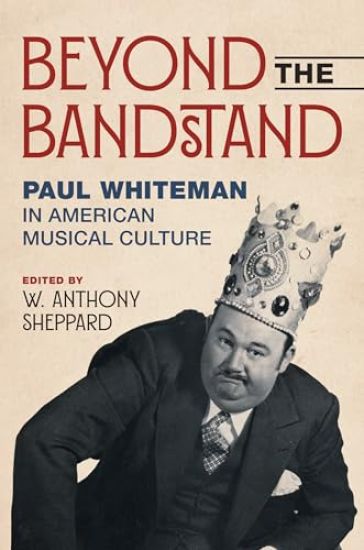
The most successful bandleader of the 1920s, Paul Whiteman was an entertainment icon who played a major role in the mainstreaming of jazz. Whiteman and his band premiered Gershwin’s Rhapsody in Blue. Duke Ellington acknowledged his achievements. His astonishing ear for talent vaulted a who’s who of artists toward prominence. But Whiteman’s oversized presence eclipsed Black jazz musicians while his middlebrow music prompted later generations to jettison him from jazz history. W. Anthony Sheppard’s collection of essays confronts the racial implications of Whiteman’s career. The contributors explore Whiteman’s broad impact on popular culture, tracking his work and influence in American marketing, animated films, the Black press, Hollywood, and the music publication industry, and following him behind the scenes with arrangers, into grand concert halls, across the Atlantic, into the courtroom, and on television. Multifaceted and cutting-edge, Beyond the Bandstand explores the racial politics and artistic questions surrounding a controversial figure in popular music. Contributors: Ryan Raul Bañagale, Stephanie Doktor, John Howland, Katherine M. Leo, Sarah Caissie Provost, W. Anthony Sheppard, Catherine Tackley, Elijah Wald, and Christi Jay Wells
Beyond the Bandstand

Beyond the Bandstand

Elijah Wald

UNIVERSITY OF ILLINOIS PRESS
2024
nidottu
The most successful bandleader of the 1920s, Paul Whiteman was an entertainment icon who played a major role in the mainstreaming of jazz. Whiteman and his band premiered Gershwin’s Rhapsody in Blue. Duke Ellington acknowledged his achievements. His astonishing ear for talent vaulted a who’s who of artists toward prominence. But Whiteman’s oversized presence eclipsed Black jazz musicians while his middlebrow music prompted later generations to jettison him from jazz history. W. Anthony Sheppard’s collection of essays confronts the racial implications of Whiteman’s career. The contributors explore Whiteman’s broad impact on popular culture, tracking his work and influence in American marketing, animated films, the Black press, Hollywood, and the music publication industry, and following him behind the scenes with arrangers, into grand concert halls, across the Atlantic, into the courtroom, and on television. Multifaceted and cutting-edge, Beyond the Bandstand explores the racial politics and artistic questions surrounding a controversial figure in popular music. Contributors: Ryan Raul Bañagale, Stephanie Doktor, John Howland, Katherine M. Leo, Sarah Caissie Provost, W. Anthony Sheppard, Catherine Tackley, Elijah Wald, and Christi Jay Wells
Jelly Roll Blues

Jelly Roll Blues

Elijah Wald

Hachette Books
2024
sidottu
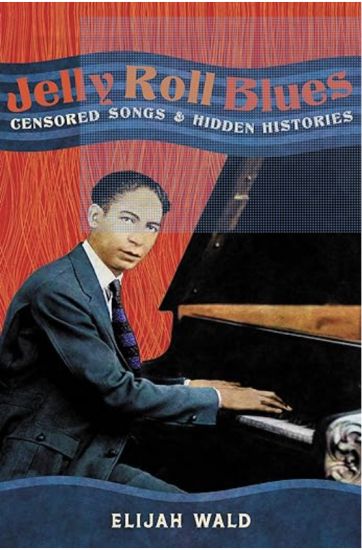
Bestselling music historian Elijah Wald follows Jelly Roll Morton on a journey through the hidden worlds and forbidden songs of early blues and jazzIn Jelly Roll Blues: Censored Songs and Hidden Histories, Elijah Wald takes readers on a journey into the hidden and censored world of early blues and jazz, guided by the legendary New Orleans pianist Jelly Roll Morton. Morton became nationally famous as a composer and bandleader in the 1920s, but got his start twenty years earlier, entertaining customers in the city's famous bordellos and singing rough blues in Gulf Coast honky-tonks. He recorded an oral history of that time in 1938, but the most distinctive songs were hidden away for over fifty years, because the language and themes were as wild and raunchy as anything in gangsta rap. Those songs inspired Wald to explore how much other history had been locked away and censored, and this book is the result of that quest. Full of previously unpublished lyrics and stories, it paints a new and surprising picture of the dawn of American popular music, when jazz and blues were still the private, after-hours music of the Black "sporting world." It gives new insight into familiar figures like Buddy Bolden and Louis Armstrong, and introduces forgotten characters like Ready Money, the New Orleans sex worker and pickpocket who ended up owning one of the largest Black hotels on the West Coast.Revelatory and fascinating, these songs and stories provide an alternate view of Black culture at the turn of the twentieth century, when a new generation was shaping lives their parents could not have imagined and art that transformed popular culture around the world-the birth of a joyous, angry, desperate, loving, and ferociously funny tradition that resurfaced in hip-hop and continues to inspire young artists in a new millennium.
Josh White

Josh White

Elijah Wald

Routledge
2002
nidottu
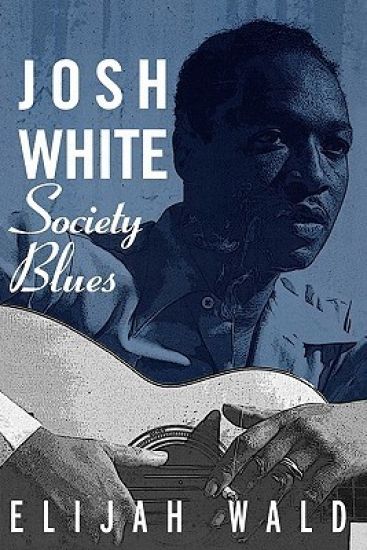
Born in South Carolina, White spent his childhood as a lead boy for traveling blind bluesmen. In the early '30s he moved to New York and became a popular blues star, then introduced folk-blues to a mass white audience in the 1940s. He was famed both for his strong Civil Rights songs, which made him a favorite of the Roosevelts, and for his sexy stage persona. The king of Café Society-also home to Billie Holiday--he was the one bluesman to consistently pack the New York nightspots, and the first black singer-guitarist to act in Hollywood films and star on Broadway. In the 1950s, White's bitter compromise with the blacklisters left him with few friends on either end of the political spectrum. He spent much of the decade in Europe, then came back strong in the 1960s folk revival. By 1963, he was voted one of America's top three male folk stars, but his health was failing and he did not survive the decade. Written in an engaging style, Society Blues portrays the difficult balancing act that all black performers must face in a predominantly white culture. Through the twists and turns of White's life, it traces the evolution of the blues and folk revival, and is a must read for anyone interested in the history of American popular culture, as well as a fascinating life story. Visit the author's website to see the Josh White photo gallery and learn more about Elijah Wald.
Global Minstrels

Global Minstrels

Elijah Wald

Routledge
2006
sidottu
As the fastest growing sector of the U.S. music market, world music has embedded itself in the fabric of American life. Artists such as Peter Gabriel, Paul Simon and the Talking Heads have all utilized characteristics of the "world" sound in their music, while international performers are enjoying unexpected fame in the U.S. At the same time, in an era of unprecedented immigration and globalization, people all over the world are using music as way to preserve their local and ethnic identity.Global Minstrels: Voices of World Music is an accessible introduction to international music and culture. Including conversations with dozens of artists from five continents, it explores the breadth of the world music experience through the voices of the musicians themselves. In the process, it gives a unique view of the interactions of a globalizing society and introduces readers to some of the most fascinating and thoughtful artists working on the current scene. Artists profiled include Oumou Sangare, Caetano Veloso, Ravi Shankar, Paco de Lucía, Ladysmith Black Mambazo, and many more.
Global Minstrels

Global Minstrels

Elijah Wald

Routledge
2006
nidottu
As the fastest growing sector of the U.S. music market, world music has embedded itself in the fabric of American life. Artists such as Peter Gabriel, Paul Simon and the Talking Heads have all utilized characteristics of the "world" sound in their music, while international performers are enjoying unexpected fame in the U.S. At the same time, in an era of unprecedented immigration and globalization, people all over the world are using music as way to preserve their local and ethnic identity.Global Minstrels: Voices of World Music is an accessible introduction to international music and culture. Including conversations with dozens of artists from five continents, it explores the breadth of the world music experience through the voices of the musicians themselves. In the process, it gives a unique view of the interactions of a globalizing society and introduces readers to some of the most fascinating and thoughtful artists working on the current scene. Artists profiled include Oumou Sangare, Caetano Veloso, Ravi Shankar, Paco de Lucía, Ladysmith Black Mambazo, and many more.
Josh White

Josh White

Elijah Wald

Routledge
2016
sidottu
Born in South Carolina, White spent his childhood as a lead boy for traveling blind bluesmen. In the early '30s he moved to New York and became a popular blues star, then introduced folk-blues to a mass white audience in the 1940s. He was famed both for his strong Civil Rights songs, which made him a favorite of the Roosevelts, and for his sexy stage persona. The king of Café Society-also home to Billie Holiday--he was the one bluesman to consistently pack the New York nightspots, and the first black singer-guitarist to act in Hollywood films and star on Broadway. In the 1950s, White's bitter compromise with the blacklisters left him with few friends on either end of the political spectrum. He spent much of the decade in Europe, then came back strong in the 1960s folk revival. By 1963, he was voted one of America's top three male folk stars, but his health was failing and he did not survive the decade. Written in an engaging style, Society Blues portrays the difficult balancing act that all black performers must face in a predominantly white culture. Through the twists and turns of White's life, it traces the evolution of the blues and folk revival, and is a must read for anyone interested in the history of American popular culture, as well as a fascinating life story. Visit the author's website to see the Josh White photo gallery and learn more about Elijah Wald.
Josh White

Josh White

Elijah Wald

University of Massachusetts Press
2000
sidottu
A gifted and charismatic entertainer, Josh White (1914-1969) was one of the best-known folk-blues artists of his day. In the early 1960s, one survey ranked him as America's third most popular male folksinger, surpassed only by Pete Seeger and Bob Dylan. He appeared on national television, performed at numerous college concerts and club dates, and released several dozen albums - all featuring his distinctive guitar style, supple voice and unique showmanship. In this biography, Elijah Wald traces White's journey from the ""coloured"" side of Greenville, South Carolina, to the heights of Manhattan cafe society. He explores the complexities of White's music, his struggles with discrimination and stereotypes, his political involvements, and his sometimes raucous personal life. White was always drawn to music and by the age of ten was leading blind blues and gospel singers around the South. By the 1930s he had become a blues recording star himself, and in the 1940s he was discovered by a white audience and regularly appeared in New York cabarets alongside such artists as Billie Holiday. He also became an outspoken proponent of civil rights and frequently appeared at rallies and benefits, singing songs against segregation. He was one of the few black figures to star on Broadway and appear in Hollywood films, the only black solo performer to have his own national tour, and a daring sex symbol with adoring fans on both sides of the colour line. In the 1950s, White won acclaim in Europe, then saw his achievements collapse in the polarized political ferment of the McCarthy era. Attempting to strike a balance that would keep his career afloat, he instead succeeded in alienating both political camps. Although still a star in England, he became the forgotten man at home until his resurrection in the folk revival.