Kirjojen hintavertailu. Mukana 11 699 587 kirjaa ja 12 kauppaa.

Kirjahaku

Etsi kirjoja tekijän nimen, kirjan nimen tai ISBN:n perusteella.

24 kirjaa tekijältä Elisabeth Bronfen

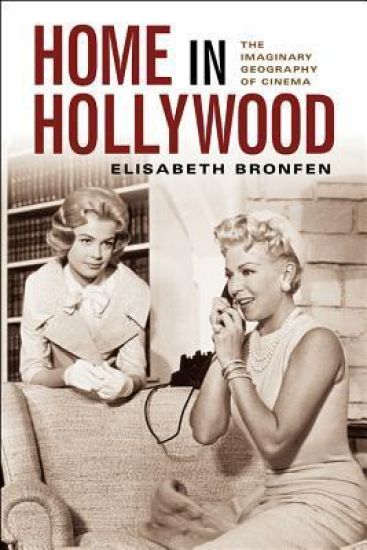
Home in Hollywood

Home in Hollywood

Elisabeth Bronfen

Columbia University Press
2004
sidottu
Who can forget Dorothy's quest for the great and powerful Oz as she tried to return to her beloved Kansas? She thought she needed a wizard's magic, only to discover that home-and the power to get there-had been with her all along. This engaging and provocative book proposes that Hollywood has created an imaginary cinematic geography filled with people and places we recognize and to which we are irresistibly drawn. Each viewing of a film stirs, in a very real and charismatic way, feelings of home, and the comfort of returning to films like familiar haunts is at the core of our nostalgic desire. Leading us on a journey through American film, Elisabeth Bronfen examines the different ways home is constructed in the development of cinematic narrative. Each chapter includes a close reading of such classic films as Fleming's The Wizard of Oz, Sirk's Imitation of Life, Burton's Batman Returns, Hitchcock's Rebecca, Ford's The Searchers, and Sayles's Lone Star.
Home in Hollywood

Home in Hollywood

Elisabeth Bronfen

Columbia University Press
2004
pokkari
Who can forget Dorothy's quest for the great and powerful Oz as she tried to return to her beloved Kansas? She thought she needed a wizard's magic, only to discover that home-and the power to get there-had been with her all along. This engaging and provocative book proposes that Hollywood has created an imaginary cinematic geography filled with people and places we recognize and to which we are irresistibly drawn. Each viewing of a film stirs, in a very real and charismatic way, feelings of home, and the comfort of returning to films like familiar haunts is at the core of our nostalgic desire. Leading us on a journey through American film, Elisabeth Bronfen examines the different ways home is constructed in the development of cinematic narrative. Each chapter includes a close reading of such classic films as Fleming's The Wizard of Oz, Sirk's Imitation of Life, Burton's Batman Returns, Hitchcock's Rebecca, Ford's The Searchers, and Sayles's Lone Star.
The Knotted Subject

The Knotted Subject

Elisabeth Bronfen

Princeton University Press
2014
pokkari
Surrealist writer Andre Breton praised hysteria for being the greatest poetic discovery of the nineteenth century, but many physicians have since viewed it as the "wastebasket of medicine," a psychosomatic state that defies attempts at definition and cure and that can be easily mistaken for other pathological conditions. In light of a resurgence of critical interest in hysteria, leading feminist scholar Elisabeth Bronfen reinvestigates medical writings and cultural performance to reveal the continued relevance of a disorder widely thought to be a romantic formulation of the past. Through a critical rereading, she develops a new concept of hysteria, one that challenges traditional gender-based theories linking it to dissatisfied feminine sexual desire. Bronfen turns instead to hysteria's traumatic causes, particularly the fear of violation, and shows how the conversion of psychic anguish into somatic symptoms can be interpreted today as the enactment of personal and cultural discontent. Tracing the development of cultural formations of hysteria from the 1800s to the present, this book explores the writings of Freud, Charcot, and Janet together with fictional texts (Radcliffe, Stoker, Anne Sexton), opera (Mozart, Wagner), cinema (Cronenberg, Hitchcock, Woody Allen), and visual art (Marie-Ange Guilleminot, Cindy Sherman). Each of these creative works attests to a particular relationship between hysteria and self-fashioning, and enables us to read hysteria quite literally as a language of discontent. The message broadcasted by the hysteric is one of vulnerability: vulnerability of the symbolic, of identity, and of the human body itself. Throughout this work, Bronfen not only offers fresh approaches to understanding hysteria in our culture, but also introduces a new metaphor to serve as a theoretical tool. Whereas the phallus has long dominated psychoanalytical discourse, the image of the navel--a knotted originary wound common to both genders--facilitates discussion of topics relevant to hysteria, such as trauma, mortality, and infinity. Bronfen's insights make for a lively, innovative work sure to interest readers across the fields of art and literature, feminism, and psychology. Originally published in 1998. The Princeton Legacy Library uses the latest print-on-demand technology to again make available previously out-of-print books from the distinguished backlist of Princeton University Press. These editions preserve the original texts of these important books while presenting them in durable paperback and hardcover editions. The goal of the Princeton Legacy Library is to vastly increase access to the rich scholarly heritage found in the thousands of books published by Princeton University Press since its founding in 1905.
The Knotted Subject

The Knotted Subject

Elisabeth Bronfen

Princeton University Press
2016
sidottu
Surrealist writer Andre Breton praised hysteria for being the greatest poetic discovery of the nineteenth century, but many physicians have since viewed it as the "wastebasket of medicine," a psychosomatic state that defies attempts at definition and cure and that can be easily mistaken for other pathological conditions. In light of a resurgence of critical interest in hysteria, leading feminist scholar Elisabeth Bronfen reinvestigates medical writings and cultural performance to reveal the continued relevance of a disorder widely thought to be a romantic formulation of the past. Through a critical rereading, she develops a new concept of hysteria, one that challenges traditional gender-based theories linking it to dissatisfied feminine sexual desire. Bronfen turns instead to hysteria's traumatic causes, particularly the fear of violation, and shows how the conversion of psychic anguish into somatic symptoms can be interpreted today as the enactment of personal and cultural discontent. Tracing the development of cultural formations of hysteria from the 1800s to the present, this book explores the writings of Freud, Charcot, and Janet together with fictional texts (Radcliffe, Stoker, Anne Sexton), opera (Mozart, Wagner), cinema (Cronenberg, Hitchcock, Woody Allen), and visual art (Marie-Ange Guilleminot, Cindy Sherman). Each of these creative works attests to a particular relationship between hysteria and self-fashioning, and enables us to read hysteria quite literally as a language of discontent. The message broadcasted by the hysteric is one of vulnerability: vulnerability of the symbolic, of identity, and of the human body itself. Throughout this work, Bronfen not only offers fresh approaches to understanding hysteria in our culture, but also introduces a new metaphor to serve as a theoretical tool. Whereas the phallus has long dominated psychoanalytical discourse, the image of the navel--a knotted originary wound common to both genders--facilitates discussion of topics relevant to hysteria, such as trauma, mortality, and infinity. Bronfen's insights make for a lively, innovative work sure to interest readers across the fields of art and literature, feminism, and psychology. Originally published in 1998. The Princeton Legacy Library uses the latest print-on-demand technology to again make available previously out-of-print books from the distinguished backlist of Princeton University Press. These editions preserve the original texts of these important books while presenting them in durable paperback and hardcover editions. The goal of the Princeton Legacy Library is to vastly increase access to the rich scholarly heritage found in the thousands of books published by Princeton University Press since its founding in 1905.

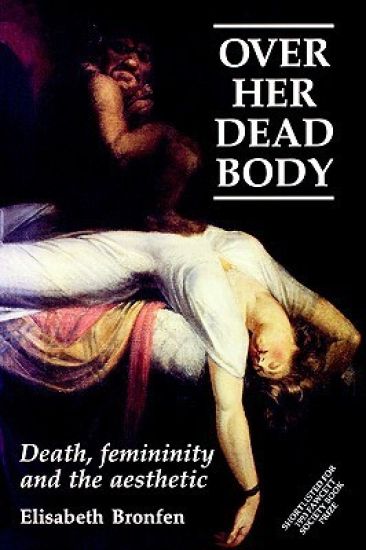
Over Her Dead Body

Over Her Dead Body

Elisabeth Bronfen

Manchester University Press
1992
nidottu
In 1846, Edgar Allen Poe wrote that 'the death of a beautiful woman is, unquestionably, the most poetic topic in the world'. The conjuction of death, art and femininity forms a rich and disturbing strata of Western culture, explored here in fascinating detail by Elisabeth Bronfen. Her examples range from Carmen to Little Nell, from Wuthering Heights to Vertigo, from Snow White to Frankenstein. The text is richly illustrated throughout with thirty-seven paintings and photographs.
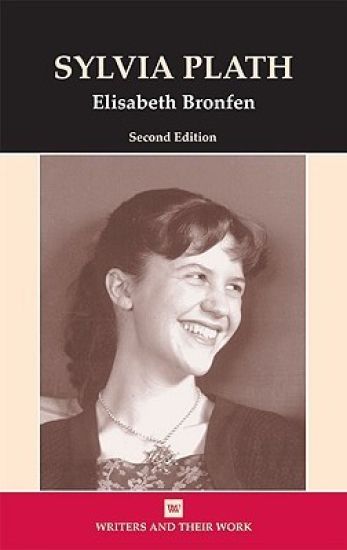
Sylvia Plath

Sylvia Plath

Elisabeth Bronfen

Northcote House Publishers Ltd
2004
nidottu
In this new edition of her engaging and original study Elisabeth Bronfen examines Sylvia Plath’s poetry, her novel The Bell Jar, her shorter fiction as well as her autobiographical texts, in the context of the resilient Plath-Legend that has grown since her suicide in 1963 and to which, after over three decades of silence. Ted Hughes responded with his collection of commemorative poems, Birthday letters. Arguing that although we can not sever our reading of Plath’s work from the critical and biographical writings about her, the study nevertheless offers close readings of texts to explore the various self-fashionings in poetry and prose. Which this highly ambivalent poet developed. The central theme to which this study returns is Plath’s insistence on a clandestine traumatic knowledge of fallibility and fragility underlying the fiction of success, health and happiness so prevalent in post-World War Two, whether expressed as anger and violence, as the celebration of feminine figures of transcendence, or as the quiet dissolution of the subject and its world represented in her late Ariel poems; whether giving voice to the relentless self-absorption of her autobiographical texts or psychic recovery in her autobiographical novel, Plath’s struggle with gender and cultural identity is astonishingly timely.
Specters of War

Specters of War

Elisabeth Bronfen

Rutgers University Press
2012
nidottu
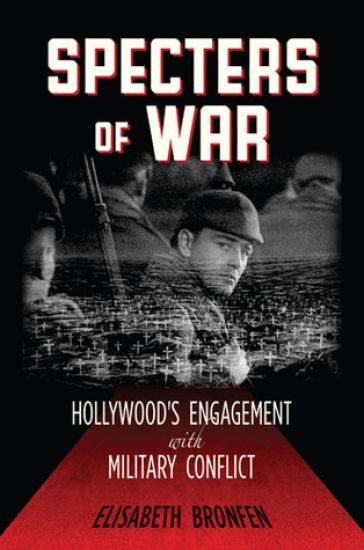
Specters of War looks at the way war has been brought to the screen in various genres and at different historical moments throughout the twentieth century and into the twenty-first. Elisabeth Bronfen asserts that Hollywood has emerged as a place where national narratives are created and circulated so that audiences can engage with fantasies, ideologies, and anxieties that take hold at a given time, only to change with the political climate.Such cultural reflection is particularly poignant when it deals with America’s traumatic history of war. The nation has no direct access to war as a horrific experience of carnage and human destruction; we understand our relation to it through images and narratives that transmit and interpret it for us. Bronfen does not discuss actual conflicts but the films by which we have come to know and remember them, including All Quiet on the Western Front, The Best Years of Our Lives, Miracle at St. Anna, The Deer Hunter, and Flags of Our Fathers. Battles and campaigns, the home front and women-who-wait narratives, war correspondents, and court martials are also explored as instruments of cultural memory. Bronfen argues that we are haunted by past wars and by cinematic re-conceptualizations of them, and reveals a national iconography of redemptive violence from which we seem unable to escape.
Specters of War

Specters of War

Elisabeth Bronfen

Rutgers University Press
2012
sidottu
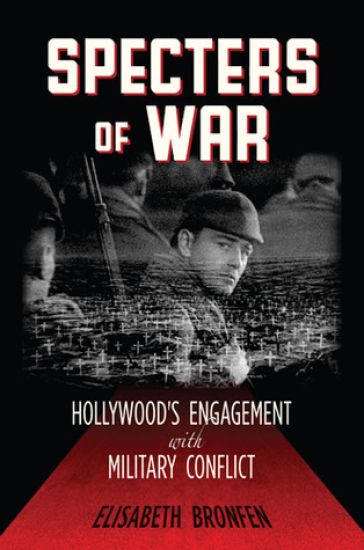
Specters of War looks at the way war has been brought to the screen in various genres and at different historical moments throughout the twentieth century and into the twenty-first. Elisabeth Bronfen asserts that Hollywood has emerged as a place where national narratives are created and circulated so that audiences can engage with fantasies, ideologies, and anxieties that take hold at a given time, only to change with the political climate.Such cultural reflection is particularly poignant when it deals with America’s traumatic history of war. The nation has no direct access to war as a horrific experience of carnage and human destruction; we understand our relation to it through images and narratives that transmit and interpret it for us. Bronfen does not discuss actual conflicts but the films by which we have come to know and remember them, including All Quiet on the Western Front, The Best Years of Our Lives, Miracle at St. Anna, The Deer Hunter, and Flags of Our Fathers. Battles and campaigns, the home front and women-who-wait narratives, war correspondents, and court martials are also explored as instruments of cultural memory. Bronfen argues that we are haunted by past wars and by cinematic re-conceptualizations of them, and reveals a national iconography of redemptive violence from which we seem unable to escape.
Crossmappings

Crossmappings

Elisabeth Bronfen

BLOOMSBURY PUBLISHING PLC
2022
nidottu
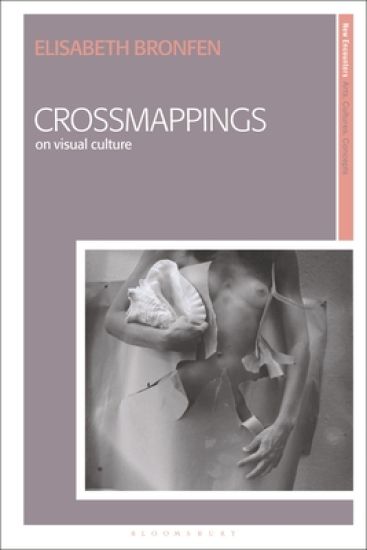
The influential cultural critic Elisabeth Bronfen sets out in this book a conversation between literature, cinema, and visual culture. The crossmappings in and between these essays address the cultural survival of image formulas involving portraiture and the uncanny relation between the body and its representability, the gendering of war, death and the fragility of life, as well as sovereignty and political power.Each chapter tracks transformations that occur as aesthetic figurations travel not only from one historical moment to the next, but also from one medium to another. Following Bronfen on these journeys into the cultural imaginary, the reader encounters prominent artists such as Edgar Degas, Francesca Woodman, Paul McCarthy, Eva Hesse, Louise Bourgeois, Richard Wagner, Pablo Picasso and William Shakespeare, alongside Classical Hollywood's film noir and melodrama, and the TV series The Wire and House of Cards.
Serial Shakespeare

Serial Shakespeare

Elisabeth Bronfen

Manchester University Press
2020
sidottu
Shakespeare is everywhere in contemporary media culture. This book explores the reasons for this dissemination and reassemblage. Ranging widely over American TV drama, it discusses the use of citations in Westworld and The Wire, demonstrating how they tap into but also transform Shakespeare’s preferred themes and concerns. It then examines the presentation of female presidents in shows such as Commander in Chief and House of Cards, revealing how they are modelled on figures of female sovereignty from his plays. Finally, it analyses the specifically Shakespearean dramaturgy of Deadwood and The Americans. Ultimately, the book brings into focus the way serial TV drama appropriates Shakespeare in order to give voice to the unfinished business of the American cultural imaginary.
Serial Shakespeare

Serial Shakespeare

Elisabeth Bronfen

MANCHESTER UNIVERSITY PRESS
2025
nidottu
Shakespeare is everywhere in contemporary media culture. This book explores the reasons for this dissemination and reassemblage. Ranging widely over American TV drama, it discusses the use of citations in Westworld and The Wire, demonstrating how they tap into but also transform Shakespeare’s preferred themes and concerns. It then examines the presentation of female presidents in shows such as Commander in Chief and House of Cards, revealing how they are modelled on figures of female sovereignty from his plays. Finally, it analyses the specifically Shakespearean dramaturgy of Deadwood and The Americans. Ultimately, the book brings into focus the way serial TV drama appropriates Shakespeare in order to give voice to the unfinished business of the American cultural imaginary.
Crossmappings

Crossmappings

Elisabeth Bronfen

I.B. Tauris
2018
sidottu
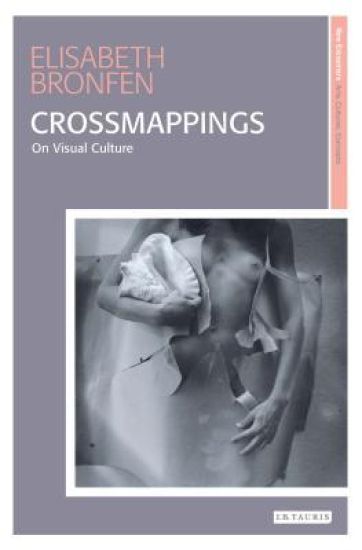
The great, influential cultural critic, Elisabeth Bronfen, sets out in this book a conversation between literature, cinema and visual culture. The crossmappings facilitated in and between these essays address the cultural survival of image formulas involving portraiture and the uncanny relation between the body and its visual representability, the gendering of war, death and the fragility of life, as well as sovereignty and political power. Each chapter tracks transformations that occur as aesthetic figurations travel from one historical moment to another, but also from one medium to another. Many prominent artists are discussed during these journeys into the cultural imaginary, include Degas, Francesca Woodman, Cindy Sherman, Paul McCarthy, Eva Hesse, Louise Bourgeois, Wagner, Picasso, and Shakespeare, as well as classic Hollywood's film noir and melodrama and the TV series, The Wire and House of Cards.
Obsessed

Obsessed

Elisabeth Bronfen

Rutgers University Press
2019
sidottu
Winner of the 2020 Gourmand Awards, Translation Section, USA Even the most brilliant minds have to eat. And for some scholars, food preparation is more than just a chore; it’s a passion. In this unique culinary memoir and cookbook, renowned cultural critic Elisabeth Bronfen tells of her lifelong love affair with cooking and demonstrates what she has learned about creating delicious home meals. She recounts her cherished food memories, from meals eaten at the family table in postwar Germany to dinner parties with friends. Yet, in a thoughtful reflection on the pleasures of cooking for one, she also reveals that some of her favorite meals have been consumed alone. Though it contains more than 250 mouth-watering recipes, Obsessed is anything but a conventional cookbook. As she shares a lifetime of knowledge acquired in the kitchen, Bronfen hopes to empower both novice and experienced home chefs to improvise, giving them hints on how to tweak her recipes to their own tastes. And unlike cookbooks that assume readers have access to an unlimited pantry, this book is grounded in reality, offering practical advice about food storage and reusing leftovers. As Bronfen serves up her personal stories and her culinary wisdom, reading Obsessed is like sitting down to a home-cooked meal with a clever friend.
Mad Men, Death and the American Dream

Mad Men, Death and the American Dream

Elisabeth Bronfen

Diaphanes AG
2016
nidottu
Matthew Weiner's Emmy-winning series Mad Men has earned wide critical acclaim in its seven seasons. What is it about these impeccably dressed men and women of midcentury Madison Avenue that fascinates us? Decades later, when Weiner's iconic characters seem as much a thing of the past as the workday martini, why is it so easy for modern viewers to commiserate with the reserved but ambitious Peggy Olson, to jeer at Pete Campbell, and to cheer on Don Draper in his often indecorous struggles? We are drawn to Mad Men's dapper cast of characters, argues Elisabeth Bronfen, because, although the series has drawn praise for its depiction of the 1960s and '70s, it speaks equally well to cultural concerns of the present. The prototypical con man, Don makes a precarious journey from poverty to fame and prosperity that maps the pursuit of moral perfectionism that features prominently throughout American cultural history. Yet a lingering sense of dissatisfaction hints that the lifestyle Don strives for may be a mere manifestation of the illusory American dream-cemented in the same collective desires Don draws on to advertise cigarettes and luxury cars by day. "Mad Men," Death and the American Dream takes readers through the cultural fantasies that underlie characters' motivations in this sophisticated and immensely popular television series, showing how-then as now-we turn to fantasy in the face of conflicts that cannot be resolved in political reality. Fascinating and full of accessible insights, the book will appeal to the show's many fans, as well as anyone interested in American studies, media studies, or cultural history.