Kirjojen hintavertailu. Mukana 11 426 755 kirjaa ja 12 kauppaa.

Kirjahaku

Etsi kirjoja tekijän nimen, kirjan nimen tai ISBN:n perusteella.

4 kirjaa tekijältä Elizabeth A. Hoffmann

Lactation at Work

Lactation at Work

Elizabeth A. Hoffmann

Cambridge University Press
2021
sidottu
In recent decades, as women entered the US workforce in increasing numbers, they faced the conundrum of how to maintain breastfeeding and hold down full-time jobs. In 2010, the Lactation at Work Law (an amendment to the US Fair Labor Standards Act) mandated accommodations for lactating women. This book examines the federal law and its state-level equivalent in Indiana, drawing on two waves of interviews with human resource personnel, supervising managers, and lactating workers. In many ways, this simple law - requiring break time and privacy for pumping - is a success story. Through advocacy by allies, education of managers, and employee initiative, many organizations created compliant accommodations. This book shows legal scholars how a successful civil rights law creates effective change; helps labor activists and management personnel understand how to approach new accommodations; and enables workers to understand the possibilities for amelioration of workplace problems through internal negotiations and legal reforms.

Lactation at Work

Lactation at Work

Elizabeth A. Hoffmann

Cambridge University Press
2022
pokkari
In recent decades, as women entered the US workforce in increasing numbers, they faced the conundrum of how to maintain breastfeeding and hold down full-time jobs. In 2010, the Lactation at Work Law (an amendment to the US Fair Labor Standards Act) mandated accommodations for lactating women. This book examines the federal law and its state-level equivalent in Indiana, drawing on two waves of interviews with human resource personnel, supervising managers, and lactating workers. In many ways, this simple law - requiring break time and privacy for pumping - is a success story. Through advocacy by allies, education of managers, and employee initiative, many organizations created compliant accommodations. This book shows legal scholars how a successful civil rights law creates effective change; helps labor activists and management personnel understand how to approach new accommodations; and enables workers to understand the possibilities for amelioration of workplace problems through internal negotiations and legal reforms.
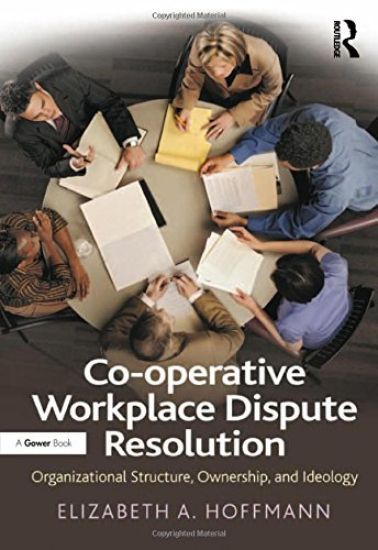
Co-operative Workplace Dispute Resolution

Co-operative Workplace Dispute Resolution

Elizabeth A. Hoffmann

Routledge
2016
nidottu
Understanding the complex dynamics involved in workplace disputes helps improve the way organizations deal with unwelcome but inevitable occurrences. These issues have been researched from different perspectives, but previously such research has failed to ask how flattened organizational form might impact ways of resolving disputes, focusing instead on what occurs in conventional, hierarchical organizations only. In Co-operative Workplace Dispute Resolution, Elizabeth Hoffmann considers the question of how workplace disputes are raised in the absence of formal hierarchy. In contrast to conventionally organized businesses, co-operatives attempt to evenly distribute power and ownership and encourage worker control through egalitarian ideologies, flattened management structures and greater information sharing. Like conventional businesses, though, they still pursue goals relating to profit and efficiency. Dr Hoffmann argues that lessening hierarchy and sharing power, as occurs in co-operatives, provides insight into how greater worker involvement and ownership might operate in a less extreme and more modest form in conventional mainstream business. This book focuses on dispute resolution strategies at matched pairs of worker co-operatives and conventional businesses in three very different industries: coal mining, taxicab driving, and wholefood distribution. The author’s central finding is that the worker co-operative members have access to more dispute resolution strategies than their conventionally employed counterparts. This leads to the conclusion that benefits might be achieved by conventional businesses that wish to embrace specific attributes usually associated with co-operatives, including management-employee cooperation, shared ownership, or greater workplace equality.
Co-operative Workplace Dispute Resolution

Co-operative Workplace Dispute Resolution

Elizabeth A. Hoffmann

Ashgate Publishing Limited
2012
sidottu
Understanding the complex dynamics involved in workplace disputes helps improve the way organizations deal with unwelcome but inevitable occurrences. These issues have been researched from different perspectives, but previously such research has failed to ask how flattened organizational form might impact ways of resolving disputes, focusing instead on what occurs in conventional, hierarchical organizations only. In Co-operative Workplace Dispute Resolution, Elizabeth Hoffmann considers the question of how workplace disputes are raised in the absence of formal hierarchy. In contrast to conventionally organized businesses, co-operatives attempt to evenly distribute power and ownership and encourage worker control through egalitarian ideologies, flattened management structures and greater information sharing. Like conventional businesses, though, they still pursue goals relating to profit and efficiency. Dr Hoffmann argues that lessening hierarchy and sharing power, as occurs in co-operatives, provides insight into how greater worker involvement and ownership might operate in a less extreme and more modest form in conventional mainstream business. This book focuses on dispute resolution strategies at matched pairs of worker co-operatives and conventional businesses in three very different industries: coal mining, taxicab driving, and wholefood distribution. The author’s central finding is that the worker co-operative members have access to more dispute resolution strategies than their conventionally employed counterparts. This leads to the conclusion that benefits might be achieved by conventional businesses that wish to embrace specific attributes usually associated with co-operatives, including management-employee cooperation, shared ownership, or greater workplace equality.