Kirjahaku
Etsi kirjoja tekijän nimen, kirjan nimen tai ISBN:n perusteella.
21 kirjaa tekijältä Elizabeth Bishop
In 1952, soon after her arrival in Brazil, Elizabeth Bishop asked her new Brazilian friends which of their country's books she should read. They recommended Minha Vida de Menina - a diary kept by a young girl who lived in a mining town at the end of the nineteenth century. As a labor of love, Elizabeth Bishop devoted three years to translating the diary, a delightful account of a young girl's life in Brazil.
A collection of 500 letters written over a 50-year period offers an intimate look at the poet's life
Whether writing about waiting as a child in a dentist's office, viewing a city from a plane high above, or losing items ranging from door keys to one's lover in the masterfully restrained "One Art," Elizabeth Bishop somehow conveyed both large and small emotional truths in language of stunning exactitude and even more astonishing resonance. As John Ashbery has written, "The private self . . . melts imperceptibly into the large utterance, the grandeur of poetry, which, because it remains rooted in everyday particulars, never sounds 'grand, ' but is as quietly convincing as everyday speech."
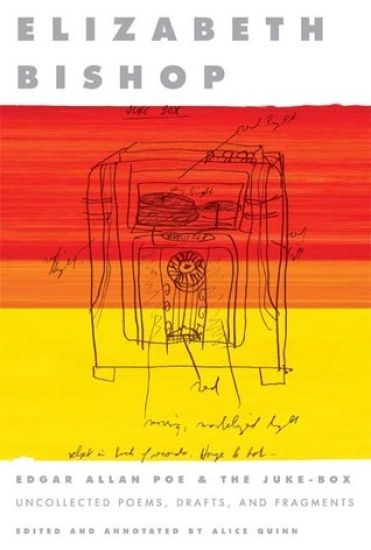
Edgar Allan Poe & the Juke-Box: Uncollected Poems, Drafts, and Fragments
Elizabeth Bishop
Farrar, Straus and Giroux
2007
nidottu
A collection of previously unpublished drafts and partial works by Elizabeth Bishop includes pieces that were started in her early adulthood about her love for Elizabethan verse and surrealist technique, dream fragments from the 1940s, and poems about her Canadian childhood. Reprint.
A Boston Globe Best Poetry Book of 2011 This is the definitive edition of the work of one of America's greatest poets, increasingly recognized as one of the greatest English-language poets of the twentieth century, loved by readers and poets alike. Bishop's poems combine humor and sadness, pain and acceptance, and observe nature and lives in perfect miniaturist close-up. The themes central to her poetry are geography and landscape--from New England, where she grew up, to Brazil and Florida, where she later lived--human connection with the natural world, questions of knowledge and perception, and the ability or inability of form to control chaos. This new edition offers readers the opportunity to take in, entire, one of the great careers in twentiethcentury poetry.
Elizabeth Bishop's prose is not nearly as well known as her poetry, but she was a dazzling and compelling prose writer too, as the publication of her letters has shown. Her stories are often on the borderline of memoir, and vice versa. From her college days, she could find the most astonishing yet thoroughly apt metaphors to illuminate her ideas. This volume edited by the poet, Pulitzer Prize winning critic, and Bishop scholar Lloyd Schwartz includes virtually all her published shorter prose pieces and a number of prose works not published until after her death. Here are her famous as well as her lesser-known stories, crucial memoirs, literary and travel essays, book reviews, and for the first time her original draft of Brazil, the Time/Life volume she repudiated in its published version, and the correspondence between Bishop and the poet Anne Stevenson, the author of the first book-length volume devoted to Bishop."
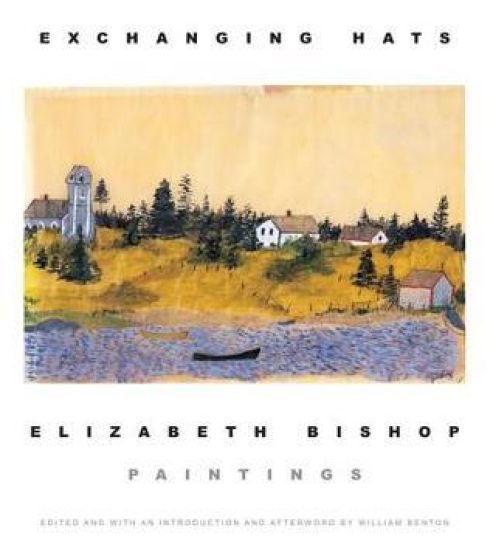
When the distinguished art critic Meyer Schapiro said that Elizabeth Bishop "writes poems with a painter's eye," Bishop was "very flattered: I'd love to be a painter." The fact is--though not many knew it--she painted throughout her life, as this handsome book, reproducing in full color forty of her works, demonstrates. The paintings were tracked down, identified, and collected by the poet and art writer William Benton, who arranged the first exhibit of Bishop's artwork (twenty-seven pieces) in January 1993 at the East Martello Tower Museum as part of the Key West Literary Seminar on Bishop's writing. Probably the best-known paintings are the three or four that decorated the dust jackets of earlier editions of her books, but most of her artwork has never been reproduced. Some, like E. Bishop's Patented Slot-Machine, come as a total surprise. William Benton gives the provenance, dimensions, and (where possible) the date of each work. In the second half of the book, he also cites many painterly passages from Bishop's writing. Typically, after admitting that occasionally she painted "a small gouache or watercolor," Bishop asserted: "They are Not Art--NOT AT ALL." William Benton concludes, "They are, though." In paperback for the first time since its publication, this edition of Exchanging Hats is sure to generate a renewed appreciation for this multi-talented artist.
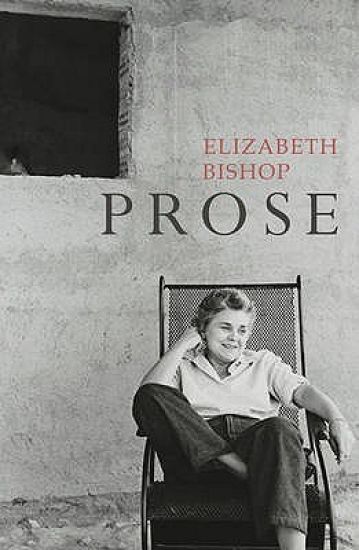
This volume includes virtually all her published shorter prose pieces and a number of prose works not published until after her death. Here are her famous as well as her lesser-known stories, crucial memoirs, literary and travel essays, book reviews and her original draft of 'Brazil'.
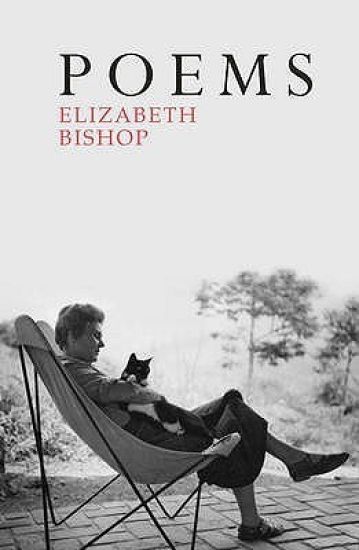
Presents the work of one of America's greatest poets, increasingly recognised as one of the greatest English-language poets of the twentieth century, loved by poets and readers alike.
Becoming Activist is a revolutionary study of youth human rights activism and literacy learning. The book follows five urban youth organizers from the Drop Knowledge Project in New York City. Intentionally polyvocal, the voices of the five youth are featured prominently to highlight the shifting articulation of their activist identities in relation to social and economic justice. Becoming Activist explores critical literacy pedagogy beyond the confines of formal education. While it has been historically theorized within English classrooms, much existing research points to the limitations of conducting critical literacy in schools. In search of a space where critical literacy can be more fully realized, this book positions urban youth organizing as an alternative context for powerful community-based learning. A valuable read for educators, researchers, and young organizers, Becoming Activist offers insight into conducting literacy work to promote positive youth and community development. Ultimately, the idea of «becoming» is key to understanding and supporting youth activists as they grow to exercise their political power for positive social change.
Becoming Activist is a revolutionary study of youth human rights activism and literacy learning. The book follows five urban youth organizers from the Drop Knowledge Project in New York City. Intentionally polyvocal, the voices of the five youth are featured prominently to highlight the shifting articulation of their activist identities in relation to social and economic justice. Becoming Activist explores critical literacy pedagogy beyond the confines of formal education. While it has been historically theorized within English classrooms, much existing research points to the limitations of conducting critical literacy in schools. In search of a space where critical literacy can be more fully realized, this book positions urban youth organizing as an alternative context for powerful community-based learning. A valuable read for educators, researchers, and young organizers, Becoming Activist offers insight into conducting literacy work to promote positive youth and community development. Ultimately, the idea of «becoming» is key to understanding and supporting youth activists as they grow to exercise their political power for positive social change.
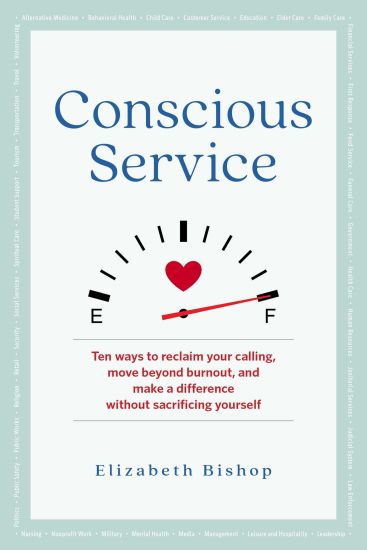
Conscious Service: Ten ways to reclaim your calling, move beyond burnout, and make a difference without sacrificing yourself will help service providers in all types of human service understand and move beyond burnout and compassion fatigue and discover a renewed energy for serving others. Each of us can learn how to thrive and find fulfillment in our vocations as we make a positive difference in our homes, workplaces, and communities. Using images, storytelling, and practical application exercises, Elizabeth Bishop invites us to reimagine how we think about, train for, and embody service. Blurring the line between the traditional and the alternative with expertly chosen spiritual and self-help insights, Conscious Service: Ten ways to reclaim your calling, move beyond burnout, and make a difference without sacrificing yourself offers pragmatic and inspiring guidance for direct service providers and the people responsible for the systems and structures through which service is delivered. Even if serving others isn't the core focus of their vocation, readers will discover keys to feeling better, living with purpose, and contributing with impact.
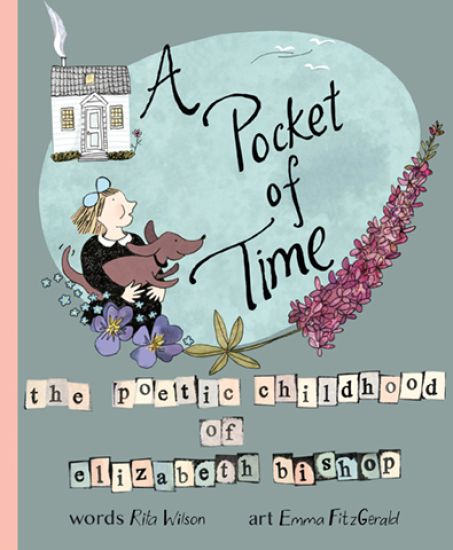
Elizabeth Bishop (1911–1979) grew up to become a famous poet, winning the Pulitzer Prize for Poetry in 1956. Before that she was a little girl who lived with her Gammie and Pa in Great Village, Nova Scotia. It was there that Bishop learned to walk, to read, to write, to sing hymns, and to catch bumblebees in foxglove flowers. It was there she first went to school and, when she was five, where her mother left and never returned. Lovingly rendered, this visual and lyrical feast tells the story of Bishop’s childhood days, inspired by Bishop’s own poetry and prose, paired with Quentin Blake-style artwork from illustrator Emma FitzGerald. A love letter to words, 'A Pocket of Time' is a lesson for young readers in finding the poetry in everything.

This is a fascinating window into the private thoughts of one of the great American writers of the twentieth century.
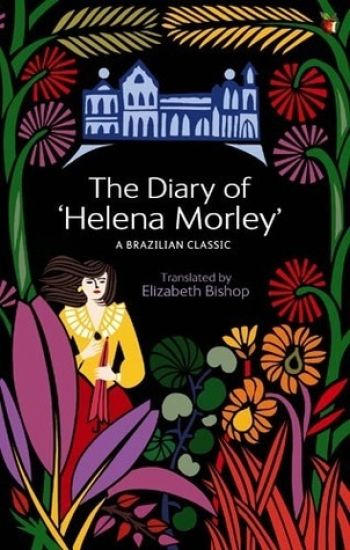
INTRODUCED BY DIANA ATHILLAn enchanting Brazilian classic. 'No wonder Bishop fell in love with this book . . . No adult writer, however skilful . . . could write with the nonchalant vivacity and ease that she unwittingly commanded' DIANA ATHILL, GUARDIAN 'A delightful, funny and revealing memoir, a little bit of Austen in the Americas' SPECTATOR'When we read her, we enter the classical serenity of a new country' ROBERT LOWELL From Elizabeth Bishop's introduction: 'When I first came to Brazil, in 1952, I asked my Brazilian friends which Brazilian books I should begin reading . . . They frequently recommended this little book, "Minha Vida de Menina" . . . In English the title means "My Life as a Little Girl" or "Young Girl", and that is exactly what the book is about, but it is not reminiscences; it is a diary, the diary actually kept by a little girl between the ages of 12 and 15, in the far-off town of Diamantina, in 1893-1895 . . . The more I read the book the better I liked it. The scenes and events it described were odd, remote, and long ago, and yet fresh, sad, funny and eternally true. The longer I stayed on in Brazil the more Brazilian the book seemed, yet much of it could have happened in any small provincial town or village, and at almost any period of history - at least before the arrival of the automobile and the moving-picture theatre.'
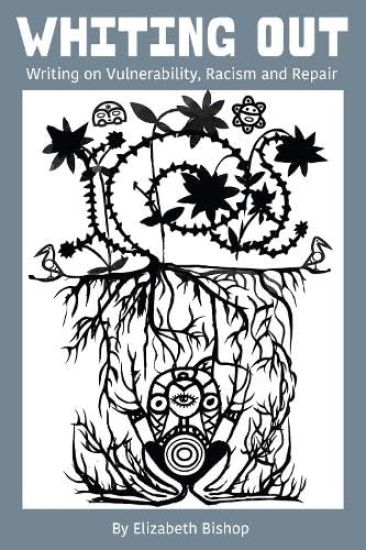
Whiting Out: Writing on Vulnerability, Racism and Repair is an experimental text that seeks to collapse the space that white writers create between themselves and their ideas when writing about race, identity, history, responsibility, positionality, power and the present. The book is written as a first-person meditation grounded in a poetics of vulnerability, undertaken as an author study in two major parts--fragmented first through the work of James Baldwin and then refracted through the writing of Gloria E. Anzaldúa. Whiting Out is for both aspiring and experienced teachers (especially white folks), as well as anyone open to writing new narratives and imagining new possible worlds. Reading Whiting Out will be necessarily uncomfortable because comfort has been built upon an artificial horizon that prioritizes the psychological safety of a repressive hypothesis over historical realities, that in effect protects a white subpopulation who inhabit a slice of the U.S. In response, the text queers such moralism to uplift deep solidarity in intersectional struggle and interconnected joy, beyond author or reader or ego. A central notion that runs throughout Whiting Out comes from the author's long-standing reading of Nietzsche, the 19th century philosopher who wrote in counter-cultural response to old ideas of morality by directly challenging the notion that rationality drives our existence (to the great benefit of capital and the church). By de-centering rationality as a normative decision-making sphere, space is made throughout this text for raw words--for discomfort, for emotion, for pain, for intellectual truth telling and for the many forms of radical honesty available on this side of history. Each chapter contains a range of unique features to engage the reader, including select excerpts of poetry, verbatim dialogue and scattered reflection questions in conversation with Baldwin and Anzaldúa. In total, Whiting Out calls upon white people to commit to deep learning toward our collective anti-racist liberation, toward intersectional futures where racial healing and reparation are prioritized. The text reads Baldwin and Anzaldúa with fresh eyes and a cautiously hopeful heart across divergent histories and contemporary moments, to write new narratives, make new moves and articulate new political commitments fortified in shared struggle.
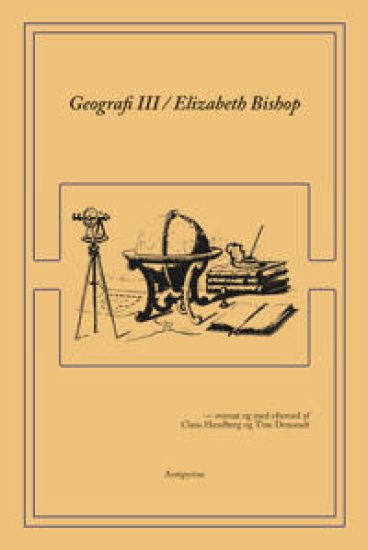
Det private jeg ... smelter umærkeligt ind i den store ytring, poesiens storhed, som, fordi den forbliver forankret i hverdagslige detaljer, aldrig lyder ‘storslået’, men er lige så stille overbevisende som daglig tale.— John Ashbery For første gang foreligger et samlet værk på dansk af den amerikanske digter Elizabeth Bishop (1911-1979). Digtsamlingen Geography III (1976) er et af forfatterskabets centrale værker, hvor Bishop viser sin særlige evne til at udvide verden indad, til at skalere, zoome fra store landskaber og ind i de mindste detaljer.Gang på gang, fra sætning til sætning, overrasker digteren og udvider tekstens rum ved ubesværet at lede læseren igennem billeder og tableauer, som sjældent er lineære, men forførende idiosynkratiske. Man ender steder, man aldrig havde forestillet sig. Gennem atlasser, vinduer, postkort, malerier, indre og ydre geografi og små erindringsstykker arbejder hun ihærdigt på at inddæmme verden i en orden, en orden hun samtidig fremstiller som utopisk. Bogens indledende tekst “First Lessons in Geography” er et eksempel på denne kamp, en lektion i ordenens utilstrækkelighed, illustreret ved en tekst fra en gammel skolebog.Et centralt emne hos Elizabeth Bishop er vores hovmod, vores evige forsøg på kategorisering af naturen og virkeligheden. Hendes digte er stille, desperate advarsler mod trangen til at forstå alt. Autoritet skaber geografi, poesi kan måske gøre det anderledes.