Kirjojen hintavertailu. Mukana 11 342 296 kirjaa ja 12 kauppaa.

Kirjahaku

Etsi kirjoja tekijän nimen, kirjan nimen tai ISBN:n perusteella.

693 kirjaa tekijältä Elizabeth Cleghorn Gaskell

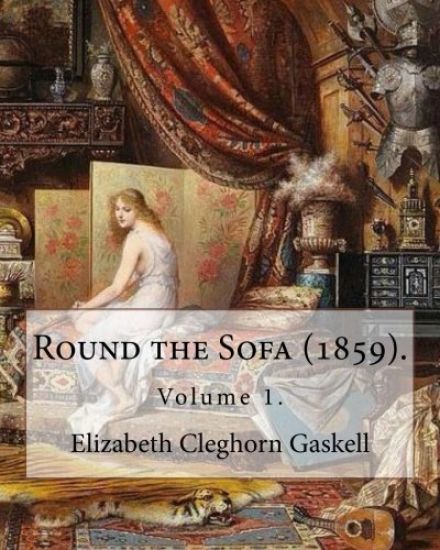
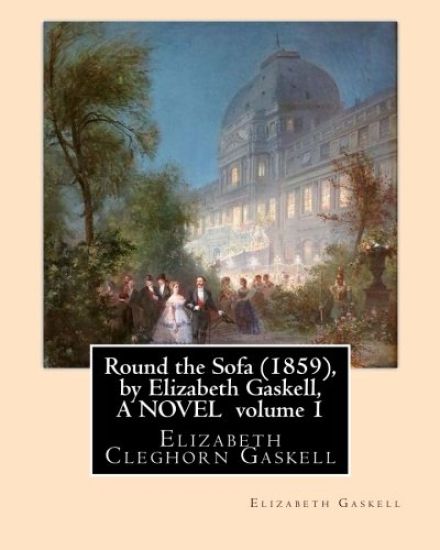
Round the Sofa (1859), by Elizabeth Gaskell, A NOVEL volume 1: Elizabeth Cleghorn Gaskell

Round the Sofa (1859), by Elizabeth Gaskell, A NOVEL volume 1: Elizabeth Cleghorn Gaskell

Elizabeth Cleghorn Gaskell

Createspace Independent Publishing Platform
2016
nidottu
The narrator, Miss Greatorex, is invited to join a party of friends who meet on a weekly basis 'round the sofa' in Mrs Dawson's house. When Mrs Dawson mentions her cousin Lady Ludlow, Miss Greatorex wants to find out more about her and the storytelling begins.Round the Sofa is not really a story. It is a vehicle to contain short stories. The narrator is invited to the home of a sickly invalid for weekly gatherings where each person in the circle takes turns telling a story. Round the Sofa is not really a story. It is a vehicle to contain short stories. The narrator is invited to the home of a sickly invalid for weekly gatherings where each person in the circle takes turns telling a story. The first short story is "My Lady Ludlow" which I'd already read, but listening to it here gives context to who the narrator is and helps to give context to the story. The next story is "An Accursed Race" which is really and academic history of a persecuted people called the Cagots. I have no idea who these people are and still don't after reading this story except that they lived in Europe and were ill treated in similar ways to Jews or other minorities. The third story is "The Doom of the Griffiths". A curse follows that Griffiths family in which the son of the 8th generation is supposed to kill his father. The way in which the curse is realized is well told. The fourth story is "Half a Life-Time Ago" is the story of Susan who in her youth has a chance for love, but must give it up to care for her family. She ends up old and lonely, but has amassed riches which ultimately bless others. The fifth story is "The Poor Clare" which tells the story of a supposed witch. The narrator discovers her history and the origin of a curse she places. The story explores how bitterness can canker our soul, but forgiveness can liberate. The final story is "The Half-Brothers" tells of two brothers - one who is loved and spoiled and the other who is misunderstood and poorly treated. It tells of an act of selfless love. Overall, I enjoyed the stories. Some are better than others, but Gaskell proves that she is incredible at writing characters who are believable and situations that tug at one's emotions Elizabeth Cleghorn Gaskell, (n e Stevenson, 29 September 1810 - 12 November 1865), often referred to as Mrs Gaskell, was an English novelist and short story writer during the Victorian era. Her novels offer a detailed portrait of the lives of many strata of society, including the very poor, and are of interest to social historians as well as lovers of literature. Her first novel, Mary Barton, was published in 1848. Gaskell's The Life of Charlotte Bront , published in 1857, was the first biography about Bront . Some of Gaskell's best known novels are Cranford (1851-53), North and South (1854-55), and Wives and Daughters (1865). Gaskell was born Elizabeth Cleghorn Stevenson on 29 September 1810 at 93 Cheyne Walk, Chelsea. She was the youngest of eight children; only she and her brother John survived infancy. Her father, William Stevenson, was a Scottish Unitarian minister at Failsworth, Lancashire, but resigned his orders on conscientious grounds and moved to London in 1806 with the intention of going to India after he was appointed private secretary to the Earl of Lauderdale, who was to become Governor General of India. That position did not materialise, however, and instead Stevenson was nominated Keeper of the Treasury Records. His wife, Elizabeth Holland, came from a family from the English Midlands that was connected with other prominent Unitarian families, including the Wedgwoods, the Martineaus, the Turners and the Darwins. When she died 13 months after giving birth to her youngest daughter, she left a bewildered husband who saw no alternative for Elizabeth but to be sent to live with her mother's sister, Hannah Lumb, in Knutsford, Cheshire
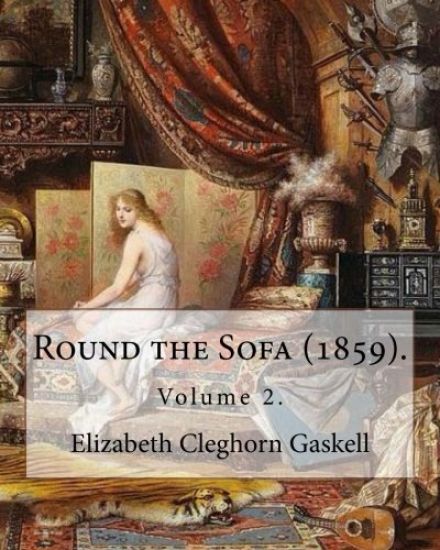
Round the Sofa (1859), by Elizabeth Gaskell, A NOVEL (volume 2): Elizabeth Cleghorn Gaskell

Round the Sofa (1859), by Elizabeth Gaskell, A NOVEL (volume 2): Elizabeth Cleghorn Gaskell

Elizabeth Cleghorn Gaskell

Createspace Independent Publishing Platform
2016
nidottu
The narrator, Miss Greatorex, is invited to join a party of friends who meet on a weekly basis 'round the sofa' in Mrs Dawson's house. When Mrs Dawson mentions her cousin Lady Ludlow, Miss Greatorex wants to find out more about her and the storytelling begins.Round the Sofa is not really a story. It is a vehicle to contain short stories. The narrator is invited to the home of a sickly invalid for weekly gatherings where each person in the circle takes turns telling a story. Round the Sofa is not really a story. It is a vehicle to contain short stories. The narrator is invited to the home of a sickly invalid for weekly gatherings where each person in the circle takes turns telling a story. The first short story is "My Lady Ludlow" which I'd already read, but listening to it here gives context to who the narrator is and helps to give context to the story. The next story is "An Accursed Race" which is really and academic history of a persecuted people called the Cagots. I have no idea who these people are and still don't after reading this story except that they lived in Europe and were ill treated in similar ways to Jews or other minorities. The third story is "The Doom of the Griffiths". A curse follows that Griffiths family in which the son of the 8th generation is supposed to kill his father. The way in which the curse is realized is well told. The fourth story is "Half a Life-Time Ago" is the story of Susan who in her youth has a chance for love, but must give it up to care for her family. She ends up old and lonely, but has amassed riches which ultimately bless others. The fifth story is "The Poor Clare" which tells the story of a supposed witch. The narrator discovers her history and the origin of a curse she places. The story explores how bitterness can canker our soul, but forgiveness can liberate. The final story is "The Half-Brothers" tells of two brothers - one who is loved and spoiled and the other who is misunderstood and poorly treated. It tells of an act of selfless love. Overall, I enjoyed the stories. Some are better than others, but Gaskell proves that she is incredible at writing characters who are believable and situations that tug at one's emotions Elizabeth Cleghorn Gaskell, (n e Stevenson, 29 September 1810 - 12 November 1865), often referred to as Mrs Gaskell, was an English novelist and short story writer during the Victorian era. Her novels offer a detailed portrait of the lives of many strata of society, including the very poor, and are of interest to social historians as well as lovers of literature. Her first novel, Mary Barton, was published in 1848. Gaskell's The Life of Charlotte Bront , published in 1857, was the first biography about Bront . Some of Gaskell's best known novels are Cranford (1851-53), North and South (1854-55), and Wives and Daughters (1865).Gaskell was born Elizabeth Cleghorn Stevenson on 29 September 1810 at 93 Cheyne Walk, Chelsea. She was the youngest of eight children; only she and her brother John survived infancy. Her father, William Stevenson, was a Scottish Unitarian minister at Failsworth, Lancashire, but resigned his orders on conscientious grounds and moved to London in 1806 with the intention of going to India after he was appointed private secretary to the Earl of Lauderdale, who was to become Governor General of India. That position did not materialise, however, and instead Stevenson was nominated Keeper of the Treasury Records. His wife, Elizabeth Holland, came from a family from the English Midlands that was connected with other prominent Unitarian families, including the Wedgwoods, the Martineaus, the Turners and the Darwins. When she died 13 months after giving birth to her youngest daughter, she left a bewildered husband who saw no alternative for Elizabeth but to be sent to live with her mother's sister, Hannah Lumb, in Knutsford, Cheshire
Sylvia's Lovers Elizabeth Cleghorn Gaskell

Sylvia's Lovers Elizabeth Cleghorn Gaskell

Elizabeth Cleghorn Gaskell

Createspace Independent Publishing Platform
2016
nidottu
The novel begins in the 1790s in the coastal town of Monkshaven (modeled on Whitby, England) against the background of the practice of impressment during the early phases of the Napoleonic Wars. Sylvia Robson lives happily with her parents on a farm, and is passionately loved by her rather dull Quaker cousin Philip. She, however, meets and falls in love with Charlie Kinraid, a dashing sailor on a whaling vessel, and they become secretly engaged. When Kinraid goes back to his ship, he is forcibly enlisted in the Royal Navy by a press gang, a scene witnessed by Philip. Philip does not tell Sylvia of the incident nor relay to her Charlie's parting message and, believing her lover is dead, Sylvia eventually marries her cousin. This act is primarily prompted out of gratefulness for Philip's assistance during a difficult time following her father's imprisonment and subsequent execution for leading a revengeful raid on press-gang collaborators. They have a daughter. Inevitably, Kinraid returns to claim Sylvia and she discovers that Philip knew all the time that he was still alive. Philip leaves her in despair at her subsequent rage and rejection, but she refuses to live with Kinraid because of her child.
North and South Elizabeth Cleghorn Gaskell

North and South Elizabeth Cleghorn Gaskell

Elizabeth Cleghorn Gaskell

Createspace Independent Publishing Platform
2016
nidottu
North and South is a novel by Elizabeth Gaskell, first published in book form in 1855 originally appeared as a twenty-two-part weekly serial from September 1854 through January 1855 in the magazine Household Words, edited by Charles Dickens. The title indicates a major theme of the book: the contrast between the way of life in the industrial north of England and the wealthier south, although it was only under pressure from her publishers that Gaskell changed the title from its original, Margaret Hale. The book is a social novel that tries to show the industrial North and its conflicts in the mid-19th century as seen by an outsider, a socially sensitive lady from the South. The heroine of the story, Margaret Hale, is the daughter of a Nonconformist minister who moves to the fictional industrial town of Milton after leaving the Church of England. The town is modeled after Manchester, where Gaskell lived as the wife of a Unitarian minister. Gaskell herself worked among the poor and knew at first hand the misery of the industrial areas.
Curious, If True: Strange Tales Elizabeth Cleghorn Gaskell

Curious, If True: Strange Tales Elizabeth Cleghorn Gaskell

Elizabeth Cleghorn Gaskell

Createspace Independent Publishing Platform
2017
nidottu
You know, my dears, that your mother was an orphan, and an only child; and I daresay you have heard that your grandfather was a clergyman up in Westmoreland, where I come from. I was just a girl in the village school, when, one day, your grandmother came in to ask the mistress if there was any scholar there who would do for a nurse-maid; and mighty proud I was, I can tell ye, when the mistress called me up...
Mary Barton Elizabeth Cleghorn Gaskell

Mary Barton Elizabeth Cleghorn Gaskell

Elizabeth Cleghorn Gaskell

Createspace Independent Publishing Platform
2017
nidottu
Mary Barton is the first novel by English author Elizabeth Gaskell, published in 1848. The story is set in the English city of Manchester between 1839 and 1842, and deals with the difficulties faced by the Victorian lower class. It is subtitled 'A Tale of Manchester Life'.
Round the Sofa (1859). By: Elizabeth Cleghorn Gaskell (Volume 1): Round the Sofa is an 1859 2-volume collection consisting of a novel with a stor
Round the Sofa is an 1859 2-volume collection consisting of a novel with a story preface and five short stories by Elizabeth Gaskell. The two volumes were published by Sampson Low, Son & Co. in London. The 1859 2-volume set is unillustrated. The first volume consists of the novel My Lady Ludlow prefaced by a short story Round the Sofa, which is used to provide a framework for the telling of My Lady Ludlow and the disparate stories. Mrs. Dawson tells the story of "My Lady Ludlow" and then five other narrators gathered around the sofa each tell a story. The second volume consists of the short stories An Accursed Race, The Doom of the Griffiths, Half a Life-time Ago, The Poor Clare, and The Half-Brothers. The novel and three of the short stories were first published in Household Words. The Doom of the Griffiths was first published in Harper's New Monthly Magazine in January 1858.The Half-Brothers was first published in The Dublin University Magazine in November 1858. Elizabeth Cleghorn Gaskell, (n e Stevenson; 29 September 1810 - 12 November 1865), often referred to as Mrs Gaskell, was an English novelist and short story writer. Her novels offer a detailed portrait of the lives of many strata of Victorian society, including the very poor, and are of interest to social historians as well as lovers of literature. Her first novel, Mary Barton, was published in 1848. Gaskell's The Life of Charlotte Bront , published in 1857, was the first biography of Bront . Some of Gaskell's best known novels are Cranford (1851-53), North and South (1854-55), and Wives and Daughters (1865).
Round the Sofa (1859). By: Elizabeth Cleghorn Gaskell (Volume 2): Round the Sofa is an 1859 2-volume collection consisting of a novel with a stor
Round the Sofa is an 1859 2-volume collection consisting of a novel with a story preface and five short stories by Elizabeth Gaskell. The two volumes were published by Sampson Low, Son & Co. in London. The 1859 2-volume set is unillustrated. The first volume consists of the novel My Lady Ludlow prefaced by a short story Round the Sofa, which is used to provide a framework for the telling of My Lady Ludlow and the disparate stories. Mrs. Dawson tells the story of "My Lady Ludlow" and then five other narrators gathered around the sofa each tell a story. The second volume consists of the short stories An Accursed Race, The Doom of the Griffiths, Half a Life-time Ago, The Poor Clare, and The Half-Brothers. The novel and three of the short stories were first published in Household Words. The Doom of the Griffiths was first published in Harper's New Monthly Magazine in January 1858.The Half-Brothers was first published in The Dublin University Magazine in November 1858. Elizabeth Cleghorn Gaskell, (n e Stevenson; 29 September 1810 - 12 November 1865), often referred to as Mrs Gaskell, was an English novelist and short story writer. Her novels offer a detailed portrait of the lives of many strata of Victorian society, including the very poor, and are of interest to social historians as well as lovers of literature. Her first novel, Mary Barton, was published in 1848. Gaskell's The Life of Charlotte Bront , published in 1857, was the first biography of Bront . Some of Gaskell's best known novels are Cranford (1851-53), North and South (1854-55), and Wives and Daughters (1865).Gaskell was born Elizabeth Cleghorn Stevenson on 29 September 1810 in Lindsey Row, Chelsea, at the house which is now 93 Cheyne Walk.She was the youngest of eight children; only she and her brother John survived infancy. Her father, William Stevenson, a Unitarian from Berwick-upon-Tweed, was minister at Failsworth, Lancashire, but resigned his orders on conscientious grounds and moved to London in 1806 with the intention of going to India after he was appointed private secretary to the Earl of Lauderdale, who was to become Governor General of India. That position did not materialise, however, and instead Stevenson was nominated Keeper of the Treasury Records. His wife, Elizabeth Holland, came from a family from the English Midlands that was connected with other prominent Unitarian families, including the Wedgwoods, the Martineaus, the Turners and the Darwins. When she died 13 months after giving birth to her youngest daughter, she left a bewildered husband who saw no alternative for Elizabeth but to be sent to live with her mother's sister, Hannah Lumb, in Knutsford, Cheshire. While she was growing up, Elizabeth's future was uncertain, as she had no personal wealth and no firm home, though she was a permanent guest at her aunt and grandparents' house. Her father married Catherine Thomson in 1814 and they had a son, William (born 1815), and a daughter, Catherine (born 1816). Although Elizabeth spent several years without seeing her father, to whom she was devoted, her older brother John often visited her in Knutsford. John was destined for the Royal Navy from an early age, like his grandfathers and uncles, but he had no entry and had to join the Merchant Navy with the East India Company's fleet.John went missing in 1827 during an expedition to India...........
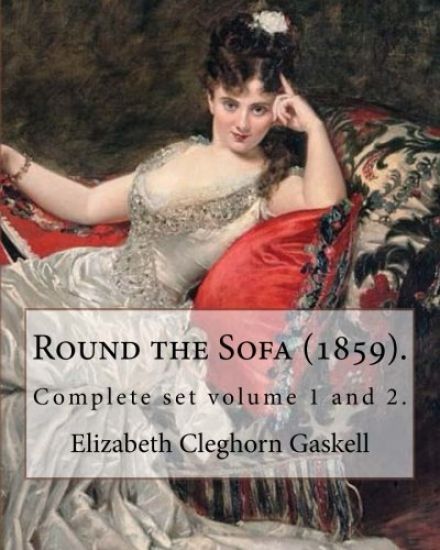
Round the Sofa (1859). By: Elizabeth Cleghorn Gaskell (Complete set volume 1 and 2): Round the Sofa is an 1859 2-volume collection consisting of
Round the Sofa is an 1859 2-volume collection consisting of a novel with a story preface and five short stories by Elizabeth Gaskell. The two volumes were published by Sampson Low, Son & Co. in London. The 1859 2-volume set is unillustrated. The first volume consists of the novel My Lady Ludlow prefaced by a short story Round the Sofa, which is used to provide a framework for the telling of My Lady Ludlow and the disparate stories. Mrs. Dawson tells the story of "My Lady Ludlow" and then five other narrators gathered around the sofa each tell a story. The second volume consists of the short stories An Accursed Race, The Doom of the Griffiths, Half a Life-time Ago, The Poor Clare, and The Half-Brothers. The novel and three of the short stories were first published in Household Words. The Doom of the Griffiths was first published in Harper's New Monthly Magazine in January 1858.The Half-Brothers was first published in The Dublin University Magazine in November 1858. Elizabeth Cleghorn Gaskell, (n e Stevenson; 29 September 1810 - 12 November 1865), often referred to as Mrs Gaskell, was an English novelist and short story writer. Her novels offer a detailed portrait of the lives of many strata of Victorian society, including the very poor, and are of interest to social historians as well as lovers of literature. Her first novel, Mary Barton, was published in 1848. Gaskell's The Life of Charlotte Bront , published in 1857, was the first biography of Bront . Some of Gaskell's best known novels are Cranford (1851-53), North and South (1854-55), and Wives and Daughters (1865).Gaskell was born Elizabeth Cleghorn Stevenson on 29 September 1810 in Lindsey Row, Chelsea, at the house which is now 93 Cheyne Walk.She was the youngest of eight children; only she and her brother John survived infancy. Her father, William Stevenson, a Unitarian from Berwick-upon-Tweed, was minister at Failsworth, Lancashire, but resigned his orders on conscientious grounds and moved to London in 1806 with the intention of going to India after he was appointed private secretary to the Earl of Lauderdale, who was to become Governor General of India. That position did not materialise, however, and instead Stevenson was nominated Keeper of the Treasury Records. His wife, Elizabeth Holland, came from a family from the English Midlands that was connected with other prominent Unitarian families, including the Wedgwoods, the Martineaus, the Turners and the Darwins. When she died 13 months after giving birth to her youngest daughter, she left a bewildered husband who saw no alternative for Elizabeth but to be sent to live with her mother's sister, Hannah Lumb, in Knutsford, Cheshire. While she was growing up, Elizabeth's future was uncertain, as she had no personal wealth and no firm home, though she was a permanent guest at her aunt and grandparents' house. Her father married Catherine Thomson in 1814 and they had a son, William (born 1815), and a daughter, Catherine (born 1816). Although Elizabeth spent several years without seeing her father, to whom she was devoted, her older brother John often visited her in Knutsford. John was destined for the Royal Navy from an early age, like his grandfathers and uncles, but he had no entry and had to join the Merchant Navy with the East India Company's fleet.John went missing in 1827 during an expedition to India...........
Elizabeth Gaskell, Collection novels II

Elizabeth Gaskell, Collection novels II

Elizabeth Cleghorn Gaskell

Createspace Independent Publishing Platform
2014
nidottu
Elizabeth Cleghorn Gaskell, n e Stevenson (29 September 1810 - 12 November 1865), often referred to simply as Mrs Gaskell, was a British novelist and short story writer during the Victorian era. Her novels offer a detailed portrait of the lives of many strata of society, including the very poor, and are of interest to social historians as well as lovers of literature. Gaskell was also the first to write a biography of Charlotte Bronte, The Life of Charlotte Bronte, which was published in 1857. Mrs Gaskell's first novel, Mary Barton, was published anonymously in 1848. The best-known of her remaining novels are North and South (1854), and Wives and Daughters (1865). In this book: Ruth Sylvia's Lovers -- Complete Cousin Phillis My Lady Ludlow Curious, if True, Strange Tales
Round the Sofa (1859), by Elizabeth Gaskell complete volume 1, and 2: novel (original version)

Round the Sofa (1859), by Elizabeth Gaskell complete volume 1, and 2: novel (original version)

Elizabeth Cleghorn Gaskell

Createspace Independent Publishing Platform
2016
nidottu
The narrator, Miss Greatorex, is invited to join a party of friends who meet on a weekly basis 'round the sofa' in Mrs Dawson's house. When Mrs Dawson mentions her cousin Lady Ludlow, Miss Greatorex wants to find out more about her and the storytelling begins.Round the Sofa is not really a story. It is a vehicle to contain short stories. The narrator is invited to the home of a sickly invalid for weekly gatherings where each person in the circle takes turns telling a story. Round the Sofa is not really a story. It is a vehicle to contain short stories. The narrator is invited to the home of a sickly invalid for weekly gatherings where each person in the circle takes turns telling a story. The first short story is "My Lady Ludlow" which I'd already read, but listening to it here gives context to who the narrator is and helps to give context to the story. The next story is "An Accursed Race" which is really and academic history of a persecuted people called the Cagots. I have no idea who these people are and still don't after reading this story except that they lived in Europe and were ill treated in similar ways to Jews or other minorities. The third story is "The Doom of the Griffiths". A curse follows that Griffiths family in which the son of the 8th generation is supposed to kill his father. The way in which the curse is realized is well told. The fourth story is "Half a Life-Time Ago" is the story of Susan who in her youth has a chance for love, but must give it up to care for her family. She ends up old and lonely, but has amassed riches which ultimately bless others. The fifth story is "The Poor Clare" which tells the story of a supposed witch. The narrator discovers her history and the origin of a curse she places. The story explores how bitterness can canker our soul, but forgiveness can liberate. The final story is "The Half-Brothers" tells of two brothers - one who is loved and spoiled and the other who is misunderstood and poorly treated. It tells of an act of selfless love. Overall, I enjoyed the stories. Some are better than others, but Gaskell proves that she is incredible at writing characters who are believable and situations that tug at one's emotions Elizabeth Cleghorn Gaskell, (n e Stevenson, 29 September 1810 - 12 November 1865), often referred to as Mrs Gaskell, was an English novelist and short story writer during the Victorian era. Her novels offer a detailed portrait of the lives of many strata of society, including the very poor, and are of interest to social historians as well as lovers of literature. Her first novel, Mary Barton, was published in 1848. Gaskell's The Life of Charlotte Bront , published in 1857, was the first biography about Bront . Some of Gaskell's best known novels are Cranford (1851-53), North and South (1854-55), and Wives and Daughters (1865).Gaskell was born Elizabeth Cleghorn Stevenson on 29 September 1810 at 93 Cheyne Walk, Chelsea. She was the youngest of eight children; only she and her brother John survived infancy. Her father, William Stevenson, was a Scottish Unitarian minister at Failsworth, Lancashire, but resigned his orders on conscientious grounds and moved to London in 1806 with the intention of going to India after he was appointed private secretary to the Earl of Lauderdale, who was to become Governor General of India. That position did not materialise, however, and instead Stevenson was nominated Keeper of the Treasury Records. His wife, Elizabeth Holland, came from a family from the English Midlands that was connected with other prominent Unitarian families, including the Wedgwoods, the Martineaus, the Turners and the Darwins. When she died 13 months after giving birth to her youngest daughter, 1] she left a bewildered husband who saw no alternative for Elizabeth but to be sent to live with her mother's sister, Hannah Lumb, in Knutsford, Cheshire...
Mary Barton (1848). By: Elizabeth Gaskell: Mary Barton is the first novel by English author Elizabeth Gaskell, published in 1848.
Mary Barton is the first novel by English author Elizabeth Gaskell, published in 1848. The story is set in the English city of Manchester between 1839 and 1842, and deals with the difficulties faced by the Victorian working class. It is subtitled "A Tale of Manchester Life". The novel begins in Manchester, where we are introduced to the Bartons and the Wilsons, two working-class families. John Barton is a questioner of the distribution of wealth and the relations between rich and poor. Soon his wife dies-he blames it on her grief over the disappearance of her sister Esther. Having already lost his son Tom at a young age, Barton is left to raise his daughter, Mary, alone and now falls into depression and begins to involve himself in the Chartist, trade-union movement. Chapter 1 takes place in countryside where Moss Side is now. Mary takes up work at a dressmaker's (her father having objected to her working in a factory) and becomes subject to the affections of hard-working Jem Wilson and Harry Carson, son of a wealthy mill owner. She fondly hopes, by marrying Carson, to secure a comfortable life for herself and her father, but immediately after refusing Jem's offer of marriage she realises that she truly loves him. She therefore decides to evade Carson, planning to show her feelings to Jem in the course of time. Jem believes her decision to be final, though this does not change his feelings for her. Meanwhile, Esther, a "street-walker," returns to warn John Barton that he must save Mary from becoming like her. He simply pushes her away, however, and she's sent to jail for a month on the charge of vagrancy. Upon her release she talks to Jem with the same purpose. He promises that he will protect Mary and confronts Carson, eventually entering into a fight with him, which is witnessed by a policeman passing by. Not long afterwards, Carson is shot dead, and Jem is arrested for the crime, his gun having been found at the scene. Esther decides to investigate the matter further and discovers that the wadding for the gun was a piece of paper on which is written Mary's name. She visits her niece to warn her to save the one she loves, and after she leaves Mary realises that the murderer is not Jem but her father. She is now faced with having to save her lover without giving away her father. With the help of Job Legh (the intelligent grandfather of her blind friend Margaret), Mary travels to Liverpool to find the only person who could provide an alibi for Jem - Will Wilson, Jem's cousin and a sailor, who was with him on the night of the murder. Unfortunately, Will's ship is already departing, so that, after Mary chases after the ship in a small boat, the only thing Will can do is promise to return in the pilot ship and testify the next day. During the trial, Jem learns of Mary's great love for him. Will arrives in court to testify, and Jem is found "not guilty". Mary has fallen ill during the trial and is nursed by Mr Sturgis, an old sailor, and his wife. When she finally returns to Manchester she has to face her father, who is crushed by his remorse. He summons John Carson, Harry's father, to confess to him that he is the murderer. Carson is still set on justice, but after turning to the Bible he forgives Barton, who dies soon afterwards in Carson's arms. Not long after this Esther comes back to Mary's home, where she, too, soon dies. Jem decides to leave England, where, his reputation damaged, it would be difficult for him to find a new job. The novel ends with the wedded Mary and Jem, their little child, and Mrs Wilson living happily in Canada. News comes that Margaret has regained her sight and that she and Will, soon to be married, will visit. Elizabeth Cleghorn Gaskell, (Stevenson, 29 September 1810 - 12 November 1865), often referred to as Mrs Gaskell, was an English novelist and short story writer. ...
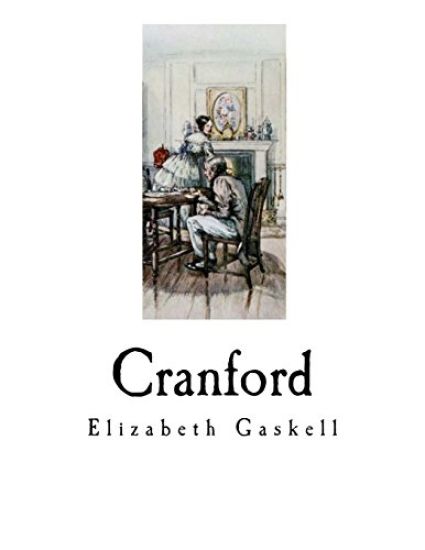
Cranford. By: Elizabeth Gaskell: Novel (World's Classics)

Cranford. By: Elizabeth Gaskell: Novel (World's Classics)

Elizabeth Cleghorn Gaskell

Createspace Independent Publishing Platform
2016
nidottu
Cranford is one of the better-known novels of the 19th-century English writer Elizabeth Gaskell. It was first published, irregularly, in eight instalments, between December 1851 and May 1853, in the magazine Household Words, which was edited by Charles Dickens. It was then published, with minor revision, in book form in 1853.The first instalment (in Household Words), which became the novel's first two chapters, was originally published "as a self-contained sketch", and the "irregular way" the further seven instalments were published suggests that it took Mrs Gaskell time to think of making this into a book.She was during this period busy writing the three volume novel Ruth, which was published January 1853.Cranford has been described as "practically structurelesss", and given the irregular nature of how it was first published, it is not surprising that it lacks unity.A. W. Ward describes the novel, as a "brief series of sketches, strung together with easy grace".The small country town of Cranford corresponds to Knutsford, Cheshire, where Elizabeth Gaskell had spent much of her childhood and where she returned after she married. However, the story's narrator comes from the nearby industrial city of Drumble, which corresponds to Manchester, where the author lived when writing the novel.There is no real plot, but rather a collection of satirical sketches, which sympathetically portray changing small town customs and values in mid Victorian England. 9] Harkening back to memories of her childhood in the small Cheshire town of Knutsford, Cranford is Elizabeth Gaskell's affectionate portrait of people and customs that were already becoming anachronisms............... Elizabeth Cleghorn Gaskell, (n e Stevenson, 29 September 1810 - 12 November 1865), often referred to as Mrs Gaskell, was an English novelist and short story writer. Her novels offer a detailed portrait of the lives of many strata of Victorian society, including the very poor, and are of interest to social historians as well as lovers of literature. Her first novel, Mary Barton, was published in 1848. Gaskell's The Life of Charlotte Bront , published in 1857, was the first biography about Bront . Some of Gaskell's best known novels are Cranford (1851-53), North and South (1854-55), and Wives and Daughters (1865).Gaskell was born Elizabeth Cleghorn Stevenson on 29 September 1810 at 93 Cheyne Walk, Chelsea. She was the youngest of eight children; only she and her brother John survived infancy. Her father, William Stevenson, was a Scottish Unitarian minister at Failsworth, Lancashire, but resigned his orders on conscientious grounds and moved to London in 1806 with the intention of going to India after he was appointed private secretary to the Earl of Lauderdale, who was to become Governor General of India. That position did not materialise, however, and instead Stevenson was nominated Keeper of the Treasury Records. His wife, Elizabeth Holland, came from a family from the English Midlands that was connected with other prominent Unitarian families, including the Wedgwoods, the Martineaus, the Turners and the Darwins. When she died 13 months after giving birth to her youngest daughter, 1] she left a bewildered husband who saw no alternative for Elizabeth but to be sent to live with her mother's sister, Hannah Lumb, in Knutsford, Cheshire. While she was growing up Elizabeth's future was uncertain, as she had no personal wealth and no firm home, though she was a permanent guest at her aunt and grandparents' house. Her father married Catherine Thomson in 1814 and they had a son, William (born 1815), and a daughter, Catherine (born 1816). Although Elizabeth spent several years without seeing her father and his new family, her older brother John often visited her in Knutsford. John was destined for the Royal Navy from an early age, like his grandfathers and uncles, but he had no entry and had to join the Merchant Navy with the East India Company's fleet.....
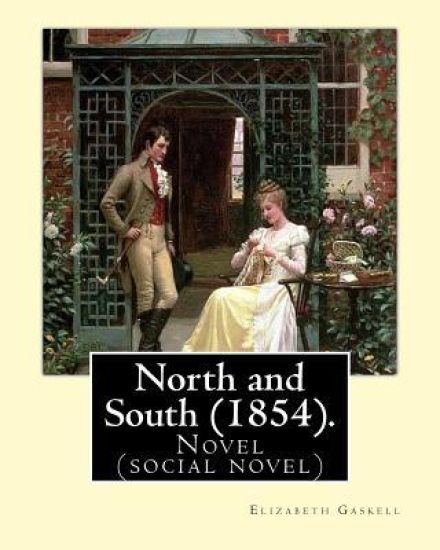
North and South (1854). By: Elizabeth Gaskell: Novel (social novel)

North and South (1854). By: Elizabeth Gaskell: Novel (social novel)

Elizabeth Cleghorn Gaskell

Createspace Independent Publishing Platform
2016
nidottu
North and South is a social novel by English writer Elizabeth Gaskell. Along with Wives and Daughters (1865) and Cranford (1853), it is one of her best known novels and has been adapted for television twice, in 1975 and 2004. The latter version renewed interest in the novel and gained it a wider readership. While Gaskell's first novel Mary Barton (1848) focused on relations between employers and workers in Manchester from the perspective of the working poor, North and South uses a protagonist from southern England to present and comment on the perspectives of both mill owners and mill workers in an industrializing city. North and South is set in the fictional industrial town of Milton in the North of England. Forced to leave her home in the tranquil rural south, Margaret Hale settles with her parents in Milton where she witnesses the brutal world wrought by the industrial revolution and employers and workers clashing in the first organised strikes. Sympathetic to the poor, whose courage and tenacity she admires and among whom she makes friends, she clashes with John Thornton, a cotton mill manufacturer who belongs to the nouveaux riches class and whose contemptuous attitude to workers Margaret rejects. The novel traces both her growing understanding of the complexity of labor relations and her impact on well-meaning mill owners, and her conflicted relationship with John Thornton.Gaskell based her depiction of Milton on Manchester, where she lived as the wife of a Unitarian minister.Margaret Hale, 19, happily returns home from London to the idyllic southern village of Helstone after her cousin Edith marries Captain Lennox. She lived nearly 10 years in the city with Edith and wealthy Aunt Shaw to learn to be an accomplished young lady. Margaret, herself, has refused a marriage offer from the captain's brother, Henry, a rising barrister. But her life is turned upside down when her father, the local pastor, leaves the Church of England and the rectory of Helstone as a matter of conscience-his intellectual honesty having made him a dissenter. On the suggestion of his old friend from Oxford, Mr. Bell, he settles with his wife and daughter in Milton-Northern, where Mr. Bell was born and owns property. An industrial town in Darkshire, a textile-producing region, it is engaged in cotton-manufacturing and finds itself in the middle of the industrial revolution, where masters and workers clash in the first organised strikes. Margaret finds the bustling, smoky town of Milton harsh and strange and she is upset by the poverty all around. Mr. Hale, in reduced financial circumstances, works as a tutor and counts as his pupil the rich and influential manufacturer, Mr. John Thornton, master of Marlborough Mills. From the outset, Margaret and Thornton are at odds with each other: She sees him as coarse and unfeeling; he sees her as haughty. But he is attracted to her beauty and self-assurance and she begins to admire how he has lifted himself from poverty. During the 18 months she spends in Milton, Margaret gradually learns to appreciate the city and its hard-working people, especially Nicholas Higgins, a Workers' Union representative, and his daughter Bessy, whom she befriends. Bessy is consumptive from inhalation of cotton dust and she eventually dies from it. Meantime, Margaret's mother is growing more seriously ill and a workers' strike is brewing. Masters and hands (workers) do not reach a resolution on the strike and an incensed mob of workers threatens Thornton and his factory with violence after he brought Irish workers into his mill. Margaret implores Thornton to intervene and talk to the mob, but he manages merely to fuel their anger. Margaret intervenes too and is struck down by a stone.........Elizabeth Cleghorn Gaskell, (n e Stevenson, 29 September 1810 - 12 November 1865), often referred to as Mrs Gaskell, was an English novelist and short story writer.....
A Dark Night's Work: Elizabeth Gaskell

A Dark Night's Work: Elizabeth Gaskell

Elizabeth Cleghorn Gaskell

Createspace Independent Publishing Platform
2018
nidottu
A Dark Night's Work by Elizabeth Gaskell. A Dark Night's Work is an 1863 novel by Elizabeth Gaskell. It was first published serially in Charles Dickens's magazine All the Year Round. The word "dark" was added to the original title by Dickens against Gaskell's wishes. Dickens felt that the altered title would be more striking. The story centers on a country lawyer, Edward Wilkins, and his daughter Ellinor. Edward has an artistic and literary personality, unsuited to his social position as the son of a successful lawyer who takes over his father's practice in the provincial town of Hamley. His legal representation of the local gentry and nobility leads him to try fitting into their social circles, only to be mocked and treated with derision. He develops a drinking problem and spends more money than he can afford to in his attempts to be an equal to his clients. His bad habits lead to problems in his business, and Edward is forced to take on a junior partner named Mr. Dunster. At the same time, Ellinor becomes engaged to a young upcoming country gentleman named Ralph Corbet. Corbet initiates the engagement partly through love of Ellinor and partly because of a promise of money from Edward. Edward continues to drink and overspend, leading to a confrontation with Mr. Dunster. In the heat of the argument, Edward strikes Mr. Dunster, killing him. Ellinor and a family servant named Dixon help Edward to bury the body in their flower garden.
Cranford: Elizabeth Gaskell

Cranford: Elizabeth Gaskell

Elizabeth Cleghorn Gaskell

Createspace Independent Publishing Platform
2018
nidottu
Cranford by Elizabeth Gaskell. Cranford is one of the better-known novels of the 19th-century English writer Elizabeth Gaskell. It was first published, irregularly, in eight instalments, between December 1851 and May 1853, in the magazine Household Words, which was edited by Charles Dickens. It was then published, with minor revision, in book form in 1853. In the years following Elizabeth Gaskell's death the novel became immensely popular. There is no real plot, but rather a collection of satirical sketches, which sympathetically portray changing small town customs and values in mid Victorian England. Harkening back to memories of her childhood in the small Cheshire town of Knutsford, Cranford is Elizabeth Gaskell's affectionate portrait of people and customs that were already becoming anachronisms.