Kirjojen hintavertailu. Mukana 11 244 527 kirjaa ja 12 kauppaa.

Kirjahaku

Etsi kirjoja tekijän nimen, kirjan nimen tai ISBN:n perusteella.

18 kirjaa tekijältä Elizabeth Edwards

Women in Teacher Training Colleges, 1900-1960
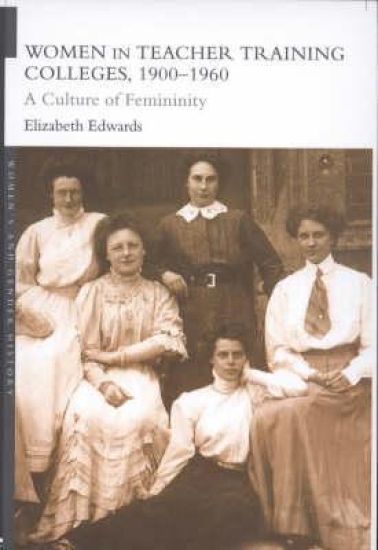
Women in Teacher Training Colleges, 1900-1960 is an intricate and fascinating investigation of the lives and experiences of women in these important educational institutions of the early twentieth century. The book provides an overview of the historical context of the development of the colleges, using detailed case studies of three colleges: Homerton, Avery Hill and Bishop Otter. Drawing on a wealth of archival material, primary and secondary sources, and on the oral testimonies of former pupils and staff, the book examines the following key themes:*the changing social class of women students*the colleges culture of femininity drawn from the family organization and social practices of the middle-class home*the conflicting public and private roles of the woman principal*the role of the college staff and the residential context of college life*women's sexuality *the last days of the womens colleges.Women in Teacher Training Colleges, 1900-1960 is an essential contribution to women's history and gives a unique insight into this neglected aspect of women's experiences in the twentieth century.
English-language Poetry from Wales 1789-1806

English-language Poetry from Wales 1789-1806

Elizabeth Edwards

University of Wales Press
2013
nidottu
In the period following the French revolution in 1789, Welsh poets continually reflected on the extraordinary new era in which they lived through their writing. Effortlessly ranging from Wales's deep and distant history to accounts of the most topical and urgent current affairs, their poems on war, Welshness, druids, parted lovers and sublime landscapes encompass the beautiful, the brutal and the mysterious. Facing a future that often seemed agonisingly uncertain, poets in Wales used their verses to voice their thoughts and feelings about events that had rocked the whole of Europe, and whose effects continued to be felt long after 1789. This new selection of poetry from Wales sets recently-discovered manuscript texts alongside little-known early printed poems, offering a full and accessible introduction to Welsh poetry in English in the period 1780-1820.
Photography, Anthropology and History

Photography, Anthropology and History

Elizabeth Edwards

Ashgate Publishing Limited
2009
sidottu
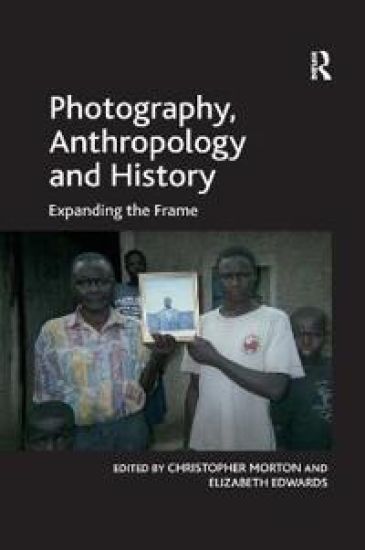
Photography, Anthropology and History examines the complex historical relationship between photography and anthropology, and in particular the strong emergence of the contemporary relevance of historical images. Thematically organized, and focusing on the visual practices developed within anthropology as a discipline, this book brings together a range of contemporary and methodologically innovative approaches to the historical image within anthropology. Importantly, it also demonstrates the ongoing relevance of both the historical image and the notion of the archive to recent anthropological thought. As current research rethinks the relationship between photography and anthropology, this volume will serve as a stimulus to this new phase of research as an essential text and methodological reference point in any course that addresses the relationship between anthropology and visuality.
Resilience

Resilience

Elizabeth Edwards

Broadway Books (A Division of Bantam Doubleday Dell Publishing Group Inc)
2010
pokkari
The bestselling author of "Saving Graces" shares her inspirational message on the challenges and blessings of coping with adversity. She's one of the most beloved political figures in the country, and on the surface, seems to have led a charmed life. In many ways, she has. Beautiful family. Thriving career. Supportive friendship. Loving marriage. But she's no stranger to adversity. Many know of the strength she had shown after her son, Wade, was killed in a freak car accident when he was only sixteen years old. She would exhibit this remarkable grace and courage again when the very private matter of her husband's infidelity became public fodder. And her own life has been on the line. Days before the 2004 presidential election--when her husband John was running for vice president--she was diagnosed with breast cancer. After rounds of surgery, chemotherapy, and radiation the cancer went away--only to reoccur in 2007. While on the campaign trail, Elizabeth met many others who have had to contend with serious adversity in their lives, and in "Resilience," she draws on their experiences as well as her own, crafting an unsentimental and ultimately inspirational meditation on the gifts we can find among life's biggest challenges. This short, powerful, pocket-sized inspirational book makes an ideal gift for anyone dealing with difficulties in their life, who can find peace in knowing they are not alone, and promise that things can get better." " "From the Hardcover edition."
The Camera As Historian

The Camera As Historian

Elizabeth Edwards

Duke University Press
2012
sidottu
In the late nineteenth century and early twentieth, hundreds of amateur photographers took part in the photographic survey movement in England. They sought to record the material remains of the English past so that it might be preserved for future generations. In The Camera as Historian, the groundbreaking historical and visual anthropologist Elizabeth Edwards works with an archive of nearly 55,000 photographs taken by 1,000 photographers, mostly unknown until now. She approaches the survey movement and its social and material practices ethnographically. Considering how the amateur photographers understood the value of their project, Edwards links the surveys to concepts of leisure, understandings of the local and the national, and the rise of popular photography. Her examination of how the photographers negotiated between scientific objectivity and aesthetic responses to the past leads her to argue that the survey movement was as concerned with the conditions of its own modernity and the creation of an archive for an anticipated future as it was nostalgic about the imagined past. Including more than 120 vibrant images, The Camera as Historian offers new perspectives on the forces that shaped Victorian and Edwardian Britain, as well as on contemporary debates about cultural identity, nationality, empire, material practices, and art.
The Camera As Historian

The Camera As Historian

Elizabeth Edwards

Duke University Press
2012
pokkari
In the late nineteenth century and early twentieth, hundreds of amateur photographers took part in the photographic survey movement in England. They sought to record the material remains of the English past so that it might be preserved for future generations. In The Camera as Historian, the groundbreaking historical and visual anthropologist Elizabeth Edwards works with an archive of nearly 55,000 photographs taken by 1,000 photographers, mostly unknown until now. She approaches the survey movement and its social and material practices ethnographically. Considering how the amateur photographers understood the value of their project, Edwards links the surveys to concepts of leisure, understandings of the local and the national, and the rise of popular photography. Her examination of how the photographers negotiated between scientific objectivity and aesthetic responses to the past leads her to argue that the survey movement was as concerned with the conditions of its own modernity and the creation of an archive for an anticipated future as it was nostalgic about the imagined past. Including more than 120 vibrant images, The Camera as Historian offers new perspectives on the forces that shaped Victorian and Edwardian Britain, as well as on contemporary debates about cultural identity, nationality, empire, material practices, and art.
The Genesis of Narrative in Malory's Morte Darthur
A study of the structure of the Morte, focusing on Malory's adaptation, as both redactor and translator, of traditional Arthurian material. The Morte Darthur is both a representative of the traditions of Arthurian literature, and a complex response to its stock themes and motifs. This book offers a new reading of the principles by which the Morte Darthur is structured, looking at the ways in which Malory deploys the Arthurian tradition and received narratives as both redactor and translator. The sources are considered in particular detail, and the additions and deletions which Malory makes to them: central to the investigation is the ways in which the fifteenth-century work on the one hand conserves thirteenth-century narratives such as Le Mort le Roi Artu, yet on the other reconstitutes it as something new, an approach which differs from the current critical trend of considering the Morte mainly in relation to its contemporary milieu. In so doing, the author develops a theory of "symbolic structure" to account for the principles of generation and combination of narrative elements in Malory, looking at the ways in which entire narratives can be put into motion by the power of a symbol such as Balin's sword, or the grail itself. Dr ELIZABETH EDWARDS teaches at the University of King's College, Halifax, Nova Scotia.
Photography, Anthropology and History

Photography, Anthropology and History

Elizabeth Edwards

Routledge
2016
nidottu
Photography, Anthropology and History examines the complex historical relationship between photography and anthropology, and in particular the strong emergence of the contemporary relevance of historical images. Thematically organized, and focusing on the visual practices developed within anthropology as a discipline, this book brings together a range of contemporary and methodologically innovative approaches to the historical image within anthropology. Importantly, it also demonstrates the ongoing relevance of both the historical image and the notion of the archive to recent anthropological thought. As current research rethinks the relationship between photography and anthropology, this volume will serve as a stimulus to this new phase of research as an essential text and methodological reference point in any course that addresses the relationship between anthropology and visuality.
Photographs and the Practice of History

Photographs and the Practice of History

Elizabeth Edwards

Bloomsbury Academic
2022
sidottu
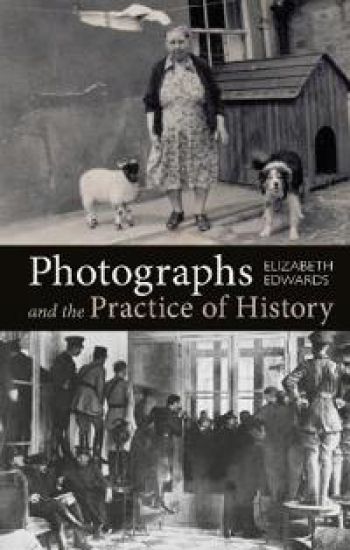
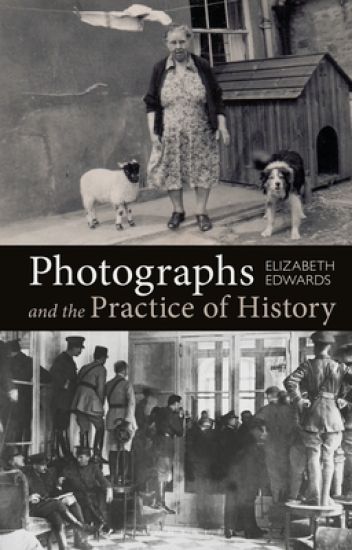
What is it to practice history in an age in which photographs exist? What is the impact of photographs on the core historiographical practices which define the discipline and shape its enquiry and methods? In Photographs and the Practice of History, Elizabeth Edwards proposes a new approach to historical thinking which explores these questions and redefines the practices at the heart of this discipline. Structured around key concepts in historical methodology which are recognisable to all undergraduates, the book shows that from the mid-19th century onward, photographs have influenced historical enquiry. Exposure to these mass-distributed cultural artefacts is enough to change our historical frameworks even when research is textually-based. Conceptualised as a series of ‘sensibilities’ rather than a methodology as such, it is intended as a companion to 'how to' approaches to visual research and visual sources. Photographs and the Practice of History not only builds on existing literature by leading scholars: it also offers a highly original approach to historiographical thinking that gives readers a foundation on which to build their own historical practices.
Photographs and the Practice of History

Photographs and the Practice of History

Elizabeth Edwards

Bloomsbury Academic
2022
nidottu
What is it to practice history in an age in which photographs exist? What is the impact of photographs on the core historiographical practices which define the discipline and shape its enquiry and methods? In Photographs and the Practice of History, Elizabeth Edwards proposes a new approach to historical thinking which explores these questions and redefines the practices at the heart of this discipline. Structured around key concepts in historical methodology which are recognisable to all undergraduates, the book shows that from the mid-19th century onward, photographs have influenced historical enquiry. Exposure to these mass-distributed cultural artefacts is enough to change our historical frameworks even when research is textually-based. Conceptualised as a series of ‘sensibilities’ rather than a methodology as such, it is intended as a companion to 'how to' approaches to visual research and visual sources. Photographs and the Practice of History not only builds on existing literature by leading scholars: it also offers a highly original approach to historiographical thinking that gives readers a foundation on which to build their own historical practices.
The Alstan Chronicles- Ashanti's Quest

The Alstan Chronicles- Ashanti's Quest

Elizabeth Edwards

Createspace Independent Publishing Platform
2013
pokkari
"Ashanti's Quest" is a children's fantasy novel from Elizabeth Edwards but can be enjoyed by adults and children alike. The novel tells the story of Alstan, a nation built both on land and in water, which comes under attack from the Dark Forces from the Voltan Mountains. 1000 years before, the Alstan general ignored prophecies which warned of a great war and his nation suffered the consequences. Now, as history threatens to repeat itself, the present general of Alstan determines not to make the same mistakes and consults the Book of Truths to save his nation. Against the wishes of her parents, Ashanti, a fourteen year old warrior apprentice, is sent on a quest to the Hetron Convention to bring back the Nagxov Orb, Alstan's only hope. She is pursued tirelessly by the Shadows of the Dark Forces and experiences many strange adventures along the way. Battling prejudice and doubt, she finally returns to Alstan with the orb. Through the unlikely assistance of her daydreaming younger sister and the arrogant prince of a neighbouring nation, Ashanti attempts to trick her enemy and fulfil the ancient prophecy. But is she to find that she is too late?"Ashanti's Quest" is the first in the series of "The Alstan Chronicles" but is also a complete story, to be enjoyed in its own right.
Raw Histories

Raw Histories

Elizabeth Edwards

Berg Publishers
2001
sidottu
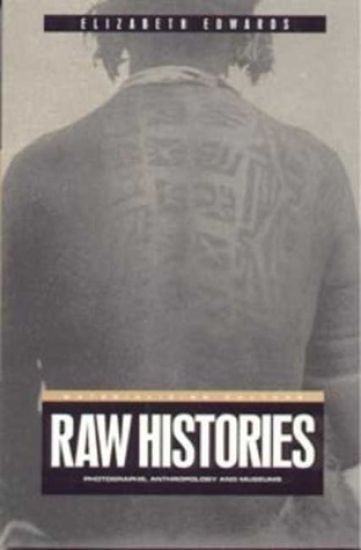
Photographs have had an integral and complex role in many anthropological contexts, from fieldwork to museum exhibitions. This book explores how approaching anthropological photographs as 'history' can offer both theoretical and empirical insights into these roles. Photographs are thought to make problematic history because of their ambiguity and 'rawness'. In short, they have too many meanings. The author refutes this prejudice by exploring, through a series of case studies, precisely the potential of this raw quality to open up new perspectives. Taking the nature of photography as her starting point, the author argues that photographs are not merely pictures of things but are part of a dynamic and fluid historical dialogue, which is active not only in the creation of the photograph but in its subsequent social biography in archive and museum spaces, past and present. In this context, the book challenges any uniform view of anthropological photography and its resulting archives. Drawing on a variety of examples, largely from the Pacific, the book demonstrates how close readings of photographs reveal not only western agendas, but also many layers of differing historical and cross-cultural experiences. That is, photographs can 'spring leaks' to show an alternative viewpoint. These themes are developed further by examining the dynamics of photographs and issues around them as used by contemporary artists and curators and presented to an increasingly varied public. This book convincingly demonstrates photographs' potential to articulate histories other than those of their immediate appearances, a potential that can no longer be neglected by scholars and institutions.
Raw Histories

Raw Histories

Elizabeth Edwards

Berg Publishers
2001
nidottu
Photographs have had an integral and complex role in many anthropological contexts, from fieldwork to museum exhibitions. This book explores how approaching anthropological photographs as 'history' can offer both theoretical and empirical insights into these roles. Photographs are thought to make problematic history because of their ambiguity and 'rawness'. In short, they have too many meanings. The author refutes this prejudice by exploring, through a series of case studies, precisely the potential of this raw quality to open up new perspectives. Taking the nature of photography as her starting point, the author argues that photographs are not merely pictures of things but are part of a dynamic and fluid historical dialogue, which is active not only in the creation of the photograph but in its subsequent social biography in archive and museum spaces, past and present. In this context, the book challenges any uniform view of anthropological photography and its resulting archives. Drawing on a variety of examples, largely from the Pacific, the book demonstrates how close readings of photographs reveal not only western agendas, but also many layers of differing historical and cross-cultural experiences. That is, photographs can 'spring leaks' to show an alternative viewpoint. These themes are developed further by examining the dynamics of photographs and issues around them as used by contemporary artists and curators and presented to an increasingly varied public. This book convincingly demonstrates photographs' potential to articulate histories other than those of their immediate appearances, a potential that can no longer be neglected by scholars and institutions.
Science Next

Science Next

Elizabeth Edwards

Bellevue Literary Press
2009
pokkari
"As we turn the page on eight years of cynical science policy in the White House, Science Next is exactly the book we need, with more provocative ideas per ounce than any volume you are likely to read this year."--Michael Pollan, author of In Defense of Food "Science Next addresses important topics in science policy in prose that is beautifully written, clear, and to the point."--Marion Nestle, author of Food Politics and What to Eat "Science Next illustrates the profound connections between science and many facets of our society. I have enjoyed hop-scotching through the book and others who are concerned about the need for evidence-based policies in government and industry will too."--Harold Varmus, Nobel Prize-winning author of The Art and Politics of Science "This elegant book lucidly covers an impressive amount of territory and sheds light on the current horizons of science. It links science and innovation policy. It bridges between the laboratory and the policy community. As such it will be invaluable to informed citizens, scientists and policy makers alike." --John Kao, author of Innovation Nation Emerging from the Bush era when right-wing ideology frequently trumped mainstream science in government, America needs bold new approaches to the most important issues of our time, such as global warming, stem cell research, national security, and improving communication in the digital age. This is the informed citizen's essential guide to science policy from the premier progressive think tank dedicated to improving the lives of Americans through ideas and action. With foreword by Elizabeth Edwards. Jonathan D. Moreno is editor-in-chief of the Center for American Progress' online magazine, Science Progress, and a professor of bioethics at the University of Pennsylvania. Rick Weiss came to CAP from The Washington Post, where he was a science and medical reporter for fifteen years.