Kirjojen hintavertailu. Mukana 11 342 296 kirjaa ja 12 kauppaa.

Kirjahaku

Etsi kirjoja tekijän nimen, kirjan nimen tai ISBN:n perusteella.

4 kirjaa tekijältä Elizabeth Eva Leach

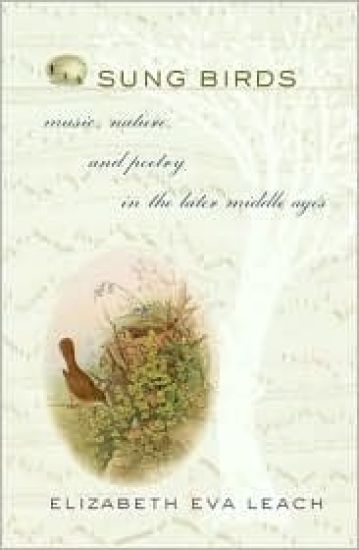
Sung Birds

Sung Birds

Elizabeth Eva Leach

Cornell University Press
2006
sidottu
Is birdsong music? The most frequent answer to this question in the Middle Ages was resoundingly "no." In Sung Birds, Elizabeth Eva Leach traces postmedieval uses of birdsong within Western musical culture. She first explains why such melodious sound was not music for medieval thinkers and then goes on to consider the ontology of music, the significance of comparisons between singers and birds, and the relationship between art and nature as enacted by the musical performance of late-medieval poetry. If birdsong was not music, how should we interpret the musical depiction of birdsong in human music-making? What does it tell us about the singers, their listeners, and the moral status of secular polyphony? Why was it the fourteenth century that saw the beginnings of this practice, continued to this day in the music of Messiaen and others? Leach explores medieval arguments about song, language, and rationality whose basic terms survive undiminished into the present. She considers not only lyrics that have their singers voice the songs or speech of birds but also those that represent other natural, nonmusical, sounds such as human cries or the barks of dogs. The dangerous sweetness of birdsong was invoked in discussions of musical ethics, which, because of the potential slippage between irrational beast and less rational woman in comparisons with rational human masculinity, depict women's singing as less than fully human. Leach's argument comes full circle with the advent of sound recording. This technological revolution-like its medieval equivalent, the invention of the music book-once again made the relationship between music and nature an acute preoccupation of Western culture.
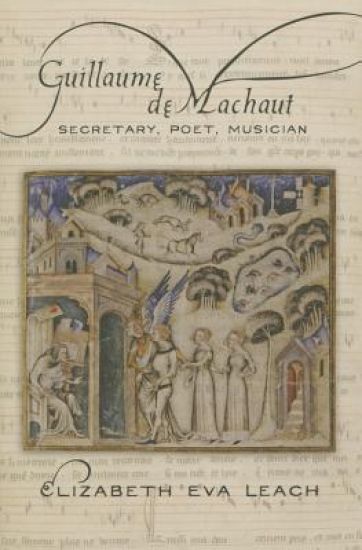
Guillaume De Machaut

Guillaume De Machaut

Elizabeth Eva Leach

Cornell University Press
2011
sidottu
At once a royal secretary, a poet, and a composer, Guillaume de Machaut was one of the most protean and creative figures of the late Middle Ages. Rather than focus on a single strand of his remarkable career, Elizabeth Eva Leach gives us a book that encompasses all aspects of his work, illuminating it in a distinctively interdisciplinary light. The author provides a comprehensive picture of Machaut's artistry, reviews the documentary evidence about his life, charts the different agendas pursued by modern scholarly disciplines in their rediscovery and use of specific parts of his output, and delineates Machaut's own poetic and material presentation of his authorial persona. Leach treats Machaut's central poetic themes of hope, fortune, and death, integrating the aspect of Machaut's multimedia art that differentiates him from his contemporaries' treatment of similar thematic issues: music. In restoring the centrality of music in Machaut's poetics, arguing that his words cannot be truly understood or appreciated without the additional layers of meaning created in their musicalization, Leach makes a compelling argument that musico-literary performance occupied a special place in the courts of fourteenth-century France.
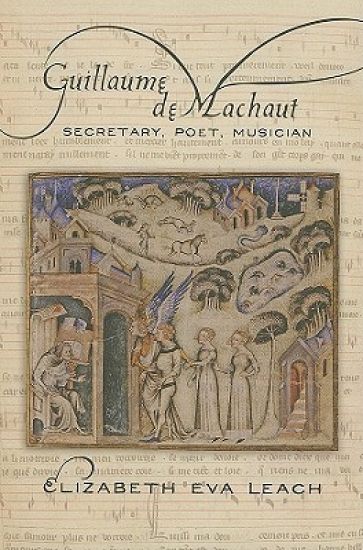
Guillaume De Machaut

Guillaume De Machaut

Elizabeth Eva Leach

CORNELL UNIVERSITY PRESS
2014
pokkari
At once a royal secretary, a poet, and a composer, Guillaume de Machaut was one of the most protean and creative figures of the late Middle Ages. Rather than focus on a single strand of his remarkable career, Elizabeth Eva Leach gives us a book that encompasses all aspects of his work, illuminating it in a distinctively interdisciplinary light. The author provides a comprehensive picture of Machaut's artistry, reviews the documentary evidence about his life, charts the different agendas pursued by modern scholarly disciplines in their rediscovery and use of specific parts of his output, and delineates Machaut's own poetic and material presentation of his authorial persona. Leach treats Machaut's central poetic themes of hope, fortune, and death, integrating the aspect of Machaut's multimedia art that differentiates him from his contemporaries' treatment of similar thematic issues: music. In restoring the centrality of music in Machaut's poetics, arguing that his words cannot be truly understood or appreciated without the additional layers of meaning created in their musicalization, Leach makes a compelling argument that musico-literary performance occupied a special place in the courts of fourteenth-century France.
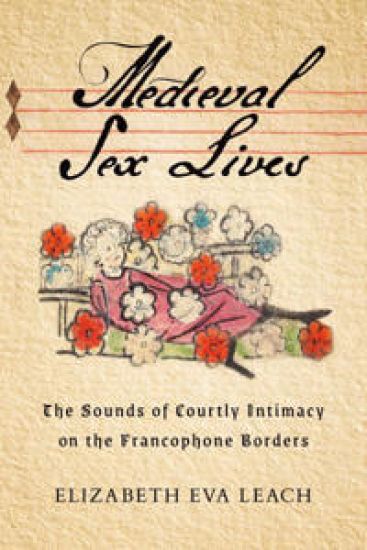
Medieval Sex Lives

Medieval Sex Lives

Elizabeth Eva Leach

CORNELL UNIVERSITY PRESS
2023
sidottu
Medieval Sex Lives examines courtly song as a complex cultural product and social force in the early fourteenth century, exploring how it illuminates the relationship between artistic production and the everyday lives of the elites for whom this music and poetry was composed and performed. In a focused analysis of the Oxford Bodelian Library's Douce 308 manuscript—a fourteenth-century compilation that includes over five hundred Old French lyrics composed over two centuries alongside a narrative account of elaborate courtly festivities centered on a week-long tournament—Elizabeth Eva Leach explores two distinct but related lines of inquiry: first, why the lyric tradition of "courtly love" had such a long and successful history in Western European culture; and, second, why the songs in the Bodleian manuscript would have been so important to the book's compilers, owners, and readers. The manuscript's lack of musical notation and authorial attributions make it unusual among Old French songbooks; its arrangement of the lyrics by genre invites inquiry into the relationship between this long musical tradition and the emotional and sexual lives of its readers. Combining an original account of the manuscript's contents and their likely social milieu with in-depth musical and poetic analyses, Leach proposes that lyrics, whether read or heard aloud, provided a fertile means of propagating and enabling various sexual scripts in the Middle Ages. Drawing on musicology, literary history, and the sociology and psychology of sexuality, Medieval Sex Lives presents a provocative hypothesis about the power of courtly songs to model, inspire, and support sexual behaviors and fantasies.