Kirjojen hintavertailu. Mukana 11 244 527 kirjaa ja 12 kauppaa.

Kirjahaku

Etsi kirjoja tekijän nimen, kirjan nimen tai ISBN:n perusteella.

3 kirjaa tekijältä Elizabeth F. Drexler

Aceh, Indonesia

Aceh, Indonesia

Elizabeth F. Drexler

University of Pennsylvania Press
2009
pokkari
In 1998, Indonesia exploded with both euphoria and violence after the fall of its longtime authoritarian ruler, Soeharto, and his New Order regime. Hope centered on establishing the rule of law, securing civilian control over the military, and ending corruption. Indonesia under Soeharto was a fundamentally insecure state. Shadowy organizations, masterminds, provocateurs, puppet masters, and other mysterious figures recalled the regime's inaugural massive anticommunist violence in 1965 and threatened to recreate those traumas in the present. Threats metamorphosed into deadly violence in a seemingly endless spiral. In Aceh province, the cycle spun out of control, and an imagined enemy came to life as armed separatist rebels. Even as state violence and systematic human rights violations were publicly exposed after Soeharto's fall, a lack of judicial accountability has perpetuated pervasive mistrust that undermines civil society. Elizabeth F. Drexler analyzes how the Indonesian state has sustained itself amid anxieties and insecurities generated by historical and human rights accounts of earlier episodes of violence. In her examination of the Aceh conflict, Drexler demonstrates the falsity of the reigning assumption of international human rights organizations that the exposure of past violence promotes accountability and reconciliation rather than the repetition of abuses. She stresses that failed human rights interventions can be more dangerous than unexamined past conflicts, since the international stage amplifies grievances and provides access for combatants to resources from outside the region. Violent conflict itself, as well as historical narratives of past violence, become critical economic and political capital, deepening the problem. The book concludes with a consideration of the improved prospects for peace in Aceh following the devastating 2004 tsunami.
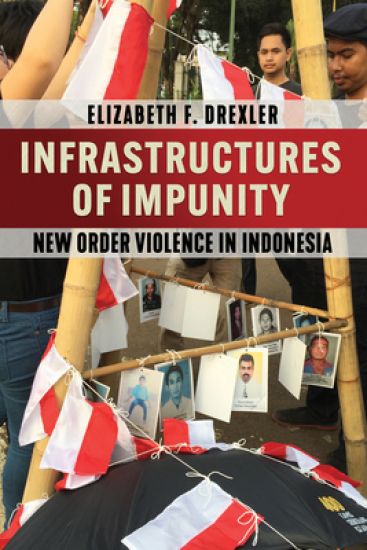
Infrastructures of Impunity

Infrastructures of Impunity

Elizabeth F. Drexler

CORNELL UNIVERSITY PRESS
2023
sidottu
In Infrastructures of Impunity Elizabeth F. Drexler argues that the creation and persistence of impunity for the perpetrators of the Cold War Indonesian genocide (1965–66) is not only a legal status but also a cultural and social process. Impunity for the initial killings and for subsequent acts of political violence has many elements: bureaucratic, military, legal, political, educational, and affective. Although these elements do not always work at once—at times some are dormant while others are ascendant—together they can be described as a unified entity, a dynamic infrastructure, whose existence explains the persistence of impunity. For instance, truth telling, a first step in many responses to state violence, did not undermine the infrastructure but instead bent to it. Creative and artistic responses to revelations about the past, however, have begun to undermine the infrastructure by countering its temporality, affect, and social stigmatization and demonstrating its contingency and specific actions, policies, and processes that would begin to dismantle it. Drexler contends that an infrastructure of impunity could take hold in an established democracy.
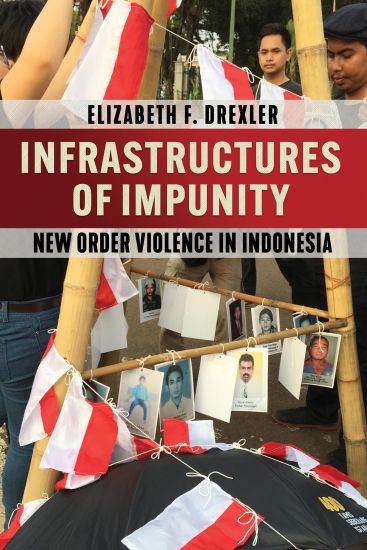
Infrastructures of Impunity

Infrastructures of Impunity

Elizabeth F. Drexler

CORNELL UNIVERSITY PRESS
2023
pokkari
In Infrastructures of Impunity Elizabeth F. Drexler argues that the creation and persistence of impunity for the perpetrators of the Cold War Indonesian genocide (1965–66) is not only a legal status but also a cultural and social process. Impunity for the initial killings and for subsequent acts of political violence has many elements: bureaucratic, military, legal, political, educational, and affective. Although these elements do not always work at once—at times some are dormant while others are ascendant—together they can be described as a unified entity, a dynamic infrastructure, whose existence explains the persistence of impunity. For instance, truth telling, a first step in many responses to state violence, did not undermine the infrastructure but instead bent to it. Creative and artistic responses to revelations about the past, however, have begun to undermine the infrastructure by countering its temporality, affect, and social stigmatization and demonstrating its contingency and specific actions, policies, and processes that would begin to dismantle it. Drexler contends that an infrastructure of impunity could take hold in an established democracy.