

Kirjahaku
Etsi kirjoja tekijän nimen, kirjan nimen tai ISBN:n perusteella.
5 kirjaa tekijältä Elizabeth Hallam


In 987, when Hugh Capet took the throne of France, founding a dynasty which was to rule for over 300 years, his kingdom was weak and insignificant. But by 1100, the kingdom of France was beginning to dominate the cultural nd religious life of western Europe. In the centuries that followed, to scholars and to poets, to reforming churchmen and monks, to crusaders and the designers of churches, France was the hub of the universe. La douce France drew people like a magnet even though its kings were, until about 1200, comparatively insignificant figures. Then, thanks to the conquests and reforms of King Philip Augustus, France became a dominant force in political and economic terms as well, producing a saint-king, Louis IX, and in Philip IV, a ruler so powerful that he could dictate to popes and emperors. Spanning France's development across four centuries, Capetian France is a definitive book. This second edition has been carefully revised to take account of the very latest work, without losing the original book's popular balance between a compelling narrative and an fascinating examination of the period's main themes.

With growing popular and academic interest in the development and importance of three-dimensional modelling and technologies across a range of practices, this book advances analyses of three-dimensional models from perspectives in anthropology, anatomy, architecture and history, examining the ways in which models shape perceptions of bodies, buildings and histories. Focusing on models in practice - that is, on how they have been made, used and interpreted over time in social and cultural contexts - 3D Modelling: Bodies and Buildings in Anthropology, Anatomy and Architecture, explores the importance of models in the constitution and communication of knowledge. With attention to the multiple and changing ways in which models are created and employed, the material dimensions of models and their implications, the kinds of knowledge generated by models in action and the social relations formed through model making and use, this volume engages with current debates concerning material culture, knowledge production and creativity. Presenting detailed empirical case studies from across a range of disciplines, it addresses key questions surrounding the reasons for which models take particular forms, the effects of their material and visual qualities in relation to bodily action and the senses, and the ways in which they carry or disrupt cultural values and ideals. As such, it will appeal to scholars across the social sciences and humanities with interests in in the connections between knowledge, practice and perception.
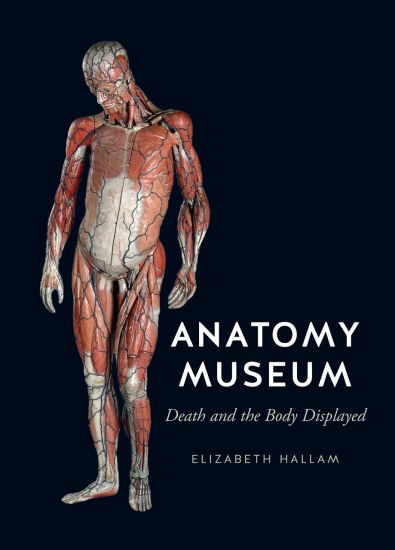
Anatomy museums contain some of the most compelling and challenging displays of the human body. This innovative book focusing on one such museum - in Scotland's northeast - opens up a wide-ranging history of deceased bodies on display, from medieval relics, to nineteenth-century mega-collections of human remains, to the controversial Body Worlds exhibition that is touring the globe. A surprisingly varied and ever-changing material and visual culture of human anatomy emerges through this history, shaped by multiple factors, including colonialism and war, as well as shifts in medical institutions, technologies and media.Within its massive granite architecture, the Anatomy Museum of Aberdeen's medical school has grown and transformed over the last two centuries, in relation to a network of diverse yet interconnected exhibition sites. Many such medical museums in Britain have been used for professional training in which bodies after death are treated as vital sources of knowledge about the living. Anatomists and their associates have preserved the dead and designed exhibits to expose the body's internal composition and workings, using models, drawings, photographs, X-rays, films and the flesh itself. Fascinating yet sometimes disturbing, anatomical displays, made with an array of techniques in substances such as wax, plaster and plastics, have enabled students to examine and understand bodies inside and out.Strikingly illustrated, Anatomy Museum investigates the social relationships and cultural practices that render deceased bodies visible and tangible in spaces of anatomical exploration and beyond.