Kirjojen hintavertailu. Mukana 12 016 292 kirjaa ja 12 kauppaa.

Kirjahaku

Etsi kirjoja tekijän nimen, kirjan nimen tai ISBN:n perusteella.

2 kirjaa tekijältä Elizabeth M. Bucar

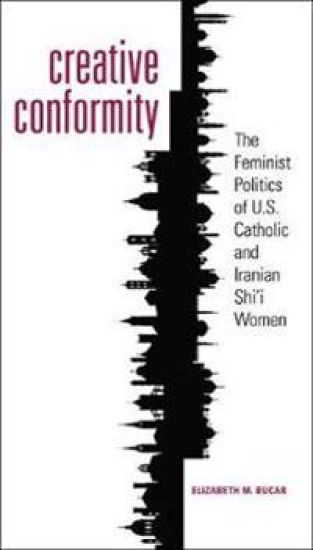
Creative Conformity

Creative Conformity

Elizabeth M. Bucar

Georgetown University Press
2011
pokkari
Much feminist scholarship has viewed Catholicism and Shi'i Islam as two religious traditions that, historically, have greeted feminist claims with skepticism or outright hostility. "Creative Conformity" demonstrates how certain liberal secular assumptions about these religious traditions are only partly correct and, more importantly, misleading. In this highly original study, Elizabeth Bucar compares the feminist politics of eleven US Catholic and Iranian Shi'i women and explores how these women contest and affirm clerical mandates in order to expand their roles within their religious communities and national politics. Using scriptural analysis and personal interviews, "Creative Conformity" demonstrates how women contribute to the production of ethical knowledge within both religious communities in order to expand what counts as feminist action, and to explain how religious authority creates an unintended diversity of moral belief and action. Bucar finds that the practices of Catholic and Shi'a women are not only determined by but also contribute to the ethical and political landscape in their respective religious communities. She challenges the orthodoxies of liberal feminist politics and, ultimately, strengthens feminism as a scholarly endeavor.
The Islamic Veil

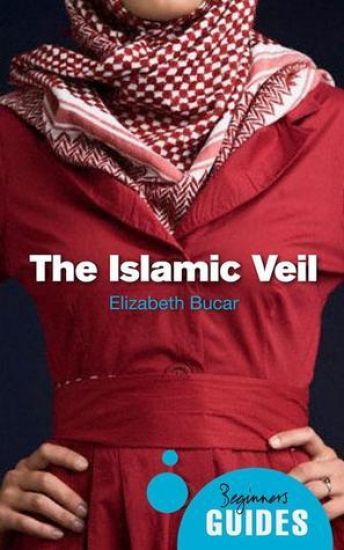
The Islamic Veil

Elizabeth M. Bucar

Oneworld Publications
2012
nidottu
Banned in public institutions in France and Turkey, mandatory in Saudi Arabia and Iran, no other item of clothing incites such furious reactions. The Islamic veil – a catch-all term that encompasses everything from a simple headscarf to the all-covering burqa – has, over the past decade, become a heated battleground for debates on everything from women’s rights to multiculturalism. Elizabeth Bucar goes beyond the simplistic question of whether the veil is “good” or “bad” to ask instead why it has become so politically symbolic. Cutting through the condescension and fear that typify the debate, she reveals the huge diversity of women’s experiences of veiling. Her illuminating global perspective takes in everything from the new veiling movement among the Egyptian middle class to hijab fashion in Indonesia. It will be invaluable to anyone looking to understand the veil beyond its status as shorthand for Islamic fundamentalism and female oppression.