Kirjojen hintavertailu. Mukana 11 342 296 kirjaa ja 12 kauppaa.

Kirjahaku

Etsi kirjoja tekijän nimen, kirjan nimen tai ISBN:n perusteella.

5 kirjaa tekijältä Elizabeth Phillips

Emily Dickinson

Emily Dickinson

Elizabeth Phillips

Pennsylvania State University Press
1990
sidottu
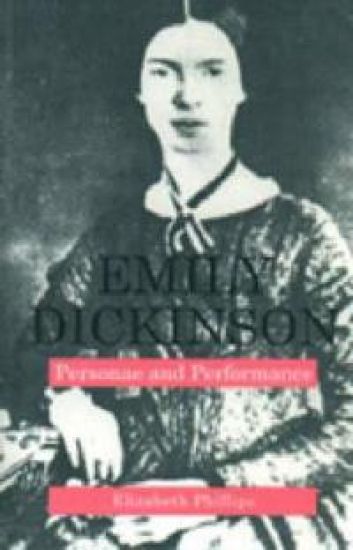
Giving us a new sense of Dickinson’s ways of being in her world, this book traces the perceptions of that world in the poetry and contributes to our pleasure in the performance of a virtuoso. Elizabeth Philips shows the imaginative uses the poet made of her own life but also the verifiable use of her responses to others—personal friends and relatives, historical and literary figures, and “nature’s people”—in the play of language that registered her insights. The book is not a biography; it considers, instead, evidence of the poet’s character and her character as a poet. Dickinson emerges as less self-enclosed and enigmatic than she is frequently assumed to be. Phillips is among those who reject the view of the poet as a psychologically disabled, perhaps mad woman who withdrew into herself because of some devastating emotional experience, presumably love that went wrong. She questions the common desire to connect the texts with a trauma for which the center is missing. While Dickinson pursued the vocation of a poet, she was actively engaged in much else that required stamina and resourcefulness. A woman in a 19th-century household, for instance, was not a woman of leisure; Dickinson bore a heavy share of domestic duties and familial responsibilities throughout most of her life. The crisis she experienced during the early 1860s, in a cluster of responses to the Civil War, coincided with the onset of her difficulties with her eyes. Suffering from exotropia and photophobia, she never fully recovered and gradually withdrew into the less severe light of the house in Amherst. She continued to care for those close to her and to write both letters and verse. From the perspective of Dickinson’s maturity and resilience, we also see her gift for depicting and dramatizing episodes in a manner that gives the illusion of their being autobiographical whether they are or not. Dickinson was, however, an actress who changed roles and points of view as readily as she experimented with poetic genres. Analyses of her various personae (or “supposed persons”) for dramatic monologues in the Browning tradition—which enabled the poet to represent a range of experiences different form her own—serve to dispel much of the confusion that has surrounded her in the last century. Rather than searching for an illusive absent center, Phillips scrutinizes in a most revealing way the poet’s reading, appropriation, and command of materials from the Brontës, George Eliot, Hawthorne, the Brownings, Shakespeare, and the Southey for personae that introduce us to a Dickinson heretofore hardly glimpsed. A central vision of the study is the poet as a biographer of souls.
Emily Dickinson

Emily Dickinson

Elizabeth Phillips

Pennsylvania State University Press
1997
pokkari
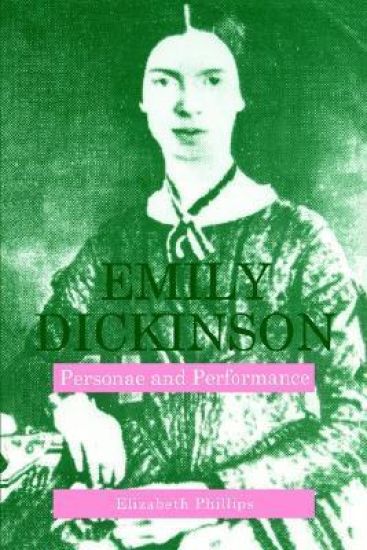
Giving us a new sense of Dickinson’s ways of being in her world, this book traces the perceptions of that world in the poetry and contributes to our pleasure in the performance of a virtuoso. Elizabeth Philips shows the imaginative uses the poet made of her own life but also the verifiable use of her responses to others—personal friends and relatives, historical and literary figures, and “nature’s people”—in the play of language that registered her insights. The book is not a biography; it considers, instead, evidence of the poet’s character and her character as a poet. Dickinson emerges as less self-enclosed and enigmatic than she is frequently assumed to be. Phillips is among those who reject the view of the poet as a psychologically disabled, perhaps mad woman who withdrew into herself because of some devastating emotional experience, presumably love that went wrong. She questions the common desire to connect the texts with a trauma for which the center is missing. While Dickinson pursued the vocation of a poet, she was actively engaged in much else that required stamina and resourcefulness. A woman in a 19th-century household, for instance, was not a woman of leisure; Dickinson bore a heavy share of domestic duties and familial responsibilities throughout most of her life. The crisis she experienced during the early 1860s, in a cluster of responses to the Civil War, coincided with the onset of her difficulties with her eyes. Suffering from exotropia and photophobia, she never fully recovered and gradually withdrew into the less severe light of the house in Amherst. She continued to care for those close to her and to write both letters and verse. From the perspective of Dickinson’s maturity and resilience, we also see her gift for depicting and dramatizing episodes in a manner that gives the illusion of their being autobiographical whether they are or not. Dickinson was, however, an actress who changed roles and points of view as readily as she experimented with poetic genres. Analyses of her various personae (or “supposed persons”) for dramatic monologues in the Browning tradition—which enabled the poet to represent a range of experiences different form her own—serve to dispel much of the confusion that has surrounded her in the last century. Rather than searching for an illusive absent center, Phillips scrutinizes in a most revealing way the poet’s reading, appropriation, and command of materials from the Brontës, George Eliot, Hawthorne, the Brownings, Shakespeare, and the Southey for personae that introduce us to a Dickinson heretofore hardly glimpsed. A central vision of the study is the poet as a biographer of souls.
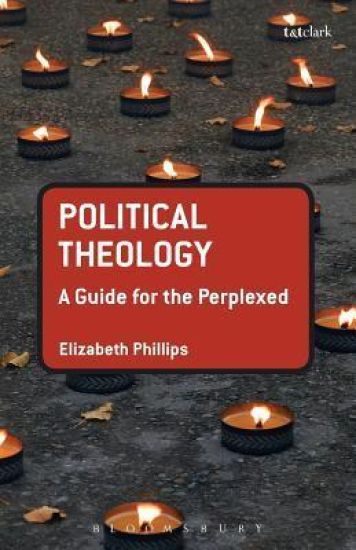
Political Theology: A Guide for the Perplexed

Political Theology: A Guide for the Perplexed

Elizabeth Phillips

T. T.Clark Ltd
2012
nidottu
This is an upper-level introduction to Political Theology. There is an increasingly intense interest in political theology amongst contemporary scholars and students. Yet, while there are many authors engaging in political theology, there are very few resources about political theology which aim to orient students and other recent new-comers to the field. This is a concise and accessible advanced introduction which distinguishes various approaches to political theology, and which explores several of the central issues addressed in political theologies. Theological students will be able to approach courses and readings in political theology with a renewed confidence with this overview in hand. Continuum's "Guides for the Perplexed" are clear, concise and accessible introductions to thinkers, writers and subjects that students and readers can find especially challenging - or indeed downright bewildering. Concentrating specifically on what it is that makes the subject difficult to grasp, these books explain and explore key themes and ideas, guiding the reader towards a thorough understanding of demanding material.
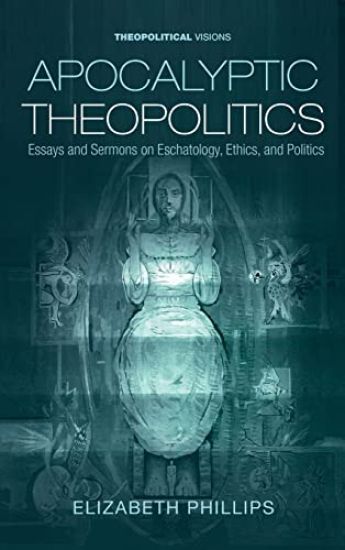
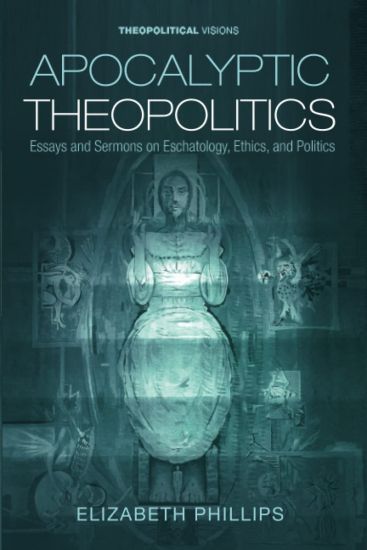
Apocalyptic Theopolitics

Apocalyptic Theopolitics

Elizabeth Phillips

Wipf Stock Publishers
2022
sidottu
In this volume, Elizabeth Phillips brings together scholarly essays on eschatology, ethics, and politics, as well as a selection of sermons preached in the chapels of the University of Cambridge arising from that scholarly work. These essays and sermons explore themes ranging from ethnography to Anabaptism and Christian Zionism to Afro-pessimism. Drawing on a wide range of authors from Flannery O'Conner and Herbert McCabe to James Cone and M. Shawn Copeland, this collection provides insight into the fields of Christian ethics and political theology, as well as ethnography and homiletics. Phillips challenges theologians to interdisciplinarity in their work, and to keep historical and traditional sources in conversation with contemporary sources from critical and liberative perspectives. She challenges Christians to engage in apocalyptic practices which name and resist the false pretenses of the political status quo. And she challenges preachers to call their congregations to moral and political faithfulness, opening up possibilities beyond both the squeamish evasion of politics in some preaching traditions and the didactic political partisanship of others.