Kirjojen hintavertailu. Mukana 11 342 296 kirjaa ja 12 kauppaa.

Kirjahaku

Etsi kirjoja tekijän nimen, kirjan nimen tai ISBN:n perusteella.

11 kirjaa tekijältä Elizabeth Stanley

Torture, Truth and Justice

Torture, Truth and Justice

Elizabeth Stanley

Routledge
2008
sidottu
This book highlights how, and why, torture is such a compelling tool for states and other powerful actors. While torture has a short-term use value for perpetrators, it also creates a devastating legacy for victims, their families and communities. In exposing such repercussions, this book addresses the questions ‘What might torture victims need to move forward from their violation?’ and ‘How can official responses provide truth or justice for torture victims?’ Building on observations, documentary analysis and over seventy interviews with both torture victims and transitional justice workers this book explores how torture was used, suffered and resisted in Timor-Leste. The author investigates the extent to which transitional justice institutions have provided justice for torture victims; illustrating how truth commissions and international courts operate together and reflecting on their successes and weaknesses with reference to wider social, political and economic conditions. Stanley also details victims’ experiences of torture and highlights how they experience life in the newly built state of Timor-LesteTracking the past, present and future of human rights, truth and justice for victims in Timor-Leste, Torture, Truth and Justice will be of interest to students, professionals and scholars of Asian studies, International Studies, Human Rights and Social Policy.
Torture, Truth and Justice

Torture, Truth and Justice

Elizabeth Stanley

Routledge
2011
nidottu
This book highlights how, and why, torture is such a compelling tool for states and other powerful actors. While torture has a short-term use value for perpetrators, it also creates a devastating legacy for victims, their families and communities. In exposing such repercussions, this book addresses the questions ‘What might torture victims need to move forward from their violation?’ and ‘How can official responses provide truth or justice for torture victims?’ Building on observations, documentary analysis and over seventy interviews with both torture victims and transitional justice workers this book explores how torture was used, suffered and resisted in Timor-Leste. The author investigates the extent to which transitional justice institutions have provided justice for torture victims; illustrating how truth commissions and international courts operate together and reflecting on their successes and weaknesses with reference to wider social, political and economic conditions. Stanley also details victims’ experiences of torture and highlights how they experience life in the newly built state of Timor-LesteTracking the past, present and future of human rights, truth and justice for victims in Timor-Leste, Torture, Truth and Justice will be of interest to students, professionals and scholars of Asian studies, International Studies, Human Rights and Social Policy.
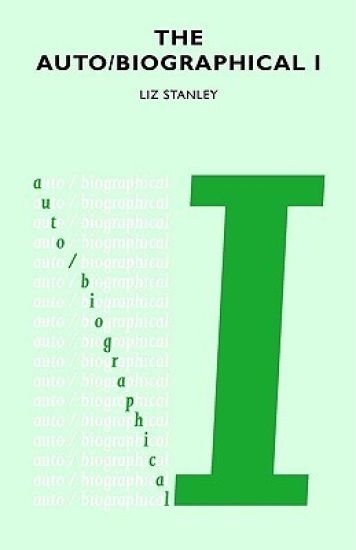
The Auto/Biographical

The Auto/Biographical

Elizabeth Stanley

Manchester University Press
1995
nidottu
This feminist literary study discusses postmodern ideas about the self, particularly about the way in which selves are constructed by biography and autobiography. The author particularly examines the manner in which women write about themselves.
Mourning Becomes...

Mourning Becomes...

Elizabeth Stanley

Manchester University Press
2006
sidottu
This fascinating work challenges many of the accepted facts about the concentration camps run by the British during the South African War. The author demonstrates that much of what we have traditionally understood about these camps originates the testimony which was solicited, selected and published by key women activists within Boer proto-nationalist circles. Using detailed archival evidence, she shows that much of the history of the camps results from a deliberate imposition of ‘post/memory’ - a process by which what was ‘remembered’ was shaped and reshaped to support the development of a racialised nationalist framework. Many of the camps’ occupants died from successive epidemics of measles, typhoid, enteritis and pneumonia rather than deliberate ill-treatment, yet the book shows how mourning for those who died was overridden by state commemorative activities concerned with promoting pan-Boer nationalist aspirations. The innovative and groundbreaking approach of the author invites the reader to step into and explore with her the commemorative sites passed by nationalist land acts, which still powerfully mark the South African landscape.
Tolerating State Violence

Tolerating State Violence

Elizabeth Stanley

TAYLOR FRANCIS LTD
2025
nidottu
Why do we tolerate state violence, despite it being disagreeable, painful and often harmful for our societies? Drawing on three liberal democratic countries – Aotearoa New Zealand, Australia and the United Kingdom – this book exposes how states perpetuate tolerance for their violence through representations, the management of experiences and testimonies, bureaucratic and technological architectures, and ritualistic reforms.Using contemporary case examples - including in relation to borders, welfare, surveillance, incarceration, slavery and climate crimes - the book provides an analysis of how state institutions organize and facilitate politics, laws, bureaucracies, economies, technologies and social experiences such that violence is normalized. It spells out how state harms can be known and made tolerable, with the resulting pain and trauma becoming part of everyday governance, social relations, institutional policies and personal experiences.In exploring the many state structures, strategies and techniques that facilitate and sustain violence, this book also maps out what we must challenge, and where our resistance efforts and demands for transformation must be directed. In short, the book questions: how do state institutions create the conditions for the tolerance of state violence and harms? And, from this knowledge, how might we make the violence and harms intolerable?Tolerating State Violence is indispensable reading for students and scholars of criminology and criminal justice, sociology, and political science. The book will also appeal to policymakers, legal professionals, and social justice advocates concerned with institutional reform and addressing systemic violence.
Tolerating State Violence

Tolerating State Violence

Elizabeth Stanley

TAYLOR FRANCIS LTD
2025
sidottu
Why do we tolerate state violence, despite it being disagreeable, painful and often harmful for our societies? Drawing on three liberal democratic countries – Aotearoa New Zealand, Australia and the United Kingdom – this book exposes how states perpetuate tolerance for their violence through representations, the management of experiences and testimonies, bureaucratic and technological architectures, and ritualistic reforms.Using contemporary case examples - including in relation to borders, welfare, surveillance, incarceration, slavery and climate crimes - the book provides an analysis of how state institutions organize and facilitate politics, laws, bureaucracies, economies, technologies and social experiences such that violence is normalized. It spells out how state harms can be known and made tolerable, with the resulting pain and trauma becoming part of everyday governance, social relations, institutional policies and personal experiences.In exploring the many state structures, strategies and techniques that facilitate and sustain violence, this book also maps out what we must challenge, and where our resistance efforts and demands for transformation must be directed. In short, the book questions: how do state institutions create the conditions for the tolerance of state violence and harms? And, from this knowledge, how might we make the violence and harms intolerable?Tolerating State Violence is indispensable reading for students and scholars of criminology and criminal justice, sociology, and political science. The book will also appeal to policymakers, legal professionals, and social justice advocates concerned with institutional reform and addressing systemic violence.