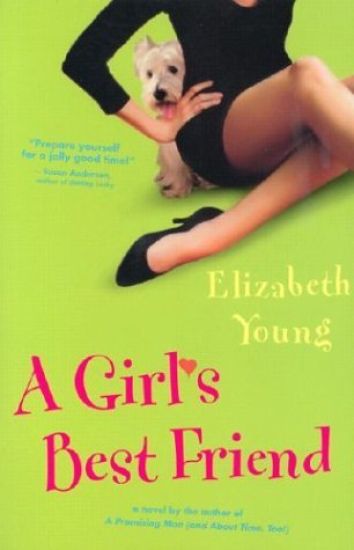
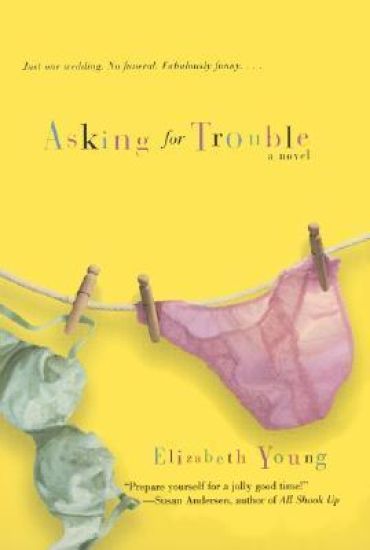
Dogs Are Better Than MenThey never brag about their ex's stunning cleavage.They don't moan or sulk if you're a half-hour late.They never tell you a Brazilian would really turn them on.After her most recent disaster with the King of the Unrepentant Jerks, Isabel "Izzy" Palmer is finally convinced that the only male she truly needs in her life is Henry, her lovable part wolfhound, part who-knows-what. Henry's faithful, he adores her madly, and he's great fun to sleep with. So who needs the additional heartache?But even armed with powerful knowledge and a new resolve, Izzy starts to feel that familiar itch ... and it's all because of Nick. He's a vet for goodness sake -- confident, handsome and compassionate -- if a bit rough around the edges. After teasing her about Henry's unusual looks and questioning her most recent choice in men, Nick then has the gall to turn halfway charming. But he doesn't stop at halfway, and though she already has a best friend, Izzy realizes it doesn't preclude her from having a perfect match, too.
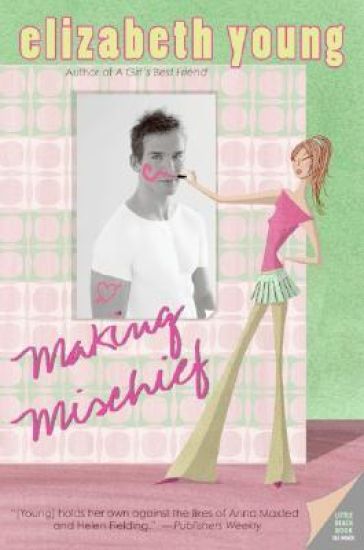
Abby Morland's been making mischief since she was not-so-sweet sixteen, when she spied gorgeous Guy from the neighborhood being attacked by curvaceous Cara, the "Topless Piranha." It was a racy, tasty, spicy piece of gossip Abby couldn't resist passing along. But years later, her indiscretion may be coming back to haunt her -- since she now wouldn't mind a little nibble of Guy herself. With four cousins, two weddings, and a re-emergent piranha in the offing, the recipe for making more mischief is at hand, and it might just turn Guy in Abby's direction at last
In this study of Civil War literature, Elizabeth Young shows that American women writers have been profoundly influenced by the Civil War and that, in turn, their works have contributed to conceptions of the war and its aftermath. Offering reassessments of works by white writers such as Harriet Beecher Stowe, Louisa May Alcott and Margaret Mitchell, and African-American writers including Elizabeth Keckley, Frances Harper and Margaret Walker, Young also highlights lesser-known texts such as the memoirs of women who masqueraded as soldiers. In each case she explores the interdependence of gender with issues of race, sexuality, region and nation. Combining literary analysis, cultural history and feminist theory, this book argues that the Civil War functioned in women's writings to connect female bodies with the body politic. Women writers used the idea of "civil war" as a metaphor to represent struggles between and within women - including struggles against the cultural prescriptions of "civility". At the same time, these writers also reimagined the nation itself, foregrounding women in their visions of America at war and in peace. In a substantial afterword, Young shows how contemporary black and white women - including those who crossdress in Civil War re-enactments - continue to reshape the meanings of the war in ways startlingly similar to their 19th-century counterparts.
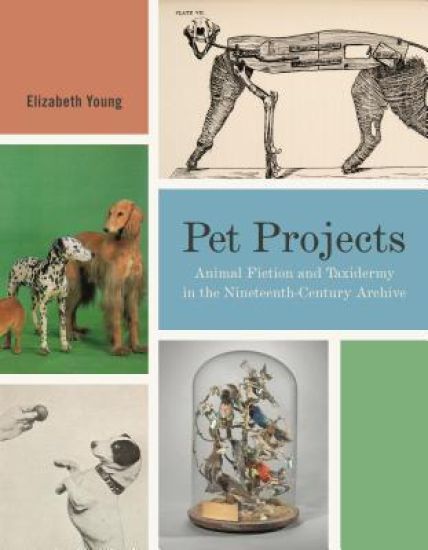
In Pet Projects, Elizabeth Young joins an analysis of the representation of animals in nineteenth-century fiction, taxidermy, and the visual arts with a first-person reflection on her own scholarly journey. Centering on Margaret Marshall Saunders, a Canadian woman writer once famous for her animal novels, and incorporating Young’s own experience of a beloved animal’s illness, this study highlights the personal and intellectual stakes of a “pet project” of cultural criticism.Young assembles a broad archive of materials, beginning with Saunders’s novels and widening outward to include fiction, nonfiction, photography, and taxidermy. She coins the term “first-dog voice” to describe the narrative technique of novels, such as Saunders’s Beautiful Joe, written in the first person from the perspective of an animal. She connects this voice to contemporary political issues, revealing how animal fiction such as Saunders’s reanimates nineteenth-century writing about both feminism and slavery. Highlighting the prominence of taxidermy in the late nineteenth century, she suggests that Saunders transforms taxidermic techniques in surprising ways that provide new forms of authority for women. Young adapts Freud to analyze literary representations of mourning by and for animals, and she examines how Canadian writers, including Saunders, use animals to explore race, ethnicity, and national identity. Her wide-ranging investigation incorporates twenty-first as well as nineteenth-century works of literature and culture, including recent art using taxidermy and contemporary film. Throughout, she reflects on the tools she uses to craft her analyses, examining the state of scholarly fields from feminist criticism to animal studies.With a lively, first-person voice that highlights experiences usually concealed in academic studies by scholarly discourse—such as detours, zigzags, roadblocks, and personal experience—this unique and innovative book will delight animal enthusiasts and academics in the fields of animal studies, gender studies, American studies, and Canadian studies.
Only one wedding and no funeral, but twice as funny... At thirty, Sophy is unmarried, and aside from her mother's near constant hectoring, in no hurry to march down the aisle. To quiet the maternal angst, Sophy invents a boyfriend named Dominic and all is well--that is, until her sister's wedding when she must produce the real thing. At the eleventh hour and in utter desperation, Sophy contacts an escort service. Attending the wedding with “Dominic,” Sophy quickly realizes that there is no such thing as one little lie and the fabrications escalate. When the bubbles from the wedding champagne evaporate, she discovers that she likes her escort as more than a convenient arm decoration. What to do? Turn lies into sighs and a happily ever after.
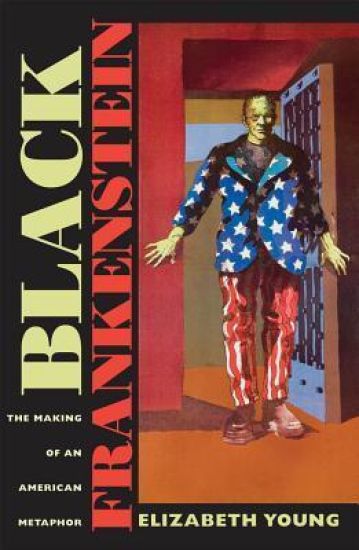
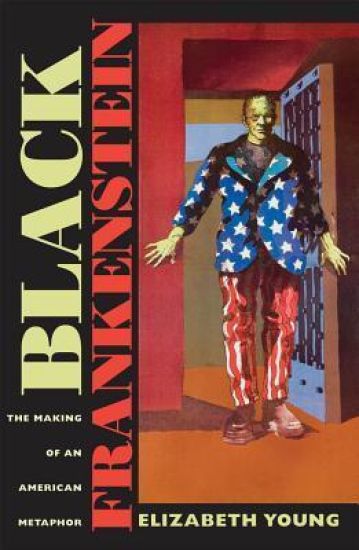
For all the scholarship devoted to Mary Shelley's English novel Frankenstein, there has been surprisingly little attention paid to its role in American culture, and virtually none to its racial resonances in the United States. In Black Frankenstein, Elizabeth Young identifies and interprets the figure of a black American Frankenstein monster as it appears with surprising frequency throughout nineteenth- and twentieth-century U.S. culture, in fiction, film, essays, oratory, painting, and other media, and in works by both whites and African Americans. Black Frankenstein stories, Young argues, effect four kinds of racial critique: they humanize the slave; they explain, if not justify, black violence; they condemn the slaveowner; and they expose the instability of white power. The black Frankenstein's monster has served as a powerful metaphor for reinforcing racial hierarchy—and as an even more powerful metaphor for shaping anti-racist critique. Illuminating the power of parody and reappropriation, Black Frankenstein tells the story of a metaphor that continues to matter to literature, culture, aesthetics, and politics.
For all the scholarship devoted to Mary Shelley's English novel Frankenstein, there has been surprisingly little attention paid to its role in American culture, and virtually none to its racial resonances in the United States. In Black Frankenstein, Elizabeth Young identifies and interprets the figure of a black American Frankenstein monster as it appears with surprising frequency throughout nineteenth- and twentieth-century U.S. culture, in fiction, film, essays, oratory, painting, and other media, and in works by both whites and African Americans. Black Frankenstein stories, Young argues, effect four kinds of racial critique: they humanize the slave; they explain, if not justify, black violence; they condemn the slaveowner; and they expose the instability of white power. The black Frankenstein's monster has served as a powerful metaphor for reinforcing racial hierarchy—and as an even more powerful metaphor for shaping anti-racist critique. Illuminating the power of parody and reappropriation, Black Frankenstein tells the story of a metaphor that continues to matter to literature, culture, aesthetics, and politics.
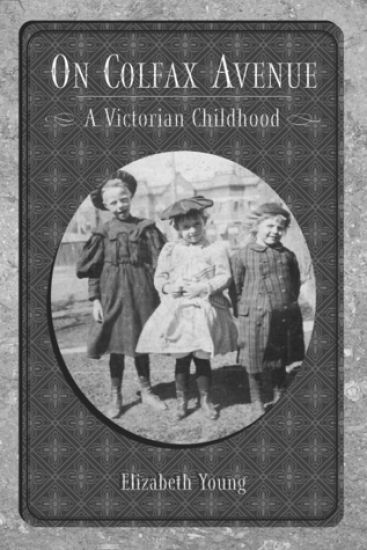
"Everyone was moving to Denver, which was mushrooming all over the prairie and giving every evidence of becoming a metropolis of real proportion" -- so recalls Elizabeth Young of her childhood on Colfax Avenue. Her youth ran parallel to that of her hometown: she grew up in the 1890s in the midst of Denver's rapid metamorphosis from frontier town to modern city. Young's memoir provides vivid glimpses of the people and events of this heady era, along with the adventuresome spirit that animated them. On Colfax Avenue captures the sense of joyful self-discovery that comes with childhood -- both the author's and Denver's.
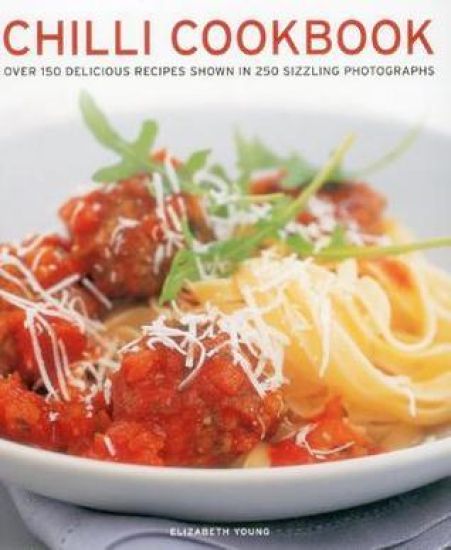
Fire up your cooking with this exciting collection of tongue-tingling recipes, which includes soups, broths, dips, salsas, appetizers, snacks, main meals, vegetarian dishes and salads. It features a delectable selection of fiery recipes from all over the globe, including soups such as Spicy Chicken Broth, tasty bites such as Hot and Spicy Plantain Snacks, and a sizzling range of main dishes from Spicy Seafood Satay to the classic Chilli con Carne. It includes a fully illustrated reference section describes the range of chillies available, and provides hints and tips on preparation and cooking techniques. Each beautifully photographed recipe is easy to follow and features a complete nutritional analysis of the fat, carbohydrate, salt and calorie content to help you plan a healthy diet. Chillies are used all over the world in many different cuisines to add piquancy and interest to the simplest of dishes - whether mild and subtle, full of complex tastes or mouth-searingly hot. Fresh and contemporary, this book is filled with 150 easy-to-make, mouthwatering recipes from around the globe. There is a recipe to suit every occasion in this collection, which features red-hot classics such as Salsa Verde, Spicy Tandoori Chicken and Chilli Beef Enchiladas, as well as lesser-known fiery dishes such as Wild Boar Cacciatora, Chilli-stuffed Squid and Spicy Pumpkin and Beef Stew. The book features a guide to the varieties of chillies available and includes information on how prepare and cook with them. Illustrated with over 250 photographs, this is an essential volume for chilli-lovers.