Kirjojen hintavertailu. Mukana 11 699 587 kirjaa ja 12 kauppaa.

Kirjahaku

Etsi kirjoja tekijän nimen, kirjan nimen tai ISBN:n perusteella.

15 kirjaa tekijältä Elleke Boehmer

Indian Arrivals, 1870-1915

Indian Arrivals, 1870-1915

Elleke Boehmer

Oxford University Press
2021
nidottu
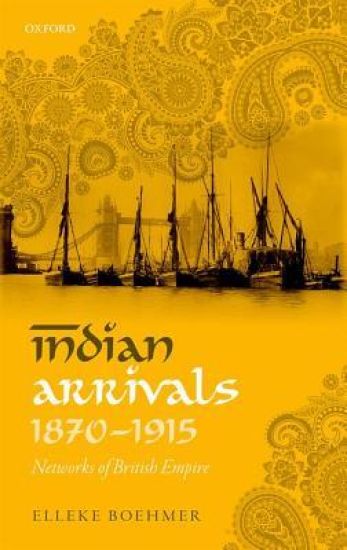
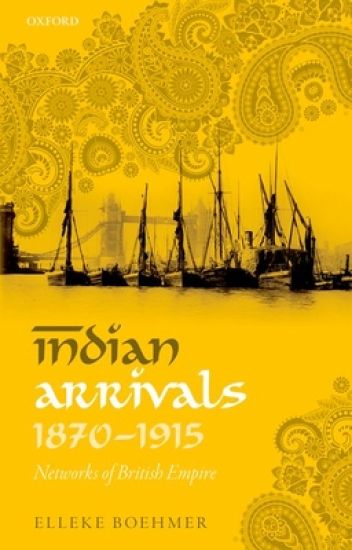
Indian Arrivals, 1870-1915: Networks of British Empire explores the rich and complicated landscape of intercultural contact between Indians and Britons on British soil at the height of empire, as reflected in a range of literary writing, including poetry and life-writing. The book's four decade-based case studies, leading from 1870 and the opening of the Suez Canal, to the first years of the Great War, investigate from several different textual and cultural angles the central place of India in the British metropolitan imagination at this relatively early stage for Indian migration. Focussing on a range of remarkable Indian 'arrivants' -- scholars, poets, religious seekers, and political activists including Toru Dutt and Sarojini Naidu, Mohandas Gandhi and Rabindranath Tagore -- Indian Arrivals examines the take-up in the metropolis of the influences and ideas that accompanied their transcontinental movement, including concepts of the west and of cultural decadence, of urban modernity and of cosmopolitan exchange. If, as is now widely accepted, vocabularies of inhabitation, education, citizenship and the law were in many cases developed in colonial spaces like India, and imported into Britain, then, the book suggests, the presence of Indian travellers and migrants needs to be seen as much more central to Britain's understanding of itself, both in historical terms and in relation to the present-day. The book demonstrates how the colonial encounter in all its ambivalence and complexity inflected social relations throughout the empire, including at its heart, in Britain itself: Indian as well as other colonial travellers enacted the diversity of the empire on London's streets.
Nelson Mandela

Nelson Mandela

Elleke Boehmer

Oxford University Press
2023
nidottu
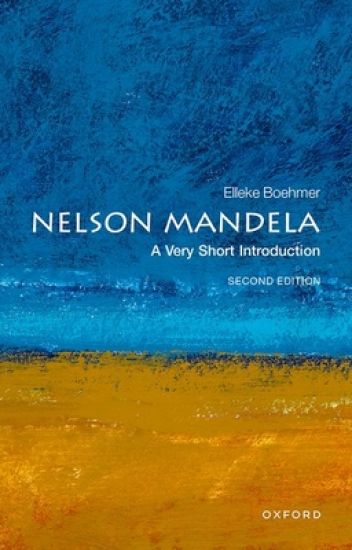
Very Short Introductions: Brilliant, Sharp, Inspiring A pathbreaking analysis of the relationship between Mandela the myth, and Mandela the historical figure, looking at the way images, stories, and politics have been combined to create the iconic image of Mandela that we know today. Boehmer explores the long trajectory of Mandela's life, explaining first the historical and political context of the struggle against apartheid in South Africa, and then the post-apartheid period of difficult reconciliation, including the shifts and changes in Mandela's reputation since the millennium. This innovative postcolonial reflection takes on board the more critical revisionist literature on Mandela that has emerged since 2015, looking at responses to his death in 2013, and the 2018 commemorations of the 100th anniversary of his birth. The first edition set a trend in scholarship on Mandela by reading his character and achievements through the lens of his influences, interests, and leading ideas. The second edition extends this focus with a far-reaching critical look at meanings of reconciliation and Mandela's ethic of reciprocity. ABOUT THE SERIES: The Very Short Introductions series from Oxford University Press contains hundreds of titles in almost every subject area. These pocket-sized books are the perfect way to get ahead in a new subject quickly. Our expert authors combine facts, analysis, perspective, new ideas, and enthusiasm to make interesting and challenging topics highly readable.
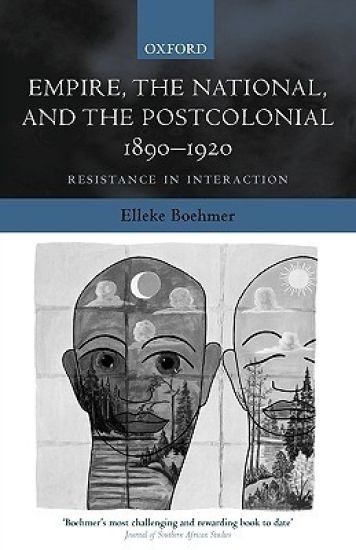
Empire, the National, and the Postcolonial, 1890-1920

Empire, the National, and the Postcolonial, 1890-1920

Elleke Boehmer

Oxford University Press
2005
nidottu
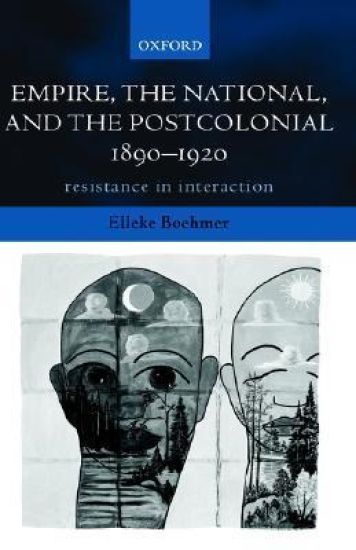
Empire, the National, and the Postcolonial, 1890-1920 explores the political co-operations and textual connections which linked anti-colonial, nationalist, and modernist groups and individuals in the empire in the years 1890-1920. By developing the key motifs of lateral interaction and colonial interdiscursivity, Boehmer builds a picture of the imperial world as an intricate network of surprising contacts and margin-to-margin interrelationships, and of modernism as a far more constellated cultural phenomenon than previously understood. Individual case studies consider Irish support for the Boers in 1899-1902, the path-breaking radical partnership of the Englishwoman Sister Nivedita and the Bengali extremist Aurobindo Ghose, Sol Plaatje's conflicted South African nationalism, and the cross-border, cosmopolitan involvements of W. B. Yeats, Rabindranath Tagore, and Leonard Woolf. Underlining Frantz Fanon's perception that 'a colonized people is not alone', Boehmer significantly questions prevailing postcolonial paradigms of the self-defining nation, syncretism and mimicry, and dismantles still-dominant binary definitions of the colonial relationship.
Empire, the National, and the Postcolonial, 1890-1920

Empire, the National, and the Postcolonial, 1890-1920

Elleke Boehmer

Oxford University Press
2002
sidottu
Empire, the National, and the Postcolonial, 1890-1920 explores the political co-operations and textual connections which linked anti-colonial, nationalist, and modernist groups and individuals in the empire in the years 1890-1920. By developing the key motifs of lateral interaction and colonial interdiscursivity, Boehmer builds a picture of the imperial world as an intricate network of surprising contacts and margin-to-margin interrelationships, and of modernism as a far more constellated cultural phenomenon than previously understood. Individual case studies consider Irish support for the Boers in 1899-1902, the path-breaking radical partnership of the Englishwoman Sister Nivedita and the Bengali extremist Aurobindo Ghose, Sol Plaatje's conflicted South African nationalism, and the cross-border, cosmopolitan involvements of W. B. Yeats, Rabindranath Tagore, and Leonard Woolf. Underlining Frantz Fanon's perception that 'a colonized people is not alone', Boehmer significantly questions prevailing postcolonial paradigms of the self-defining nation, syncretism and mimicry, and dismantles still-dominant binary definitions of the colonial relationship.
Indian Arrivals, 1870-1915

Indian Arrivals, 1870-1915

Elleke Boehmer

Oxford University Press
2015
sidottu
Indian Arrivals 1870-1915: Networks of British Empire explores the rich and complicated landscape of intercultural contact between Indians and Britons on British soil at the height of empire, as reflected in a range of literary writing, including poetry and life-writing. The book's four decade-based case studies, leading from 1870 and the opening of the Suez Canal, to the first years of the Great War, investigate from several different textual and cultural angles the central place of India in the British metropolitan imagination at this relatively early stage for Indian migration. Focussing on a range of remarkable Indian 'arrivants' -- scholars, poets, religious seekers, and political activists including Toru Dutt and Sarojini Naidu, Mohandas Gandhi and Rabindranath Tagore -- Indian Arrivals examines the take-up in the metropolis of the influences and ideas that accompanied their transcontinental movement, including concepts of the west and of cultural decadence, of urban modernity and of cosmopolitan exchange. If, as is now widely accepted, vocabularies of inhabitation, education, citizenship and the law were in many cases developed in colonial spaces like India, and imported into Britain, then, the book suggests, the presence of Indian travellers and migrants needs to be seen as much more central to Britain's understanding of itself, both in historical terms and in relation to the present-day. The book demonstrates how the colonial encounter in all its ambivalence and complexity inflected social relations throughout the empire, including at its heart, in Britain itself: Indian as well as other colonial travellers enacted the diversity of the empire on London's streets.
Colonial and Postcolonial Literature

Colonial and Postcolonial Literature

Elleke Boehmer

Oxford University Press
2005
nidottu
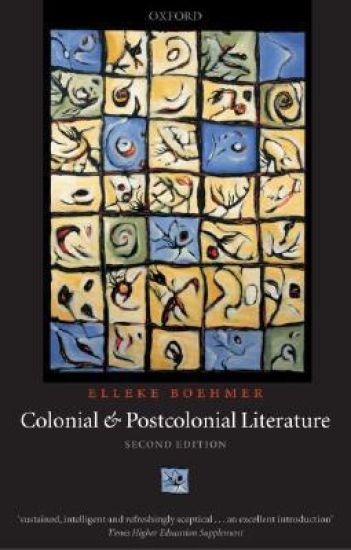
Colonial and Postcolonial Literature is the leading critical overview of and historical introduction to colonial and postcolonial literary studies. Highly praised from the time of its first publication for its lucidity, breadth, and insight, the book has itself played a crucial part in founding and shaping this rapidly expanding field. The author, an internationally renowned postcolonial critic, provides a broad contextualizing narrative about the evolution of colonial and postcolonial writing in English. Illuminating close readings of texts by a wide variety of writers - from Kipling and Conrad through to Kincaid, from Ngugi to Noonuccal and Naipaul - explicate key theoretical terms such as 'subaltern', 'colonial resistance', 'writing back', and 'hybridity'. This revised edition includes new critiques of postcolonial women's writing, an expanded and fully annotated bibliography, and a new chapter and conclusion on postcolonialism exploring keynote debates in the field relating to sexuality, transnationalism, and local resistance.
Southern Imagining

Southern Imagining

Elleke Boehmer

PRINCETON UNIVERSITY PRESS
2025
sidottu
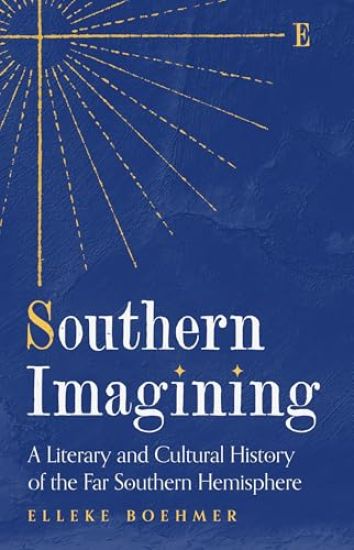
A new compass for global reading: looking at the world from the far southern latitudesA northern viewpoint is most often the default, while the south—the far southern latitudes occupied by Australia, New Zealand, Argentina and southern Africa, among others—seems far away and ignorable. In Southern Imagining, Elleke Boehmer offers an alternative perspective, using literary, scientific and cultural material to explore how we look at the world from the south. Reading, she argues, is a transformative means of reversing our usual planetary perspective and rearranging our perceptual geography. Boehmer examines writing from across southern continents and islands, considering how we imaginatively inhabit the farthest reaches of our planet. Writers ranging from the Portuguese epic poet Luís de Camöes to Samuel Taylor Coleridge, Charles Darwin, Katherine Mansfield, Jorge Luis Borges and ancient Indigenous scribes, Boehmer finds, capture the edgy and austere experiences of the far south.Boehmer argues that imaginative work stimulates and shapes our phenomenological understanding. Southerners often see themselves as if far away from where things count, as outsiders, internalising the wider global sense of their relative insignificance. Conversely, when northerners read or hear legends, narratives, songs and poems from the south, it is as if they are located in the south, at least for the duration of the reading or listening. Boehmer suggests that the south-tilted world map, re-centred through song and story, invites us to claim a more involved sense of belonging to our planet, both its north and its south. The writers of the south disrupt conventional ways of seeing and invite us to inhabit our globe differently.
Stories of Women

Stories of Women

Elleke Boehmer

Manchester University Press
2009
nidottu
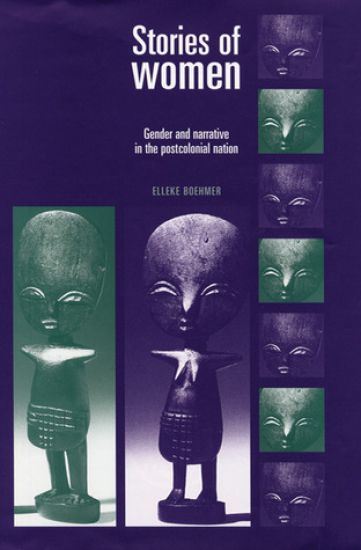
Elleke Boehmer's work on the crucial intersections between independence, nationalism and gender has already proved canonical in the field. 'Stories of women' combines her keynote essays on the mother figure and the postcolonial nation, with incisive new work on male autobiography, 'daughter' writers, the colonial body, the trauma of the post-colony, and the nation in a transnational context. Focusing on Africa as well as South Asia, and sexuality as well as gender, Boehmer offers fine close readings of writers ranging from Achebe, Okri and Mandela to Arundhati Roy and Yvonne Vera, shaping these into a critical engagement with theorists of the nation like Fredric Jameson and Partha Chatterjee. This new paperback edition will be of interest to readers and researchers of postcolonial, international and women's writing; of nation theory, colonial history and historiography; of Indian, African, migrant and diasporic literatures, and is likely to prove a landmark study in the field.An electronic edition of this book is freely available under a Creative Commons (CC BY-NC-ND) licence.
Nile Baby

Nile Baby

Elleke Boehmer

Ayebia Clarke Publishing Ltd
2008
nidottu
Nile Baby is a story about two young friends who discover a ninety-year-old foetus specimen in their \ school laboratory storeroom. The mystery develops at a pace from there . A magnificent, important and moving story about the deeply embedded presences of Africa in England today. Zoe Wicomb, University of Strathclyde, UK. Nile Baby has been described by Giles Foden as Grange Hill crossed with Frankenstein a fascinating read ."
The Arts of Leading

The Arts of Leading

Elleke Boehmer

GEORGETOWN UNIVERSITY PRESS
2024
sidottu
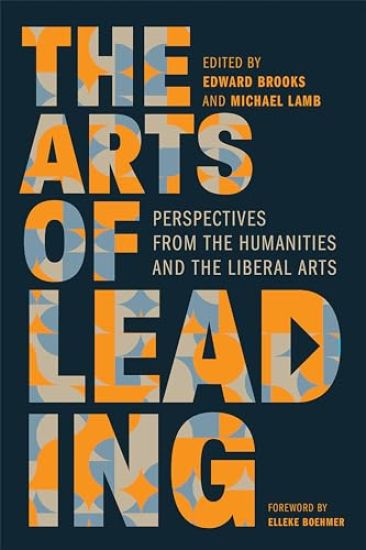
A deeply insightful approach to cultivating leaders of character centered on the arts and humanitiesWhat does it mean to lead? Whom do we consider to be leaders? And how might viewing leadership through the many lenses of the humanities expand our understanding of how it is imagined, represented, and enacted?Drawing on insights from eminent scholars in the classics, philosophy, religion, literature, history, art, music, and theater, The Arts of Leading reveals the power of the arts and humanities to unsettle common assumptions about leadership. Rather than instrumentalizing the arts and humanities or reducing them to mere management resources, this series of thoughtful and refreshing essays engages a litany of diverse and nuanced perspectives to uncover alternative ways of imagining and embodying leadership across different historical, moral, political, and cultural contexts.By exploring how a wide range of disciplines can illuminate and humanize complex aspects of leadership that are often obscured in a discourse hooked on reductive paradigms and quick fixes, The Arts of Leading invites leaders, scholars, and citizens to expand their practice of leadership in our ever-evolving world.
The Arts of Leading

The Arts of Leading

Elleke Boehmer

GEORGETOWN UNIVERSITY PRESS
2024
pokkari
A deeply insightful approach to cultivating leaders of character centered on the arts and humanitiesWhat does it mean to lead? Whom do we consider to be leaders? And how might viewing leadership through the many lenses of the humanities expand our understanding of how it is imagined, represented, and enacted?Drawing on insights from eminent scholars in the classics, philosophy, religion, literature, history, art, music, and theater, The Arts of Leading reveals the power of the arts and humanities to unsettle common assumptions about leadership. Rather than instrumentalizing the arts and humanities or reducing them to mere management resources, this series of thoughtful and refreshing essays engages a litany of diverse and nuanced perspectives to uncover alternative ways of imagining and embodying leadership across different historical, moral, political, and cultural contexts.By exploring how a wide range of disciplines can illuminate and humanize complex aspects of leadership that are often obscured in a discourse hooked on reductive paradigms and quick fixes, The Arts of Leading invites leaders, scholars, and citizens to expand their practice of leadership in our ever-evolving world.
To the Volcano, and other stories

To the Volcano, and other stories

Elleke Boehmer

Myriad Editions
2019
pokkari
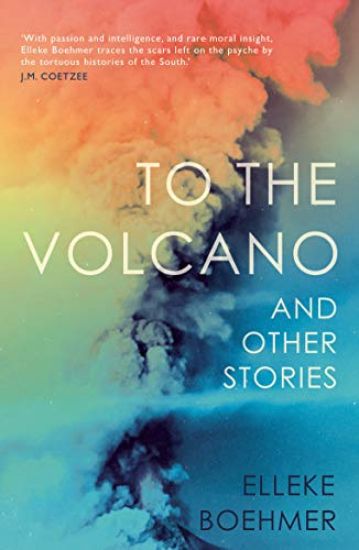
These are stories of people caught up in a world that tilts seductively, sometimes dangerously, between south and north, between ambition and tradition, between light and dark. Her characters are poised to leave or on the point of return; often caught in limbo, haunted by their histories and veering between possibilities. An African student in England longs for her desert home; a shy Argentinian travel agent agonises about joining her boyfriend in New York; a soldier is pursued by his past; a writer’s widow fends off the attentions of his predatory biographer. From story to story we walk through radically different worlds and journeys packed with hopes and ideals. Sharp, tender, and always arresting, these exquisitely written pieces crackle with luminous insights as characters struggle to come to terms—with their pasts, with one another, and with themselves.
Postcolonial Poetics

Postcolonial Poetics

Elleke Boehmer

Springer Nature Switzerland AG
2019
nidottu
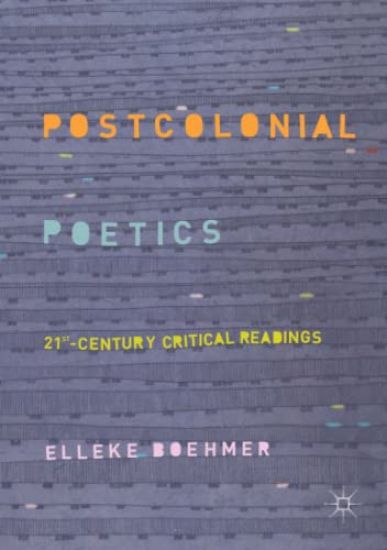
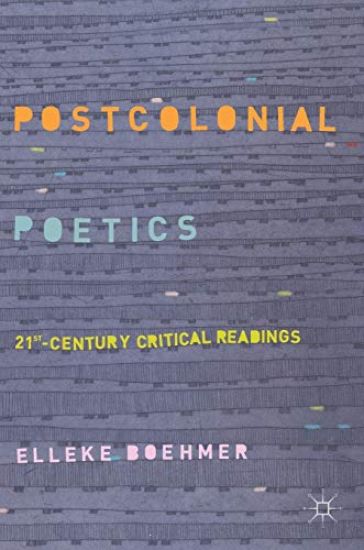
Postcolonial Poetics is about how we read postcolonial and world literatures today, and about how the structures of that writing shape our reading. The book’s eight chapters explore the ways in which postcolonial writing in English from various 21st-century contexts, including southern and West Africa, and Black and Asian Britain, interacts with our imaginative understanding of the world. Throughout, the focus is on reading practices, where reading is taken as an inventive, border-traversing activity, one that postcolonial writing with its interests in margins, intersections, subversions, and crossings specifically encourages. This close, sustained focus on reading, reception, and literariness is an outstanding feature of the study, as is its wide generic range, embracing poetry, essays, and life-writing, as well as fiction. The field-defining scholar Elleke Boehmer holds that literature has the capacity to keep reimagining and refreshing how we understand ourselves inrelation to the world and to some of the most pressing questions of our time, including resistance, reconciliation, survival after terror, and migration.
Postcolonial Poetics

Postcolonial Poetics

Elleke Boehmer

Springer International Publishing AG
2018
sidottu
Postcolonial Poetics is about how we read postcolonial and world literatures today, and about how the structures of that writing shape our reading. The book’s eight chapters explore the ways in which postcolonial writing in English from various 21st-century contexts, including southern and West Africa, and Black and Asian Britain, interacts with our imaginative understanding of the world. Throughout, the focus is on reading practices, where reading is taken as an inventive, border-traversing activity, one that postcolonial writing with its interests in margins, intersections, subversions, and crossings specifically encourages. This close, sustained focus on reading, reception, and literariness is an outstanding feature of the study, as is its wide generic range, embracing poetry, essays, and life-writing, as well as fiction. The field-defining scholar Elleke Boehmer holds that literature has the capacity to keep reimagining and refreshing how we understand ourselves inrelation to the world and to some of the most pressing questions of our time, including resistance, reconciliation, survival after terror, and migration.