Drawing on psychoanalytic discourse, the author of this work probes the use of words and images in contemporary culture. She draws upon a number of artistic movements and exhibitions to examine the emotional and intellectual responses to art.
In this provocative, closely argued book, Ellen Handler Spitz explores three principal psychoanalytic approaches to art. The first considers the relations between an artist’s life and work; the second focuses on the work of art itself; and the third encompasses the intricate relations between a work of art and its audience or beholders. To illustrate her theoretical discussion, Spitz draws on a variety of art forms, including painting, sculpture, literature, music, and dance. “No one who is concerned with the psychoanalytic study of art can afford to neglect [this book]; no one who cares about the art of psychoanalysis should ignore it.”—Aaron H. Esman, M.D., Journal of the American Psychoanalytic Association “This book … should prove fascinating to all who are concerned with works of art as expressions of the human mind and heart.”—Shehira Davezac, Hospital and Community Psychiatry “This book is highly recommended to all who enjoy the multiple applications of analytic thought to extend our senses.”—Jay Lefer, Journal of the American Academy of Psychoanalysis Ellen Handler Spitz holds degrees in art history, aesthetics, and education from Barnard College, Harvard University, and Columbia University. She was trained as a special candidate at the Center for Psychoanalytic Training and Research, Columbia University.
Mention a name from a beloved childhood picture book—Madeline, Corduroy, Peter Rabbit, Max and his “wild things”—and most adults can recollect a bright image, fragments of a story, the timbre of a certain reading voice, the sensation of being held, and best of all being together with someone and enveloped in fantasy. Why do picture book images shown to us as young children linger in our minds? How do picture books shape our lives early on and even later into adulthood? This book takes up such questions. It explores the profound impact of the experience of reading to children. Ellen Handler Spitz reveals how classic picture books transmit psychological wisdom, convey moral lessons, shape tastes, and implant subtle prejudices.Each chapter of the book discusses well-known children’s books—Goodnight Moon, Babar, Little Black Sambo, to name a few—that deal with a theme of importance to young children. These include bedtime, separation, loss, and death; curiosity, disobedience, and punishment; and identity and self-acceptance. Focusing on the relationship between a child and an adult reader, Spitz explains the notion of “conversational reading” and emphasizes the mutual benefits of dialogue and intimacy. This book not only gives parents, grandparents, teachers, therapists, and scholars a new understanding of the meaning of picture books, it also empowers adults to interpret and choose future cultural experiences for their children.
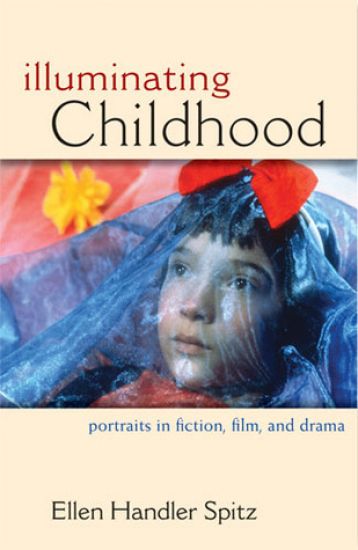
"A brilliant and daring book on how art reveals life, how it illuminates childhood beyond what the sciences of development can tell us."---Jerome Bruner, University Professor, New York University"Combining the surgical precision of a psychoanalytically informed critic with the oracular eloquence of a brilliant close reader, Ellen Handler Spitz reads our cultural fortunes about childhood and parenting through works of art. Moving us (in both senses of the term) from the serene plenitude of Piero della Francesca's Madonna of Childbirth to the unsparing horror of Lessing's Fifth Child, she reveals just how powerfully art puts us in touch with the pulsing energies of real life."---Maria Tatar, John L. Loeb Professor of Germanic Languages and Literatures, Harvard University "Illuminating Childhood is a wonderfully well-written and researched interdisciplinary study of childhood in various media and mediums as well as through ethnicity, race, gender, cultures, and time."---T. Denean Sharpley-Whiting, Distinguished Professor of French and Director of African American and Diaspora Studies, Vanderbilt UniversityWhile literature and the arts are rarely considered primary sources for knowledge about human motivation and behavior, people read novels, attend movies, watch television, and go to the theater not solely to be entertained but also to learn about one another and about themselves. Illuminating Childhood formalizes this quest for psychological knowledge in the domain of the arts.Starting with the premise that a gifted writer, artist, or filmmaker has the ability to teach us as much in one scene as a theorist can in a treatise or a therapist in a session, the author shares her intimate experience of eight thematically linked works in film and literature from the second half of the twentieth century, touching on issues central to parent-child relations, including toxic intrafamilial secrets, the disjunction between love and understanding, and the lasting impact of deceased parents on their children. While the canon of literature about children and parent-child relations includes books that identify problems, propose solutions, and present statistical data, Illuminating Childhood offers a living out of experience via the arts, written for a general audience---parents, teachers, mental health professionals, those who engage with their students via the arts of literature and film, and others.Ellen Handler Spitz holds the Honors College Professorship of Visual Arts at the University of Maryland. She is the author of a number of books on art, psychology, and imagery, including The Brightening Glance: Imagination and Childhood. Her abiding research interests are the cultural lives of young people; the relations between aesthetics and psychology; and the interconnections among literature, music, dance, and the visual arts.Jacket photo: Courtesy of PhotoFest
"A brilliant and daring book on how art reveals life, how it illuminates childhood beyond what the sciences of development can tell us."---Jerome Bruner, University Professor, New York University"Combining the surgical precision of a psychoanalytically informed critic with the oracular eloquence of a brilliant close reader, Ellen Handler Spitz reads our cultural fortunes about childhood and parenting through works of art. Moving us (in both senses of the term) from the serene plenitude of Piero della Francesca's Madonna of Childbirth to the unsparing horror of Lessing's Fifth Child, she reveals just how powerfully art puts us in touch with the pulsing energies of real life."---Maria Tatar, John L. Loeb Professor of Germanic Languages and Literatures, Harvard University "Illuminating Childhood is a wonderfully well-written and researched interdisciplinary study of childhood in various media and mediums as well as through ethnicity, race, gender, cultures, and time."---T. Denean Sharpley-Whiting, Distinguished Professor of French and Director of African American and Diaspora Studies, Vanderbilt UniversityWhile literature and the arts are rarely considered primary sources for knowledge about human motivation and behavior, people read novels, attend movies, watch television, and go to the theater not solely to be entertained but also to learn about one another and about themselves. Illuminating Childhood formalizes this quest for psychological knowledge in the domain of the arts.Starting with the premise that a gifted writer, artist, or filmmaker has the ability to teach us as much in one scene as a theorist can in a treatise or a therapist in a session, the author shares her intimate experience of eight thematically linked works in film and literature from the second half of the twentieth century, touching on issues central to parent-child relations, including toxic intrafamilial secrets, the disjunction between love and understanding, and the lasting impact of deceased parents on their children. While the canon of literature about children and parent-child relations includes books that identify problems, propose solutions, and present statistical data, Illuminating Childhood offers a living out of experience via the arts, written for a general audience---parents, teachers, mental health professionals, those who engage with their students via the arts of literature and film, and others.Ellen Handler Spitz holds the Honors College Professorship of Visual Arts at the University of Maryland. She is the author of a number of books on art, psychology, and imagery, including The Brightening Glance: Imagination and Childhood. Her abiding research interests are the cultural lives of young people; the relations between aesthetics and psychology; and the interconnections among literature, music, dance, and the visual arts.Jacket photo: Courtesy of PhotoFest