Kirjojen hintavertailu. Mukana 11 342 296 kirjaa ja 12 kauppaa.

Kirjahaku

Etsi kirjoja tekijän nimen, kirjan nimen tai ISBN:n perusteella.

7 kirjaa tekijältä Ellen Lewin

Gay Fatherhood

Gay Fatherhood

Ellen Lewin

University of Chicago Press
2009
sidottu
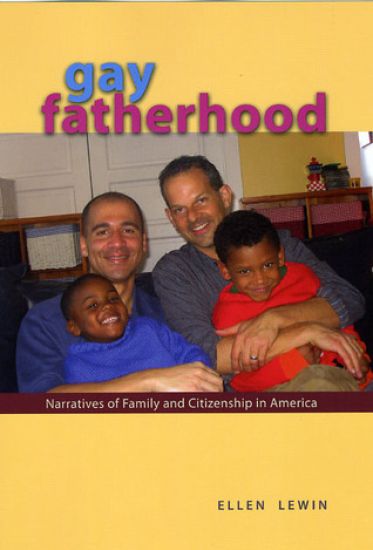
Men are often thought to have less interest in parenting than women, and gay men are generally assumed to prefer pleasure over responsibility. The toxic combination of these two stereotypical views has led to a lack of serious attention being paid to the experiences of gay fathers. But the truth is that more and more gay men are setting out to become parents and succeeding - and "Gay Fatherhood" aims to tell their stories. Ellen Lewin takes as her focus people who undertake the difficult process of becoming fathers as gay men, rather than having become fathers while married to women. These men face unique challenges in their quest for fatherhood, negotiating specific bureaucratic and financial difficulties as they pursue adoption or surrogacy and juggling questions about their future child's race, age, sex, and health. "Gay Fatherhood" chronicles the lives of these men, exploring how they cope with political attacks from both the 'family values' right and the 'radical queer' left - while also shedding light on the evolving meanings of family in twenty-first-century America.
Gay Fatherhood

Gay Fatherhood

Ellen Lewin

University of Chicago Press
2009
nidottu
Men are often thought to have less interest in parenting than women, and gay men are generally assumed to prefer pleasure over responsibility. The toxic combination of these two stereotypical views has led to a lack of serious attention being paid to the experiences of gay fathers. But the truth is that more and more gay men are setting out to become parents and succeeding - and "Gay Fatherhood" aims to tell their stories. Ellen Lewin takes as her focus people who undertake the difficult process of becoming fathers as gay men, rather than having become fathers while married to women. These men face unique challenges in their quest for fatherhood, negotiating specific bureaucratic and financial difficulties as they pursue adoption or surrogacy and juggling questions about their future child's race, age, sex, and health. "Gay Fatherhood" chronicles the lives of these men, exploring how they cope with political attacks from both the 'family values' right and the 'radical queer' left - while also shedding light on the evolving meanings of family in twenty-first-century America.
Filled with the Spirit

Filled with the Spirit

Ellen Lewin

University of Chicago Press
2018
sidottu
In 2001, a collection of open and affirming churches with predominantly African American membership and a Pentecostal style of worship formed a radically new coalition. The group, known now as the Fellowship of Affirming Ministries or TFAM, has at its core the idea of “radical inclusivity”: the powerful assertion that everyone, no matter how seemingly flawed or corrupted, has holiness within. Whether you are LGBT, have HIV/AIDS, have been in prison, abuse drugs or alcohol, are homeless, or are otherwise compromised and marginalized, TFAM tells its people, you are one of God’s creations. In Filled with the Spirit, Ellen Lewin gives us a deeply empathetic ethnography of the worship and community central to TFAM, telling the story of how the doctrine of radical inclusivity has expanded beyond those it originally sought to serve to encompass people of all races, genders, sexualities, and religious backgrounds. Lewin examines the seemingly paradoxical relationship between TFAM and traditional black churches, focusing on how congregations and individual members reclaim the worship practices of these churches and simultaneously challenge their authority. The book looks closely at how TFAM worship is legitimated and enhanced by its use of gospel music and considers the images of food and African American culture that are central to liturgical imagery, as well as how understandings of personal authenticity tie into the desire to be filled with the Holy Spirit. Throughout, Lewin takes up what has been mostly missing from our discussions of race, gender, and sexuality—close attention to spirituality and faith.
Filled with the Spirit

Filled with the Spirit

Ellen Lewin

University of Chicago Press
2018
nidottu
In 2001, a collection of open and affirming churches with predominantly African American membership and a Pentecostal style of worship formed a radically new coalition. The group, known now as the Fellowship of Affirming Ministries or TFAM, has at its core the idea of “radical inclusivity”: the powerful assertion that everyone, no matter how seemingly flawed or corrupted, has holiness within. Whether you are LGBT, have HIV/AIDS, have been in prison, abuse drugs or alcohol, are homeless, or are otherwise compromised and marginalized, TFAM tells its people, you are one of God’s creations. In Filled with the Spirit, Ellen Lewin gives us a deeply empathetic ethnography of the worship and community central to TFAM, telling the story of how the doctrine of radical inclusivity has expanded beyond those it originally sought to serve to encompass people of all races, genders, sexualities, and religious backgrounds. Lewin examines the seemingly paradoxical relationship between TFAM and traditional black churches, focusing on how congregations and individual members reclaim the worship practices of these churches and simultaneously challenge their authority. The book looks closely at how TFAM worship is legitimated and enhanced by its use of gospel music and considers the images of food and African American culture that are central to liturgical imagery, as well as how understandings of personal authenticity tie into the desire to be filled with the Holy Spirit. Throughout, Lewin takes up what has been mostly missing from our discussions of race, gender, and sexuality—close attention to spirituality and faith.
Recognizing Ourselves

Recognizing Ourselves

Ellen Lewin

Columbia University Press
1998
sidottu
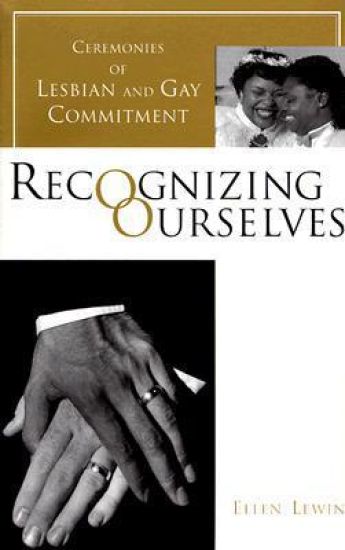
In April 1993, as part of the March on Washington for Lesbian, Gay, and Bi Equal Rights and Liberation, hundreds of couples participated in "the Wedding," a symbolic commitment ceremony held in front of the Internal Revenue Service building. Part protest and part affirmation of devotion, the event was a reminder that marriage rights have become a major issue among lesbians and gay men, who cannot marry legally and can only claim domestic partner rights in a few locations in the United States. Yet despite official lack of recognition, same-sex wedding ceremonies have been increasing in frequency over the past decade. Ellen Lewin, who has consecrated her own lesbian relationship with a commitment ceremony, decided to explore the myriad ways in which lesbians and gay men create meaningful ceremonies for themselves. She offers the first comprehensive account of lesbian and gay weddings in modern America. A series of richly detailed profiles-the result of extensive interviews and participation in the planning and realization of many of these commitment rituals-is woven together to show how new traditions, and ultimately new families, are emerging within contemporary America. Just as the book is a moving portrait of same-sex couples today, it is also a significant political document on a new arena in the struggle for lesbian and gay rights. In a larger sense, Lewin's work is about the politics surrounding same-sex marriages and the ramifications for central dimensions of American culture such as kinship, community, morality, and love. Lewin explores the ceremonies themselves, which range from traditional church weddings to Wicca rituals in the countryside, with portraits of the planning, the joys, and the anxieties that led up to the weddings. She introduces Bob and Mark, a leather fetishist couple who sanctified their love by legally changing their last names and exchanging vows in tuxedos, leather bow ties, and knee-high police boots. In an equally absorbing profile, Lewin describes Khadija, from a working-class black family deeply suspicious of whites (and especially Jews) and Shulamith, raised in a Zionist household. She tells of how the two women struggled to reconcile their widely disparate upbringings and how they ultimately combined elements of African and Jewish traditions in their wedding. These, among many other stories, make Recognizing Ourselves a vivid tapestry of lesbian and gay life in post-Stonewall United States.
Recognizing Ourselves

Recognizing Ourselves

Ellen Lewin

Columbia University Press
1999
pokkari
In April 1993, as part of the March on Washington for Lesbian, Gay, and Bi Equal Rights and Liberation, hundreds of couples participated in "the Wedding," a symbolic commitment ceremony held in front of the Internal Revenue Service building. Part protest and part affirmation of devotion, the event was a reminder that marriage rights have become a major issue among lesbians and gay men, who cannot marry legally and can only claim domestic partner rights in a few locations in the United States. Yet despite official lack of recognition, same-sex wedding ceremonies have been increasing in frequency over the past decade. Ellen Lewin, who has consecrated her own lesbian relationship with a commitment ceremony, decided to explore the myriad ways in which lesbians and gay men create meaningful ceremonies for themselves. She offers the first comprehensive account of lesbian and gay weddings in modern America. A series of richly detailed profiles-the result of extensive interviews and participation in the planning and realization of many of these commitment rituals-is woven together to show how new traditions, and ultimately new families, are emerging within contemporary America. Just as the book is a moving portrait of same-sex couples today, it is also a significant political document on a new arena in the struggle for lesbian and gay rights. In a larger sense, Lewin's work is about the politics surrounding same-sex marriages and the ramifications for central dimensions of American culture such as kinship, community, morality, and love. Lewin explores the ceremonies themselves, which range from traditional church weddings to Wicca rituals in the countryside, with portraits of the planning, the joys, and the anxieties that led up to the weddings. She introduces Bob and Mark, a leather fetishist couple who sanctified their love by legally changing their last names and exchanging vows in tuxedos, leather bow ties, and knee-high police boots. In an equally absorbing profile, Lewin describes Khadija, from a working-class black family deeply suspicious of whites (and especially Jews) and Shulamith, raised in a Zionist household. She tells of how the two women struggled to reconcile their widely disparate upbringings and how they ultimately combined elements of African and Jewish traditions in their wedding. These, among many other stories, make Recognizing Ourselves a vivid tapestry of lesbian and gay life in post-Stonewall United States.

Lesbian Mothers

Lesbian Mothers

Ellen Lewin

Cornell University Press
2018
pokkari
Within a society that long considered "lesbian motherhood" a contradiction in terms, what were the experiences of lesbian mothers at the end of the twentieth century? In this illuminating book, lesbian mothers tell their stories of how they became mothers; how they see their relationships with their children, relatives, lovers, and friends and with their children's fathers and sperm donors; how they manage child-care arrangements and financial difficulties; and how they deal with threats to custody. Ellen Lewin's unprecedented research on lesbian mothers in the San Francisco area captured a vivid portrait of the moment before gay and lesbian parenting moved into the mainstream of U.S. culture. Drawing on interviews with 135 women, Lewin provided her readers with a new understanding of the attitudes of individual women, the choices they made, and the texture of their daily lives.