Kirjojen hintavertailu. Mukana 12 083 983 kirjaa ja 12 kauppaa.

Kirjahaku

Etsi kirjoja tekijän nimen, kirjan nimen tai ISBN:n perusteella.

8 kirjaa tekijältä Ellen Winner

An Uneasy Guest in the Schoolhouse

An Uneasy Guest in the Schoolhouse

Ellen Winner

OXFORD UNIVERSITY PRESS INC
2022
sidottu
An Uneasy Guest in the Schoolhouse recounts how art education has been conceptualized, taught, and advocated for in the United States in the face of its persistent marginalization in the education system. Tracing various rationales offered from the 19th century onward, Winner argues that art education has failed to be justified as a good in and of itself--and this failure has affected both the status of visual art education in our schools and the quality of its teaching. Winner's comprehensive book maps recurrent pendulum swings between "traditional" and "progressive" approaches to art education in the United States, supplemented by her firsthand experiences observing art teaching in schools in China and Italy. Despite this problematic and uncertain past, 21st century art education in the United States and abroad has exploded with a wealth of new ideas aligned with the progressivism of the early 20th century and informed by the practices of contemporary art. As Winner details, an understanding of the history of art education, along with a focus on current challenges and opportunities, is essential for arts researchers, educators, and advocates, as well as anyone in the general public who cares about quality education in the 21st century.
How Art Works

How Art Works

Ellen Winner

Oxford University Press Inc
2018
sidottu
There is no end of talk and of wondering about 'art' and 'the arts.' This book examines a number of questions about the arts (broadly defined to include all of the arts). Some of these questions come from philosophy. Examples include: · What makes something art? · Can anything be art? · Do we experience "real" emotions from the arts? · Why do we seek out and even cherish sorrow and fear from art when we go out of our way to avoid these very emotions in real life? · How do we decide what is good art? Do aesthetic judgments have any objective truth value? · Why do we devalue fakes even if we -- indeed, even the experts--- can't tell them apart from originals? · Does fiction enhance our empathy and understanding of others? Is art-making therapeutic? Others are "common sense" questions that laypersons wonder about. Examples include: · Does learning to play music raise a child's IQ? · Is modern art something my kid could do? · Is talent a matter of nature or nurture? This book examines puzzles about the arts wherever their provenance - as long as there is empirical research using the methods of social science (interviews, experimentation, data collection, statistical analysis) that can shed light on these questions. The examined research reveals how ordinary people think about these questions, and why they think the way they do - an inquiry referred to as intuitive aesthetics. The book shows how psychological research on the arts has shed light on and often offered surprising answers to such questions.
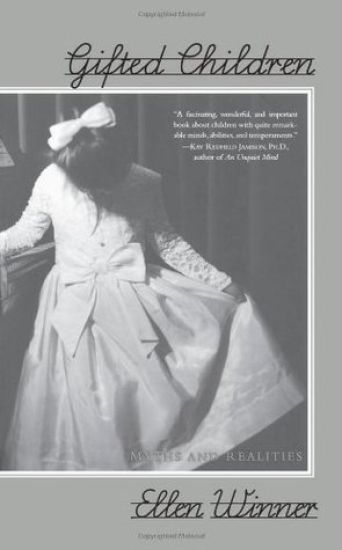
Gifted Children

Gifted Children

Ellen Winner

Basic Books
1997
pokkari
In this fascinating book, Ellen Winner uncovers and explores nine myths about giftedness, and shows us what gifted children are really like.Using vivid case studies, Winner paints a complex picture of the gifted child. Here we meet David, a three-year-old who learned to read in two weeks KyLee, a five-year-old who mastered on his own all of the math concepts expected by the end of elementary school and Nadia, an autistic and retarded savant" who nevertheless could draw like a Renaissance master.Winner uses her research with these and several other extraordinary children, as well as the latest biological and psychological evidence, to debunk the many myths about academic, musical, and artistic giftedness. Gifted Children also looks at the role played by schools in fostering exceptional abilities. Winner castigates schools for wasting resources on weak educational programs for the moderately gifted. Instead, she advocates elevating standards for all children, and focusing our resources for gifted education on those with extreme abilities,children who are left untouched by the kinds of minimal programs we have today.
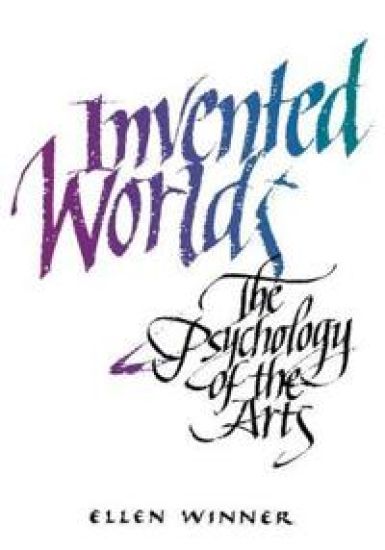
Invented Worlds

Invented Worlds

Ellen Winner

Harvard University Press
1985
nidottu
Cave paintings of our prehistoric ancestors, elaborate ritual dances of preliterate tribesmen, long lines at the movies, earnest scribbles of the three-year-old next door—evidence of human preoccupation with art is everywhere, and it is overwhelming. But unlike other human universals—language, tool use, the family—art makes no material contribution to mankind’s survival. What impels the artist to the lonely effort at self-expression? What moves the audience to resonate to the work of a master? What accounts for the child’s inherent fascination with pictures and stories and songs?These questions are among the deepest we can ask about human nature. Freud deemed some of them forever unanswerable, but modern psychology has made new inroads into these old mysteries. Invented Worlds provides a complete, authoritative account of this progress. Dealing with the three major art forms—painting, music, and literature—Ellen Winner shows how the artist fashions a symbolic world that transforms the experience of the observer. She probes the adult’s ability to create and respond to works of art. In addition, she examines children’s art for what it can reveal about the artistic impulse before adult convention becomes a shaping force. Finally, in order to reach a better understanding of the biological bases of artistry, Winner discusses the art of the mentally disturbed and the neurologically impaired patient.The sum of these discussions is more than an up-to-date handbook to the field; it is nothing less than a new synthesis of our understanding of man’s artistic nature. Written with admirable clarity, Invented Worlds is a book that can be used by professionals and students in psychology, education, and the arts, as well as anyone with reason to be curious about the processes that underlie the creation and enjoyment of art.
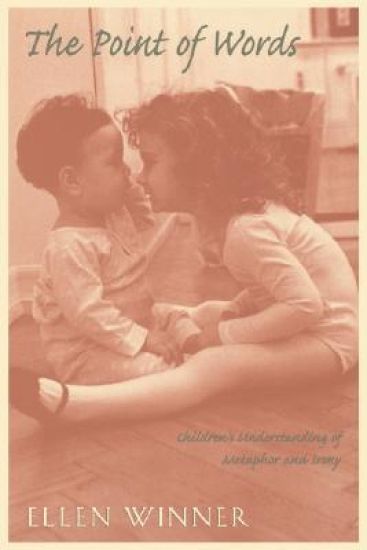
The Point of Words

The Point of Words

Ellen Winner

Harvard University Press
1997
nidottu
A small child looks at a dripping faucet and says that it is drooling." Another calls a centipede a "comb." An older child notices the mess in his younger brother's room and says, "Wow, it sure is neat in here." Children's spontaneous speech is rich in such creative, nonliteral discourse. How do children's abilities to use and interpret figurative language change as they grow older? What does such language show us about the changing features of children's minds?In this absorbing book, psychologist Ellen Winner examines the development of the child's ability to use and understand metaphor and irony. These, she argues, are the two major forms of figurative language and are, moreover, complementary. Metaphor, which describes and sometimes explains, highlights attributes of a topic. As such, it serves primarily a cognitive function. Irony highlights the speaker's attitude toward the subject arid presupposes an appreciation of that attitude by the listener. In contrast to metaphor, irony serves primarily a social function. Winner looks in detail at the ways these forms of language differ structurally and at the cognitive and social capacities required for each.The book not only draws on the author's own empirical studies but also offers a valuable synthesis of research in the area: it is the first account that spans the realm of figurative language. Winner writes clearly and engagingly and enlivens her account with many vivid examples from children's speech. The book will appeal to developmental psychologists, educators, psychologists of language, early-language specialists, students of literature, indeed, anyone who is delighted by the fanciful utterances of young children.