An enthralling Victorian sensation novel where secrets, infidelity, and mistaken identities collide in a tale of passion. Set in the sprawling English countryside, East Lynne follows the misfortunes of Lady Isabel Vane. Left penniless and homeless when her father dies, Isabel is left with no choice but to marry a lawyer, Archibald Carlyle, who buys her former home East Lynne. He's a caring man, but when his sister moves in she seems set on making Isabel's life miserable. A tangled web of misunderstandings and betrayal ensues as the novel explores the consequences of choices made in the pursuit of happiness. This volume is part of the Mothers of the Macabre series, celebrating the gothic horror masterpieces of pioneering women writers who played a pivotal role in shaping and advancing the genre. First published in 1861, East Lynne was a Victorian bestseller and is known for its hilariously dramatic and tragic plot. A must-read for fans of gothic horror, Ellen Wood's masterful work has had multiple stage and screen adaptations.
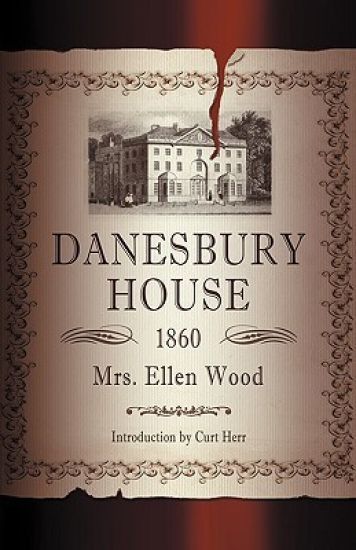
East Lynne is an English sensation novel of 1861 by Ellen Wood. A Victorian bestseller, it is remembered chiefly for its elaborate and implausible plot, centring on infidelity and double identities. There have been numerous stage and film adaptations. The much-"quoted" line "Gone And never called me mother " (variant: "Dead Dead And never called me mother ") does not appear in the book; both variants come from later stage adaptations. The book was originally serialised in The New Monthly Magazine between January 1860 and September 1861, being issued as a three-volume novel on 19 September 1861. Plot summary: Lady Isabel Carlyle, a beautiful and refined young woman, leaves her hard-working lawyer-husband, Carlyle, and her infant children to elope with an aristocratic suitor, Francis Levison, after wrongfully suspecting and becoming jealous of her husband's friendship with Barbara Hare. However once abroad with Levison she realises he has no intention of marrying her, despite her having borne their illegitimate child. He deserts her, Lady Isabel is disfigured in a train accident and the child is killed. Following this Isabel is able to take the position of governess in the household of her former husband and his new wife allowing her to be close to her children but which also becomes a source of great misery. The pressure of keeping up a fa ade and being constantly reminded that her husband has moved on eventually physically weakens her. On her deathbed she tells all to Carlyle who forgives her. Ellen Wood (n e Price; 17 January 1814 - 10 February 1887), was an English novelist, better known in that respect as Mrs. Henry Wood. She is remembered most for her 1861 novel East Lynne, but many of her books became international bestsellers and widely known in the United States. She surpassed the fame of Charles Dickens in Australia. Life: Ellen Price was born in Worcester in 1814. In 1836 she married Henry Wood, who worked in the banking and shipping trade in Dauphin in the South of France, where they lived for 20 years. On the failure of Wood's business, the family (including four children) returned to England and settled in Upper Norwood near London, where Ellen Wood turned to writing. This supported the family (Henry Wood died in 1866). She wrote over 30 novels, many of which (especially East Lynne) enjoyed remarkable popularity. Among the best known are Danesbury House, Oswald Cray, Mrs. Halliburton's Troubles, The Channings, Lord Oakburn's Daughters and The Shadow of Ashlydyat. Her writing tone would be described as "conservative and Christian,"occasionally expressing religious rhetoric. In 1867, Wood purchased the English magazine Argosy, which had been founded by Alexander Strahan in 1865. She wrote much of the magazine herself, but other contributors included Hesba Stretton, Julia Kavanagh, Christina Rossetti, Sarah Doudney and Rosa Nouchette Carey. Wood continued as its editor until her death in 1887, when her son Charles Wood took over. Wood's works were translated into many languages, including French and Russian.Leo Tolstoy, in a 9 March 1872 letter to his older brother Sergei, noted that he was "reading Mrs. Wood's wonderful novel In the Maze". Wood wrote several works of supernatural fiction, including "The Ghost" (1862) and the often anthologized "Reality or Delusion?" (1868). At her death (caused by bronchitis), her estate was valued at over 36,000, which was then a very considerable sum. She was buried in Highgate Cemetery, London. A monument to her was unveiled in Worcester Cathedral in 1916.
This work has been selected by scholars as being culturally important, and is part of the knowledge base of civilization as we know it. This work was reproduced from the original artifact, and remains as true to the original work as possible. Therefore, you will see the original copyright references, library stamps (as most of these works have been housed in our most important libraries around the world), and other notations in the work.This work is in the public domain in the United States of America, and possibly other nations. Within the United States, you may freely copy and distribute this work, as no entity (individual or corporate) has a copyright on the body of the work.As a reproduction of a historical artifact, this work may contain missing or blurred pages, poor pictures, errant marks, etc. Scholars believe, and we concur, that this work is important enough to be preserved, reproduced, and made generally available to the public. We appreciate your support of the preservation process, and thank you for being an important part of keeping this knowledge alive and relevant.
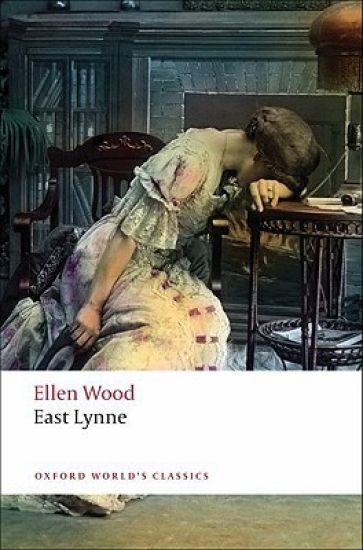
'Coward! Sneak! May good men shun him, from henceforth! may his Queen refuse to receive him! You, an earl's daughter! Oh, Isabel! How utterly you have lost yourself!' When the aristocratic Lady Isabel abandons her husband and children for her wicked seducer, more is at stake than moral retribution. Ellen Wood played upon the anxieties of the Victorian middle classes who feared a breakdown of the social order as divorce became more readily available and promiscuity threatened the sanctity of the family. In her novel the simple act of hiring a governess raises the spectres of murder, disguise, and adultery. Her sensation novel was devoured by readers from the Prince of Wales to Joseph Conrad and continued to fascinate theatre-goers and cinema audiences well into the next century. This edition returns for the first time to the racy, slang-ridden narrative of the first edition, rather than the subsequent stylistically 'improved' versions hitherto reproduced by modern editors. ABOUT THE SERIES: For over 100 years Oxford World's Classics has made available the widest range of literature from around the globe. Each affordable volume reflects Oxford's commitment to scholarship, providing the most accurate text plus a wealth of other valuable features, including expert introductions by leading authorities, helpful notes to clarify the text, up-to-date bibliographies for further study, and much more.

![A Race For Life And Other Tales [by E. Wood?]](/covers/9781378934135.jpg)