Kirjojen hintavertailu. Mukana 12 083 983 kirjaa ja 12 kauppaa.

Kirjahaku

Etsi kirjoja tekijän nimen, kirjan nimen tai ISBN:n perusteella.

12 kirjaa tekijältä Elliot D. Cohen

Cognitive Behavior Therapy for Those Who Say They Can’t
Cognitive-Behavior Therapy for Those Who Say They Can’t is a comprehensive aid for people who stifle their personal freedom, creativity, and autonomy by telling themselves they "can’t" do things such as: take risks; make commitments; control their anger or fear; avoid intrusive thoughts; tolerate disappointment; accept challenges, make decisions, and more. This accessible workbook concisely explains how to identify, refute, and replace "I can’t" with uplifting and liberating virtues. Worksheets include systematic exercises on coping with shame, rational–emotive imagery, reframing, mindfulness, behavioral planning, and taking risks. Each chapter tackles a particular type of self-defeating "I can’t" and is complete with an assessment inventory that helps users/clients identify which chapter/s they need to work on.This workbook provides essential self-help for those struggling with disempowering thoughts and can also be used by mental health professionals in working with their clients.
Cognitive Behavior Therapy for Those Who Say They Can’t
Cognitive-Behavior Therapy for Those Who Say They Can’t is a comprehensive aid for people who stifle their personal freedom, creativity, and autonomy by telling themselves they "can’t" do things such as: take risks; make commitments; control their anger or fear; avoid intrusive thoughts; tolerate disappointment; accept challenges, make decisions, and more. This accessible workbook concisely explains how to identify, refute, and replace "I can’t" with uplifting and liberating virtues. Worksheets include systematic exercises on coping with shame, rational–emotive imagery, reframing, mindfulness, behavioral planning, and taking risks. Each chapter tackles a particular type of self-defeating "I can’t" and is complete with an assessment inventory that helps users/clients identify which chapter/s they need to work on.This workbook provides essential self-help for those struggling with disempowering thoughts and can also be used by mental health professionals in working with their clients.
The New Rational Therapy

The New Rational Therapy

Elliot D. Cohen

Rowman Littlefield
2006
sidottu
Throughout the ages, great thinkers such as Plato, Aristotle, Epicurus, Aquinas,Descartes, Spinoza, Kant, Nietzsche, and many others have had incredibly useful things to say about overcoming the strife of everyday living and attaining happiness. Unfortunately contemporary approaches to psychology have made only limited use of this guidance. At last, here is an uplifting psychology that systematically applies the wisdom of the ages to attaining life pregnant with insight, meaning, value, and purpose. Guided by the vision of great minds, this book shows you how you can still feel secure and hopeful in a precarious, uncertain universe; face evil with life-affirming courage; build self-esteem, respect for others, and global reverence; become your own person; take control of you're emotions and behavior; strengthen your willpower; confront moral problems creatively; build rapport and solidarity with others; and hone your practical decision-making skills. Unlike classical approaches to rational psychology that only scratch the surface of what's deeply wrong in your life, The New Rational Therapy gets to the core and offers you penetrating, philosophical antidotes for transcending your malaise, and for attaining an enduring, profound happiness.
The New Rational Therapy

The New Rational Therapy

Elliot D. Cohen

Rowman Littlefield
2006
nidottu
Throughout the ages, great thinkers such as Plato, Aristotle, Epicurus, Aquinas,Descartes, Spinoza, Kant, Nietzsche, and many others have had incredibly useful things to say about overcoming the strife of everyday living and attaining happiness. Unfortunately contemporary approaches to psychology have made only limited use of this guidance. At last, here is an uplifting psychology that systematically applies the wisdom of the ages to attaining life pregnant with insight, meaning, value, and purpose. Guided by the vision of great minds, this book shows you how you can still feel secure and hopeful in a precarious, uncertain universe; face evil with life-affirming courage; build self-esteem, respect for others, and global reverence; become your own person; take control of you're emotions and behavior; strengthen your willpower; confront moral problems creatively; build rapport and solidarity with others; and hone your practical decision-making skills. Unlike classical approaches to rational psychology that only scratch the surface of what's deeply wrong in your life, The New Rational Therapy gets to the core and offers you penetrating, philosophical antidotes for transcending your malaise, and for attaining an enduring, profound happiness.
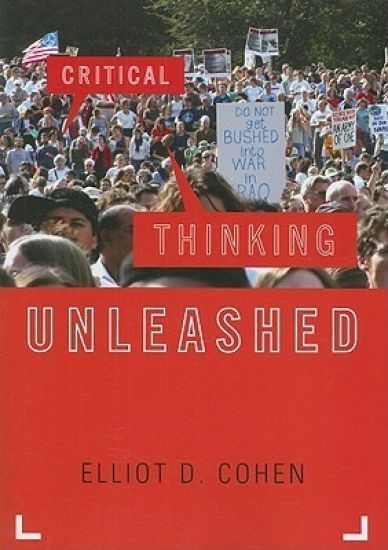
Critical Thinking Unleashed

Critical Thinking Unleashed

Elliot D. Cohen

Rowman Littlefield Publishers
2009
sidottu
From alcohol and drug addiction to rage on national highways and in airports, many human beings have kept themselves in perpetual turmoil and despair. From encroachment on individual rights and liberties to wars of attrition and mass genocide, human history has continually repeated itself due to a failure to see the light. Containing numerous skill-building exercises, Critical Thinking Unleashed seeks to cultivate the reasoning skills required to overcome such destructive human tendencies and to live meaningful and productive lives in a democratic society. In contrast to other treatments of practical reasoning, Elliot D. Cohen not only teaches students how to identify and refute irrational premises—he also teaches them how to construct rational antidotes to combat the personal, social, and political obstacles they confront in everyday life. Moreover, Cohen encourages students to use the theories and ideas embodied in the history of philosophy in order to construct these rational guides, drawing examples from many contemporary sources. Demonstrating the practical relevance and import of many historically significant philosophers (e.g. Socrates, Aristotle, Epictetus, Hume, Kant, Mill, Sartre, and Nietzsche), the book presents a practical, non-technical, and comprehensive approach to critical thinking.
Critical Thinking Unleashed

Critical Thinking Unleashed

Elliot D. Cohen

Rowman Littlefield Publishers
2009
nidottu
From alcohol and drug addiction to rage on national highways and in airports, many human beings have kept themselves in perpetual turmoil and despair. From encroachment on individual rights and liberties to wars of attrition and mass genocide, human history has continually repeated itself due to a failure to see the light. Containing numerous skill-building exercises, Critical Thinking Unleashed seeks to cultivate the reasoning skills required to overcome such destructive human tendencies and to live meaningful and productive lives in a democratic society. In contrast to other treatments of practical reasoning, Elliot D. Cohen not only teaches students how to identify and refute irrational premises_he also teaches them how to construct rational antidotes to combat the personal, social, and political obstacles they confront in everyday life. Moreover, Cohen encourages students to use the theories and ideas embodied in the history of philosophy in order to construct these rational guides, drawing examples from many contemporary sources. Demonstrating the practical relevance and import of many historically significant philosophers (e.g. Socrates, Aristotle, Epictetus, Hume, Kant, Mill, Sartre, and Nietzsche), the book presents a practical, non-technical, and comprehensive approach to critical thinking.
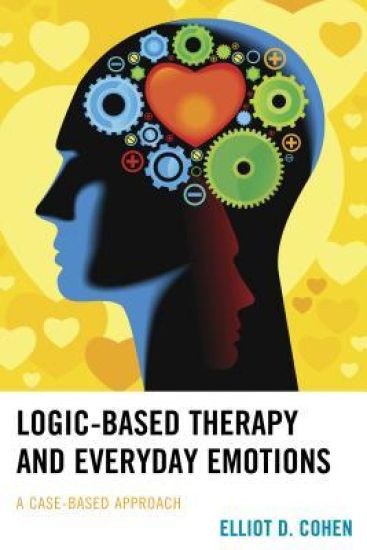
Logic-Based Therapy and Everyday Emotions

Logic-Based Therapy and Everyday Emotions

Elliot D. Cohen

Lexington Books
2016
sidottu
In this latest book on the popular philosophical practice modality of Logic-Based Therapy, LBT inventor and practitioner, Elliot D. Cohen, develops both theory and practice of LBT within the context of accessible, engaging, and illustrative cases involving everyday emotions, such as anxiety, worry, guilt, anger, and sadness. Beginning with an examination of the relationship between philosophical and psychological practice, Cohen shows how philosophy (its methods and theories) can be applied, through the practice of LBT’s six-step method, to help people confront the emotionally-laden problems of everyday life with courage, temperance, empathy, prudence, and the other “Guiding Virtues” of LBT. In non-technical language, accessible to students of philosophy and psychotherapy as well as professionals in these fields, Cohen artfully builds a mutually cooperative, competent, and compassionate bridge between philosophical and psychological practice.
Logic-Based Therapy and Everyday Emotions

Logic-Based Therapy and Everyday Emotions

Elliot D. Cohen

Lexington Books
2017
nidottu
In this latest book on the popular philosophical practice modality of Logic-Based Therapy, LBT inventor and practitioner, Elliot D. Cohen, develops both theory and practice of LBT within the context of accessible, engaging, and illustrative cases involving everyday emotions, such as anxiety, worry, guilt, anger, and sadness. Beginning with an examination of the relationship between philosophical and psychological practice, Cohen shows how philosophy (its methods and theories) can be applied, through the practice of LBT’s six-step method, to help people confront the emotionally-laden problems of everyday life with courage, temperance, empathy, prudence, and the other “Guiding Virtues” of LBT. In non-technical language, accessible to students of philosophy and psychotherapy as well as professionals in these fields, Cohen artfully builds a mutually cooperative, competent, and compassionate bridge between philosophical and psychological practice.
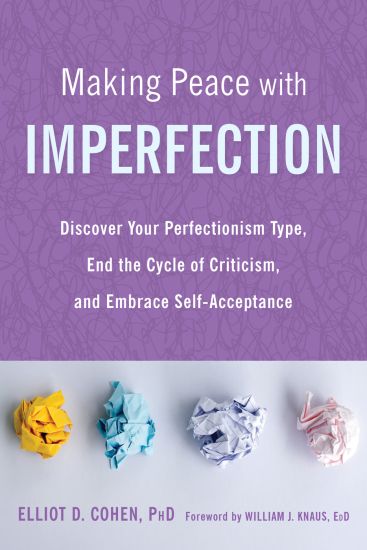
Making Peace with Imperfection

Making Peace with Imperfection

Elliot D. Cohen

New Harbinger Publications
2019
pokkari
Demanding perfection in everything you do can create a life of stress, worry, and overload. With this essential self-help guide, you'll learn to escape the perfectionism trap and cultivate unconditional self-acceptance in an imperfect world.Are you a perfectionist? Do you wear this title like a badge of honor, even though it creates needless stress in your life?Ironically, the stress you create by demanding perfection from yourself and others can actually make it harder to achieve your goals in the long run. It can also alienate you from friends, family, and coworkers. So, how can you escape the perfectionism trap and start living a life of self-compassion?In this informative and practical resource, author Elliot Cohen reveals the eleven types of perfectionism, and gives you the tools and skills you need to move past this distressing mind set before it leads to chronic stress, anxiety, anger, or even depression. Using strategies grounded in evidence-based rational emotive behavior therapy (REBT), you'll discover how your perfectionism is actually a result of irrational beliefs, learn to challenge these beliefs, and replace negative thoughts with compassionate ones.Being a perfectionist can affect virtually every decision you make, and every action you take-leading to a life of perpetual stress. This book can help you put a stop to the absolutist thinking behind your perfectionism and take steps toward a calmer, more balanced way of being.
Are You Making Love or Just Having Sex?

Are You Making Love or Just Having Sex?

Elliot D. Cohen

ANTHEM PRESS
2024
sidottu
In making love, one is elevated beyond the carnal desires it satisfies. For the religious, it is Divine; for those who are not religiously inclined, it is still a spiritual experience, one of seamless solidarity, a unity of two as one that defies mere orgasmic stimulation. You don’t have to make love to have sex. Even strangers can be sexually attracted and have an orgasmic escapade. But in the act of making love, there is symbolic meaning that is felt through-and-through the sex act. Two in love are joined, in life, and the sexual expression of this unison is deeply felt in the sex act itself. This is sexual intimacy, the making of love, the likes of which is rarely, if ever, seen outside a loving relationship. There is no escape from the philosophical dimensions of such a loving relationship. It is as abstract as it is concrete in the ideals that ground it. There is a mystery about it, a kind of transcendent experience that defies translation into words. Making and being in love are thus joined at the hip. Loving relationships make the bed in which true lovers sleep. Unfortunately, many relationships flounder or never get off the ground. Just having sex may ease the tension, but it then becomes a means, not truly an end-in-itself. The moment the sex act ends, the couple may retreat and fall into discord. It is an oasis in a barren desert that provides temporary relief, a titillating, temporary escape from reality. This book can help you to overcome the obstacles, the unlovable habits that encumber your relationship, both inside and outside the bedroom. It can help to create the harmonic balance between your sex life and other aspects of your personal and interpersonal relationships, which are preludes to making and being in love. To accomplish this, it applies a five-step method based on Logic-Based Therapy & Consultation (LBTC), a popular form of evidence-based, philosophical counseling modality. First, it introduces you to six types of unlovable ways of thinking and acting and helps you to identify the ones that may be sabotaging your own relationship. Second, it shows you how to counter these self-defeating habits with certain lovable goals (“virtues of love”). Third, it helps you to identify and embrace a personal “love philosophy” that empowers you to reach for your lovable goals. Fourth, it provides core philosophical ideas that are key to any successful quest for romantic love. Fifth, it helps you construct a behavioral plan that applies your philosophies to making constructive changes in your relationship. The latter may require making changes both inside and outside your relationship. Thus, this book also shows you how the problems you are having in one area of your life (at work, in your social life, etc.) can affect the quality of your relationship, inside and outside the bedroom, and it offers guidance, including self-improvement exercises, to overcome these impediments and attain enduring love and sexual intimacy.
Are You Making Love or Just Having Sex?

Are You Making Love or Just Having Sex?

Elliot D. Cohen

ANTHEM PRESS
2024
nidottu
In making love, one is elevated beyond the carnal desires it satisfies. For the religious, it is Divine; for those who are not religiously inclined, it is still a spiritual experience, one of seamless solidarity, a unity of two as one that defies mere orgasmic stimulation. You don’t have to make love to have sex. Even strangers can be sexually attracted and have an orgasmic escapade. But in the act of making love, there is symbolic meaning that is felt through-and-through the sex act. Two in love are joined, in life, and the sexual expression of this unison is deeply felt in the sex act itself. This is sexual intimacy, the making of love, the likes of which is rarely, if ever, seen outside a loving relationship. There is no escape from the philosophical dimensions of such a loving relationship. It is as abstract as it is concrete in the ideals that ground it. There is a mystery about it, a kind of transcendent experience that defies translation into words. Making and being in love are thus joined at the hip. Loving relationships make the bed in which true lovers sleep. Unfortunately, many relationships flounder or never get off the ground. Just having sex may ease the tension, but it then becomes a means, not truly an end-in-itself. The moment the sex act ends, the couple may retreat and fall into discord. It is an oasis in a barren desert that provides temporary relief, a titillating, temporary escape from reality. This book can help you to overcome the obstacles, the unlovable habits that encumber your relationship, both inside and outside the bedroom. It can help to create the harmonic balance between your sex life and other aspects of your personal and interpersonal relationships, which are preludes to making and being in love. To accomplish this, it applies a five-step method based on Logic-Based Therapy & Consultation (LBTC), a popular form of evidence-based, philosophical counseling modality. First, it introduces you to six types of unlovable ways of thinking and acting and helps you to identify the ones that may be sabotaging your own relationship. Second, it shows you how to counter these self-defeating habits with certain lovable goals (“virtues of love”). Third, it helps you to identify and embrace a personal “love philosophy” that empowers you to reach for your lovable goals. Fourth, it provides core philosophical ideas that are key to any successful quest for romantic love. Fifth, it helps you construct a behavioral plan that applies your philosophies to making constructive changes in your relationship. The latter may require making changes both inside and outside your relationship. Thus, this book also shows you how the problems you are having in one area of your life (at work, in your social life, etc.) can affect the quality of your relationship, inside and outside the bedroom, and it offers guidance, including self-improvement exercises, to overcome these impediments and attain enduring love and sexual intimacy.
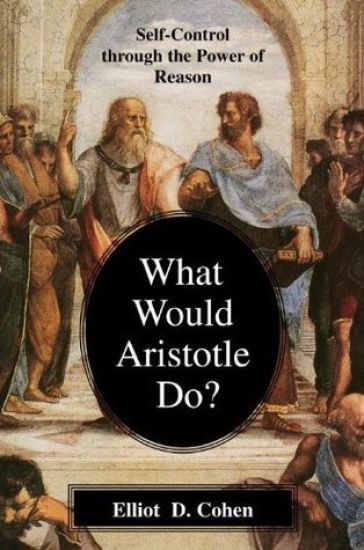
What Would Aristotle Do?

What Would Aristotle Do?

Elliot D. Cohen

Prometheus Books
2003
pokkari
Do you get upset easily, even about small things, or have trouble getting along with others? Do you feel down most of the time? Are you plagued by loneliness, grief, guilt, or a gnawing feeling of life's futility? Does fear, anxiety, or worry often overwhelm you? In this uplifting, user-friendly guide, philosopher Elliot D. Cohen offers an uncommonly commonsense approach to these and many other problems of living. Cohen, one of the principal founders of "philosophical counseling" in the United States, reveals how you can attain genuine insight into the common confusions of everyday life by harnessing your own native powers of reason. "Early on in my work with clients," writes Cohen, "I became aware that the utility of philosophy for ordinary life was in the rigors of its rational, commonsense approach." Through engaging case studies drawn from his practice, and candid discussion of his own personal life ("stories of the road"), Cohen vividly illustrates how, by making unrealistic assumptions about life, you may be undermining your own personal and interpersonal happiness without even realizing it. Step by step, the author shows you how to use your native reason to expose, refute, correct, and overcome these sometimes dangerous, irrational assumptions hidden in your thinking. This realistic, no-nonsense, and drug-free approach to "rational medicine," in the tradition of Aristotle, walks you through some of the most injurious and offending fallacies of life, and arms you with many commonsense prescriptions for attaining greater freedom and control over your life.