Kirjojen hintavertailu. Mukana 12 016 292 kirjaa ja 12 kauppaa.

Kirjahaku

Etsi kirjoja tekijän nimen, kirjan nimen tai ISBN:n perusteella.

3 kirjaa tekijältä Emilio Cueto

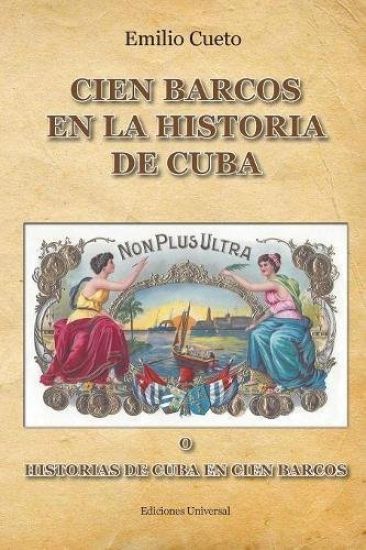
Historia de Cuba En Cien Barcos

Historia de Cuba En Cien Barcos

Emilio Cueto

Ediciones Universal
2018
pokkari
EMILIO CUETO (Havana, 1944). Lawyer, collector and researcher. He lives in the United States since 1961. Author of Mialhe's Colonial Cuba (1992), Cuba in Old Maps (1999), Illustrating Cuba's Flora and Fauna (2002) La Cuba Pintoresca de Fr d ric Mialhe (The Picturesque Cuba of Fr d ric Mialhe) (2010), La Virgen de la Caridad del Cobre en el alma del pueblo cubano (Our Lady of Charity in the soul of the Cuban people) (2014), Camag ey en la M sica (Camag ey in its Music) (2015) and Las Litograf as santiagueras del Departamento Oriental de la Isla de Cuba (The lithographs from Santiago de Cuba of the Eastern Department of the Island of Cuba) (2015). Between 2008 and 2013 he collaborated with Florida International University (Miami) in the organization of concerts related to Cuban music. He has another book in preparation: Cuba en USA (Cuba in the USA) y Matanzas en la Mano (Matanzas in the Hand).CIEN BARCOS EN LA HISTORIA DE CUBA (ONE HUNDRED BOATS IN THE HISTORY OF CUBA). The main events of our History have been marked by boats. In remote times, Cuba was a barren territory ... and our first inhabitants arrived on ships. We became an island populated by Caribbean aborigines, but with Christopher Columbus' three caravels we became s a Spanish colony. And that we were until the Maine exploded in Havana, making us an independent country but very dependent on the United States. And then the Granma arrived, which routed the Island to the East and a good number of Cubans to the North. The boats of the Bay of Pigs tried, without success, to open a new chapter. All these boats made us Spanish, English and American. But, above all, they made us Cubans: With what they brought (Cachita, the shield, the flag, the Marti's Simple Verses, baseball, the butterfly, the national flower) --and what they took (emigration, sugar, the habanera)-- we made our Cuba and we became the people that we are today.
Delivering Cuba Through the Mail

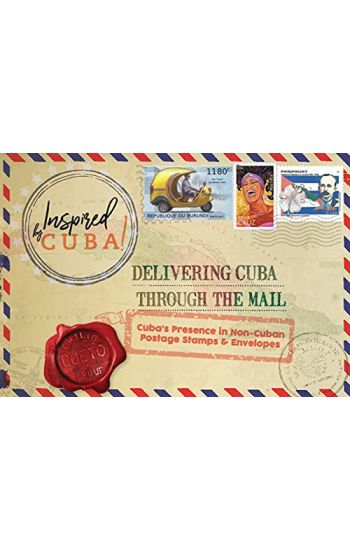
Delivering Cuba Through the Mail

Emilio Cueto

Library Press at Uf
2021
pokkari
On May 1st, 1840, the United Kingdom issued the first postage stamps in the world: the Penny Black and Two Pence Blue. Other countries soon followed: United States (1847), France and Belgium (1849), Spain, Switzerland, Austria and Prussia (1850), and many more in the ensuing years. In Cuba, then a colony of Spain, the first stamp was used in 1855 and it depicted the image of Queen Isabella II, the sovereign of the Spanish Empire at the time.In 1899, after Cuba had become separated from Spain and was under US occupation, the first set of Cuban stamps (printed in the US) included an image of Christopher Columbus, who arrived on the island in 1492; a group of Cuban royal palm trees; the statue of an Indian woman representing the island; a rural scene featuring a field plowed by oxen; and a steamship, highlighting Cuba's lifeline to the rest of the world. Cuba was beginning to tell its own story on stamps. And that has been the practice ever since.As a result, finding Cuba-related images in Cuban postage stamps is to be expected and comes as no surprise to anyone. Much less known and studied is the fact that, from time to time, Cuba somehow shows up in foreign postage stamps as well as in so-called "cinderellas" (resembling stamps, but not issued for postal purposes). It also appears in the design of souvenir sheets outside of the stamps themselves and in the cachets printed on commemorative envelopes and postcards. This is a fascinating story in itself and the one told in this book for the first time.
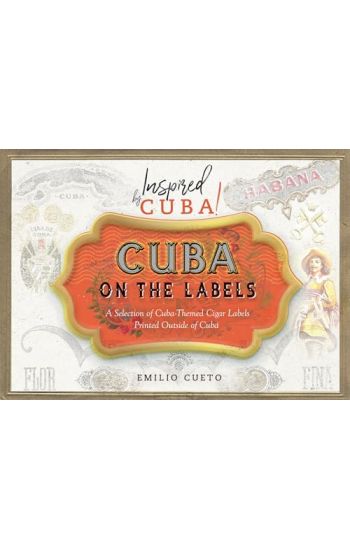
Cuba on the Labels

Cuba on the Labels

Emilio Cueto

Library Press at Uf
2024
pokkari
“This book documents the extent to which merchants have gone to sell a dream—even if they do not provide the real thing.”—Emilio Cueto Cuba on the Labels: A Selection of Cuba-Themed Cigar Labels Printed Outside of Cuba explores how the island of Cuba and one of the island’s top exports, the Cuban cigar, have been immortalized in cigar labels created outside the island. Over three hundred labels are reproduced in large, beautifully detailed images. Having meticulously collected and researched these labels over many decades, Emilio Cueto covers the subject comprehensively. The close-to-original size reproductions allow readers to admire the labels that show Cuba through the eyes of the cigar label makers who work outside of Cuba. Cuba on the Labels is the third book in Cueto’s Inspired by Cuba! series. This volume follows his previous "Havana" cigar book, La Habana también se fuma/Havana is for Smokers (2019). Cuba on the Labels uniquely contributes to the bibliography of Cuban cigar label art, highlighting examples produced outside the island that include the words “Cuban,” “Cuban,” or their derivatives on the label. It is, as Cueto states, “certainly, the most thorough [study] ever attempted. It will be an invaluable reference book.”