Kirjojen hintavertailu. Mukana 11 392 847 kirjaa ja 12 kauppaa.

Kirjahaku

Etsi kirjoja tekijän nimen, kirjan nimen tai ISBN:n perusteella.

5 kirjaa tekijältä Emily Steiner

John Trevisa's Information Age

John Trevisa's Information Age

Emily Steiner

Oxford University Press
2021
sidottu
What would medieval English literature look like if we viewed it through the lens of the compendium? In that case, John Trevisa might come into focus as the major author of the fourteenth century. Trevisa (d. 1402) made a career of translating big informational texts from Latin into English prose. These included Ranulph Higden's Polychronicon, an enormous universal history, Bartholomaeus Anglicus's well-known natural encyclopedia De proprietatibus rerum, and Giles of Rome's advice-for-princes manual, De regimine principum. These were shrewd choices, accessible and on trend: De proprietatibus rerum and De regimine principum had already been translated into French and copied in deluxe manuscripts for the French and English nobility, and the Polychronicon had been circulating England for several decades. This book argues that John Trevisa's translations of compendious informational texts disclose an alternative literary history by way of information culture. Bold and lively experiments, these translations were a gamble that the future of literature in England was informational prose. This book argues that Trevisa's oeuvre reveals an alternative literary history more culturally expansive and more generically diverse than that which we typically construct for his contemporaries, Geoffrey Chaucer and William Langland. Thirteenth- and early fourteenth-century European writers compiled massive reference books which would shape knowledge well into the Renaissance. This study maintains that they had a major impact on English poetry and prose. In fact, what we now recognize to be literary properties emerged in part from translations of medieval compendia with their inventive ways of handling vast quantities of information.
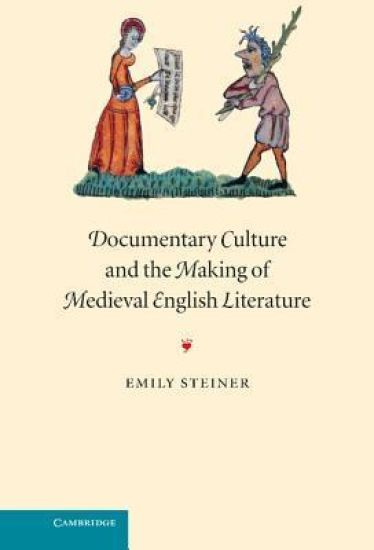
Documentary Culture and the Making of Medieval English Literature
Emily Steiner describes the rich intersections between legal documents and English literature in the fourteenth and fifteenth centuries. The literature of this period, from Passion lyrics to Lollard sermons, abounds in documentary language and metaphors. Steiner argues that documentary culture (including charters, testaments, patents and seals) enabled writers to think in new ways about the conditions of textual production in late medieval England. She explains that the distinctive rhetoric, material form and ritual performance of legal documents offered writers of Chaucer's generation and the generation succeeding him a model of literary practice. Covering a wide variety of medieval texts: sermons, lyrics, Piers Plowman, Mum and the Sothsegger, The Book of Margery Kempe, heretical writings and trial records, this study will be of interest to scholars of medieval literary studies and medieval studies in general.
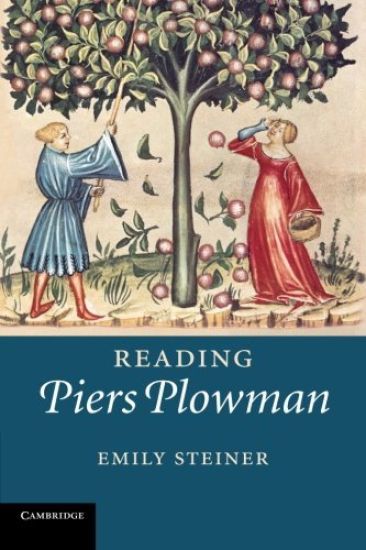
Reading Piers Plowman

Reading Piers Plowman

Emily Steiner

Cambridge University Press
2013
pokkari
Reading 'Piers Plowman' is an indispensable scholarly guide to a magnificent - and notoriously difficult - medieval poem. With 'Piers Plowman', the fourteenth-century poet William Langland proved that English verse could be at once spiritually electrifying and intellectually rigorous, capable of imagining society in its totality while at the same time exploring heady ideas about language, theology and culture. In her study of Piers Plowman, Emily Steiner explores how Langland's ambitious poetics emerged in dialogue with contemporary ideas; for example, about political counsel and gender, the ethics of poverty, Christian and pagan learning, lordship and servitude, and the long history of Christianity. Lucid and comprehensive, Steiner's study teaches us to stay alert to the poem's stunning effects while still making sense of its literary and historical contexts.
Documentary Culture and the Making of Medieval English Literature
Emily Steiner describes the rich intersections between legal documents and English literature in the fourteenth and fifteenth centuries. The literature of this period, from Passion lyrics to Lollard sermons, abounds in documentary language and metaphors. Steiner argues that documentary culture (including charters, testaments, patents and seals) enabled writers to think in new ways about the conditions of textual production in late medieval England. She explains that the distinctive rhetoric, material form and ritual performance of legal documents offered writers of Chaucer's generation and the generation succeeding him a model of literary practice. Covering a wide variety of medieval texts: sermons, lyrics, Piers Plowman, Mum and the Sothsegger, The Book of Margery Kempe, heretical writings and trial records, this study will be of interest to scholars of medieval literary studies and medieval studies in general.
Reading Piers Plowman

Reading Piers Plowman

Emily Steiner

Cambridge University Press
2013
sidottu
Reading 'Piers Plowman' is an indispensable scholarly guide to a magnificent - and notoriously difficult - medieval poem. With 'Piers Plowman', the fourteenth-century poet William Langland proved that English verse could be at once spiritually electrifying and intellectually rigorous, capable of imagining society in its totality while at the same time exploring heady ideas about language, theology and culture. In her study of Piers Plowman, Emily Steiner explores how Langland's ambitious poetics emerged in dialogue with contemporary ideas; for example, about political counsel and gender, the ethics of poverty, Christian and pagan learning, lordship and servitude, and the long history of Christianity. Lucid and comprehensive, Steiner's study teaches us to stay alert to the poem's stunning effects while still making sense of its literary and historical contexts.