Kirjojen hintavertailu. Mukana 12 016 292 kirjaa ja 12 kauppaa.

Kirjahaku

Etsi kirjoja tekijän nimen, kirjan nimen tai ISBN:n perusteella.

3 kirjaa tekijältä Emma Heaney

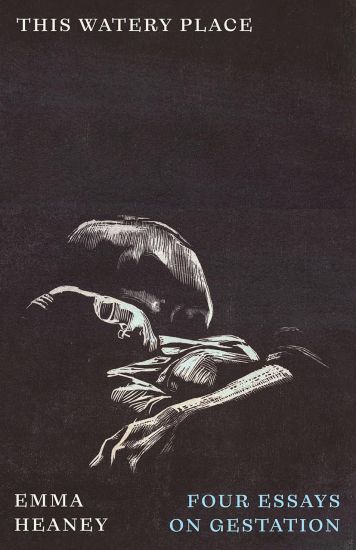
This Watery Place

This Watery Place

Emma Heaney

PLUTO PRESS
2025
pokkari
What does it feel like to experience your body cleaving into two or more while listening to lawyers, judges, pundits, and politicians center debates about reproductive healthcare around the viability line, the fantasized moment when any fetus could be extracted from the uterus and survive? What form of subjectivity is produced by the recurrent practice of scrolling through photographs of children crushed in war while a baby sleeps beside you, indistinguishable from the dead children in expression and bodily habit? This Watery Place departs from author Emma Heaney’s experiences to address these questions, which are situated between the particular historical moment of her pregnancies, of any individual pregnancy, and the transhistorical continuities of the sensations, emotions, socialities, and conceptual provocations that have long accompanied gestation. The book centers the embodied realities that are often mystified in the sentimentalizing of motherhood, a process that enables the material abandonment of those who do the labor of gestation and care, and, indeed of children. As a result, gestation is revealed as a process against cisness, wage work, and the death cult of war.
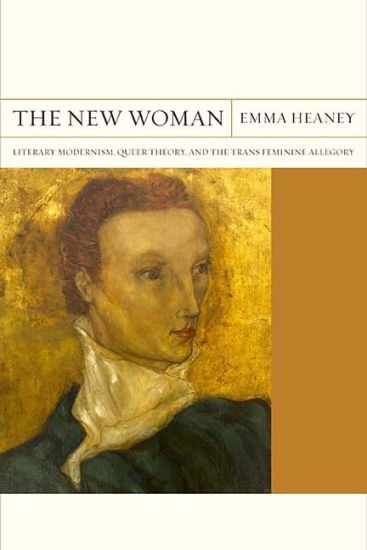
The New Woman

The New Woman

Emma Heaney

Northwestern University Press
2017
nidottu
The New Woman: Literary Modernism, Queer Theory, and the Trans Feminine Allegory traces the creation and significance of the trans feminine as an allegorical figure from its origins in late nineteenth-century sexological writing to subsequent writings in the fields of psychoanalysis, Modernist fiction, and contemporary Queer Theory.The first study to identify the process by which medical sources simplified the diversity of trans feminine experience into a single diagnostic narrative of transsexuality, The New Woman illuminates how trans women were identified as archetypes for the redefinition of sex roles in works by artists and writers such as Aldous Huxley, James Joyce, Djuna Barnes, T. S. Eliot, and Jean Genet. She demonstrates how Modernism borrowed the sexological trans feminine as the embodiment of the ""sexual anarchy"" of the period.Thus illuminating the trans feminine's Modernist provenance, The New Woman examines foundational works in Queer Theory to demonstrate how the Modernist trans feminine allegory was resuscitated at the end of the twentieth century. Insightful and seminal, The New Woman debunks the pervasive reflex beginning in the 1990s to connect trans people to a perceived collapse in sexual differences by revealing the late nineteenth-century and Modernist roots of the figure.
The New Woman

The New Woman

Emma Heaney

Northwestern University Press
2017
sidottu
The New Woman: Literary Modernism, Queer Theory, and the Trans Feminine Allegory traces the creation and significance of the trans feminine as an allegorical figure from its origins in late nineteenth-century sexological writing to subsequent writings in the fields of psychoanalysis, Modernist fiction, and contemporary Queer Theory. The first study to identify the process by which medical sources simplified the diversity of trans feminine experience into a single diagnostic narrative of transsexuality, The New Woman illuminates how trans women were identified as archetypes for the redefinition of sex roles in works by artists and writers such as Aldous Huxley, James Joyce, Djuna Barnes, T. S. Eliot, and Jean Genet. She demonstrates how Modernism borrowed the sexological trans feminine as the embodiment of the ""sexual anarchy"" of the period. Thus illuminating the trans feminine's Modernist provenance, The New Woman examines foundational works in Queer Theory to demonstrate how the Modernist trans feminine allegory was resuscitated at the end of the twentieth century. Insightful and seminal, The New Woman debunks the pervasive reflex beginning in the 1990s to connect trans people to a perceived collapse in sexual differences by revealing the late nineteenth-century and Modernist roots of the figure.