Kirjojen hintavertailu. Mukana 11 717 486 kirjaa ja 12 kauppaa.

Kirjahaku

Etsi kirjoja tekijän nimen, kirjan nimen tai ISBN:n perusteella.

20 kirjaa tekijältä Emmanuel Falque

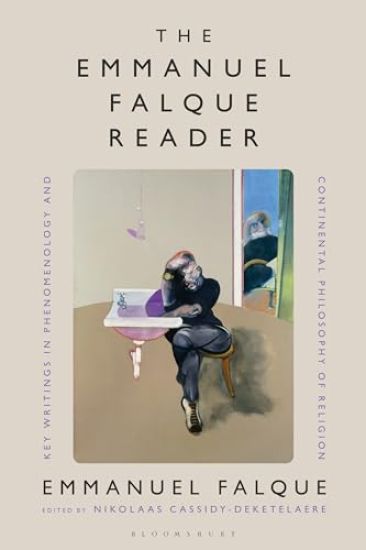
The Emmanuel Falque Reader

The Emmanuel Falque Reader

Emmanuel Falque

BLOOMSBURY PUBLISHING PLC
2024
sidottu
Emmanuel Falque is one of the foremost philosophers working in the continental philosophy of religion today. This is the first English-language anthology to bring together extracts from Falque’s major works, key essays and even some previously unpublished material. Spanning his entire career to date, The Emmanuel Falque Reader is organised thematically and showcases the vast array of Falque’s interests, from his early work on medieval philosophy to his methodology, anthropology and Christian phenomenology. It also includes an Editor’s Introduction, which situates Falque within phenomenology’s so-called ‘theological turn’ and provides a comprehensive overview of his philosophy. Falque's thinking urges more careful consideration of human finitude, atheism in a secular age, and the interaction between philosophy and theology. Featuring a foreword by esteemed scholar Kevin Hart, this essential collection explores the new directions in which Falque is taking continental philosophy of religion.
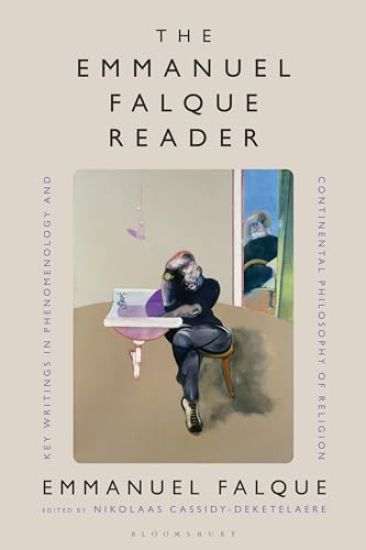
The Emmanuel Falque Reader

The Emmanuel Falque Reader

Emmanuel Falque

BLOOMSBURY PUBLISHING PLC
2024
nidottu
Emmanuel Falque is one of the foremost philosophers working in the continental philosophy of religion today. This is the first English-language anthology to bring together extracts from Falque’s major works, key essays and even some previously unpublished material. Spanning his entire career to date, The Emmanuel Falque Reader is organised thematically and showcases the vast array of Falque’s interests, from his early work on medieval philosophy to his methodology, anthropology and Christian phenomenology. It also includes an Editor’s Introduction, which situates Falque within phenomenology’s so-called ‘theological turn’ and provides a comprehensive overview of his philosophy. Falque's thinking urges more careful consideration of human finitude, atheism in a secular age, and the interaction between philosophy and theology. Featuring a foreword by esteemed scholar Kevin Hart, this essential collection explores the new directions in which Falque is taking continental philosophy of religion.
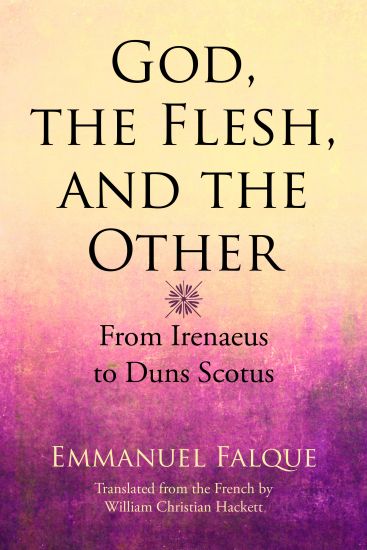
God, the Flesh, and the Other

God, the Flesh, and the Other

Emmanuel Falque

Northwestern University Press
2014
sidottu
In God, the Flesh, and the Other, the philosopher Emmanuel Falque joins the ongoing debate about the role of theology in phenomenology. An important voice in the second generation of French philosophy's ""theological turn,"" Falque examines philosophically the fathers of the Church and the medieval theologians on the nature of theology and the objects comprising it.Falque works phenomenology itself into the corpus of theology. Theological concepts thus translate into philosophical terms that phenomenology should legitimately question: concepts from contemporary phenomenology such as onto-theology, appearance, reduction, body/flesh, inter-corporeity, the genesis of community, intersubjectivity, and the singularity of the other find penetrating analogues in patristic and medieval thought forged through millennia of Christological and Trinitarian debate, mystical discourses, and speculative reflection. Through Falque's wide-ranging interpretive path, phenomenology finds itself interrogated–and renewed.
God, the Flesh, and the Other

God, the Flesh, and the Other

Emmanuel Falque

Northwestern University Press
2014
nidottu
In God, the Flesh, and the Other, the philosopher Emmanuel Falque joins the ongoing debate about the role of theology in phenomenology. An important voice in the second generation of French philosophy's "theological turn," Falque examines philosophically the fathers of the Church and the medieval theologians on the nature of theology and the objects comprising it. Falque works phenomenology itself into the corpus of theology. Theological concepts thus translate into philosophical terms that phenomenology should legitimately question: concepts from contemporary phenomenology such as onto-theology, appearance, reduction, body/flesh, inter-corporeity, the genesis of community, intersubjectivity, and the singularity of the other find penetrating analogues in patristic and medieval thought forged through millennia of Christological and Trinitarian debate, mystical discourses, and speculative reflection. Through Falque's wide-ranging interpretive path, phenomenology finds itself interrogated--and renewed.
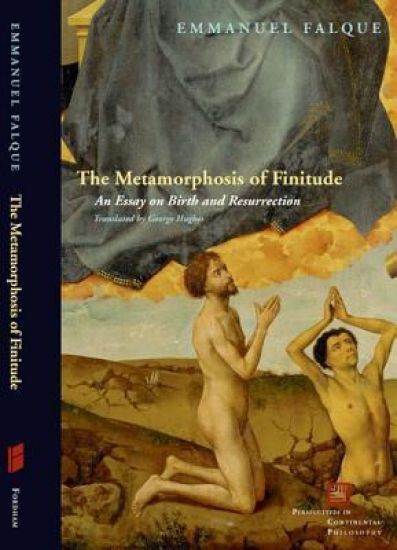
The Metamorphosis of Finitude

The Metamorphosis of Finitude

Emmanuel Falque

Fordham University Press
2012
sidottu
This book starts off from a philosophical premise: nobody can be in the world unless they are born into the world. It examines this premise in the light of the theological belief that birth serves, or ought to serve, as a model for understanding what resurrection could signify for us today. After all, the modern Christian needs to find some way of understanding resurrection, and the dogma of the resurrection of the body is vacuous unless we can relate it philosophically to our own world of experience. Nicodemus first posed the question "How can anyone be born after having grown old? Can one enter a second time into the mother's womb and be born?" This book reads that problem in the context of contemporary philosophy (particularly the thought of Husserl, Heidegger, Sartre, Merleau-Ponty, and Deleuze). A phenomenology of the body born "from below" is seen as a paradigm for a theology of spiritual rebirth, and for rebirth of the body from "on high." The Resurrection changes everything in Christianity—but it is also our own bodies that must be transformed in resurrection, as Christ is transfigured. And the way in which I hope to be resurrected bodily in God, in the future, depends upon the way in which I live bodily today.
The Metamorphosis of Finitude

The Metamorphosis of Finitude

Emmanuel Falque

Fordham University Press
2012
pokkari
This book starts off from a philosophical premise: nobody can be in the world unless they are born into the world. It examines this premise in the light of the theological belief that birth serves, or ought to serve, as a model for understanding what resurrection could signify for us today. After all, the modern Christian needs to find some way of understanding resurrection, and the dogma of the resurrection of the body is vacuous unless we can relate it philosophically to our own world of experience. Nicodemus first posed the question "How can anyone be born after having grown old? Can one enter a second time into the mother's womb and be born?" This book reads that problem in the context of contemporary philosophy (particularly the thought of Husserl, Heidegger, Sartre, Merleau-Ponty, and Deleuze). A phenomenology of the body born "from below" is seen as a paradigm for a theology of spiritual rebirth, and for rebirth of the body from "on high." The Resurrection changes everything in Christianity—but it is also our own bodies that must be transformed in resurrection, as Christ is transfigured. And the way in which I hope to be resurrected bodily in God, in the future, depends upon the way in which I live bodily today.
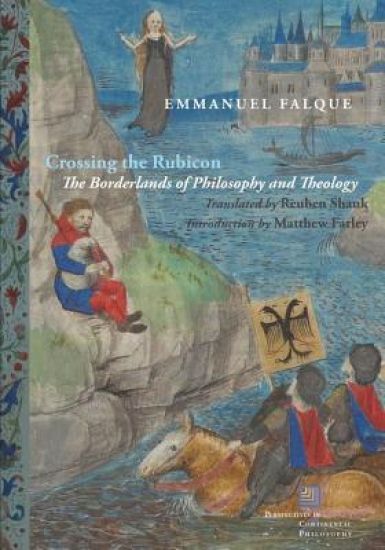
Crossing the Rubicon

Crossing the Rubicon

Emmanuel Falque

Fordham University Press
2016
sidottu
In France today, philosophy—phenomenology in particular—finds itself in a paradoxical relation to theology. Some debate a "theological turn." Others disavow theological arguments as if such arguments would tarnish their philosophical integrity, while nevertheless carrying out theology in other venues. In Crossing the Rubicon, Emmanuel Falque seeks to end this face-off. Convinced that "the more one theologizes, the better one philosophizes," he proposes a counterblow by theology against phenomenology. Instead of another philosophy of "the threshold" or "the leap"—and through a retrospective and forward-looking examination of his own method—he argues that an encounter between the two disciplines will reveal their mutual fruitfulness and their true distinctive borders. Falque shows that he has made the crossing between philosophy and theology and back again with audacity and perhaps a little recklessness, knowing full well that no one thinks without exposing himself to risk.
Crossing the Rubicon

Crossing the Rubicon

Emmanuel Falque

Fordham University Press
2016
pokkari
In France today, philosophy—phenomenology in particular—finds itself in a paradoxical relation to theology. Some debate a "theological turn." Others disavow theological arguments as if such arguments would tarnish their philosophical integrity, while nevertheless carrying out theology in other venues. In Crossing the Rubicon, Emmanuel Falque seeks to end this face-off. Convinced that "the more one theologizes, the better one philosophizes," he proposes a counterblow by theology against phenomenology. Instead of another philosophy of "the threshold" or "the leap"—and through a retrospective and forward-looking examination of his own method—he argues that an encounter between the two disciplines will reveal their mutual fruitfulness and their true distinctive borders. Falque shows that he has made the crossing between philosophy and theology and back again with audacity and perhaps a little recklessness, knowing full well that no one thinks without exposing himself to risk.
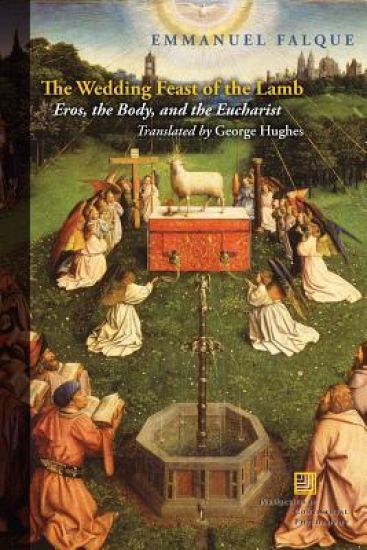
The Wedding Feast of the Lamb

The Wedding Feast of the Lamb

Emmanuel Falque

Fordham University Press
2016
sidottu
Emmanuel Falque's The Wedding Feast of the Lamb represents a turning point in his thought. Here, Falque links philosophy and theology in an original fashion that allows us to see the full effect of theology's "backlash" against philosophy. By attending closely to the incarnation and the eucharist, Falque develops a new concept of the body and of love: By avoiding the common mistake of "angelism"—consciousness without body—Falque considers the depths to which our humanity reflects animality, or body without consciousness. He shows the continued relevance of the question "How can this man give us his flesh to eat?" (John 6:52), especially to philosophy. We need to question the meaning of "this is my body" in "a way that responds to the needs of our time" (Vatican II). Because of the ways that "Hoc est corpus meum" has shaped our culture and our modernity, this is a problem both for religious belief and for culture.
The Wedding Feast of the Lamb

The Wedding Feast of the Lamb

Emmanuel Falque

Fordham University Press
2016
pokkari
Emmanuel Falque's The Wedding Feast of the Lamb represents a turning point in his thought. Here, Falque links philosophy and theology in an original fashion that allows us to see the full effect of theology's "backlash" against philosophy. By attending closely to the incarnation and the eucharist, Falque develops a new concept of the body and of love: By avoiding the common mistake of "angelism"—consciousness without body—Falque considers the depths to which our humanity reflects animality, or body without consciousness. He shows the continued relevance of the question "How can this man give us his flesh to eat?" (John 6:52), especially to philosophy. We need to question the meaning of "this is my body" in "a way that responds to the needs of our time" (Vatican II). Because of the ways that "Hoc est corpus meum" has shaped our culture and our modernity, this is a problem both for religious belief and for culture.
The Guide to Gethsemane

The Guide to Gethsemane

Emmanuel Falque

Fordham University Press
2018
pokkari
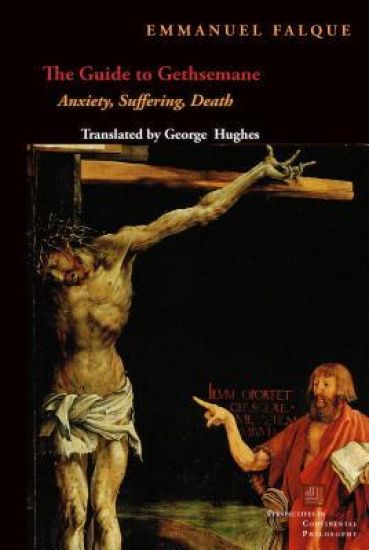
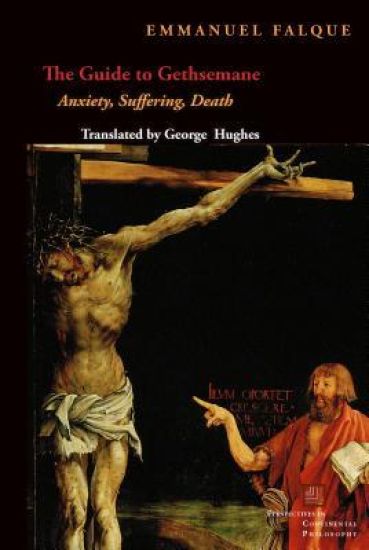
Anxiety, suffering and death are not simply the "ills" of our society, nor are they uniquely the product of a sick and sinful humanity. We must all some day confront them, and we continually face their implications long before we do. In that sense, the Garden of Gethsemane is not merely a garden "outside the walls" of Jerusalem but also the essential horizon for all of us, whether we are believers or not. Emmanuel Falque explores, with no small measure of doubt, Heidegger's famous statement that by virtue of Christianity's claims of salvation and the afterlife, its believers cannot authentically experience anxiety in the face of death. In this theological development of the Passion, already widely debated upon its publication in French, Falque places a radical emphasis on the physicality and corporeality of Christ's suffering and death, marking the continuities between Christ's Passion and our own orientation to the mortality of our bodies. Beginning with an elaborate reading of the divine and human bodies whose suffering is masterfully depicted in the Isenheim Altarpiece, and written in the wake of the death of a close friend, Falques's study is both theologically rigorous and marked by deeply human concerns. Falque is at unusual pains to elaborate the question of death in terms not merely of faith, but of a "credible Christianity" that remains meaningful to non-Christians, holding, with Maurice Blondel, that "the important thing is not to address believers but to say something which counts in the eyes of unbelievers." His account is therefore as much a work of philosophy as of theology—and of philosophy explicated not through abstractions but through familiar and ordinary experience. Theology's task, for Falque, is to understand that human problems of the meaning of existence apply even to Christ, at least insofar as he lives in and shares our finitude. In Falque's remarkable account, Christ takes upon himself the burden of suffering finitude, so that he can undertake a passage through it, or a transformation of it. This book, a key text from one the most remarkable of a younger generation of philosophers and theologians, will be widely read and debated by all who hold that theology and philosophy has the most to offer when it eschews easy answers and takes seriously our most anguishing human experiences.
The Guide to Gethsemane

The Guide to Gethsemane

Emmanuel Falque

FORDHAM UNIVERSITY PRESS
2018
sidottu
Anxiety, suffering and death are not simply the "ills" of our society, nor are they uniquely the product of a sick and sinful humanity. We must all some day confront them, and we continually face their implications long before we do. In that sense, the Garden of Gethsemane is not merely a garden "outside the walls" of Jerusalem but also the essential horizon for all of us, whether we are believers or not. Emmanuel Falque explores, with no small measure of doubt, Heidegger's famous statement that by virtue of Christianity's claims of salvation and the afterlife, its believers cannot authentically experience anxiety in the face of death. In this theological development of the Passion, already widely debated upon its publication in French, Falque places a radical emphasis on the physicality and corporeality of Christ's suffering and death, marking the continuities between Christ's Passion and our own orientation to the mortality of our bodies. Beginning with an elaborate reading of the divine and human bodies whose suffering is masterfully depicted in the Isenheim Altarpiece, and written in the wake of the death of a close friend, Falques's study is both theologically rigorous and marked by deeply human concerns. Falque is at unusual pains to elaborate the question of death in terms not merely of faith, but of a "credible Christianity" that remains meaningful to non-Christians, holding, with Maurice Blondel, that "the important thing is not to address believers but to say something which counts in the eyes of unbelievers." His account is therefore as much a work of philosophy as of theology—and of philosophy explicated not through abstractions but through familiar and ordinary experience. Theology's task, for Falque, is to understand that human problems of the meaning of existence apply even to Christ, at least insofar as he lives in and shares our finitude. In Falque's remarkable account, Christ takes upon himself the burden of suffering finitude, so that he can undertake a passage through it, or a transformation of it. This book, a key text from one the most remarkable of a younger generation of philosophers and theologians, will be widely read and debated by all who hold that theology and philosophy has the most to offer when it eschews easy answers and takes seriously our most anguishing human experiences.
The Book of Experience

The Book of Experience

Emmanuel Falque

BLOOMSBURY PUBLISHING PLC
2024
sidottu
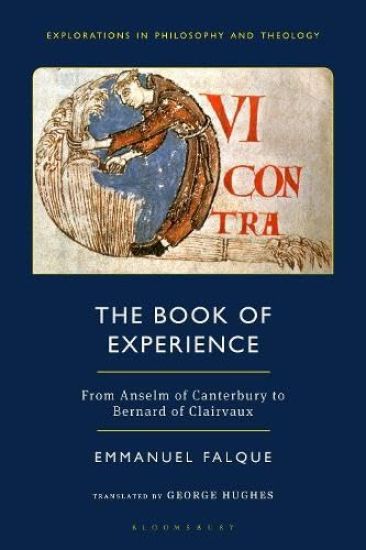
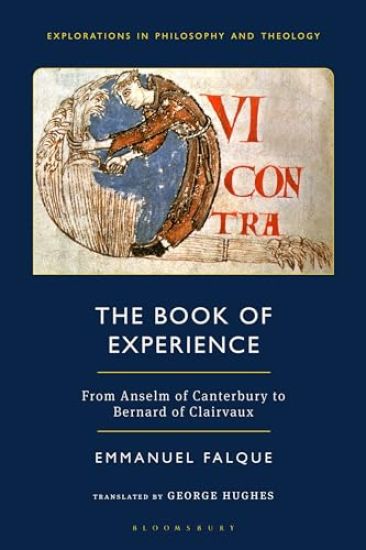
Emmanuel Falque, one of the foremost philosophers working in the continental philosophy of religion today, takes us by the hand into the very heart of 12th-century monastic spirituality.Translated into English for the first time, The Book of Experience weaves together contemporary phenomenological questions with medieval theology, revealing undiscovered dialogues already underway between Hugh of St. Victor and Maurice Merleau-Ponty, between Richard of St. Victor and Emmanuel Levinas, between Aelred of Rievaulx and Michel Henry, and not least between Bernard of Clairvaux and the trio of Descartes, Heidegger, and Jean-Luc Marion, consummating in a masterful phenomenological reading of Bernard’s sermons on the Song of Songs.Whether it is a question of 'the idea that comes to God' (Anselm of Canterbury) or actively 'feeling oneself fully alive' (Aelred of Rievaulx or Bernard of Clairvaux), Falque uses these encounters to shed light on both parties, medieval and modern, theological and philosophical. Leading us through works of art, landscapes, architectures, and liturgies, this major contemporary philosopher of religion clarifies mysteries and discovers experience lying at the heart of the medieval tradition.
The Book of Experience

The Book of Experience

Emmanuel Falque

BLOOMSBURY PUBLISHING PLC
2025
nidottu
Emmanuel Falque, one of the foremost philosophers working in the continental philosophy of religion today, takes us by the hand into the very heart of 12th-century monastic spirituality.Translated into English for the first time, The Book of Experience weaves together contemporary phenomenological questions with medieval theology, revealing undiscovered dialogues already underway between Hugh of St. Victor and Maurice Merleau-Ponty, between Richard of St. Victor and Emmanuel Levinas, between Aelred of Rievaulx and Michel Henry, and not least between Bernard of Clairvaux and the trio of Descartes, Heidegger, and Jean-Luc Marion, consummating in a masterful phenomenological reading of Bernard’s sermons on the Song of Songs.Whether it is a question of 'the idea that comes to God' (Anselm of Canterbury) or actively 'feeling oneself fully alive' (Aelred of Rievaulx or Bernard of Clairvaux), Falque uses these encounters to shed light on both parties, medieval and modern, theological and philosophical. Leading us through works of art, landscapes, architectures, and liturgies, this major contemporary philosopher of religion clarifies mysteries and discovers experience lying at the heart of the medieval tradition.
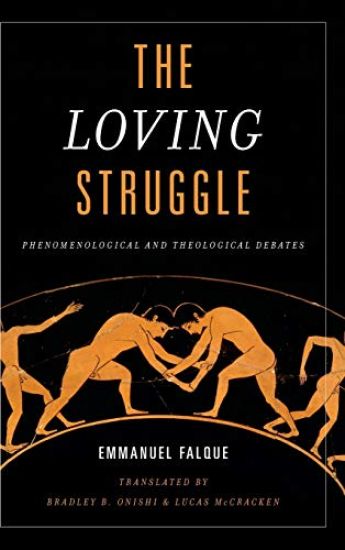
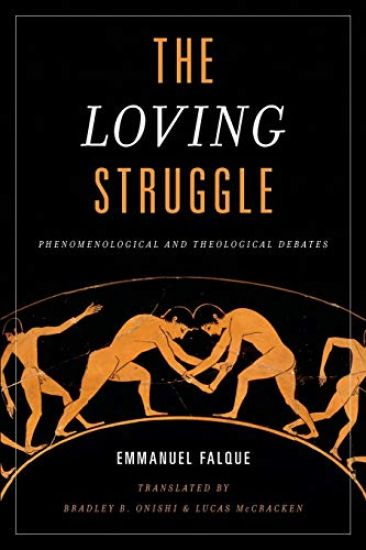
The Loving Struggle

The Loving Struggle

Emmanuel Falque

Rowman Littlefield
2018
sidottu
It has been 25 years since Dominique Janicaud derisively proclaimed the “theological turn” in French phenomenology due to the return of God to philosophy through the influence of “religious” thinkers such as Lévinas, Ricoeur, and Marion. Since then, the “theological turn” has flowered into a fully-fledged movement on both sides of the Atlantic. But, what will be the shape and direction of the second generation of the “theological turn”? In this important new book, Emmanuel Falque engages with all the major twentieth-century French phenomenologists—something heretofore unavailable in English. He argues that rather than being content to argue for the return of God to philosophy, something fought for and developed by the foregoing generation of the “theological turn,” it is necessary to stage a philosophical confrontation, or disputatio, with them and their work in order to ensure the ongoing vitality of the unexpected contemporary relationship between philosophy and theology. Drawing on the legacies of Jaspers and Heidegger, who both staged their own “loving struggles” to arrive at defining philosophical conclusions, Falque confronts, interrogates, and learns from his most influential philosophical forebears to steer the “theological turn” in a new direction. Offering a novel and creative philosophy of the body, Falque argues for a reorientation of philosophy of religion generally and the “theological turn” specifically from a philosophy of revelation from above to a philosophy of the limit from below.
The Loving Struggle

The Loving Struggle

Emmanuel Falque

Rowman Littlefield
2018
nidottu
It has been 25 years since Dominique Janicaud derisively proclaimed the “theological turn” in French phenomenology due to the return of God to philosophy through the influence of “religious” thinkers such as Lévinas, Ricoeur, and Marion. Since then, the “theological turn” has flowered into a fully-fledged movement on both sides of the Atlantic. But, what will be the shape and direction of the second generation of the “theological turn”? In this important new book, Emmanuel Falque engages with all the major twentieth-century French phenomenologists—something heretofore unavailable in English. He argues that rather than being content to argue for the return of God to philosophy, something fought for and developed by the foregoing generation of the “theological turn,” it is necessary to stage a philosophical confrontation, or disputatio, with them and their work in order to ensure the ongoing vitality of the unexpected contemporary relationship between philosophy and theology. Drawing on the legacies of Jaspers and Heidegger, who both staged their own “loving struggles” to arrive at defining philosophical conclusions, Falque confronts, interrogates, and learns from his most influential philosophical forebears to steer the “theological turn” in a new direction. Offering a novel and creative philosophy of the body, Falque argues for a reorientation of philosophy of religion generally and the “theological turn” specifically from a philosophy of revelation from above to a philosophy of the limit from below. to the return of God to philosophy through the influence of “religious” thinkers such as Lévinas, Ricoeur, and Marion. Since then, the “theological turn” has flowered into a fully-fledged movement on both sides of the Atlantic. But, what will be the shape and direction of the second generation of the “theological turn”? In this important new book, Emmanuel Falque engages with all the major twentieth-century French phenomenologists—something heretofore unavailable in English. He argues that rather than being content to argue for the return of God to philosophy, something fought for and developed by the foregoing generation of the “theological turn,” it is necessary to stage a philosophical confrontation, or disputatio, with them and their work in order to ensure the ongoing vitality of the unexpected contemporary relationship between philosophy and theology. Drawing on the legacies of Jaspers and Heidegger, who both staged their own “loving struggles” to arrive at defining philosophical conclusions, Falque confronts, interrogates, and learns from his most influential philosophical forebearers in order to steer the “theological turn” in a new direction. Offering a novel and creative philosophy of the body, Falque argues for a reorientation of philosophy of religion generally and the “theological turn” specifically from a philosophy of revelation from above to a philosophy of the limit from below.
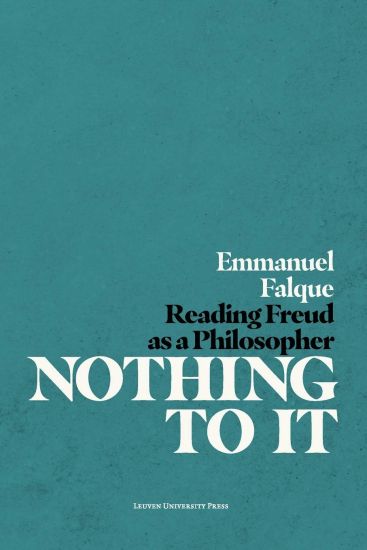
Nothing to It

Nothing to It

Emmanuel Falque

Leuven University Press
2020
nidottu
The special role of psychoanalysis in the development of phenomenologyThe confrontation between philosophy and psychoanalysis has had its heyday. After the major debates between Paul Ricoeur, Maurice Merleau-Ponty, Jacques Derrida, Gilles Deleuze, and Michel Henry, this dialogue now seems to have broken down. It has therefore proven necessary and gainful to revisit these debates to explore their re-usability and the degree to which they can provide new insights from a contemporary point of view. It can be said that contemporary philosophy suffers from an ‘excess of meaning’, and this is exactly where psychoanalysis comes in and may raise key questions. This is precisely what a philosophical reading of Freud demonstrates. To say ‘Nothing to It’ indicates that the ‘It’—or Freudian Id—is not visible as it never shows itself as a ‘phenomenon’. Such a reading of Freud exemplifies how psychoanalysis has a special role to play in phenomenology's development.Translators: Robert Vallier (DePaul University), William L. Connelly (The Catholic University of Paris)This publication is GPRC-labeled (Guaranteed Peer-Reviewed Content).
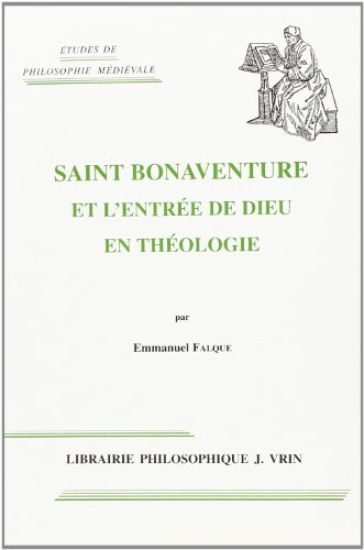
Saint Bonaventure Et l'Entree de Dieu En Theologie

Saint Bonaventure Et l'Entree de Dieu En Theologie

Emmanuel Falque

Librarie Philosophique J. Vrin
2001
nidottu
"Sans presupposer aucune connaissance ni en phenomenologie ni en philosophie medievale, Emmanuel Falque va suivre le prologue et la premiere partie du Breviloquium de Bonaventure pour y etudier la question de l'entree de Dieu en philosophie comme en theologie, autrement dit son mode de manifestation a l'homme. Emmanuel Falque a deja apporte des preuves convaincantes de la validite de sa methode dans plusieurs articles cites dans une note de l'Avant-propos et dans son Passeur de Gethsemani. Il est clairement justifie qu'apres et avec les resultats des experiences, recits et descriptions des mystiques, apres et avec les speculations des theologiens, on introduise de nouvelles methodes pour tenter de saisir ces vecus et meme ces notions a la source de leur surgissement, pour elaborer une quete de l'originaire selon la specificite de la reponse a une revelation." (Extrait de la preface de Jean Jolivet)