Kirjojen hintavertailu. Mukana 11 342 296 kirjaa ja 12 kauppaa.

Kirjahaku

Etsi kirjoja tekijän nimen, kirjan nimen tai ISBN:n perusteella.

11 kirjaa tekijältä Emmanuel Todd

Who is Charlie?: Xenophobia and the New Middle Class
In the wake of the attack on the offices of Charlie Hebdo in Paris on 7 January 2015, millions took to the streets to demonstrate their revulsion, expressing a desire to reaffirm the ideals of the French Republic: liberté, égalité, fraternité. But who were the millions of demonstrators who were suddenly united under the single cry of ‘Je suis Charlie’?In this probing new book, Emmanuel Todd investigates the cartography and sociology of the three to four million who marched in Paris and across France and draws some unsettling conclusions. For while they claimed to support liberal, republican values, the real middle classes who marched on that day of indignant protest also had a quite different programme in mind, one that was far removed from their proclaimed ideal. Their deep values were in fact more reminiscent of the most depressing aspects of France’s national history: conservatism, selfishness, domination and inequality.By identifying the anthropological, religious, economic and political forces that brought France to the edge of the abyss, Todd reveals the real dangers posed to all western societies when the interests of privileged middle classes work against marginalised and immigrant groups. Should we really continue to mistreat young people, force the children of immigrants to live on the outskirts of our cities, consign the poorer classes to the remoter parts of the country, demonise Islam, and allow the growth of an ever more menacing anti-Semitism? While asking uncomfortable questions and offering no easy solutions, Todd points to the difficult and uncertain path that might lead to an accommodation with Islam rather than a deepening and divisive confrontation.
Who is Charlie?: Xenophobia and the New Middle Class
In the wake of the attack on the offices of Charlie Hebdo in Paris on 7 January 2015, millions took to the streets to demonstrate their revulsion, expressing a desire to reaffirm the ideals of the French Republic: liberté, égalité, fraternité. But who were the millions of demonstrators who were suddenly united under the single cry of ‘Je suis Charlie’?In this probing new book, Emmanuel Todd investigates the cartography and sociology of the three to four million who marched in Paris and across France and draws some unsettling conclusions. For while they claimed to support liberal, republican values, the real middle classes who marched on that day of indignant protest also had a quite different programme in mind, one that was far removed from their proclaimed ideal. Their deep values were in fact more reminiscent of the most depressing aspects of France’s national history: conservatism, selfishness, domination and inequality.By identifying the anthropological, religious, economic and political forces that brought France to the edge of the abyss, Todd reveals the real dangers posed to all western societies when the interests of privileged middle classes work against marginalised and immigrant groups. Should we really continue to mistreat young people, force the children of immigrants to live on the outskirts of our cities, consign the poorer classes to the remoter parts of the country, demonise Islam, and allow the growth of an ever more menacing anti-Semitism? While asking uncomfortable questions and offering no easy solutions, Todd points to the difficult and uncertain path that might lead to an accommodation with Islam rather than a deepening and divisive confrontation.
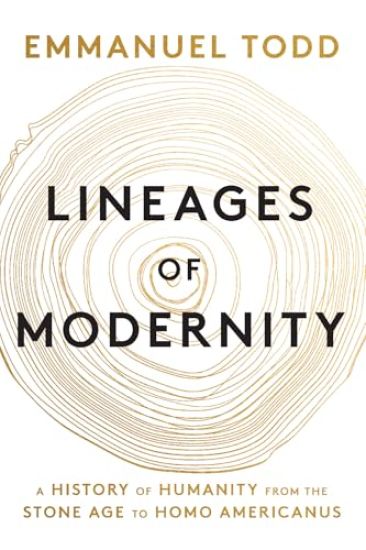
Lineages of Modernity

Lineages of Modernity

Emmanuel Todd

Polity Press
2019
sidottu
In most developed countries there is a palpable sense of confusion about the contemporary state of the world. Much that was taken for granted a decade or two ago is being questioned, and there is a widespread urge to try and understand how we reached our present situation, and where we are heading. In this major new book, the leading sociologist, historical anthropologist and demographer Emmanuel Todd sheds fresh light on our current predicament by reconstructing the historical dynamics of human societies from the Stone Age to the present. Eschewing the tendency to attribute special causal significance to the economy, Todd develops an anthropological account of history, focusing on the long-term dynamics of family systems and their links to religion and ideology – what he sees as the slow-moving, unconscious level of society, in contrast to the conscious level of the economy and politics. He also analyses the dramatic changes brought about by the spread of education. This enables him to explain the different historical trajectories of the advanced nations and the growing divergence between them, a divergence that can be observed in such phenomena as the rise of the Anglosphere in the modern period, the paradox of a Homo americanus who is both innovative and archaic, the startling electoral success of Donald Trump, the lack of realism in the will to power shown by Germany and China, the emergence of stable authoritarian democracy in Russia, the new introversion of Japan and the recent turbulent developments in Europe, including Brexit. This magisterial account of human history brings into sharp focus the massive transformations taking place in the world today and shows that these transformations have less to do with the supposedly homogenizing effects of globalization and the various reactions to it than with an ethnic diversity that is deeply rooted in the long history of human evolution.
Lineages of the Feminine

Lineages of the Feminine

Emmanuel Todd

JOHN WILEY AND SONS LTD
2023
sidottu
We are experiencing an anthropological revolution. We see it in the #MeToo movement, in the denunciation of femicide and in an increasingly vociferous critique of patriarchal domination. Why this sudden rise of an antagonistic conception of the relationship between men and women, at the very moment when progress is accelerating and when the goals of first- and second-wave feminism seem on the verge of being achieved? In this book, the anthropologist and historian Emmanuel Todd, while not underestimating the importance of crucial inequalities that remain, argues that the emancipation of women has essentially already taken place but that it has given rise to new tensions and contradictions. As women gain more freedom, they also gain access to traditional male social pathologies: economic anxiety, the disorientation of anomie, and individual and class resentment. But because they remain women, with the ability to bear children, their burden as human beings, although richer, is now more difficult to bear than that of men. In order to understand our current condition, Todd retraces the evolution of the male/female relationship through the long history of the human species, from the emergence of Homo sapiens a hundred thousand years ago to the present. He also conducts a broad empirical study of the convergence between men and women today and of the differences that still separate them – in education, in employment and in relation to longevity, suicide and homicide, electoral behaviour and racism. He explores the relations between women’s liberation and other changes in contemporary societies such as the collapse of religion, the decline of industry, the decline of homophobia, the rise of bisexuality and the transgender phenomenon, and the decline in a sense of the collective life. And he shows how and why Western countries – and especially the Anglo-American world, Scandinavia and France – are, in their new feminist revolution, perhaps less universal than they think.
Lineages of Modernity

Lineages of Modernity

Emmanuel Todd

JOHN WILEY AND SONS LTD
2025
nidottu
In most developed countries there is a palpable sense of confusion about the contemporary state of the world. Much that was taken for granted a decade or two ago is being questioned, and there is a widespread urge to try and understand how we reached our present situation, and where we are heading. In this major new book, the leading sociologist, historical anthropologist and demographer Emmanuel Todd sheds fresh light on our current predicament by reconstructing the historical dynamics of human societies from the Stone Age to the present. Eschewing the tendency to attribute special causal significance to the economy, Todd develops an anthropological account of history, focusing on the long-term dynamics of family systems and their links to religion and ideology – what he sees as the slow-moving, unconscious level of society, in contrast to the conscious level of the economy and politics. He also analyses the dramatic changes brought about by the spread of education. This enables him to explain the different historical trajectories of the advanced nations and the growing divergence between them, a divergence that can be observed in such phenomena as the rise of the Anglosphere in the modern period, the paradox of a Homo americanus who is both innovative and archaic, the startling electoral success of Donald Trump, the lack of realism in the will to power shown by Germany and China, the emergence of stable authoritarian democracy in Russia, the new introversion of Japan and the recent turbulent developments in Europe, including Brexit. This magisterial account of human history brings into sharp focus the massive transformations taking place in the world today and shows that these transformations have less to do with the supposedly homogenizing effects of globalization and the various reactions to it than with an ethnic diversity that is deeply rooted in the long history of human evolution.
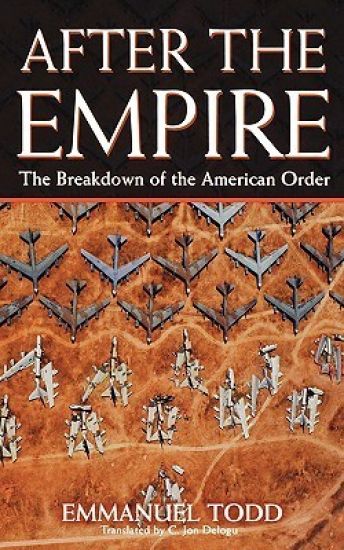
After the Empire

After the Empire

Emmanuel Todd

Constable
2004
nidottu
In 1975, Emmanuel Todd predicted the decline and fall of the Soviet Union, drawing on research from cultural anthropology and demography as well as economics. At the time his findings challenged a conventional wisdom that saw in the Communist world a dynamic and growing challenge to the West. Generations of Kremlinologists may not have known much, but they knew that Todd was wrong - until 1989, that is, when conventional wisdom retired hurt. Now Todd returns to the debate on the future of international power relations with another startling prediction. Far from being at the apogee of its power, the United States of America is now locked in the messy and disruptive logic of decline. Because the world has long relied on America as a source of stability, it is now desperately important for us to find a way to contain the shock waves from America's impending collapse as the sole superpower. This is not a book from an anti-American, and you will not find a smooth recitation of the standard arguments of Left or Right. It is that unfashionable thing - a determined and unembarrassed attempt to tell the truth.
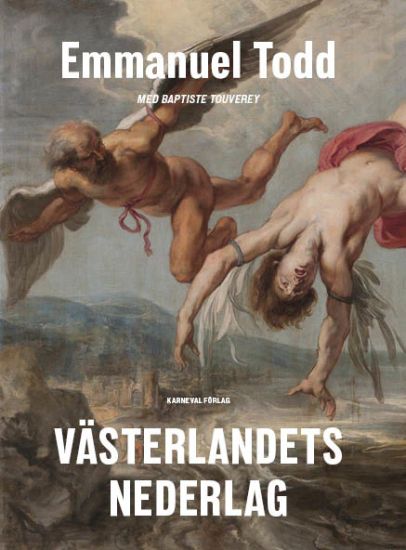
Västerlandets nederlag

Västerlandets nederlag

Emmanuel Todd

Karneval förlag
2024
nidottu
För nästan 50 år sedan förutspådde den franske histo­ri­kern Emmanuel Todd Sovjetunionens fall. Då fick han rätt.Nu förutspår han som en följd av kriget i Ukraina om inte Västerlandets fall, så åtminstone dess tronfall. Det västliga misslyckandet är dock inte bara militärt och geopolitiskt, menar han, utan har också sociala, ekono­mis­ka och moraliska dimensioner. Sina slutsatser kommer Emmanuel Todd fram till genom studier av ett brett spektrum av ämnen. Han behandlar Rysslands och Ukrainas vägval sedan Sovjetunionens fall. Han tar upp den parallella utvecklingen i USA, Storbritannien, Frankrike och Skandinavien. Som viktiga uttryck för krisen pekar han på bland annat kris­ten­domens försvinnande, de nationella kulturernas förflackning, det låga barna­födandet, utbildningssystemets degradering, transgender­ideologins expansion och nihilismens återkomst. Efter att krutröken i Ukraina har skingrats ser dock författaren möjligheter till en positiv vändning. Bland annat prognostiserar han ett fredligt närmande mellan Europas två mäktigaste stater, Tyskland och Ryssland, och en återuppståndelse, efter decennier av frånvaro, av Europa som en autonom global aktör.Får Emmanuel Todd rätt i sina förutsägelser även denna gång? Läs Västerlandets nederlag och bilda dig en egen uppfattning! OM FÖRFATTARENEmmanuel Todd, född 1951, är en fransk författare och forskare vid Frankrikes demografiska institut i Paris. Han doktorerade i historisk antropo­logi 1976 vid University of Cambridge. Samma år väckte han uppmärksamhet när han i boken La chute finale (»Det slutliga fallet«) förutspådde Sovjetunionens fall. Därefter har han publicerat ett tjugo­tal böcker, de flesta på de prestigefulla förlagen Gallimard och Seuil. Ett åter­kommande tema hos Emmanuel Todd är att ideo­logier och politiska system bestäms inte så mycket av idéernas eller klassernas kamp som av djupare liggande faktorer som familjesystem och demografi. Det är ett tema som även underbygger hans nya bok. FÖRFATTAREN OM VÄSTERLANDETS NEDERLAGKriget tar dig till andra sidan spegelnParadoxen med denna bok är att den, med utgångs­punkt från en rysk ­militär operation, leder oss till krisen i väst. Analysen av den sociala dynami­ken i Ryssland 1990-2022 kommer att visa sig enkel. Ukrainas och de tidigare folkdemo­kra­tier­nas utvecklingsbanor är paradoxala men framstår ändå inte som särskilt komplicerade.Däremot kommer det att bli en svårare intellektuell övning att undersöka Europa, Storbritannien och ännu mer USA. Vi måste då konfrontera illusioner, reflektioner och hägringar innan vi tränger in i verkligheten i vad som alltmer liknar ett svart hål: bortom Europas nedåtgående spiral kommer vi att finna interna obalanser i Storbritannien och Förenta staterna av sådan omfattning att de hotar världens stabilitet.Den ultimata paradoxen är att vi måste erkänna att krig, en erfarenhet av våld och lidande, en värld av dumhet och misstag, också är ett verklighetstest. Krig tar dig till andra sidan spegeln, in i en värld där ideologi, statistiska illusioner, medias misslyckanden och staternas lögner, för att inte tala om konspirationstänkandets villfarelser, gradvis förlorar sin makt. Då kommer en enkel sanning att framträda: att den västerländska krisen är mo­torn i den historia vi upplever. Somliga visste det på förhand. I slutet av kriget kommer ingen längre att kunna förneka det. Emmanuel Todd SAGT OM VÄSTERLANDETS NEDERLAG»För mer än ett år sedan, när Rysslands militära misslyckande i Kiev fick Västvärlden att i förtid sälja björnens skinn, meddelade Emmanuel Todd att Moskva inte skulle förlora. Hans analys baserades inte så mycket på militära data som på de inblandade ländernas kulturella styrka och inre sammanhållning och på det stöd de kunde förväntas få från det globala syd. Fiaskot med den ukrainska motoffensiven och sanktionerna mot Ryssland tycks nu bekräfta denna prognos ... De korta kapitlen i denna ofta provocerande bok, som författaren uppenbarligen haft nöje av att skriva, befriar för ett ögonblick läsaren från det propagandistiska gift som han eller hon nästan överallt annars utsätts för.« Serge Halimi, Le Monde Diplomatique »... en tät, läsvärd och perfekt uppbyggd essä där Emmanuel Todd, med hjälp av en stor mängd bibliografiska referenser, ekonomiska data och antropologiska studier, drar viktiga lärdomar av konflikten. Framför allt ser han kriget i Ukraina som en kollaps för USA och Storbritannien, som inte längre har någonting att göra med de mäktiga och kreativa nationalstater de var under förra århundradet.« André Larané, Herodote »... kapitlet om Ukraina är invändningsfritt, det är ett måste för dem som vill förstå vad som har hänt i landet under de senaste 30 åren, inte minst för dem som tror att ukrainarna bara har emigrerat till väst när de i själva verket har gjort det i åratal och i massiv utsträckning även till Ryssland ... Frågan är naturligtvis om Todds nya bok bör ­läsas. Jag säger ja, utan att tveka, för även om Todd skulle ha fel, så tvingar hans bok oss att tänka bortom de vanliga klichéerna, till ­exempel de om onda ryssar och goda ukrainare .« Éric Le Bourg, Regards »Emmanuel Todds tankar om den nuvarande stora geopolitiska händelsen, kriget i Uk­raina, är solida och välargumenterade. Hans analys av hur nationers makt grundas på obestridliga demografiska och antropologiska egenskaper, som spädbarnsdödlighet, fertilitet och förväntad livslängd, verkar också mycket robust och dessutom originell. Vad som förvånade denna läsare mer var avslöjandet av den ryska nationen och dess ekonomi under Vladimir Putins presidentskap. Medan vi i väst gillar att peka på zombifieringen av det ryska samhället, eftersom det fjärmar oss från tanken på vår egen ­potentiella zombifiering, berättar Todd för oss att Ryssland har sett sin ekonomi återhämta sig under den hemska diktatorns styre.« Guillaume Basquin, France-Soir »Kriget i Ukraina ger Emmanuel Todd ett tillfälle att jämföra de västerländska demokratierna och den ryska regimen under Vladimir Putin. Genom att tillämpa ett socio­logiskt perspektiv på studiet av politiska regimer har vår författare tidigare förklarat hur den ryska familjestrukturen underlättade etableringen av kommunismen i det ­forna tsarriket. Den här gången analyserar han de stridande parternas familjestrukturer, utifrån vilka han delvis förklarar drivkrafterna bakom konflikten. Du kanske inte håller med om Todds teser, tycker att de är skandalösa eller till och med helt felaktiga. Att läsa denna bok öppnar dock nya horisonter för personlig reflektion, eftersom den går stick i stäv med de flesta dominerande teman, vare sig det gäller Ryssland, upp­komsten av den rysk-ukrainska konflikten eller det amerikanska och, mer allmänt, västerländska samhället och ekonomin.« Jean-Pierre Tirouflet, Culture-Tops