Kirjojen hintavertailu. Mukana 11 383 215 kirjaa ja 12 kauppaa.

Kirjahaku

Etsi kirjoja tekijän nimen, kirjan nimen tai ISBN:n perusteella.

2 kirjaa tekijältä Eric C. K. Cheng

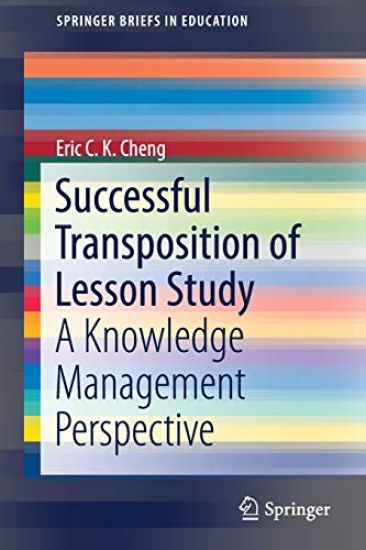
Successful Transposition of Lesson Study

Successful Transposition of Lesson Study

Eric C. K. Cheng

Springer Verlag, Singapore
2018
nidottu
This book analyses the organisation cultures that promote Japanese Lesson Study, identifies the soul of lesson study, which is missing in other cultures, and discusses the conditions for successfully transplanting the Lesson Study to other cultures. Adopting Nonaka and Tateuchi’s (1995) SECI knowledge creation model as the analytical lens, it explores the tacit and explicit knowledge convention and creation processes in lesson study. Unpacking the mechanism of the knowledge management process and practices could assist policy makers and school administrators, educators in contextualising lesson study to their school systems. The book provides an accessible discussion of the benefits and challenges of introducing lesson study, and presents three new research dimensions to analyse it: reviewing the historical development of lesson study in terms of the pendulum swings between professional accountability and state accountability in developing the school-based curriculum and the national curriculum; examining lesson study as a knowledge management tool for creating pedagogical knowledge for curriculum implementation: and studying the “kaizen kata” embedded in the PDCA cycles of lesson study as an organization routine for school improvement.
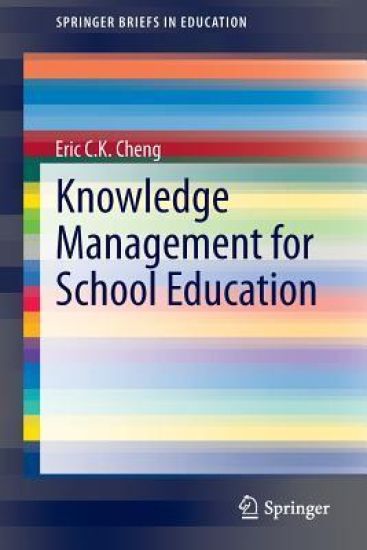
Knowledge Management for School Education

Knowledge Management for School Education

Eric C. K. Cheng

Springer Verlag, Singapore
2014
nidottu
?This book introduces the application of knowledge management (KM) theories, practices, and tools in school organization for sustainable development. Schools in Asia Pacific have long faced a variety of challenges in terms of sustainable development under the education reforms and curriculum reforms to meet the demands of a knowledge society. Schools are inevitably expected to develop human capital for the knowledge society within the competitive global economy, and to interact with its policy environment and know how to leverage pedagogical knowledge. The high speed of expansion change and expansion of knowledge have dramatically influence the development of flexibility of teacher and school works. The nature of teacher work becomes increasingly less routine, more analytical, and disruptive yet often come with a sense of urgency and need to be more collaborative. Teachers not only require data and information, but also knowledge and experience of individual, they also need to collaborative task execution, decision making and problem solving. Helping school leaders and teachers to manage their knowledge and become “know how” to cope with the change is important.