Kirjojen hintavertailu. Mukana 12 016 292 kirjaa ja 12 kauppaa.

Kirjahaku

Etsi kirjoja tekijän nimen, kirjan nimen tai ISBN:n perusteella.

4 kirjaa tekijältä Eric C. Nystrom

Seeing Underground

Seeing Underground

Eric C. Nystrom

University of Nevada Press
2016
nidottu
The digging of mineral wealth from the ground dates to prehistoric times, and Europeans pursued mining in the Americas from the earliest colonial days. Prior to the Civil War, very little mining went deep enough to require maps. However, the major finds of the mid-nineteenth century, such as the Comstock Lode, were vastly larger and deeper than any previous finds in America. Nystrom argues that, as industrial mining came of age in the United States, the development of maps and models gave power to a new visual culture. These maps and models became necessary tools in creating and controlling the mines’ pitch-dark, three-dimensional space. Nystrom demonstrates that these neglected artifacts of the nineteenth and early twentieth centuries have much to teach us today.
Seeing Underground

Seeing Underground

Eric C. Nystrom

University of Nevada Press
2014
sidottu
Digging mineral wealth from the ground dates to prehistoric times, and Europeans pursued mining in the Americas from the earliest colonial days. Prior to the Civil War, little mining was deep enough to require maps. However, the major finds of the mid-nineteenth century, such as the Comstock Lode, were vastly larger than any before in America. In Seeing Underground, Nystrom argues that, as industrial mining came of age in the United States, the development of maps and models gave power to a new visual culture and allowed mining engineers to advance their profession, gaining authority over mining operations from the miners themselves. Starting in the late nineteenth century, mining engineers developed a new set of practises, artifacts, and discourses to visualise complex, pitch-dark three-dimensional spaces. These maps and models became necessary tools in creating and controlling those spaces. They made mining more understandable, predictable, and profitable. Nystrom shows that this new visual culture was crucial to specific developments in American mining, such as implementing new safety regulations after the Avondale, Pennsylvania, fire of 1869 killed 110 men and boys; understanding complex geology, as in the rich ores of Butte, Montana; and settling high-stakes litigation, such as the Tonopah, Nevada, Jim Butler v. West End lawsuit, which reached the US Supreme Court. Nystrom demonstrates that these neglected artifacts of the nineteenth and early twentieth centuries have much to teach us today. The development of a visual culture helped create a new professional class of mining engineers and changed how mining was done.
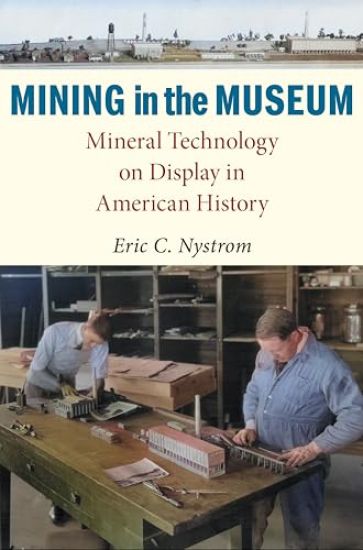
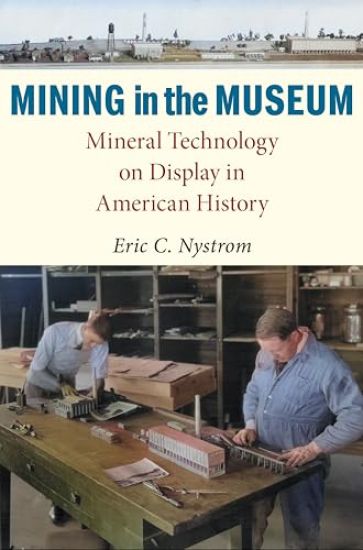
Mining in the Museum

Mining in the Museum

Eric C. Nystrom

UNIVERSITY OF MASSACHUSETTS PRESS
2027
nidottu
Examining 150 years of mining and mineral technology exhibits at the Smithsonian Buried deep underground or cut into remote landscapes, mines are often dirty, dark, and dangerous places, located far from the everyday urban spaces that most Americans call home. Yet mining is foundational to the making of the United States, supplying the raw materials that built its infrastructure, powered its industries, and shaped its scientific institutions, even as the work itself has remained physically removed, technically complex, and culturally overlooked. Mining in the Museum reveals how Americans have encountered this vital industry not at the distant mine face, but in museum galleries. Tracing more than 150 years of mining and mineral technology exhibits at the Smithsonian Institution in Washington, DC, Eric C. Nystrom shows how curators transformed ore, instruments, models, and machinery into stories about progress, innovation, and national development, and how those interpretive choices shaped what the nation remembers—and forgets—about mining. Using mining collections as a lens into institutional change, Nystrom offers a new history of the Smithsonian and its United States National Museum, examining how curators, administrators, and policymakers debated what museums were for, which kinds of knowledge they should produce, and what objects deserved display. He follows the shifting fortunes of mineral and mining exhibits across world's fairs, scientific surveys, and changing exhibition philosophies, showing how display strategies evolved alongside professional science and public education. As mining's place in the national imagination changed, so too did its presence in the federal museum, moving from a central scientific and technological showcase to a subject increasingly preserved by regional and local institutions closer to mining communities themselves. Grounded in extensive archival research, Mining in the Museum illuminates the evolving relationship among technology, public history, and the politics of display, demonstrating how museums help define which industries, and which kinds of work, become part of the American story.