Kirjojen hintavertailu. Mukana 11 342 296 kirjaa ja 12 kauppaa.

Kirjahaku

Etsi kirjoja tekijän nimen, kirjan nimen tai ISBN:n perusteella.

3 kirjaa tekijältä Eric D. Carter

Enemy in the Blood

Enemy in the Blood

Eric D. Carter

The University of Alabama Press
2020
nidottu
Enemy in the Blood: Malaria, Environment, and Development in Argentina examines the dramatic yet mostly forgotten history of malaria control in northwest Argentina. Carter traces the evolution of malaria science and policy in Argentina from the disease's emergence as a social problem in the 1890s to its effective eradication by 1950. Malaria-control proponents saw the campaign as part of a larger project of constructing a modern identity for Argentina. Insofar as development meant building a more productive, rational, and hygienic society, the perceptions of a culturally backwards and disease-ridden interior prevented Argentina from joining the ranks of 'modern' nations. The path to eradication, however, was not easy due to complicated public health politics, inappropriate application of foreign malaria control strategies, and a habitual misreading of the distinctive ecology of malaria in the northwest, especially the unique characteristics of the local mosquito vector. Homegrown scientific expertise, a populist public health agenda, and an infusion of new technologies eventually brought a rapid end to malaria's scourge, if not the cure for regional underdevelopment.Enemy in the Blood sheds light on the often neglected history of northwest Argentina's interior, adds to critical perspectives on the history of development and public health in modern Latin America, and demonstrates the merits of integrative socialenvironmental research.
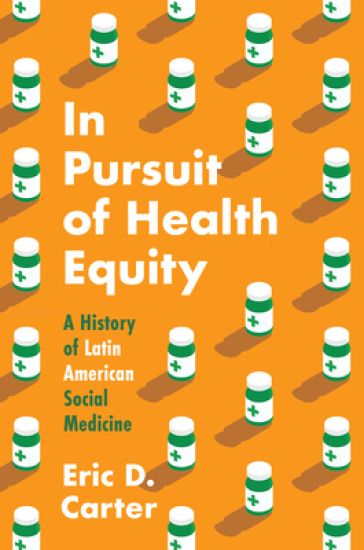
In Pursuit of Health Equity

In Pursuit of Health Equity

Eric D. Carter

THE UNIVERSITY OF NORTH CAROLINA PRESS
2023
sidottu
Throughout Latin America, social medicine has been widely recognized for its critical perspectives on mainstream understandings of health and for its progressive policy achievements. Nevertheless, it has been an elusive subject: hard to define, with puzzling historical discontinuities and misconceptions about its origins. Drawing on a vast archive and with an ambitious narrative scope that transcends national borders, Eric D. Carter offers the first comprehensive intellectual and political history of the social medicine movement in Latin America, from the early twentieth century to the present day.While maintaining a consistent focus on health equity, social medicine has evolved with changing conditions in the region. Carter shows how it shaped early Latin American welfare states, declined with the dominance of midcentury technocratic health planning, resurged in the 1970s in solidarity against authoritarian regimes, and later resisted neoliberal reforms of the health sector. He centers socialist and anarchist doctors, political exiles, intellectuals, populist leaders, and rebellious technocrats from Argentina, Chile, Brazil, and other countries who responded to and shaped a dynamic political environment around health equity. The lessons from this history will inform new thinking about how to achieve health equity in the twenty-first century.
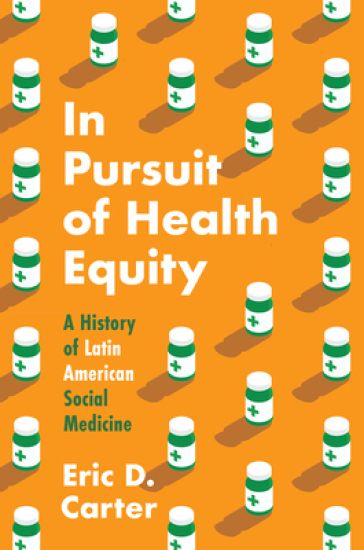
In Pursuit of Health Equity

In Pursuit of Health Equity

Eric D. Carter

THE UNIVERSITY OF NORTH CAROLINA PRESS
2023
pokkari
Throughout Latin America, social medicine has been widely recognized for its critical perspectives on mainstream understandings of health and for its progressive policy achievements. Nevertheless, it has been an elusive subject: hard to define, with puzzling historical discontinuities and misconceptions about its origins. Drawing on a vast archive and with an ambitious narrative scope that transcends national borders, Eric D. Carter offers the first comprehensive intellectual and political history of the social medicine movement in Latin America, from the early twentieth century to the present day.While maintaining a consistent focus on health equity, social medicine has evolved with changing conditions in the region. Carter shows how it shaped early Latin American welfare states, declined with the dominance of midcentury technocratic health planning, resurged in the 1970s in solidarity against authoritarian regimes, and later resisted neoliberal reforms of the health sector. He centers socialist and anarchist doctors, political exiles, intellectuals, populist leaders, and rebellious technocrats from Argentina, Chile, Brazil, and other countries who responded to and shaped a dynamic political environment around health equity. The lessons from this history will inform new thinking about how to achieve health equity in the twenty-first century.