Kirjojen hintavertailu. Mukana 11 342 296 kirjaa ja 12 kauppaa.

Kirjahaku

Etsi kirjoja tekijän nimen, kirjan nimen tai ISBN:n perusteella.

3 kirjaa tekijältä Eric Fillion

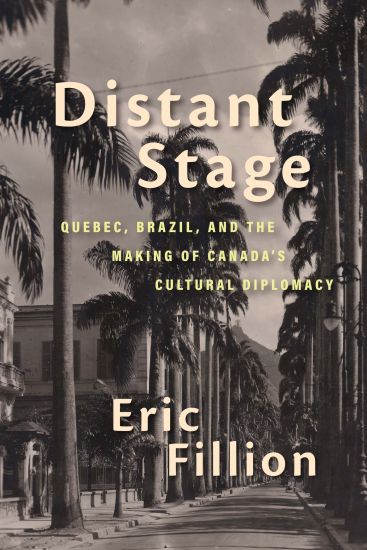
Distant Stage

Distant Stage

Eric Fillion

MCGILL-QUEEN'S UNIVERSITY PRESS
2022
sidottu
It is a little-known fact that the first cultural agreement Canada signed was with Brazil in 1944. The two countries’ rapprochement launched a flurry of activity connecting Montreal to Rio de Janeiro amid the turbulence of war and its aftermath. Why Brazil? And what could songs and paintings achieve that traditional diplomacy could not? Distant Stage examines the neglected histories of Canada-Brazil relations and the role played by culture in Canada’s pursuit of an international identity. The efforts of French-Canadian artists, intellectuals, and diplomats are at the heart of both. Eric Fillion demonstrates how music and the visual arts gave state and non-state actors new connections to the idea of nation, which in turn informed their sense of place in the world. Tracing the origins of Canadian cultural diplomacy to South America, the book underscores the significance of race and religion in the country’s international history, showing how Brazil served as a distant stage where Canadian identity politics and aspirations could play out. Both a timely invitation to think about cultural diplomacy as a critical practice and a reflection on the interplay between internationalism and nationalism, Distant Stage draws attention to the ambiguous yet essential roles played by artists in international and intercultural relations.
Distant Stage

Distant Stage

Eric Fillion

MCGILL-QUEEN'S UNIVERSITY PRESS
2022
nidottu
It is a little-known fact that the first cultural agreement Canada signed was with Brazil in 1944. The two countries’ rapprochement launched a flurry of activity connecting Montreal to Rio de Janeiro amid the turbulence of war and its aftermath. Why Brazil? And what could songs and paintings achieve that traditional diplomacy could not? Distant Stage examines the neglected histories of Canada-Brazil relations and the role played by culture in Canada’s pursuit of an international identity. The efforts of French-Canadian artists, intellectuals, and diplomats are at the heart of both. Eric Fillion demonstrates how music and the visual arts gave state and non-state actors new connections to the idea of nation, which in turn informed their sense of place in the world. Tracing the origins of Canadian cultural diplomacy to South America, the book underscores the significance of race and religion in the country’s international history, showing how Brazil served as a distant stage where Canadian identity politics and aspirations could play out. Both a timely invitation to think about cultural diplomacy as a critical practice and a reflection on the interplay between internationalism and nationalism, Distant Stage draws attention to the ambiguous yet essential roles played by artists in international and intercultural relations.
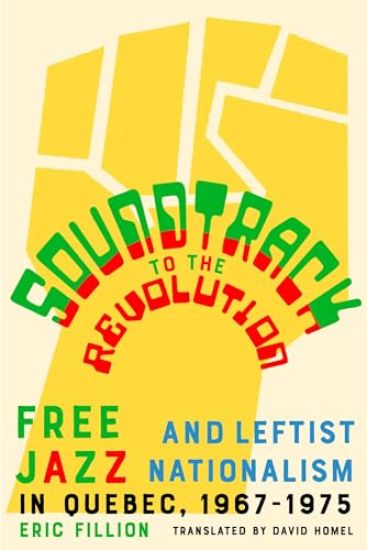
Soundtrack to the Revolution: Free Jazz and Leftist Nationalism in Quebec 1967-1975
"I am a revolutionary first, a musician second. Instead of a machine gun, I have a trumpet," explained Yves Charbonneau, co-founder of the Montreal-based group Jazz Libre, in May of 1969.Upbeat excitement resonated throughout Montreal and across the predominantly French-speaking province of Quebec in the wake of the Quiet Revolution and in the immediate aftermath of Expo 67, the highlight of Canada's Centennial celebrations. Yet at the time, the city was also a hub of discordant politics, many of which were about the promises of various types of leftism and their intersection with nationalism. Cultural workers--individuals, groups, and their networks--participated actively in these debates, prompting new forms of communication, participation, and organization to catalyze all kinds of evocative solidarities.In telling the story of Jazz Libre, Soundtrack to the Revolution reveals the meaningful role that the art of spontaneity played in the turbulent 1960s and 1970s. It traces the path taken by Jazz Libre--a collective of improvisers who embraced free jazz to help legitimize the efforts of the Quebec left to situate its nationalist aspirations within global anti-imperialist and anti-capitalist movements. Charbonneau and his bandmates strongly believed that collective improvisation could inspire resistance and hope by fostering communication, collaboration, initiative, trust, and self-criticism--but also a disposition to take risks as well as a willingness to think creatively and make decisions on the spur of the moment. Their many initiatives (concert forums aimed at students and workers, a self-governing arts summer camp in Val-David, north of Montreal, a socialist commune in the Eastern Townships as well as an experimental cultural centre in Old Montreal) were all oriented toward the convergence of protest movements shaking Quebec. Jazz Libre's fate was, as a result, irreversibly tied to the leftist independence movement--a hodgepodge of groups in search of possible futures during these pivotal decades.