Kirjojen hintavertailu. Mukana 12 016 292 kirjaa ja 12 kauppaa.

Kirjahaku

Etsi kirjoja tekijän nimen, kirjan nimen tai ISBN:n perusteella.

22 kirjaa tekijältä Eric Foner

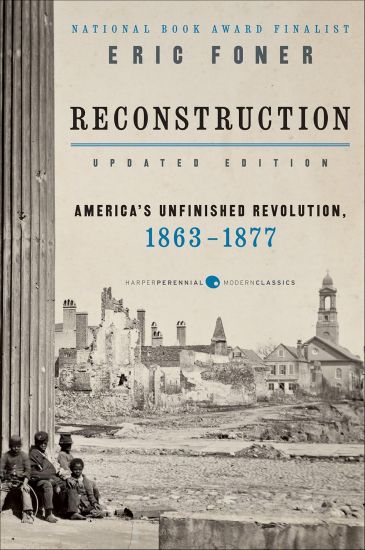
Reconstruction Updated Edition

Reconstruction Updated Edition

Eric Foner

Harper Perennial Modern Classics
2015
nidottu
Newly Reissued with a New Introduction: From the "preeminent historian of Reconstruction" (New York Times Book Review), a newly updated edition of the prize-winning classic work on the post-Civil War period which shaped modern America. Eric Foner's "masterful treatment of one of the most complex periods of American history" (New Republic) redefined how the post-Civil War period was viewed. Reconstruction chronicles the way in which Americans-black and white-responded to the unprecedented changes unleashed by the war and the end of slavery. It addresses the ways in which the emancipated slaves' quest for economic autonomy and equal citizenship shaped the political agenda of Reconstruction; the remodeling of Southern society and the place of planters, merchants, and small farmers within it; the evolution of racial attitudes and patterns of race relations; and the emergence of a national state possessing vastly expanded authority and committed, for a time, to the principle of equal rights for all Americans. This "smart book of enormous strengths" (Boston Globe) remains the standard work on the wrenching post-Civil War period-an era whose legacy still reverberates in the United States today.
A Short History of Reconstruction [Updated Edition]
From the "preeminent historian of Reconstruction" (New York Times Book Review), an updated abridged edition of Reconstruction, the prize-winning classic work on the post-Civil War period which shaped modern America.Reconstruction chronicles the way in which Americans--black and white--responded to the unprecedented changes unleashed by the war and the end of slavery. It addresses the quest of emancipated slaves' searching for economic autonomy and equal citizenship, and describes the remodeling of Southern society; the evolution of racial attitudes and patterns of race relations; and the emergence of a national state possessing vastly expanded authority and one committed, for a time, to the principle of equal rights for all Americans.This "masterful treatment of one of the most complex periods of American history" (New Republic) remains the standard work on the wrenching post-Civil War period--an era whose legacy still reverberates in the United States today.
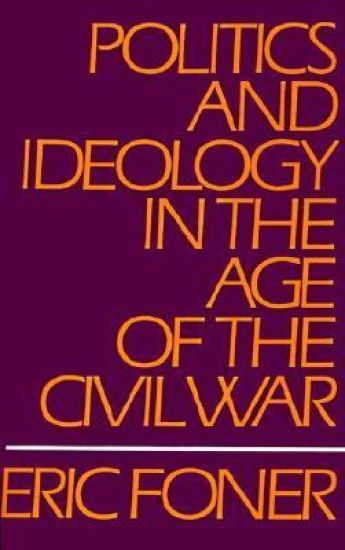
Politics and Ideology in the Age of the Civil War

Politics and Ideology in the Age of the Civil War

Eric Foner

Oxford University Press Inc
1981
nidottu
Insisting that politics and ideology must remain at the forefront of any examination of nineteenth-century America, Foner reasserts the centrality of the Civil War to the people of that period. The first section of this book deals with the causes of the sectional conflict; the second, with the antislavery movement; and a final group of essays treats land and labor after the war. Taken together, Foner's essays work towards reintegrating the social, political, and intellectual history of the nineteenth century.
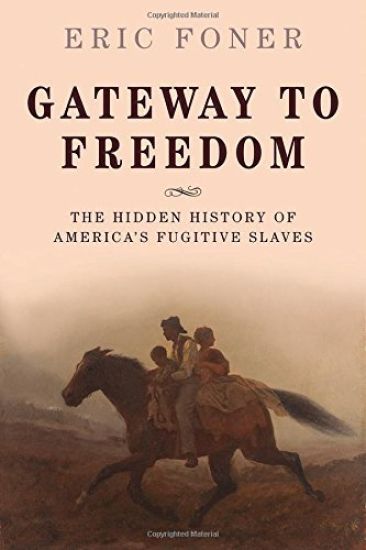
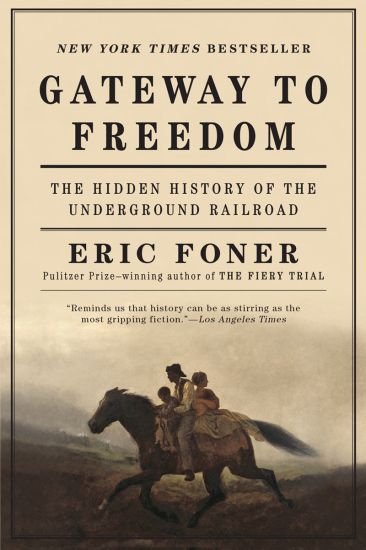
Gateway to Freedom

Gateway to Freedom

Eric Foner

Oxford University Press
2015
sidottu
When slavery was a routine part of life in America's South, a secret network of activists and escape routes enabled slaves to make their way to freedom in what is now Canada. The 'underground railroad' has become part of folklore, but one part of the story is only now coming to light. In New York, a city whose banks, business and politics were deeply enmeshed in the slave economy, three men played a remarkable part, at huge personal risk. In Gateway to Freedom, Pulitzer Prize-winning historian Eric Foner tells the story of Sydney Howard Gay, an abolitionist newspaper editor; Louis Napoleon, furniture polisher; and Charles B. Ray, a black minister. Between 1830 and 1860, with the secret help of black dockworkers, the network led by these three men helped no fewer than 3,000 fugitives to liberty. The previously unexamined records compiled by Gay offer a portrait of fugitive slaves who passed through New York City -- where they originated, how they escaped, who helped them in both North and South, and how they were forwarded to freedom in Canada.
Gateway to Freedom

Gateway to Freedom

Eric Foner

WW Norton Co
2015
sidottu
More than any other scholar, Eric Foner has influenced our understanding of America's history. Now, making brilliant use of extraordinary evidence, the Pulitzer Prize winning historian once again reconfigures the national saga of American slavery and freedom. A deeply entrenched institution, slavery lived on legally and commercially even in the northern states that had abolished it after the American Revolution. Slaves could be found in the streets of New York well after abolition, traveling with owners doing business with the city's major banks, merchants, and manufacturers. New York was also home to the North s largest free black community, making it a magnet for fugitive slaves seeking refuge. Slave catchers and gangs of kidnappers roamed the city, seizing free blacks, often children, and sending them south to slavery. To protect fugitives and fight kidnappings, the city's free blacks worked with white abolitionists to organize the New York Vigilance Committee in 1835. In the 1840s vigilance committees proliferated throughout the North and began collaborating to dispatch fugitive slaves from the upper South, Washington, and Baltimore, through Philadelphia and New York, to Albany, Syracuse, and Canada. These networks of antislavery resistance, centered on New York City, became known as the underground railroad. Forced to operate in secrecy by hostile laws, courts, and politicians, the city s underground-railroad agents helped more than 3,000 fugitive slaves reach freedom between 1830 and 1860. Until now, their stories have remained largely unknown, their significance little understood. Building on fresh evidence including a detailed record of slave escapes secretly kept by Sydney Howard Gay, one of the key organizers in New York Foner elevates the underground railroad from folklore to sweeping history. The story is inspiring full of memorable characters making their first appearance on the historical stage and significant the controversy over fugitive slaves inflamed the sectional crisis of the 1850s. It eventually took a civil war to destroy American slavery, but here at last is the story of the courageous effort to fight slavery by "practical abolition," person by person, family by family."
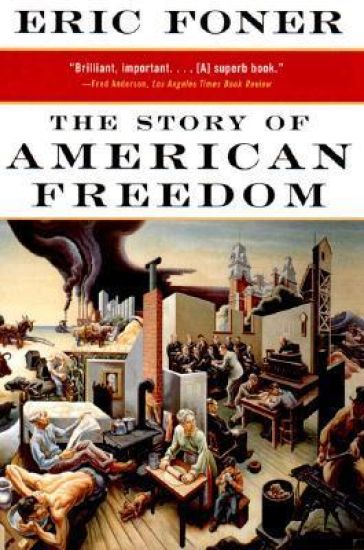
The Story of American Freedom

The Story of American Freedom

Eric Foner

WW Norton Co
1999
pokkari
From the Revolution to our own time, freedom has been America's strongest cultural bond and its most perilous fault line, a birthright for some Americans and a cruel mockery for others. Eric Foner takes freedom not as a timeless truth but as a value whose meaning and scope have been contested throughout American history. His sweeping narrative shows freedom to have been shaped not only in congressional debates and political treatises but also on plantations and picket lines, in parlors and bedrooms, by our acknowledged leaders and by former slaves, union organizers, freedom riders, and women's rights activists.
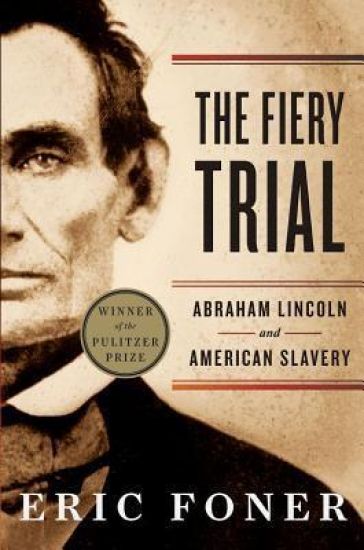
The Fiery Trial

The Fiery Trial

Eric Foner

WW Norton Co
2012
nidottu
Selected as a Notable Book of the Year by the New York Times Book Review, this landmark work gives us a definitive account of Lincoln's lifelong engagement with the nation's critical issue: American slavery. A master historian, Eric Foner draws Lincoln and the broader history of the period into perfect balance. We see Lincoln, a pragmatic politician grounded in principle, deftly navigating the dynamic politics of antislavery, secession, and civil war. Lincoln's greatness emerges from his capacity for moral and political growth.
Gateway to Freedom: The Hidden History of the Underground Railroad
More than any other scholar, Eric Foner has influenced our understanding of America's history. Now, making brilliant use of extraordinary evidence, the Pulitzer Prize-winning historian once again reconfigures the national saga of American slavery and freedom.A deeply entrenched institution, slavery lived on legally and commercially even in the northern states that had abolished it after the American Revolution. Slaves could be found in the streets of New York well after abolition, traveling with owners doing business with the city's major banks, merchants, and manufacturers. New York was also home to the North's largest free black community, making it a magnet for fugitive slaves seeking refuge. Slave catchers and gangs of kidnappers roamed the city, seizing free blacks, often children, and sending them south to slavery.To protect fugitives and fight kidnappings, the city's free blacks worked with white abolitionists to organize the New York Vigilance Committee in 1835. In the 1840s vigilance committees proliferated throughout the North and began collaborating to dispatch fugitive slaves from the upper South, Washington, and Baltimore, through Philadelphia and New York, to Albany, Syracuse, and Canada. These networks of antislavery resistance, centered on New York City, became known as the underground railroad. Forced to operate in secrecy by hostile laws, courts, and politicians, the city's underground-railroad agents helped more than 3,000 fugitive slaves reach freedom between 1830 and 1860. Until now, their stories have remained largely unknown, their significance little understood.Building on fresh evidence--including a detailed record of slave escapes secretly kept by Sydney Howard Gay, one of the key organizers in New York--Foner elevates the underground railroad from folklore to sweeping history. The story is inspiring--full of memorable characters making their first appearance on the historical stage--and significant--the controversy over fugitive slaves inflamed the sectional crisis of the 1850s. It eventually took a civil war to destroy American slavery, but here at last is the story of the courageous effort to fight slavery by "practical abolition," person by person, family by family.
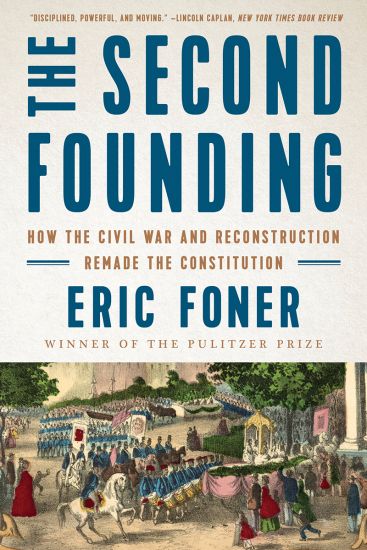
The Second Founding

The Second Founding

Eric Foner

WW Norton Co
2020
nidottu
The Declaration of Independence announced equality as an American ideal but it took the Civil War and the adoption of three constitutional amendments to establish that ideal as law. The Reconstruction amendments abolished slavery, guaranteed due process and the equal protection of the law, and equipped black men with the right to vote. By grafting the principle of equality onto the Constitution, the amendments marked the second founding of the United States. Eric Foner conveys the dramatic origins of these revolutionary amendments and explores the court decisions that then narrowed and nullified the rights guaranteed in these amendments. Today, issues of birthright citizenship, voting rights, due process and equal protection are still in dispute; the ideal of equality yet to be achieved.
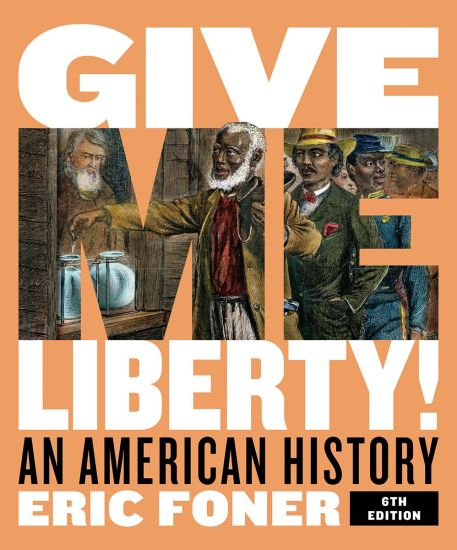
Give Me Liberty!

Give Me Liberty!

Eric Foner

WW Norton Co
2020
muu
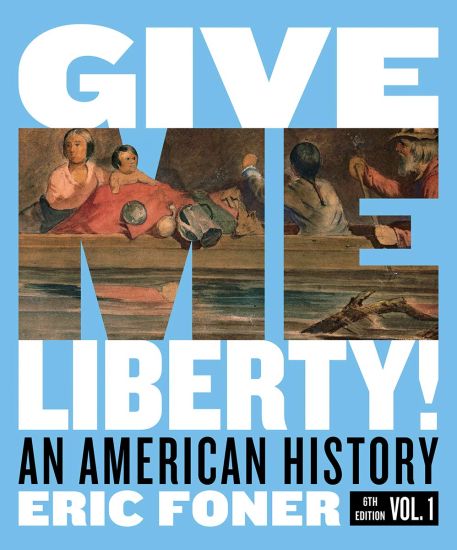
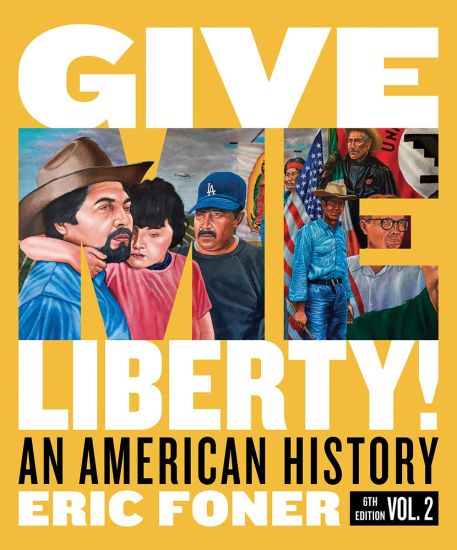
A powerful text by an acclaimed historian, Give Me Liberty! delivers an authoritative, concise and integrated American history. In the Sixth Edition, Eric Foner addresses a question that has motivated, divided and stirred passionate debates: “Who is an American?” With new coverage of issues of inclusion and exclusion—reinforced by new primary source features in the text and a new secondary source tutorial online—Give Me Liberty! strengthens students’ most important historical thinking skills.
Give Me Liberty!

Give Me Liberty!

Eric Foner

WW Norton Co
2020
muu
A powerful text by an acclaimed historian, Give Me Liberty! delivers an authoritative, concise and integrated American history. In the Sixth Edition, Eric Foner addresses a question that has motivated, divided and stirred passionate debates: “Who is an American?” With new coverage of issues of inclusion and exclusion—reinforced by new primary source features in the text and a new secondary source tutorial online—Give Me Liberty! strengthens students’ most important historical thinking skills.
Give Me Liberty!

Give Me Liberty!

Eric Foner

WW Norton Co
2020
muu
A powerful text by an acclaimed historian, Give Me Liberty! delivers an authoritative, concise and integrated American history. In the Sixth Edition, Eric Foner addresses a question that has motivated, divided and stirred passionate debates: “Who is an American?” With new coverage of issues of inclusion and exclusion—reinforced by new primary source features in the text and a new secondary source tutorial online—Give Me Liberty! strengthens students’ most important historical thinking skills.
Give Me Liberty!

Give Me Liberty!

Eric Foner

WW Norton Co
2016
nidottu
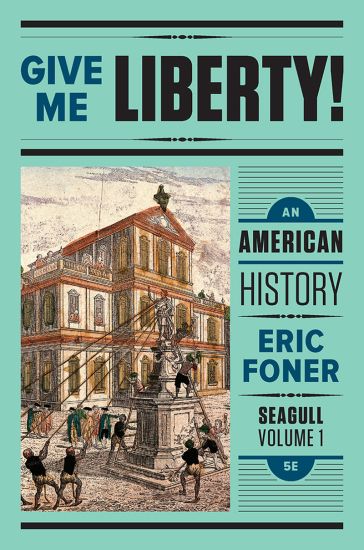
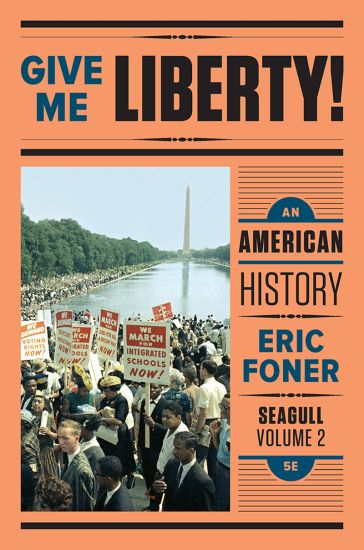
Give Me Liberty! is the #1 book in the U.S. history survey course because it works in the classroom. A single-author text by a leader in the field, Give Me Liberty! delivers an authoritative, accessible, concise, and integrated American history. Updated with powerful new scholarship on borderlands and the West, the Fifth Edition brings new interactive History Skills Tutorials and Norton InQuizitive for History, the award-winning adaptive quizzing tool. The best-selling Seagull Edition is also available in full color for the first time.
Give Me Liberty!

Give Me Liberty!

Eric Foner

WW Norton Co
2017
nidottu
Give Me Liberty! is the #1 book in the U.S. history survey course because it works in the classroom. A single-author text by a leader in the field, Give Me Liberty! delivers an authoritative, accessible, concise, and integrated American history. Updated with powerful new scholarship on borderlands and the West, the Fifth Edition brings new interactive History Skills Tutorials and Norton InQuizitive for History, the award-winning adaptive quizzing tool. The best-selling Seagull Edition is also available in full color for the first time.
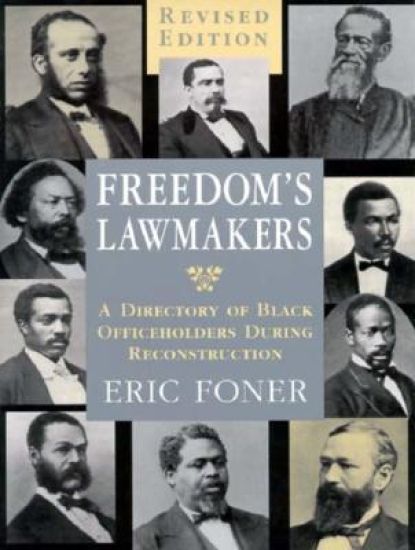
Freedom's Lawmakers

Freedom's Lawmakers

Eric Foner

Louisiana State University Press
1996
nidottu
With Freedom's Lawmakers, Eric Foner has assembled the first comprehensive directory of the over 1,500 African Americans who held political office in the South during the Reconstruction era. He has compiled an impressive amount of information about the antebellum status, occupations, property ownership, and military service of these officials - who range from U.S. congressmen to local justices of the peace and constables. This revised paperback edition also contains new material on forty-five officials who were not included in the first edition. In his Introduction, Foner ably analyses and interprets the roles of the black American officeholders. Concise biographies, in alphabetical order, trace the life histories of individuals - many previously unknown - who played important parts in the politics of the period. This useful and informative volume also includes an index by state, by occupation, by office during Reconstruction, by birth status, and by topic.
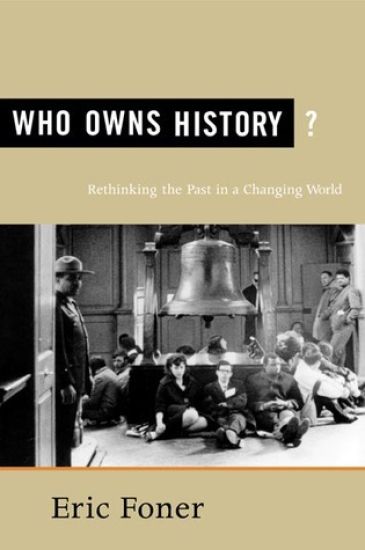
Who Owns History?: Rethinking the Past in a Changing World
"Who Owns History? testifies to Eric Foner's lifelong personal commitment to writing histories that advance the struggle for racial equality and economic justice." --David Glassberg, The Sunday Star-Ledger History has become a matter of public controversy, as Americans clash over such things as museum presentations, the flying of the Confederate flag, and reparations for slavery. So whose history is being written? Who owns it? Eric Foner answers these and other questions about the historian's relationship to the world of the past and future in this provocative, even controversial, study of the reasons we care about history--or should.
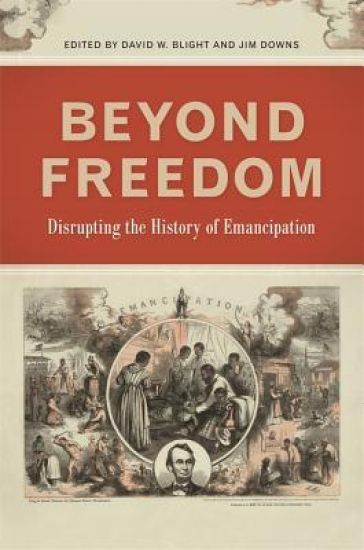
Beyond Freedom

Beyond Freedom

Eric Foner

University of Georgia Press
2017
sidottu
This collection of eleven original essays interrogates the concept of freedom and recenters our understanding of the process of emancipation. Who defined freedom, and what did freedom mean to nineteenth-century African Americans, both during and after slavery? Did freedom just mean the absence of constraint and a widening of personal choice, or did it extend to the ballot box, to education, to equality of opportunity? In examining such questions, rather than defining every aspect of postemancipation life as a new form of freedom, these essays develop the work of scholars who are looking at how belonging to an empowered government or community defines the outcome of emancipation.Some essays in this collection disrupt the traditional story and time-frame of emancipation. Others offer trenchant renderings of emancipation, with new interpretations of the language and politics of democracy. Still others sidestep academic conventions to speak personally about the politics of emancipation historiography, reconsidering how historians have used source material for understanding subjects such as violence and the suffering of refugee women and children. Together the essays show that the question of freedom—its contested meanings, its social relations, and its beneficiaries—remains central to understanding the complex historical process known as emancipation.Contributors: Justin Behrend, Gregory P. Downs, Jim Downs, Carole Emberton, Eric Foner, Thavolia Glymph, Chandra Manning, Kate Masur, Richard Newman, James Oakes, Susan O’Donovan, Hannah Rosen, Brenda E. Stevenson.
Beyond Freedom

Beyond Freedom

Eric Foner

University of Georgia Press
2017
pokkari
This collection of eleven original essays interrogates the concept of freedom and recenters our understanding of the process of emancipation. Who defined freedom, and what did freedom mean to nineteenth-century African Americans, both during and after slavery? Did freedom just mean the absence of constraint and a widening of personal choice, or did it extend to the ballot box, to education, to equality of opportunity? In examining such questions, rather than defining every aspect of postemancipation life as a new form of freedom, these essays develop the work of scholars who are looking at how belonging to an empowered government or community defines the outcome of emancipation.Some essays in this collection disrupt the traditional story and time-frame of emancipation. Others offer trenchant renderings of emancipation, with new interpretations of the language and politics of democracy. Still others sidestep academic conventions to speak personally about the politics of emancipation historiography, reconsidering how historians have used source material for understanding subjects such as violence and the suffering of refugee women and children. Together the essays show that the question of freedom—its contested meanings, its social relations, and its beneficiaries—remains central to understanding the complex historical process known as emancipation.Contributors: Justin Behrend, Gregory P. Downs, Jim Downs, Carole Emberton, Eric Foner, Thavolia Glymph, Chandra Manning, Kate Masur, Richard Newman, James Oakes, Susan O’Donovan, Hannah Rosen, Brenda E. Stevenson.
Political Parties Marti

Political Parties Marti

Eric Foner

Temple University Press,U.S.
1989
sidottu
Author note: Philip S. Foner is Professor Emeritus of History, Lincoln University. Elinor Randall is a noted translator of Spanish literature. Together they have published five volumes of Jose Martiâs writings in English.